
Salads
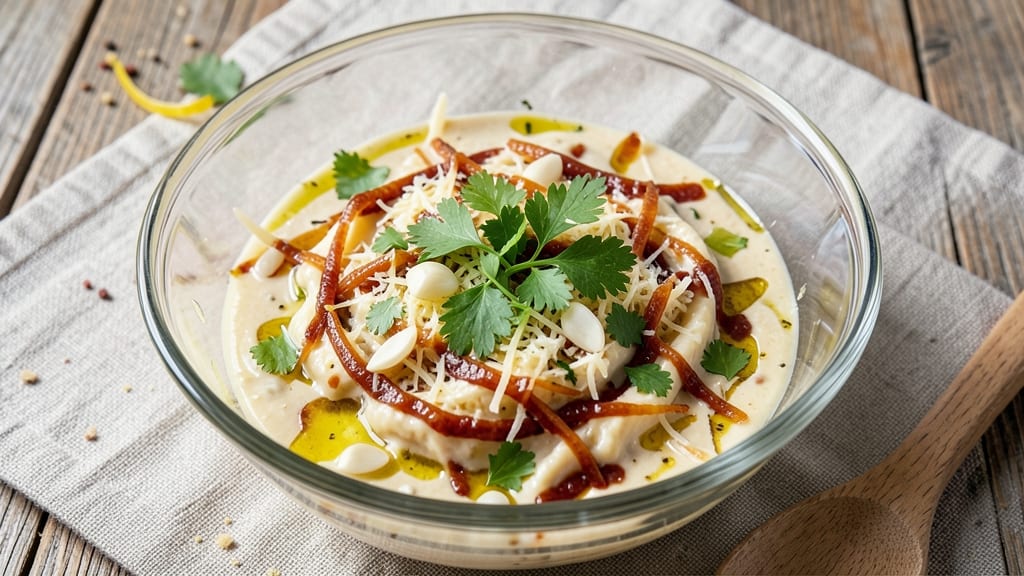
This Asiago salad dressing recipe transforms simple ingredients into a rich, nutty sauce that elevates every bite. The secret lies in blending aged Asiago cheese with tangy vinegar and smooth olive oil, creating a creamy texture that clings beautifully to greens.
I developed this recipe after craving a dressing with depth—something between a creamy vinaigrette and a cheese sauce, but lighter and more versatile.
The base is simple: Asiago cheese provides that signature nutty, umami-rich flavor, while Dijon mustard helps emulsify the dressing for a silky consistency. Fresh herbs like parsley or basil add brightness, and a touch of garlic rounds out the profile.
What makes this dressing special is its balance—creamy enough to coat salads generously but light enough to let the vegetables shine.
Perfect for Caesar-inspired salads, this dressing also works as a dip for crusty bread or a finishing touch on grilled meats. The recipe yields about 1 cup, enough for two generous salads or four sides.
Store it in the fridge for up to 5 days, shaking before each use to maintain its smooth texture.
For extra richness, stir in a spoonful of sour cream or Greek yogurt. If you prefer a sharper taste, add a splash of lemon juice or increase the vinegar slightly. The possibilities are endless, but the foundation remains foolproof—creamy, tangy, and packed with that unmistakable Asiago flavor.
Ingredients for asiago salad dressing
Aged Asiago cheese and olive oil create a nutty, creamy dressing perfect for salads and more.
| Ingredient | Amount | Notes |
|---|---|---|
| Aged Asiago Cheese 🧀 | ¾ cup | Freshly grated, block preferred |
| Extra-Virgin Olive Oil 🫒 | ½ cup | Light fruity variety for balance |
| White Wine Vinegar 🍷 | ¼ cup | Dry, crisp vinegar preferred |
| Dijon Mustard 🌶️ | 1 tbsp | For proper emulsification |
| Fresh Garlic Cloves 🧄 | 2 cloves | Minced for subtle flavor |
| Fresh Parsley Leaves 🌿 | ¼ cup | Chopped, stems removed |
| Fresh Basil Leaves 🌿 | ⅛ cup | Optional for herb variation |
| Granulated Garlic Powder 🧄 | ½ tsp | Enhances garlic flavor |
| Diamond Crystal Kosher Salt 🧂 | ½ tsp | Fine grain for even seasoning |
| Ground Black Pepper 🌶️ | ¼ tsp | Freshly ground preferred |
The Asiago cheese is the heart of this dressing—aged for at least 6 months delivers that rich, nutty depth. Whole Foods or specialty cheese shops carry the best blocks, but any well-marbled Asiago works. Grate it yourself for maximum flavor; pre-shredded lacks that fresh, sharp bite. For olive oil, California Avocado Ranch or Bertolli varieties strike the perfect balance between buttery and fruity. The Dijon mustard is non-negotiable here—it's what creates that silky emulsion. Skip the powdered versions; Maille is a solid brand but any quality Dijon will do.
No fresh parsley? Fresh cilantro or chives work in a pinch, though parsley's bright, clean flavor is ideal. Short on basil? Fresh dill or tarragon adds a different but still complementary herb note. Want extra richness? Swap half the vinegar for lemon juice—it brightens the dressing beautifully. For a sharper kick, increase the vinegar by 1 teaspoon. The garlic powder enhances the minced garlic without overpowering, but if you're using fresh, start with just 1 clove and adjust to taste. This dressing is incredibly forgiving—play with ratios until you hit your perfect balance.
Store in an airtight jar in the fridge for up to 5 days, shaking gently before each use to maintain emulsion. For longer storage, freeze in ice cube trays—thaw and shake to re-emulsify. The dressing thickens slightly when chilled, so add a splash of water or vinegar when ready to use. Doubling the recipe? Use the same ratios—this dressing scales perfectly for crowd-sized salads or party dips. Always taste before serving; the Asiago's intensity means you might need less salt than usual.
Why You'll Love This Recipe
- Five-Ingredient Magic: I swear by this combo—aged Asiago, garlic, and Dijon mustard do all the heavy lifting. No fancy techniques, just whisking until it’s smooth and chef’s kiss tangy.
- Umami Bomb: That aged Asiago? It’s the star—nutty, sharp, and just salty enough to make every bite sing. The white wine vinegar cuts through the richness like a fresh breeze.
- Weeknight Workhorse: Drizzle it on greens for a quick lunch, toss it with pasta for dinner, or even use it as a marinade. It’s my go-to when I’m too tired to think but still want flavor.
- No-Waste Winner: Make a big batch—it keeps for days in the fridge. Use it up on salads, roasted veggies, or even as a dip. Less waste, more delicious leftovers.
Step-by-step instructions for Asiago salad dressing
This rich, nutty dressing comes together in minutes with simple technique.
Grate the Asiago Cheese Finely
Use a box grater or food processor to grate the 0.75 cup Aged Asiago Cheese into fine, even shreds. A block of cheese works best—pre-shredded cheese contains anti-caking agents that prevent proper emulsification. As you grate, stop occasionally to scrape down the sides and ensure consistent texture. The finer the grated cheese, the smoother your dressing will be.
Transfer the grated cheese to a small bowl and set aside. This step is critical because larger cheese pieces won't fully dissolve, leaving gritty textures in your dressing. If using a food processor, pulse briefly to avoid melting the cheese from friction heat.
Whisk Together Wet Ingredients
In a medium bowl, combine the 0.5 cup Extra-Virgin Olive Oil, 0.25 cup White Wine Vinegar, 1 tbsp Dijon Mustard, 0.5 tsp Granulated Garlic Powder, 0.5 tsp Diamond Crystal Kosher Salt, and 0.25 tsp Ground Black Pepper. Whisk vigorously for 1-2 minutes until the mixture is fully emulsified and thickens slightly. The Dijon mustard acts as an emulsifier, helping the oil and vinegar blend smoothly.
This is where the dressing's foundation forms. You'll notice the mixture initially separates, but with steady whisking, it will transform into a creamy, homogeneous base. If you encounter resistance, add 1-2 teaspoons of warm water to help the emulsification process along.
Incorporate the Garlic and Herbs
Mince the 2 cloves Fresh Garlic Cloves finely using a knife or garlic press. Add them to the wet mixture along with the 0.25 cup Fresh Parsley Leaves and 0.125 cup Fresh Basil Leaves, which should be chopped into small pieces. Whisk again for 30-45 seconds until the garlic is fully distributed and the herbs are well incorporated. The fresh herbs add vibrant color and bright, fresh notes that balance the richness of the cheese.
Here's the thing—don't over-chop the herbs. You want visible flecks in the dressing for texture and visual appeal. If the mixture appears too thick, gradually add 1-2 tablespoons of water while whisking continuously to achieve your desired consistency.
Gradually Add the Grated Cheese
With the whisk running at medium speed, slowly add the grated 0.75 cup Aged Asiago Cheese in small increments. This gradual approach prevents the cheese from clumping and ensures a smooth, creamy texture. Whisk continuously for 2-3 minutes until the cheese is fully melted and the dressing reaches a thick, velvety consistency.
You'll know it's ready when the dressing coats the back of a spoon and holds its shape briefly before slowly dripping. If the mixture becomes too thick, thin it with 1 tablespoon of water at a time until you reach your preferred consistency. The cheese should be completely dissolved with no visible lumps.
Taste and Adjust Seasoning
Transfer the dressing to a clean jar or airtight container. Taste and adjust the seasoning as needed. If it needs more acidity, add ½ teaspoon of White Wine Vinegar. For extra richness, incorporate 1 tablespoon of Extra-Virgin Olive Oil. If the flavor feels flat, add a pinch more Diamond Crystal Kosher Salt or a dash of Ground Black Pepper to enhance the depth.
This dressing keeps well in the refrigerator for up to 1 week, making it perfect for meal prep. Give it a good shake before each use to redistribute any separated ingredients. The flavors will continue to meld and develop over time, becoming even more complex and delicious.
Pro Tips For Making Asiago Salad Dressing
- GRATE THE CHEESE FINE: Freshly grating aged Asiago makes all the difference—skip the pre-shredded stuff, which clumps and lacks texture. Use the small holes on your box grater and work in small batches so the cheese doesn’t melt into a gluey mess.
- TEMPER THE CHEESE FIRST: Dumping cold cheese into warm oil? Recipe for separation. Rub the grated Asiago between your palms to soften it slightly, then let it sit at room temp for 10 minutes before mixing. This ensures a smooth, emulsified dressing instead of curdled oil.
- WHISK THE MUSTARD IN LAST: Adding Dijon too early turns your dressing into a thick paste. Start with oil and vinegar, then whisk in the garlic and a splash of water to help emulsify—only then fold in the mustard. This keeps the texture light and pourable.
- USE COLD GARLIC: Raw garlic burns easily, and burned garlic ruins everything. Smash the cloves with the flat side of your knife instead of mincing, then let them sit in ice water for 5 minutes before draining. The cold slows down the allicin release, so your dressing tastes fresh, not bitter.
Regional styles of this recipe
Northern Italian Style
In Northern Italy, this dressing takes on a slightly tangier profile by incorporating 1 tablespoon of lemon zest along with the white wine vinegar. The region's love for bold flavors shines through in this variation, where 1 teaspoon of dried oregano replaces fresh basil.
I find this version pairs beautifully with roasted radicchio and walnuts—a classic Northern Italian salad combination. 🌿
Venetian-Inspired
For a true Venetian twist, substitute ½ cup of aged balsamic vinegar for the white wine vinegar and add 1 teaspoon of finely chopped sun-dried tomatoes. The deep, caramelized notes of balsamic create a rich contrast to the nutty Asiago.
This dressing works wonderfully with creamy polenta salads or as a dip for freshly baked focaccia. The sun-dried tomatoes add a sweet-savory depth that's pure Venetian charm.
Tuscan Herb Variation
Tuscan cuisine brings earthy flavors to the table, so this version incorporates 1 teaspoon of finely chopped rosemary and ½ teaspoon of fennel seeds (lightly toasted). The fennel seeds add a subtle anise-like note that complements the Asiago beautifully.
I like to serve this dressing with arugula and shaved fennel bulbs for a salad that's pure Tuscan inspiration. The rosemary's piney aroma elevates the dressing to new heights.
Lombardy Creamy Twist
Lombardy is known for its creamy sauces, so this variation replaces ¼ cup of the olive oil with ¼ cup of heavy cream for a richer texture. Add ½ teaspoon of ground nutmeg to enhance the creamy profile, and use fresh chervil instead of parsley for a delicate anise-like flavor.
This dressing is perfect for creamy risotto salads or as a dip for crusty breadsticks. The nutmeg adds warmth that's characteristic of Lombardy's cuisine.
Emilian Heartiness
Emilia-Romagna brings hearty flavors to this dressing by adding 1 tablespoon of finely chopped pancetta (cooked until crispy) and ½ teaspoon of ground cinnamon. The pancetta adds a smoky, salty depth while the cinnamon provides warmth.
This version works wonderfully with roasted beets and goat cheese salads. The combination of sweet and savory is pure Emilian comfort food at its finest. 🍖
Sicilian Sun-Kissed
Sicily's sunny climate shines through in this variation with 1 tablespoon of orange zest and ½ teaspoon of ground coriander. The citrus notes brighten the dressing beautifully, making it perfect for summer salads with fresh tomatoes and mozzarella.
I also add 1 teaspoon of honey to balance the acidity, creating a dressing that's both refreshing and complex. This version is a celebration of Sicily's vibrant flavors and sunny disposition. 🍊
Nutrition facts
Frequently asked questions
Can I make this dressing without fresh herbs?
If you don't have fresh parsley or basil, try dried herbs like 1 teaspoon dried parsley or ½ teaspoon dried basil. For extra flavor, add ½ teaspoon onion powder or 1 teaspoon capers to mimic the herbaceous notes. The dressing will still taste delicious—just slightly less vibrant.
Why did my dressing separate? How do I fix it?
Dressings separate when oil and vinegar aren't properly emulsified. Whisk in 1 teaspoon Dijon mustard or 1 tablespoon warm water while whisking vigorously to re-combine. For a quick fix, add ½ teaspoon xanthan gum (a stabilizer) and whisk until smooth. Always store in an airtight container to prevent future separation.
Can I use Parmesan instead of Asiago?
Yes, but the flavor will differ. Parmesan is sharper and saltier, so reduce the salt to ¼ teaspoon. For a closer match, blend ½ cup Parmesan with ¼ cup Asiago. The nutty depth of Asiago is key—it's what makes this dressing uniquely rich and complex.
How long will this dressing last?
Store in an airtight jar in the fridge for up to 1 week. For longer storage, freeze in ice cube trays, then transfer to a bag. Thaw overnight in the fridge and shake to re-emulsify. The texture may thicken slightly when chilled—thin with 1 teaspoon water before serving.
Is this dressing vegan-friendly?
Not traditionally, but you can adapt it! Replace the Asiago with ½ cup vegan Parmesan or ¼ cup nutritional yeast for a cheesy flavor. Use vegan olive oil and vegan Dijon mustard. The texture will be lighter, but still creamy and tangy. For extra richness, stir in 2 tablespoons silken tofu or vegan cream cheese.