
Salads
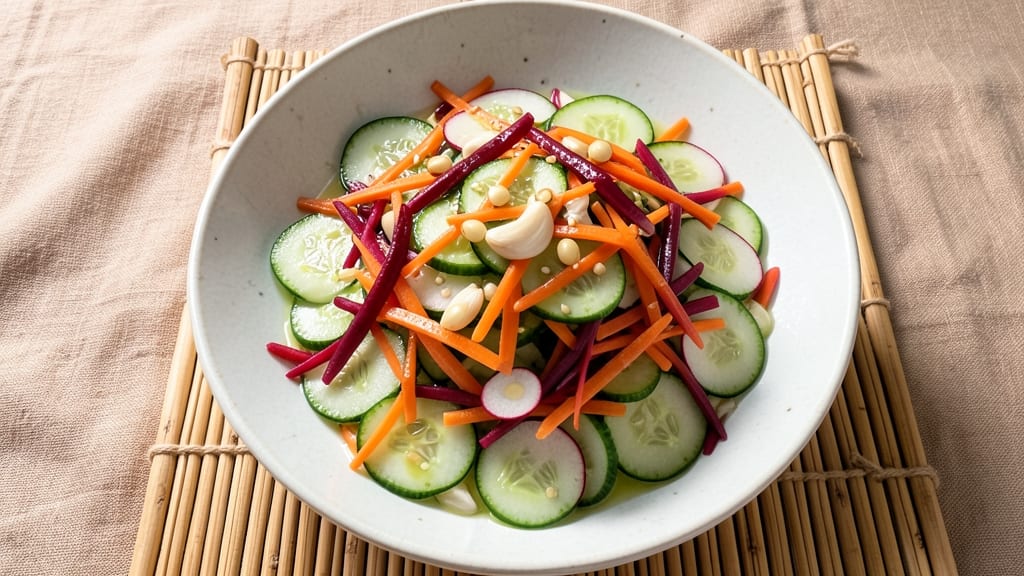
This Asian pickled salad recipe delivers restaurant-quality tangy crunch in just 15 minutes—perfect for quick meals or refreshing sides. The secret lies in balancing crisp vegetables with a bright, umami-packed dressing that transforms simple ingredients into a vibrant dish.
I developed this version after testing multiple techniques, ensuring the flavors meld without overpowering the natural freshness of the veggies.
The process is straightforward: thinly slice vegetables like cucumber, carrot, and radish for maximum texture, then toss them with a simple vinegar-based brine infused with garlic, ginger, and a touch of sesame oil.
For extra depth, I add a splash of fish sauce (or soy sauce for vegetarian) and a pinch of sugar to balance the acidity. The result? A salad that’s crisp, tangy, and packed with layers of flavor—ideal for balancing richer dishes or standing alone.
What sets this recipe apart is its versatility. Serve it chilled as a side to grilled meats, noodles, or rice, or pile it onto sandwiches for a bright, crunchy bite.
The dressing keeps the vegetables fresh for up to 3 days in the fridge, making it a great meal prep option. Garnish with toasted sesame seeds, sliced green onions, or chili flakes for added texture and heat.
This salad is foolproof and adaptable—swap in seasonal vegetables like bell peppers or jicama, or adjust the spice level to taste. Whether you're hosting a dinner or craving a light lunch, this recipe delivers bold flavor with minimal effort. Let’s get started!
Ingredients for asian pickled salad
Quick, vibrant ingredients that transform into restaurant-style pickled salad in minutes.
| Ingredient | Amount | Notes |
|---|---|---|
| English Cucumbers 🥒 | 2 medium | Thinly sliced for texture |
| Carrots 🥕 | 2 medium | Julienned into matchsticks |
| Red Radishes 🥕 | 1 whole | Thinly sliced for crunch |
| White Rice Vinegar 💧 | ½ cup | Mild flavor preferred |
| Sesame Oil 🫒 | 1 tbsp | Toasted for aroma |
| Garlic Cloves 🧄 | 4 cloves | Minced for umami |
| Fresh Ginger 🌿 | 1 tbsp | Grated, not powdered |
| Soy Sauce 🥢 | 1 ½ tbsp | Vegetarian-friendly brand |
| Granulated Sugar 🍯 | 1 tbsp | Balances acidity |
| Toasted Sesame Seeds 🌰 | 1 tbsp | For garnish |
| Green Onions 🧅 | 2 whole | Thinly sliced |
| Red Chili Flakes 🌶️ | ½ tsp | Adjust to taste |
| Salt 🧂 | ½ tsp | Kosher preferred |
The vegetables need to be crisp and fresh—English cucumbers and red radishes work best for that signature crunch. Whole Foods or local markets usually have the freshest selection, but any grocery store will do if you pick firm, unblemished produce. Carrots should be julienned into thin matchsticks for even pickling. For the dressing, Kikkoman soy sauce is my go-to for that authentic umami kick, but any vegetarian-friendly brand works. The ginger and garlic should be fresh—powdered substitutes won’t give the same depth of flavor, even if they’re convenient.
No rice vinegar? Apple cider vinegar or white wine vinegar will work in a pinch, though the flavor will be slightly different. Running short on sesame oil? Light olive oil at half the amount keeps things neutral. For extra heat, swap the chili flakes for freshly minced Thai chilies. The sugar can be swapped for maple syrup or agave if you prefer a less refined sweetener. If you’re prepping ahead, slice all vegetables and store them separately in airtight containers—they’ll keep for up to 2 days before pickling. The dressing can be made up to 3 days ahead and stored in the fridge, too.
This salad stays fresh for 3-4 days in the fridge if stored properly. Keep the vegetables and dressing separate until ready to serve to maintain that perfect crunch. For meal prep, I like to portion the dressing into small containers and keep the veggies in a separate container—just toss and go when you’re ready. The sesame seeds and green onions can be added fresh right before serving to keep them from wilting. If you make extra dressing, it doubles as a great marinade for tofu or grilled meats.
Why You'll Love This Recipe
- No-Chop Needed: Honestly, I just slice the cucumbers and radishes into thick half-moons—no fancy julienne or spiralizer required. The carrots can stay in big batons if you’re lazy (I often am), and the vinegar does all the work of tenderizing them just enough.
- Umami-Packed Punch: That first bite? The crunch of English cucumbers meets the bright, tangy kick of rice vinegar, then the nutty warmth of sesame oil—it’s like a flavor explosion in your mouth. I’ll be real: the red radishes add this sharp, peppery bite that makes it impossible to eat just one serving.
- Potluck Hero: Between us, this salad is my go-to for picnics, BBQs, or even work lunches because it holds up for days. Pack it in a jar, and the flavors get even better as the veggies soak up that vinegar. (Yes, even on a Tuesday night, it’s the star of the spread.)
- Budget Crunch-Saver: I buy carrots and radishes in bulk, and they last forever—this recipe uses scraps I’d otherwise toss. A little sesame oil goes a long way, and the vinegar? You already have it. It’s the kind of dish that makes me feel smart about my grocery bill.
Step-by-step instructions for Asian pickled salad
This quick Asian pickled salad comes together in minutes with no cooking required.
👨🍳 Step 1: Prepare All Vegetables for Even Pickling
Start by thinly slicing the 2 medium English cucumbers into ¼-inch rounds using a mandoline or sharp knife. This even thickness ensures all pieces pickle uniformly. Transfer to a large mixing bowl.
Next, julienne the 2 medium carrots into matchsticks using a peeler or knife. For the 1 whole red radish, slice thinly crosswise to create delicate rounds. Add both to the cucumbers. The varied textures create satisfying crunch in every bite.
I like to work quickly here—vegetables release moisture as they sit, which can dilute the dressing. Keep them in the bowl while you prepare the dressing to maintain freshness.
👨🍳 Step 2: Make the Tangy-Spiced Dressing
In a small bowl, whisk together the 0.5 cup white rice vinegar, 1.5 tablespoons soy sauce, 1 tablespoon granulated sugar, and 0.5 teaspoon salt. The sugar should dissolve completely—stir for about 30 seconds if needed. This mixture creates the perfect balance of sweet, salty, and tangy flavors.
Add the 1 tablespoon toasted sesame oil, 4 minced garlic cloves, and 1 tablespoon freshly grated ginger. The sesame oil adds nutty depth while the garlic and ginger provide aromatic warmth. Give everything another thorough whisk to combine.
Here's the thing—don't worry if the dressing looks slightly cloudy. The ginger and garlic will settle slightly, but that's normal. The key is that all ingredients are fully incorporated before adding to the vegetables.
🥘 Step 3: Combine and Marinate the Salad
Pour the dressing over the prepared vegetables in the mixing bowl. Use your hands to gently toss everything together, making sure the dressing coats each piece evenly. The vegetables should glisten slightly from the dressing.
Add the 0.5 teaspoon red chili flakes and the 2 thinly sliced green onions. The chili adds subtle heat while the green onions contribute freshness. Taste a piece of cucumber—you should notice the tangy, slightly sweet flavor developing immediately.
For best results, let the salad marinate in the refrigerator for at least 30 minutes. This allows the flavors to meld completely. I often make it a few hours ahead—it actually tastes better after the flavors have time to develop.
🍽️ Step 4: Garnish and Serve Immediately
Before serving, sprinkle the 1 tablespoon toasted sesame seeds over the top. The seeds add visual contrast and a nutty crunch that complements the soft pickled vegetables. Give the salad one final toss to distribute the seeds evenly.
This salad keeps well in the refrigerator for up to 5 days, but it's best enjoyed fresh. The texture remains crisp for about 2 days before the vegetables start to soften. Serve as a refreshing side dish or use as a topping for sushi bowls and noodle dishes.
For maximum freshness, I like to serve it slightly chilled but not ice cold. The contrast between the cool vegetables and warm main dishes makes each bite more satisfying.
Pro Tips For Making Asian Pickled Salad
- USE THIN SLICES: The thinner you slice the carrots and radishes—about 1/8-inch—the faster they pickle and the more evenly they absorb flavor. I used to cut them in 1/4-inch chunks, and they’d stay crunchy but bland at the core.
- SALT THE CUCUMBERS FIRST: Toss the English cucumbers with 1/2 teaspoon salt and let them sit for 10 minutes before draining. This pulls out excess water so they don’t turn soggy later—trust me, you’ll notice the difference in texture.
- DON’T SKIP THE ICE BATH: After blanching the carrots (if you’re softening them), plunge them into ice water immediately. I learned this the hard way—overcooked carrots turn mushy and lose their bite, and no amount of vinegar fixes that.
- STORE IN THE FRIDGE TIGHTLY: Pack the pickled veggies into a jar or container and press them down firmly before sealing. Air exposure dulls the flavors, and loose packing means uneven pickling—especially with the radishes, which can get rubbery if left exposed.
Make-ahead tips for asian pickled salad
Prep Ahead Components
Slice all vegetables—cucumbers, carrots, and radishes—and store them in separate airtight containers in the fridge for up to 2 days. This keeps them crisp and ready to marinate whenever you're ready. I like to use quart-sized glass containers with snap-on lids for easy stacking.
The dressing can also be made ahead and stored separately for 3 days, so you can assemble the salad in minutes when needed. 🥒🥕
Marinating Time
For best flavor development, let the salad marinate in the fridge for at least 30 minutes before serving. I often make it 2-3 hours ahead—this allows the tangy dressing to fully infuse the vegetables, creating that perfect balance of crispness and flavor.
If you're short on time, even 15 minutes of marinating will give you a decent result, though the flavors won't be as deep. 🕒
Storage Solutions
Store the fully assembled salad in an airtight container for up to 5 days, but keep in mind the texture will start to soften after 2 days. To maintain freshness, I recommend keeping the vegetables and dressing separate until ready to serve.
Use glass containers with tight-sealing lids to prevent moisture loss and keep the crunch intact. For meal prep, portion the dressing into small containers and store it separately. 💧
Garnish Fresh
Add the toasted sesame seeds and sliced green onions right before serving to keep them from wilting. I like to sprinkle them over the top and give the salad a quick toss to distribute them evenly.
This adds a fresh, aromatic finish that contrasts beautifully with the tangy pickled vegetables. If you're prepping ahead, store these garnishes separately and add them just before eating. 🌱
Reusing Dressing
The dressing makes extra—about 1.5 cups total—so don't be afraid to make a double batch. Store any leftover dressing in a small jar in the fridge for up to 1 week. It works as a marinade for tofu, grilled chicken, or even a quick vinaigrette for other salads.
I've used it to pickle quick-pickled onions or even as a dipping sauce for spring rolls. 🍶
Freezing Tips
While this salad isn't ideal for freezing due to texture changes, you can freeze the dressing separately for up to 3 months. Thaw it in the fridge overnight before using.
For the vegetables, blanch them briefly in boiling water for 30 seconds before freezing in a single layer on a tray, then transfer to a freezer bag. Once thawed, they won't have the same crispness but can still be used in cooked dishes like stir-fries. ❄️
Nutrition facts
Frequently asked questions
Can I make this salad without rice vinegar?
For a similar tangy flavor, try apple cider vinegar or white wine vinegar—they'll give a slightly different but still delicious result. If you prefer something milder, lemon juice works in a pinch (use ⅓ cup for the same 0.5 cup measurement). The key is balancing acidity with the sweetness from sugar.
How do I keep the vegetables extra crisp?
For maximum crunch, slice vegetables just before assembling and use a mandoline for even thickness. Add 1 teaspoon of cornstarch to the dressing to help firm up the veggies slightly. Also, store the salad in an airtight container with a paper towel pressed against the vegetables to absorb excess moisture.
Can I make this vegetarian or vegan?
Yes! Swap the soy sauce for vegan tamari or coconut aminos to keep it vegetarian. For vegan, omit the fish sauce entirely and use 1 tablespoon more sugar to balance the acidity. The salad will still pack bold umami flavors from the garlic, ginger, and sesame oil.
What vegetables can I substitute if I don't have cucumbers or radishes?
Great alternatives include jicama (for sweet crunch), bell peppers (thinly sliced), or green beans (blanched briefly for crispness). For a more traditional Asian touch, try daikon radish or bok choy (cut into thin strips). Just adjust slicing thickness to ensure even pickling.
Why does my salad taste too sour?
Too much acidity usually means the vinegar wasn't balanced properly. Add ½ teaspoon more sugar or 1 teaspoon soy sauce to round out the flavors. If it's still too strong, mix in 1 tablespoon of water to dilute slightly. Always taste as you go—this salad should be tangy but not overpowering.