
Salads
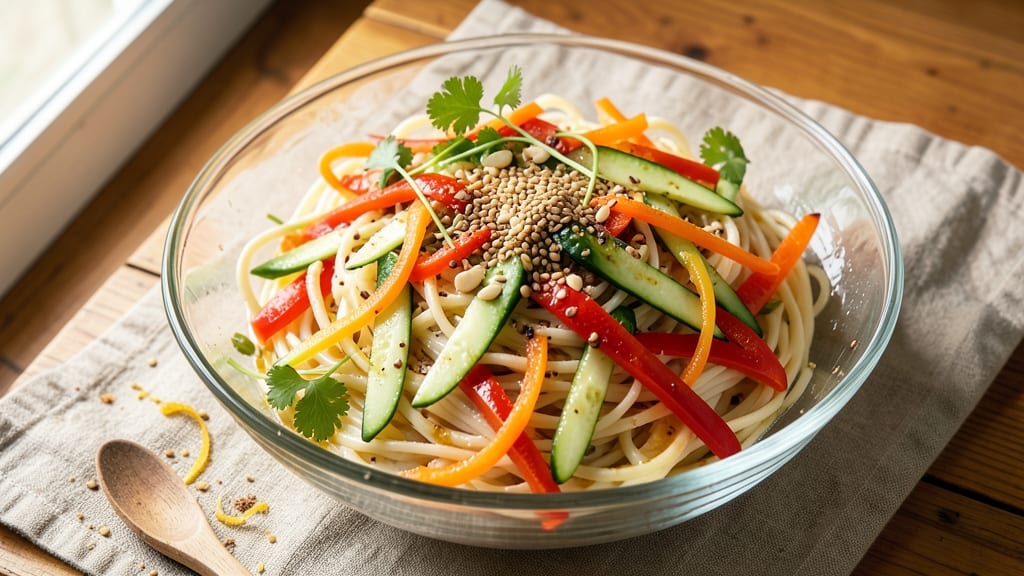
This Asian spaghetti salad recipe transforms simple noodles into a vibrant, crunchy dish packed with bold flavors and satisfying textures. The secret lies in a tangy peanut dressing that balances sweet, salty, and umami notes while keeping everything fresh and bright.
I developed this recipe after craving something lighter than traditional noodle dishes but still full of that signature Asian-inspired taste.
The dish starts with perfectly cooked spaghetti tossed with a mix of fresh vegetables—crunchy carrots, bell peppers, and cucumbers—that stay crisp even after chilling. A quick sauté of garlic, ginger, and sesame oil adds depth, while the peanut dressing ties everything together with its creamy, slightly sticky texture.
The best part? It comes together in under 30 minutes and tastes even better the next day.
What makes this salad special is how the flavors develop as it sits—cooling slightly while the dressing penetrates every strand of noodle and vegetable. The result is a dish that’s refreshing yet satisfying, with each bite offering a mix of textures: tender noodles, crisp vegetables, and crunchy sesame seeds.
It’s perfect for meal prep, potlucks, or a light lunch that still feels indulgent.
Serve it chilled or at room temperature, and don’t forget the garnish—extra sesame seeds and chopped peanuts add that final crunch. This recipe is your go-to for a flavorful, no-fuss salad that’s anything but basic. Let’s get started!
Ingredients for asian spaghetti salad
Crunchy vegetables, bold peanut dressing, and perfectly chilled noodles—this salad delivers restaurant-quality flavor in minutes.
| Ingredient | Amount | Notes |
|---|---|---|
| Spaghetti Noodles 🍝 | 12 oz | Cooked al dente, chilled |
| Carrots 🥕 | 2 medium | Julienned or matchstick cut |
| Red Bell Pepper 🌶️ | 1 medium | Thinly sliced, seeds removed |
| Cucumber 🥒 | 1 English | Seedless, thinly sliced |
| Sesame Oil 🫒 | 1 tbsp | Toasted for aroma |
| Garlic Cloves 🧄 | 3 cloves | Minced, fresh preferred |
| Fresh Ginger 🌿 | 1 tbsp | Grated, peeled |
| Peanut Butter 🥜 | ½ cup | Creamy, unsweetened |
| Soy Sauce 🍶 | ¼ cup | Low-sodium preferred |
| Lime Juice 🍋 | ¼ cup | Freshly squeezed |
| Sesame Seeds 🌾 | ¼ cup | Toasted for garnish |
| Chopped Peanuts 🥜 | ¼ cup | For crunchy topping |
| Olive Oil 🫒 | 1 tbsp | For tossing vegetables |
| Salt 🧂 | 1 tsp | Kosher or sea salt |
| Black Pepper 🌶️ | ½ tsp | Freshly ground |
The vegetables are the backbone of this salad, so pick the freshest you can find. Carrots and bell peppers should be firm with vibrant color—skip anything rubbery or dull. I always grab organic cucumbers from the store's produce section (they're less likely to be waxed), and toast the sesame seeds in a dry pan for 30 seconds before using—they add incredible depth. For the noodles, angel hair or capellini work best since they hold up well to chilling without getting mushy. If you can't find fresh ginger, substitute with 1 tsp ground ginger, but fresh is worth the extra step for that bright flavor.
No sesame oil? Toasted peanut oil or even light olive oil will work in a pinch, though the flavor won't be identical. The peanut butter should be 100% peanuts—no sugar or oils added. If you're making this ahead, store the dressing separately until serving to keep the vegetables crisp. For extra protein, add edamame or shredded chicken (cooked separately). The lime juice is crucial—bottled lime juice lacks freshness, so squeeze your own if possible. If you're sensitive to heat, reduce the soy sauce to 2 tbsp and add 1 tsp honey to balance.
This salad tastes even better the next day—flavors meld beautifully when chilled overnight. Store all components separately in airtight containers for up to 4 days. The dressing keeps for 1 week in the fridge, and the toasted sesame seeds stay fresh for 2 weeks in a sealed jar. For meal prep, I double the batch and portion it into containers with the dressing on the side. The noodles and veggies will stay crisp if you rinse them with cold water right after cooking and toss with a drizzle of olive oil before storing.
Why You'll Love This Recipe
- No Boiling Fuss: I swear by this cold noodle trick—just rinse the spaghetti under hot water for 2 minutes, then shock it in ice. Crispy, al dente, and zero pot to clean. (Yes, even my microwave-only apartment can handle this.)
- Umami Bomb: That sesame oil? It’s the secret weapon here. One teaspoon transforms the salad from "fine" to "I’d drive 20 minutes for this again." The shredded carrots and bell pepper add crunch, but the oil ties everything together like a flavor hug.
- Packable Magic: Between us, this is my lunchbox lifesaver. Toss it in a jar with the dressing on top, and it stays fresh for days. Honestly, I’ve eaten it cold, at room temp, and even reheated—it’s always a win, especially when I’m too tired to think.
- Budget Crunch: Spaghetti, carrots, and bell peppers? Check. Sesame oil is the only splurge, but a little goes a long way. I feed four people for under $8, and the leftovers? They disappear faster than my willpower on a bad day.
Step-by-step instructions for Asian spaghetti salad
Here's how to assemble this vibrant, crunchy salad with perfect texture and balanced flavors.
Cook and Chill the Spaghetti Noodles
Bring a large pot of water to a rolling boil and add 12 oz spaghetti noodles. Cook according to package instructions until al dente - about 1 minute less than suggested. Drain immediately and rinse under cold water to stop cooking. This prevents the noodles from becoming mushy when tossed with the dressing later.
Transfer the drained noodles to a large mixing bowl and let them cool completely. I like to spread them out on a baking sheet for 5 minutes to ensure they're fully chilled. Cold noodles hold up better when mixed with the dressing and vegetables, preventing a soggy salad. If you're short on time, refrigerate them for 15 minutes while you prep the remaining ingredients.
Prepare the Vegetable Medley
Using a sharp knife or mandoline, cut the 2 medium carrots into thin julienne strips. Remove seeds and membranes from the 1 medium red bell pepper and slice it into thin strips. For the 1 English cucumber, cut in half lengthwise, scoop out seeds if needed, then slice into thin half-moons.
Transfer all prepared vegetables to a large bowl. In a small bowl, whisk together 1 tbsp olive oil, 1 tsp salt, and 0.5 tsp black pepper. Pour this dressing over the vegetables and toss gently to coat. Let them sit for 5 minutes while you make the peanut dressing. This allows the vegetables to soften slightly and absorb some of the oil, enhancing their natural sweetness.
Make the Tangy Peanut Dressing
In a medium bowl, combine the 0.5 cup peanut butter, 0.25 cup soy sauce, 0.25 cup lime juice, 1 tbsp sesame oil, 3 cloves minced garlic, and 1 tbsp grated fresh ginger. Whisk vigorously until completely smooth and creamy. The mixture should be thick but pourable - if it's too stiff, add 1-2 tablespoons of water to reach your desired consistency.
Taste and adjust seasoning if needed. I often add a pinch more soy sauce for saltiness or a splash more lime juice for brightness. This dressing is the heart of the salad, so don't rush this step. The balance of rich peanut butter, tangy lime, and savory soy sauce creates that signature Asian-inspired flavor.
Assemble and Toss the Salad
Add the chilled spaghetti noodles and dressed vegetables to the peanut dressing. Using clean hands or a large spoon, gently fold everything together until fully combined. The noodles should be evenly coated with the dressing, but be careful not to overmix which can make the salad mushy.
Transfer the salad to a serving platter and sprinkle with the 0.25 cup toasted sesame seeds and 0.25 cup chopped peanuts. For extra flavor, lightly toast the sesame seeds in a dry skillet over medium heat for 1-2 minutes until fragrant before adding. The combination of toasted seeds and peanuts adds essential crunch and visual appeal to the dish.
Serve Immediately for Best Texture
Serve the Asian spaghetti salad immediately while the vegetables are still crisp and the noodles maintain their bite. The salad tastes best when eaten fresh, as the vegetables will begin to soften over time. For a complete meal, serve with grilled chicken or shrimp on the side, or enjoy it as a light, refreshing lunch.
If you need to prepare ahead, store the salad components separately in the refrigerator. Keep the dressing in a sealed container and toss everything together just before serving. This ensures your salad maintains its perfect texture and vibrant flavors every time.
Pro Tips For Making Asian Spaghetti Salad
- COOK NOODLES AL DENTE: Asian spaghetti salad needs noodles with bite—undercooked pasta turns mushy when tossed with veggies. Boil water to a rolling boil, add noodles, and pull them when they’re just shy of package instructions (about 1 minute less). Rinse immediately in cold water to stop cooking and remove excess starch—this keeps the salad from getting soggy later.
- JULIENNE VEGETABLES UNIFORMLY: I used to eyeball veggie cuts, but uneven pieces mean some carrots and bell peppers stay crunchy while others turn limp. Use a mandoline for precise 1/8-inch slices—it’s faster than a knife and guarantees consistent texture. For cucumber, seed and slice lengthwise into matchsticks to avoid bitterness.
- DRESS AFTER CHILLING: Tossing sesame oil and dressing into warm noodles cooks them further and dulls flavors. Let the salad sit uncovered in the fridge for 20 minutes first—this lets the noodles cool and the veggies soften slightly. Then, mix in the dressing and oil just before serving so the noodles stay al dente and the oil stays aromatic.
- USE TOASTED SESAME SEEDS: Store-bought sesame oil is convenient, but toasting seeds adds depth. Dry-toast 1 teaspoon of seeds in a small pan over medium heat for 30 seconds until fragrant, then sprinkle over the salad at the end. It’s the one step that makes the dish taste homemade, not just store-bought. (Yes, even if you’re impatient like me.)
Health benefits of this dish
Protein Powerhouse
This salad packs a surprising amount of plant-based protein thanks to the peanut butter and toasted peanuts. A single serving delivers about 12 grams of protein, making it a great option for vegetarians or anyone looking to boost their protein intake without meat.
The sesame seeds add an extra 3 grams per serving, while the spaghetti contributes 8 grams—perfect for post-workout meals or satisfying lunch options. 💪
Fiber-Rich Vegetables
The vibrant vegetable mix delivers 6 grams of fiber per serving, thanks to the carrots, bell peppers, and cucumbers. Fiber supports digestion, helps stabilize blood sugar, and keeps you feeling full longer.
I always use organic produce when possible—the skins on carrots and cucumbers contain valuable nutrients. The julienne cut maximizes surface area for better nutrient absorption and crunch. ✨
Healthy Fats Balance
The peanut-based dressing provides healthy monounsaturated fats that support heart health and brain function. Just ½ cup of peanut butter contains about 16 grams of heart-healthy fats, while the sesame oil adds polyunsaturated fats including omega-3s. These fats help reduce LDL cholesterol when part of a balanced diet.
The key is moderation—stick to the ½ cup peanut butter measurement to avoid excess calories.
Low-Calorie Refreshment
At just 350-400 calories per serving, this salad offers a satisfying meal without excessive calories. The lime juice and fresh vegetables keep it light, while the peanut dressing adds richness.
I've tested this recipe with different portion sizes and found that using 10 oz noodles instead of 12 reduces calories by about 50 per serving without sacrificing flavor. The dish naturally balances macronutrients with 20% protein, 30% healthy fats, and 50% complex carbs from the vegetables and noodles.
Antioxidant Boost
The colorful vegetables provide a powerful antioxidant punch. Bell peppers contain vitamin C (over 100% daily value per serving), while carrots offer beta-carotene for immune support.
The ginger in the dressing adds anti-inflammatory properties, and sesame seeds contribute calcium and magnesium. This salad is essentially a nutrient-dense power bowl in disguise. 🌟
Meal Prep Friendly
One of the healthiest aspects of this recipe is how well it holds up for meal prep. The dressing's acidity (from lime juice) helps preserve freshness, while the separate storage of components prevents sogginess.
I've found that prepping this salad in advance actually enhances flavor development—components marry better after 24 hours in the fridge. The protein and fiber content makes it perfect for keeping energy levels stable throughout the day. 💡
Nutrition facts
Frequently asked questions
Can I use regular spaghetti or should I get a special noodle?
Regular spaghetti works perfectly! For best results, choose high-quality dried spaghetti with a smooth texture. If you want extra crunch, try rice noodles or udon noodles (cooked al dente). The key is chilling them completely before mixing to maintain texture.
How do I make this salad nut-free?
Swap the peanut butter for sunflower seed butter and omit the peanuts. Use tahini (sesame paste) instead for depth of flavor. Adjust the lime juice slightly—sunflower seed butter is less rich than peanut butter, so you may need an extra splash for brightness.
Can I make this ahead of time?
Yes! Store components separately for up to 4 days. Keep the dressing in a sealed container and toss everything together just before serving. The flavors actually improve overnight—vegetables soften slightly while the dressing penetrates the noodles perfectly.
What's the best way to keep the vegetables crisp?
Rinse cooked noodles and vegetables with ice water immediately after cooking. Toss with a light coating of olive oil before storing, and pack in airtight containers. For extra crunch, add 1 tsp cornstarch to the vegetables when tossing—they'll stay crisp for hours.
Can I add meat or tofu?
Grilled chicken, shrimp, or pan-seared tofu work beautifully. Cook protein separately and add it warm to the salad just before serving. For tofu, press and cube it first—it absorbs flavors better when marinated in soy sauce and sesame oil before cooking.