Salads
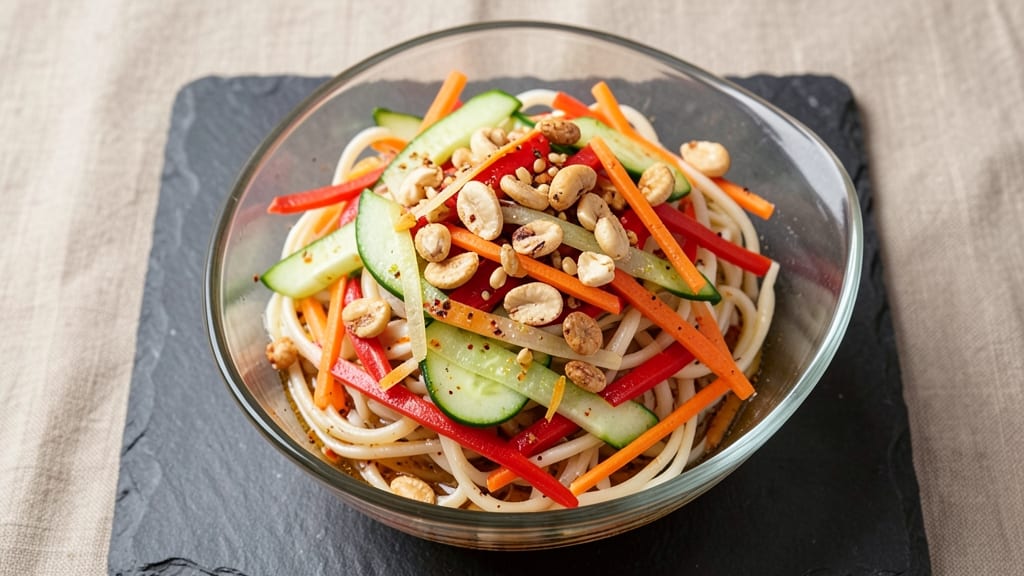
This Asian style pasta salad recipe transforms a classic dish into a vibrant fusion of textures and flavors that's perfect for summer picnics or office lunches. The secret lies in the sesame-ginger vinaigrette—where toasted sesame oil meets tangy rice vinegar and fresh ginger—for a dressing that's both aromatic and balanced.
Crispy peanuts add a satisfying crunch, while quick-pickled vegetables bring brightness to every bite, making this salad anything but boring.
The beauty of this recipe is its versatility—you can keep it vegetarian with tofu or grilled chicken for added protein. I use cold pasta (like spaghetti or soba noodles) to prevent sogginess, tossed with a mix of shredded carrots, cucumber, and bell peppers for freshness.
The dressing clings to everything perfectly, creating a harmonious blend of umami, sweetness, and tang that keeps flavors exciting.
What you'll end up with is a bright, crunchy, and deeply flavorful pasta salad that's far from your typical mayo-heavy version. The sesame-ginger vinaigrette adds depth without overpowering, while the peanuts and pickled veggies deliver texture and contrast.
It's the kind of dish that feels special but comes together in under 30 minutes—ideal for meal prep or last-minute gatherings.
Serve it chilled for maximum crunch or at room temperature for a more restaurant-style experience. Pair with grilled meats, spring rolls, or even as a side for takeout-style meals. Here's how to make it—simple steps for a restaurant-worthy result.
Ingredients for asian style pasta salad
Eight ingredients for the salad base, plus seven for the aromatic vinaigrette—simple but packed with flavor.
| Ingredient | Amount | Notes |
|---|---|---|
| Spaghetti or Soba Noodles 🍝 | 8 oz | Cold, uncooked for texture |
| Red Bell Pepper 🌶️ | 1 whole | Thinly sliced, any color |
| Carrots 🥕 | 1 medium | Julienned or matchstick cut |
| Cucumber 🥒 | 1 medium | Sliced into thin half-moons |
| Crispy Peanuts 🥜 | ½ cup | Toasted, unsalted preferred |
| Fresh Ginger 🌿 | 1 inch | Peeled, grated finely |
| Toasted Sesame Oil 🫒 | 2 tbsp | For aroma and richness |
| Rice Vinegar 💧 | ⅓ cup | Seasoned preferred |
| Sesame Seeds 🌾 | 1 tbsp | Toasted lightly |
| Soy Sauce 🍶 | 2 tbsp | Low-sodium preferred |
| Honey 🍯 | 1 tbsp | Or maple syrup for vegan |
| Sesame-Ginger Vinaigrette 🍶 | ½ cup | Homemade (see notes) |
| Lime Juice 🍋 | 1 tbsp | Freshly squeezed |
| Salt 🧂 | ½ tsp | Diamond Crystal preferred |
| Black Pepper 🌶️ | ¼ tsp | Freshly cracked |
The peanuts and veggies are non-negotiable for texture. Trader Joe's has the best crispy peanuts in bulk, but any unsalted roasted peanuts work—just toast them yourself if they're soft. For the bell peppers, yellow or red add natural sweetness, while green keeps it classic. Carrots should be fresh, firm, and vibrant orange—no rubbery ones. The cucumber? English cucumbers stay crunchier longer than seedless varieties. If you can't find soba noodles, rice noodles are a great swap—they hold up to the dressing beautifully.
No sesame oil? Toasted peanut oil works in a pinch, though it lacks that nutty depth. Short on ginger? Substitute 1 tsp ground ginger plus 1/2 tsp cinnamon for warmth. The rice vinegar matters—seasoned adds subtle umami, while plain needs a pinch of sugar. For the honey, agave or maple syrup keeps it vegan. The dressing ratio is key: 1 part honey to 2 parts vinegar balances sweet and tang. Make extra—it's perfect on grilled chicken or spring rolls too.
Store the dressing separately in a small jar with a tight lid—keeps for 1 week in the fridge. The peanuts? Keep them in an airtight container at room temp for 2 weeks. The veggies and noodles stay fresh 3-4 days if sealed in containers. Pro tip: Toss the noodles with a dry paper towel after draining to cut down on sogginess. This salad actually tastes better the next day as flavors meld.
Why You'll Love This Recipe
- No-Cook Crunch Prep: I swear by the "toss-and-go" method here—just slice the bell pepper, shred the carrots, and dice the cucumber while the noodles cook. No chopping board acrobatics, just straightforward knife work that takes less than 10 minutes. The peanuts? Buy them already roasted to save another five.
- Umami-Packed Bite: That combo of toasted peanuts, sesame oil, and a splash of soy sauce gives it a depth you won’t find in your average pasta salad. The crunch from the peanuts and cucumber keeps every bite interesting—no soggy, sad leftovers here.
- Lunchbox Superstar: Between us, this is my go-to for packed lunches or potlucks. It holds up for days in the fridge (yes, even the noodles stay al dente), and I’ve served it at BBQs, office parties, and lazy Sunday brunches. No one ever leaves a bowl unfinished.
- Budget Meal Magic: Soba noodles stretch further than you’d think, and the veggies add bulk without breaking the bank. A single bag of peanuts lasts through three batches, and the dressing? Just a few cents per serving. It’s the kind of dish that makes grocery money go further without sacrificing flavor.
Step-by-step instructions for Asian style pasta salad
Here's how to create a vibrant, crunchy Asian-inspired pasta salad with perfect texture balance.
Prepare the Fresh Vegetable Medley
Start by cutting the ingredients into uniform pieces for even cooking and presentation. Thinly slice the whole red bell pepper into ¼-inch strips, removing seeds and membranes first. For the medium carrots, use a julienne peeler or sharp knife to create matchstick-thin cuts—aim for consistency so they cook evenly. Slice the medium cucumber into thin half-moons, about ⅛-inch thick, and immediately place them in a colander to drain excess moisture for 5 minutes. This step prevents a watery salad later.
While the vegetables drain, finely grate the 1-inch piece of fresh ginger using a microplane or fine grater. You'll need about 1 tablespoon of grated ginger for the vinaigrette. Set it aside with the vegetables—keeping everything prepped ensures a smooth assembly process. The fresh ginger adds bright, zesty depth that balances the nutty peanuts perfectly.
Cook and Chill the Noodles
Bring a large pot of water to a rolling boil and add the 8 oz of spaghetti or soba noodles. Cook according to package instructions until al dente—about 1 minute less than suggested. This ensures the noodles hold their bite even after chilling. Drain immediately and rinse under cold water for 30 seconds to stop the cooking process and remove excess starch.
Transfer the drained noodles to a large mixing bowl and let them cool completely at room temperature for 10 minutes. This chilling step is crucial—it prevents the salad from becoming soggy when combined with the vinaigrette. While the noodles cool, lightly toast the 1 tablespoon of sesame seeds in a dry skillet over medium heat for 1-2 minutes until fragrant. Set aside to cool.
Assemble the Salad Components
Add the drained vegetables, the 0.5 cup of crispy peanuts, and the toasted sesame seeds to the cooled noodles. Gently toss everything together with a silicone spatula, being careful not to break the vegetables or peanuts. The texture contrast between the crunchy peanuts, crisp vegetables, and tender noodles is what makes this salad exceptional.
In a small bowl, whisk together the 0.5 cup of sesame-ginger vinaigrette, 2 tablespoons of soy sauce, 1 tablespoon of honey, and 1 tablespoon of lime juice. The vinaigrette should be smooth and well-emulsified. Pour this dressing over the noodle mixture and toss gently but thoroughly to coat each component evenly. Let the salad sit for 5 minutes to allow the flavors to meld together.
Season and Serve
Taste the salad and adjust seasoning with the 0.5 teaspoon of salt and 0.25 teaspoon of black pepper. The dressing should be perfectly balanced—tangy from the rice vinegar, sweet from the honey, and nutty from the sesame oil. If needed, add a splash of water or more rice vinegar to reach your desired consistency. The salad should be moist but not dripping.
For the final touch, drizzle the 2 tablespoons of toasted sesame oil over the top just before serving. This adds an aromatic richness that complements the other flavors. Serve immediately while the vegetables are still crisp and the noodles maintain their texture. This Asian-inspired pasta salad keeps well in the refrigerator for up to 2 days, making it perfect for meal prep.
Pro Tips For Making Asian Style Pasta Salad
- Rinse Soba First: Soba noodles are packed with wheat starch, which makes them gummy if cooked in plain water. Toss them in cold water for 30 seconds after cooking—this washes off excess starch and keeps them light and separate. I learned this the hard way when my salad turned into a sticky mess.
- Shave Carrots Thin: Skip the dice or julienne—use a peeler to create long, paper-thin strips. They cook faster, stay crunchier, and blend better with the dressing. My grandmother swore by this, and she was right: they disappear into the salad without overpowering it.
- Dressing Last, Not First: Tossing noodles in dressing too early turns them mushy. Instead, mix the dressing with the veggies first, then fold in the drained noodles right before serving. This keeps the texture crisp and the flavors bright—no sad, soggy pasta here.
- Toast Peanuts Fresh: Store-bought peanuts lose their crunch fast. Toss them in a dry pan over medium heat for 2-3 minutes until fragrant and golden. They’ll add a better texture and richer flavor than the ones sitting in your pantry for months. (Yes, even if you’re impatient like me.)
Troubleshooting great asian style pasta salad
Dressing Too Thin?
If your vinaigrette feels too watery, let it sit for 10 minutes before using—this allows the sesame oil to fully emulsify. For immediate thickening, whisk in 1 teaspoon of cornstarch mixed with 1 tablespoon water until smooth.
I've had this happen when using extra rice vinegar; just remember the ratio: 1 part honey to 2 parts vinegar keeps it balanced. 💧
Peanuts Too Soft?
Store-bought peanuts lose their crunch fast. For maximum crispiness, toast your own: spread ½ cup unsalted peanuts on a baking sheet and bake at 350°F for 8-10 minutes, stirring halfway.
Let them cool completely before adding to the salad. Trader Joe's brand stays crunchy longest when stored in an airtight container at room temperature. 🥜
Vegetables Getting Soggy?
Prevent limp veggies by draining cucumbers and bell peppers thoroughly before adding to the salad. For extra insurance, toss them with ½ teaspoon of cornstarch before mixing with noodles—this creates a light barrier against moisture. I also recommend cutting carrots last minute if possible, as they soften fastest. 🥕
Noodles Too Starchy?
Rinsing noodles under cold water removes excess starch, but if they still feel gummy, try this trick: after draining, toss them with 1 tablespoon of olive oil before chilling.
This creates a protective layer that prevents sticking. For soba noodles specifically, I recommend 1 minute less cook time than package instructions—they're naturally firmer. 🍜
Flavors Muted?
Let the salad rest for 15-20 minutes after tossing to allow flavors to develop fully. If still lacking depth, add ½ teaspoon of fish sauce (like Red Boat) or a pinch of white pepper for umami complexity.
The sesame-ginger vinaigrette needs time to penetrate the noodles—patience is key here! ✨
Peanut Allergies?
Swap peanuts for toasted cashews or crushed wasabi peas for a similar crunch. For nut-free options, use crispy fried shallots or toasted pumpkin seeds. Just toast them in the same way—350°F for 5-7 minutes—until golden and fragrant. The texture contrast remains essential for this salad's success. 🌱
Nutrition facts
Frequently asked questions
Can I use regular pasta instead of soba noodles? This recipe works beautifully with any pasta shape—spaghetti, linguine, or even penne. For a more authentic texture, opt for rice noodles or udon noodles (cooked al dente). Just
What’s the best way to store leftovers?
Store the salad in an airtight container with the dressing poured separately. Keep it refrigerated for up to 2 days. The vegetables stay crispest when stored this way, and the flavors meld beautifully overnight. Re-toss with extra dressing before serving to revive the texture.
How can I make this dish gluten-free?
Swap regular pasta for rice noodles or gluten-free soba noodles (made from mung beans). Check your soy sauce for gluten—use tamari instead if needed. All other ingredients are naturally gluten-free. The flavor profile remains rich and balanced!
Can I add protein to this salad?
Yes! Grilled chicken breast, shrimp, or tofu work perfectly. For chicken, marinate in 1 tbsp soy sauce + 1 tsp honey before grilling. For tofu, press and pan-fry until crispy. Add protein just before serving to keep it warm and tender.
Why does my dressing separate?
This happens when the sesame oil and vinegar aren’t fully emulsified. Whisk vigorously for 30 seconds or add 1 tsp cornstarch mixed with 1 tbsp water to thicken. For extra stability, chill the dressing for 10 minutes before using. The key is patience—let it sit and blend naturally!