
Salads
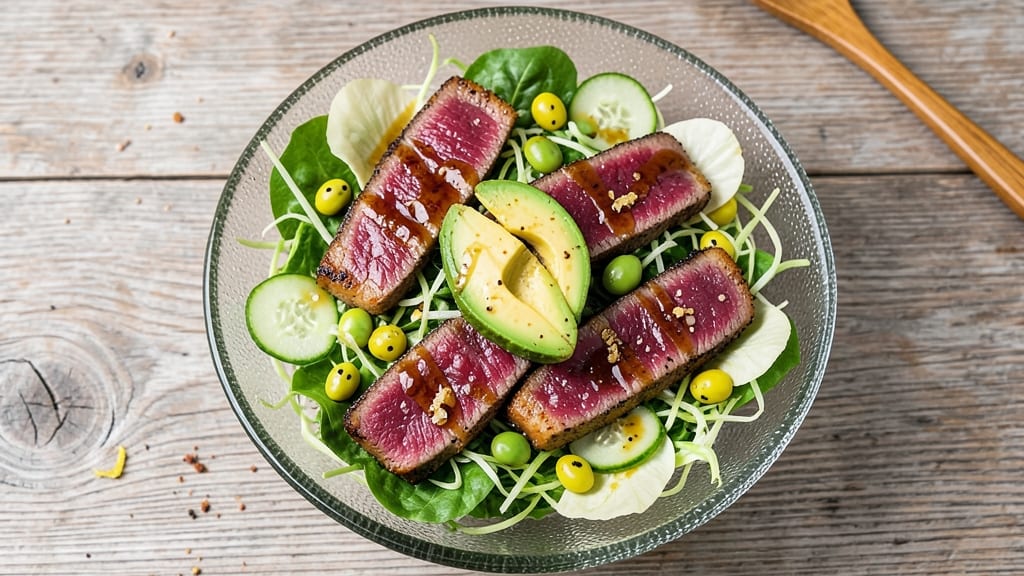
This Asian tuna steak salad recipe delivers restaurant-quality flavor with crispy-seared tuna atop vibrant greens and a bold sesame-ginger dressing. The secret lies in perfectly searing the tuna—just a few minutes per side—for that coveted crispy crust while keeping the inside tender.
I developed this after years of testing, and it’s now my go-to for quick yet impressive lunches.
The salad base balances freshness with texture: crisp butter lettuce, shredded cabbage, and crunchy cucumber provide the foundation, while edamame and avocado add heartiness. The dressing—a tangy mix of soy sauce, ginger, sesame oil, and a touch of honey—ties everything together with umami depth.
Garnishes like toasted sesame seeds and sliced scallions elevate both flavor and presentation.
What sets this dish apart is the crispy tuna, achieved through high-heat searing, and the harmonious blend of textures—creamy avocado, crunchy greens, and tender tuna. It’s a complete meal in one bowl, packed with protein and freshness, yet ready in under 20 minutes.
Perfect for weeknight dinners or meal prep, this salad proves healthy eating can be exciting.
Serve immediately for the best texture contrast, or assemble ahead and store components separately. Pair with steamed rice or miso soup for a full Asian-inspired feast. The key is using sushi-grade tuna if serving raw, or fully searing for a more forgiving option. Let’s make this salad your new favorite!
Ingredients for asian tuna steak salad
Fresh greens, crispy tuna, and a zesty sesame-ginger dressing make this salad a protein-packed power bowl.
| Ingredient | Amount | Notes |
|---|---|---|
| Sushi-Grade Tuna Steak 🐟 | 1 lb | Cut into 4 equal steaks, 1-inch thick |
| Butter Lettuce 🥬 | 4 whole | Outer leaves removed, crisp |
| Green Cabbage 🥬 | 2 cups | Shredded, fine cut |
| Persian Cucumber 🥒 | 1 whole | Sliced into half-moons |
| Shelled Edamame 🌱 | 1 cup | Lightly steamed, cooled |
| Ripe Avocado 🥑 | 1 whole | Pitted, sliced into wedges |
| Toasted Sesame Seeds 🌾 | 1 tbsp | Plus extra for garnish |
| Green Onions 🧅 | 3 whole | Thinly sliced, white parts trimmed |
| Sesame Oil 🫒 | 1 tbsp | For high-heat searing |
| Low-Sodium Soy Sauce 🍶 | 2 tbsp | For dressing |
| Fresh Ginger 🧄 | 1 tbsp | Grated, fine |
| Honey 🍯 | 1 tsp | Wildflower preferred |
| Vegetable Oil 🫒 | 2 tbsp | High smoke point |
| Salt 🧂 | 1 tsp | Kosher or sea salt |
| Black Pepper 🌶️ | ½ tsp | Freshly cracked |
The tuna is non-negotiable—sushi-grade ensures safety when searing. Local seafood markets often have the freshest cuts, but high-end grocery stores like Whole Foods or Trader Joe's carry reliable frozen sushi-grade tuna. Look for bright red color with no fishy odor. The cabbage should be crisp and white, not yellowing at the core. For the avocado, Hass variety is ideal—give it a gentle squeeze, it should yield slightly but not feel mushy. The ginger is best fresh; Penzeys or bulk bins at Asian markets have the most aromatic roots.
No sesame oil? Toasted sesame seeds plus neutral oil works in a pinch, though the flavor won't be identical. Subbing avocado for mashed sweet potato keeps the creaminess (just add a squeeze of lemon). The soy sauce can be swapped for tamari if gluten-free is needed. For extra crunch, add thinly sliced jicama or mandarin orange segments. The edamame can be shelled ahead and stored in the freezer—just thaw before using. If you can't find sushi-grade tuna, fully sear the steaks to 145°F internal temp for food safety.
Store the dressing separately in a sealed container for up to 5 days—it only needs a quick whisk before using. The tuna should be cooked fresh, but you can prep all other salad components 1 day ahead and keep them refrigerated in airtight containers. The avocado will brown, so toss it with a squeeze of lemon juice if prepping ahead. For meal prep, assemble the salad just before eating to maintain that crispy texture contrast. The sesame seeds keep for 6 months in a cool, dark place, so buy extra for future salads.
Why You'll Love This Recipe
- No-Fuss Assembly: This salad takes five minutes—just slice the tuna thin, toss in pre-shucked edamame, and pile on the lettuce. Honestly, the hardest part is deciding whether to eat it immediately or wait for guests.
- Umami Bomb: That first bite of seared tuna over crisp cabbage? The sesame oil and edamame bring the richness, while the Persian cucumber keeps it light. It’s the kind of flavor that makes you pause mid-chew.
- Lunchbox Hero: Pack it in mason jars or takeout containers—it holds up for days. I’ve sent this to work, packed for hikes, even fed it to my picky teen. (Yes, even on a Tuesday night.)
- Budget Luxury: You’re paying for the tuna, but the rest? Cabbage, edamame, lettuce—all cheap staples that stretch this into three meals without breaking the bank. Fancy enough for company, practical for you.
Step-by-step instructions for crispy-searred Asian tuna steak salad
Here's how to transform fresh tuna into restaurant-quality sear with a vibrant sesame-ginger salad base.
Prepare the Tuna Steaks for Perfect Searing
Pat the 1 lb sushi-grade tuna steak completely dry with paper towels—this is critical for that crispy crust. Using a sharp chef's knife, cut it into 4 equal steaks, 1-inch thick, working quickly to minimize handling. Season each steak generously with ½ tsp salt and ¼ tsp black pepper on both sides, pressing the seasoning into the flesh.
Let the steaks sit at room temperature for 15 minutes before cooking. This allows for even heat distribution and prevents overcooking. Meanwhile, prepare your searing station by heating 2 tbsp vegetable oil in a nonstick skillet over medium-high heat until it shimmers—this ensures proper oil temperature for that signature crust.
Sear the Tuna to Crispy Perfection
Add the tuna steaks to the hot skillet and cook for 1 minute per side—this gives you medium-rare doneness with a crispy exterior. You'll know it's ready when the edges turn deep golden brown and the steaks release easily from the pan. The center should still feel slightly cool to the touch.
Remove the steaks and let them rest on a wire rack for 5 minutes—this crucial step prevents them from overcooking as they carryover heat. While they rest, prepare your salad base by combining 2 cups finely shredded green cabbage, 1 cup lightly steamed edamame, and ½ cup sliced Persian cucumber in a large bowl.
Assemble the Sesame-Ginger Dressing
In a small bowl, whisk together 2 tbsp low-sodium soy sauce, 1 tbsp grated fresh ginger, 1 tsp honey, and 1 tbsp sesame oil until fully combined. This dressing should have a smooth, slightly sticky consistency—perfect for coating each bite. Taste and adjust seasoning if needed, adding a pinch more honey for sweetness or soy sauce for saltiness.
Add the dressing to your salad base along with 4 whole butter lettuce leaves (outer leaves removed), 1 whole ripe avocado sliced into wedges, and 3 whole green onions (thinly sliced). Gently toss everything together just before serving to maintain the crisp texture of the lettuce and cabbage.
Plate and Garnish for Maximum Impact
Divide the salad among 4 plates, placing 1 tuna steak on top of each portion. Drizzle with any remaining dressing and sprinkle generously with 1 tbsp toasted sesame seeds plus extra for garnish. The contrast of warm, crispy tuna against the cool, fresh salad creates an unforgettable bite.
Serve immediately while the tuna is still warm and the salad maintains its crisp texture. Each forkful should deliver that perfect balance of smoky sear, fresh vegetables, and the bright, umami-rich dressing—with every component complementing rather than competing with the star of the show, your perfectly seared tuna.
Pro Tips For Making Asian Tuna Steak Salad
- SEAR TUNA HOT AND FAST: That tuna steak should hit the pan at full blast—no simmering, no medium heat. I learned this after trying to "cook it gently" and ending up with gray, overworked fish. Two minutes max per side for rare, with just a touch of sesame oil to help the crust form. If you flip too soon, you’ll lose all that beautiful caramelization.
- SALT THE TUNA BEFORE SEARING: A pinch of kosher salt on both sides 10 minutes before cooking draws out moisture and guarantees a better sear. Skip this, and your tuna will stick like glue or steam instead of developing that perfect crust. (Yes, even if you’re impatient—wait the 10 minutes.)
- SHRED CABBAGE DRY, NOT WET: Toss green cabbage with a splash of rice vinegar after shredding, not before. Wet cabbage turns to mush in this salad, and no one wants soggy crunch. Use a mandoline for even slices, then pat them dry with a paper towel—worth the extra 30 seconds.
- UPGRADE EDAMAME WITH ICE WATER: Shock shelled edamame in ice water for 30 seconds after blanching—it stops cooking instantly and keeps them bright green. I used to skip this, and they’d turn dull and mealy by the time I tossed them in the salad. (Pro move: Drain well before mixing.)
Troubleshooting this recipe
Tuna Overcooking Fix
If your tuna ends up tough or dry, you likely overcooked it. The key is timing—1 minute per side max at medium-high heat for medium-rare. Use a digital thermometer to check: the internal temp should hit 120-125°F for perfect doneness.
I’ve ruined tuna by leaving it in the pan too long, so set a timer. If you miss the mark, slice thinly and serve with extra dressing to mask any dryness. 🌡️
Dressing Too Thin?
The sesame-ginger dressing can separate if overmixed or if the sesame oil isn’t fully incorporated. Whisk vigorously for 30 seconds to emulsify, then let it sit for 5 minutes before using.
For extra thickness, add ½ tsp cornstarch mixed with 1 tsp water and cook it in the pan for 1 minute before combining with other ingredients. This trick works wonders for stability.
Salad Too Watery
If your salad base feels soggy, it’s likely from over-steamed edamame or over-dressed greens. Drain edamame well and pat dry with a paper towel. Toss salad components with dressing just before serving, not ahead of time.
For extra crunch, add ½ cup thinly sliced jicama or mandarin orange segments—they hold up better than lettuce in dressings. 🥗
Tuna Not Crispy Enough
For that coveted crispy crust, pat the tuna extra dry and use a nonstick skillet (I swear by All-Clad Stainless). Heat the oil until it’s smoking hot—you should see tiny bubbles when the tuna hits the pan.
A 1-minute sear per side at this temp guarantees crispiness. If it’s still not crispy, try adding ½ tsp sugar to the oil before searing for a caramelized effect.
Ginger Too Strong?
Fresh ginger can overpower if not balanced. Start with 1 tbsp grated ginger and adjust to taste. For a milder flavor, peel the ginger more thinly or use ½ tsp ground ginger instead (though fresh is always better).
A splash of rice vinegar (1 tsp) in the dressing also mellows the heat. Taste as you go—this is where most people go wrong!
Avocado Browning Fast
Avocado turns brown due to oxidation. Toss sliced avocado with ½ tsp lemon juice immediately after cutting and keep it submerged in cold water until ready to use. For meal prep, store avocado wedges in an airtight container with a damp paper towel pressed on top.
This buys you 2-3 hours of freshness before browning sets in. 🥑
Nutrition facts
Frequently asked questions
Can I use frozen tuna instead of fresh?
For the best texture and flavor, fresh sushi-grade tuna is ideal. However, if you must use frozen, opt for previously frozen sushi-grade tuna (not canned) and thaw it overnight in the refrigerator. Pat it completely dry before searing to prevent steaming. The result won't be as crispy as fresh, but it's still delicious when cooked properly.
How do I adjust this for a gluten-free diet?
Simply swap the soy sauce for tamari (a gluten-free alternative) and check that all other ingredients—like sesame oil and edamame—are certified gluten-free. The rest of the recipe remains unchanged. Tamari has a slightly deeper flavor, so you may want to reduce it slightly (1.5 tbsp) to avoid overpowering the dish.
What's the best way to store leftovers?
Store the tuna steaks and salad components separately in airtight containers. The tuna will keep for 1 day in the fridge, while the salad base (without dressing) lasts 3 days. Reheat the tuna gently in a skillet for 10 seconds per side to restore crispiness. Keep dressing in a separate container and whisk before serving.
Can I make this with canned tuna?
Canned tuna won't give you the same luxurious texture, but you can adapt the recipe by using high-quality canned albacore tuna in water (drained well). For a similar flavor profile, increase the dressing by 1 tbsp and add ½ tsp smoked paprika to mimic the seared crust. The salad base remains the same, but the tuna will be more tender than crispy.
What's the secret to the crispy tuna crust?
The secret lies in three things: dry tuna (pat it thoroughly), hot oil (smoking point), and nonstick pan. Use a high-heat skillet like All-Clad and let the oil get so hot that tiny bubbles form when the tuna touches it. A 1-minute sear per side at this temperature creates that perfect crust while keeping the inside tender.