
Salads
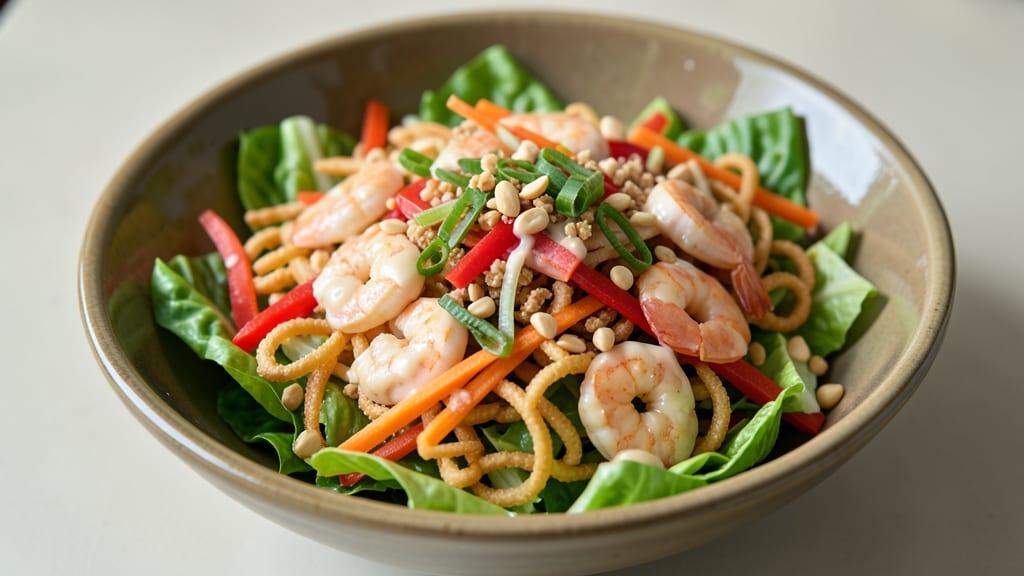
This Asian wonton salad recipe transforms simple ingredients into a harmonious blend of textures and flavors that feels both comforting and exciting. The secret lies in crispy wonton noodles that hold their shape while absorbing the creamy peanut dressing, creating a satisfying balance between crunch and richness.
I developed this version after craving something that combined my love for Asian flavors with the freshness of a salad.
The beauty of this dish is its versatility—you can customize the wonton filling with shrimp, pork, or even a vegetarian option, while the peanut dressing brings together tangy, nutty, and slightly sweet notes that tie everything together.
Fresh greens and crunchy toppings like crushed peanuts and scallions add layers of texture that make each bite feel special. The dish is perfect for meal prep, picnics, or a light yet satisfying dinner.
What makes this recipe stand out is the creamy peanut dressing that's rich enough to coat the noodles but light enough to keep the salad from feeling heavy.
The wonton noodles, with their delicate yet sturdy texture, hold up beautifully to the dressing, ensuring every bite delivers that perfect harmony of flavors and textures. This salad is the kind of dish that feels both familiar and fresh, with just the right amount of Asian-inspired flair.
Whether you're serving it as a main course or a side, this wonton salad is designed to impress with its balance of flavors and ease of preparation. Once you try it, you'll find yourself reaching for the ingredients again and again. Let's get started on creating this delicious dish!
Ingredients for asian wonton salad
Simple yet flavorful ingredients for a crispy, creamy Asian-inspired salad everyone will love.
| Ingredient | Amount | Notes |
|---|---|---|
| Wonton Noodles 🍜 | 8 oz | Dried, Asian-style wonton noodles |
| Shrimp 🦐 | 1 lb | Peeled, deveined, cooked |
| Red Bell Pepper 🌶️ | 1 whole | Thinly sliced, any color |
| Carrots | 2 medium | Julienned or matchstick cut |
| Carrots 🥕 | 2 cups | Julienned or matchstick cut |
| Green Onions 🧅 | 4 whole | Thinly sliced, white and green parts |
| Crushed Peanuts 🥜 | ½ cup | Toasted for extra crunch |
| Romaine Lettuce 🥬 | 1 head | Chopped, crisp variety |
| Peanut Butter 🥜 | ½ cup | Creamy, unsweetened |
| Soy Sauce 🍶 | ¼ cup | Low-sodium preferred |
| Rice Vinegar 🍶 | ¼ cup | Seasoned or plain |
| Sesame Oil 🫒 | 1 tbsp | Toasted sesame oil |
| Honey 🍯 | 2 tbsp | Or agave for vegan option |
| Garlic Cloves 🧄 | 2 cloves | Minced for dressing |
| Lime Juice 🍋 | 1 tbsp | Freshly squeezed |
| Sesame Seeds 🌾 | 1 tbsp | Toasted for garnish |
The wonton noodles are the star—King Noodle brand from the Asian aisle is my go-to, but any dried wonton noodles work. Look for the ones labeled 'wonton' or 'egg noodles' (not rice noodles). If you can't find shrimp, cooked chicken or tofu works just as well. The peanuts should be crushed, not powdered—the crunch is everything. For the lettuce, pick a crisp variety like romaine or butter lettuce. Trader Joe's has pre-washed bags that save time, but fresh is always better if you've got it.
No sesame oil? Toasted peanut oil works in a pinch. Want extra tang? Add another tablespoon of rice vinegar. The dressing can be made ahead and stored in the fridge for up to 5 days. If you're making this for a crowd, double the dressing ingredients—it's that good. For the veggie mix, don't stress about perfect julienne cuts; a food processor or sharp knife works fine. The carrots can be baby carrots if that's what's in the fridge—just chop them into matchsticks.
The noodles keep their crunch best when tossed with dressing right before serving—don't soak them. Store leftover dressing in a jar with a thin layer of oil on top to preserve freshness. This salad tastes even better the next day as the flavors meld. Portion into containers for easy lunches—just add fresh greens and peanuts when ready to eat. The dressing thickens when chilled, so stir before using.
Why You'll Love This Recipe
- No Boil, No Stress: I swear by this trick—just toss those wonton noodles in hot water for 2 minutes instead of boiling them separately. They soften perfectly while I sauté the shrimp, and honestly? No soggy mess, no waiting around.
- Crunch That Hits: Between the shredded carrots (raw, because cooked ones get mushy) and the thinly sliced red bell pepper, this salad has texture that pops. Add the crispy shrimp? That’s the moment everyone leans in for seconds.
- Lunchbox Magic: Here’s what sold me—this keeps perfectly for 3 days in the fridge. Pack it cold for work or school, and the noodles stay chewy, not limp. My kids actually eat their veggies this way (small miracle).
- Budget Meal Upgrade: Shrimp sounds fancy, but frozen tails cut costs—same flavor, none of the fuss. Swap in chicken or skip it entirely; the dressing (soy, sesame, lime) makes everything taste restaurant-level. Leftovers? Double win.
Step-by-step instructions for Asian wonton salad
Here's how to assemble this refreshing, crunchy salad with a perfectly balanced peanut dressing.
Cook and Prepare the Wonton Noodles
Bring a large pot of water to a rolling boil and add the 8 oz wonton noodles. Cook according to package instructions until al dente - they should be tender but still have a slight bite. I usually aim for about 4-5 minutes after the water returns to a boil.
Drain immediately and rinse under cold water to stop the cooking process and remove excess starch. Toss the noodles with 1 tablespoon sesame oil while still damp to prevent sticking. Let them cool completely before assembling the salad - this prevents the dressing from turning watery when combined.
Prepare the Vegetable Components
While the noodles cook, thinly slice the 1 whole red bell pepper into matchstick strips. Julienne the 2 medium carrots and the 2 cups carrots into thin, even strips - about 1/8-inch wide. Thinly slice the 4 whole green onions, separating the white and green parts if you prefer different textures.
Chop the 1 head romaine lettuce into bite-sized pieces, removing any tough stems. I like to tear the leaves rather than cut them for a more rustic presentation. Store all prepared vegetables in separate containers until ready to assemble - this keeps them crisp and prevents premature wilting.
Make the Creamy Peanut Dressing
In a small bowl, whisk together the 0.5 cup peanut butter, 0.25 cup soy sauce, 0.25 cup rice vinegar, 2 tablespoons honey, 1 tablespoon lime juice, and 2 minced garlic cloves. Start with a slow whisk to combine, then increase speed until smooth and fully incorporated.
Slowly drizzle in the 1 tablespoon sesame oil while continuing to whisk. The dressing should be thick but pourable - if it's too thick, add 1-2 teaspoons warm water to reach your desired consistency. Taste and adjust seasoning with additional soy sauce for saltiness or honey for sweetness as needed.
Assemble the Salad
In a large bowl, combine the cooled wonton noodles, all prepared vegetables, and the 0.5 cup crushed peanuts. Gently toss everything together until the vegetables are evenly distributed. You want to maintain some texture contrast - don't overmix or the lettuce will get soggy.
Drizzle about half of the peanut dressing over the salad and toss gently to coat. Taste and adjust seasoning if needed - the dressing should complement rather than overpower the fresh vegetables. For best texture, assemble the salad just before serving to maintain crispness.
Garnish and Serve
Transfer the salad to serving plates and sprinkle with the 1 tablespoon toasted sesame seeds. I like to arrange the salad with the noodles and vegetables in the center and drizzle the remaining peanut dressing around the edges for visual appeal.
Serve immediately while the lettuce is still crisp and the dressing is at its best. The contrast of warm, toasted peanuts against cool vegetables and the creamy peanut dressing creates a perfect balance of textures and flavors in every bite.
Pro Tips For Making Asian Wonton Salad
- Boil Noodles Until Al Dente: Wonton noodles turn mushy fast once drained—pull them when they’re still slightly firm, about 2 minutes before package instructions say. Rinse in cold water immediately, then toss with a drizzle of oil to prevent sticking. I learned this the hard way after serving a salad with noodles so soft they disintegrated like overcooked spaghetti.
- Peel Shrimp Before Cooking: Skip the hassle of peeling after cooking—peel and devein shrimp first, then pat them very dry with paper towels. This ensures they sear evenly in the wok and absorb marinades better. (Yes, even if you’re impatient like me—trust the process.)
- Julienne Veggies Uniformly: Cut red bell pepper and carrots into matchsticks of the same length (about 1/4-inch thick). Uneven pieces cook at different rates, leaving some crunchy and others limp. Use a mandoline if you’re tired of chopping—it’s faster and more consistent.
- Toss Noodles Last: Dress the shrimp and veggies first, then add the noodles right before serving. Cold noodles absorb dressing unevenly, turning them soggy. Keep the dressing separate until the end—this keeps the texture crisp and the flavors balanced. (Your future self will thank you.)
Common mistakes when making perfect results
Overcooking Noodles
Wonton noodles have a delicate texture that disappears when overcooked. I’ve ruined this dish too many times by leaving them in boiling water past the recommended time—4-5 minutes is perfect. They should be tender but still hold their shape.
Drain immediately and rinse with cold water to stop cooking. This step is crucial because soggy noodles turn the salad into a mushy mess. 🥗
Skipping the Cold Rinse
After draining, always rinse the noodles under cold water. This stops the cooking process and removes excess starch that would otherwise make the dressing watery. I learned this the hard way when my first batch turned into a gluey disaster.
The cold water shock preserves that perfect al dente texture and keeps the salad crisp.
Using Powdered Peanuts
Crushed peanuts are non-negotiable—they provide the essential crunch. Powdered peanuts might seem like a lazy shortcut, but they’ll turn your salad into a paste. Toast your peanuts lightly in a dry pan for 2-3 minutes until fragrant.
This enhances their flavor and makes them even crunchier. Trust me, your taste buds will notice the difference.
Overmixing the Salad
When tossing the salad, go easy on the mixing. Overworking the lettuce and vegetables will crush their texture and release moisture, making everything soggy. Gently combine the ingredients just until everything is evenly distributed. The goal is harmony, not a mushy pile. A light hand keeps the crunch intact.
Neglecting the Dressing Ratio
The peanut dressing should coat the noodles and vegetables without drowning them. I’ve made the mistake of pouring too much dressing, which can make the salad greasy.
Start with half the dressing and adjust to taste. The remaining dressing can be drizzled on the side for serving—this keeps the salad light and balanced.
Not Prepping Vegetables Uniformly
Unevenly cut vegetables create an unbalanced bite. Thinly slice the bell pepper, julienne the carrots, and chop the lettuce into similar-sized pieces. This ensures each forkful has the same mix of textures and flavors. A sharp knife and steady hand make this step easier than it sounds. 🌶️
Nutrition facts
Frequently asked questions
Can I make this wonton salad vegetarian?
Swap the shrimp for 1 lb firm tofu or 1 cup cooked mushrooms for a meat-free version. For extra protein, add 1 cup edamame or 1/2 cup baked tempeh crumbles. The peanut dressing and vegetables will still provide plenty of flavor and texture.
How do I store leftovers without making the noodles soggy?
Store the dressing separately in a jar with a thin layer of oil on top to preserve freshness. Keep the noodles and vegetables in an airtight container for up to 3 days. When ready to eat, toss everything together with fresh dressing and a sprinkle of toasted peanuts. The lettuce will wilt, but the other components stay crisp.
What's the best way to make the dressing thicker or thinner?
For a thicker dressing, whisk in 1 teaspoon more peanut butter or reduce the rice vinegar by 1 tablespoon. If it's too thick, add 1-2 teaspoons warm water or a splash of lime juice to loosen it. The ideal consistency should coat a spoon but still drip slowly. Taste as you go—adjust gradually!
Can I use regular pasta instead of wonton noodles?
Not recommended—wonton noodles have a unique texture that holds up beautifully to the dressing. If you must substitute, try vermicelli rice noodles (cooked al dente) or soba noodles, but they'll absorb dressing differently. The dish loses its signature crunch and chewiness. Stick with wonton noodles for the authentic experience.
What other Asian-inspired toppings can I add?
Try fried shallots for extra crunch, cilantro for freshness, or dried seaweed flakes for umami depth. For heat, add chili crisp or sliced Thai chilies. Keep portions small—these toppings should complement, not overpower, the main flavors.