
Salads
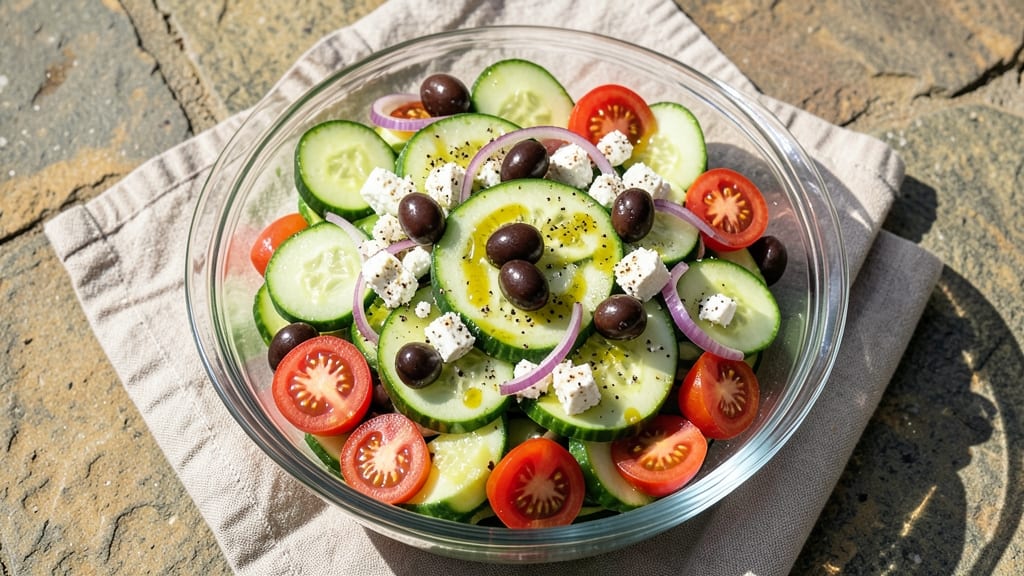
Athenian salad delivers the bright, tangy flavors of Greece with just five simple ingredients—no cooking required. This classic Horiatiki salad combines crisp cucumbers, juicy tomatoes, briny feta, and a drizzle of extra-virgin olive oil for a dish that's as refreshing as it is iconic. The secret lies in proper layering and freshness, transforming humble ingredients into something extraordinary.
The beauty of this salad is its simplicity: no dressing needed beyond a generous pour of high-quality olive oil. Traditionalists swear by the combination of cucumbers and tomatoes, their natural juices mingling with the salty feta to create perfect balance.
The key technique? Cutting ingredients into large chunks rather than dicing them—this preserves texture and makes every bite satisfyingly substantial.
What makes this dish special is its cultural significance as Greece's most beloved summer salad. It's vegetarian by nature but packed with bold Mediterranean flavors that make it hearty enough for a main course.
The contrast between crisp vegetables, creamy feta, and the peppery bite of olive oil creates a symphony of textures and tastes that's impossible to resist.
Serve this salad as an appetizer, side dish, or light lunch—it's equally perfect for summer picnics or elegant dinner parties. The recipe scales easily, making it ideal for feeding a crowd while maintaining authenticity. Here's how to assemble the classic version with optional variations for customization.
Ingredients for athenian salad
Five ingredients transform into Greece's most beloved summer salad—crisp, bright, and effortlessly elegant.
| Ingredient | Amount | Notes |
|---|---|---|
| Persian Cucumbers 🥒 | 2 medium | Unpeeled, sliced into thick half-moons |
| Ripe Tomatoes 🍅 | 2 medium | Vine-ripened, cut into 1-inch chunks |
| Red Onion 🧅 | 1 medium | Thinly sliced into half-rings |
| Extra-Virgin Olive Oil 🫒 | ½ cup | Peppery, fruity variety preferred |
| Feta Cheese 🧀 | 8 oz | Block form, cut into 1-inch cubes |
| Fresh Kalamata Olives 🫒 | ¼ cup | Pitted, sliced in half lengthwise |
| Fresh Oregano 🌿 | 2 tsp | Chopped, or 1 tsp dried |
| Diamond Crystal Kosher Salt 🧂 | 1 ½ tsp | Adjust to taste |
| Freshly Ground Black Pepper 🌶️ | ½ tsp | Freshly cracked preferred |
| Red Wine Vinegar 🍷 | 1 tbsp | Optional for brightness |
The vegetables are non-negotiable for authentic flavor. Persian cucumbers have thinner skins and fewer seeds than English cucumbers, making them ideal for this dish. Look for vibrant green cucumbers with firm skin at your local farmers market—they'll hold up best. For tomatoes, heirloom varieties from specialty grocers add sweetness, but any ripe, juicy tomato works. The red onion should be crisp—Spanish or Vidalia varieties stay crunchy longer. If using pre-sliced onions from the grocery store, rinse them thoroughly to remove any residual preservatives that can dull the flavor.
No feta block? Pre-cubed feta from the deli section works in a pinch, but it lacks the proper texture and saltiness. For olives, Kalamata are traditional, but Manzanilla or green olives add a nice contrast. Short on oregano? Dried oregano at half the amount suffices, but fresh delivers that bright Mediterranean aroma. The olive oil is where you shouldn't skimp—Spanish or Italian varieties with robust peppery notes elevate the dish. For extra brightness, a splash of red wine vinegar cuts through the richness, though traditionalists often omit it entirely.
Store the vegetables separately in airtight containers for up to 3 days—this preserves their crispness. The feta keeps 1 week wrapped in parchment paper in the fridge, while olives last 6 months unopened. Assemble the salad just before serving to maintain optimal texture. For meal prep, store components separately and combine when ready to eat. This salad holds beautifully for 2 days if kept refrigerated, though the tomatoes may soften slightly. Serve chilled for maximum refreshment.
Why You'll Love This Recipe
- No-Chop Nightmare: I swear by this version—just halve the cucumbers and tomatoes, slice the onion thin (or don’t, if you’re lazy), and toss. The Persian cucumbers stay crisp without wilting, and the tomatoes? They practically dress themselves.
- Feta Magic: That salty, briny feta crumbling over the bright acidity of the tomatoes and the sharp bite of red onion? It’s the kind of contrast that makes you reach for seconds without thinking. Drizzle with good olive oil, and it’s like a flavor hug for your plate.
- Picnic-Proof Perfection: Honestly, this is my go-to for lunchboxes, potlucks, or when I forget to pack dinner. It keeps well for days in the fridge, travels without a mess, and even tastes better the next day—no sad wilted greens here.
- Budget Bright Spot: Between us, this salad costs me pennies but feels fancy. Persian cucumbers last forever, tomatoes are cheap in season, and a block of feta stretches across multiple meals. It’s the kind of dish that makes grocery day feel like a win.
Step-by-step instructions for Athenian salad
This classic Greek salad balances crisp vegetables, briny feta, and bright olive oil for perfect harmony.
Prepare the Vegetables with Precision
Begin by washing the 2 medium Persian cucumbers thoroughly. Using a sharp chef's knife, slice them into thick half-moons—about ¼-inch thick—keeping the peel on for added texture and flavor. The cucumbers should be firm but not watery; if they release excess liquid, pat them dry with paper towels before adding to the salad.
Next, handle the 2 medium ripe tomatoes by cutting them into 1-inch chunks. Avoid squeezing them as this releases excess moisture that can make the salad soggy. For the 1 medium red onion, slice it into half-rings—thin enough to be easily chewed but still holding shape. Soak the onion slices in ice water for 5 minutes if you prefer a milder flavor, then drain and pat dry before combining with the other vegetables.
Assemble the Salad Base
In a large mixing bowl, combine the sliced cucumbers, tomatoes, and red onion. Gently toss them together just once to distribute evenly—overmixing releases juices and softens the vegetables. The salad should look vibrant, with the deep red of the tomatoes, the crisp green of the cucumbers, and the sharp white of the onion creating a striking contrast.
Add the 8 oz feta cheese, cut into 1-inch cubes, and the 0.25 cup fresh Kalamata olives, sliced lengthwise. Sprinkle the 2 tsp fresh oregano and 0.5 tsp freshly ground black pepper over the top. The oregano should be finely chopped to distribute evenly, and the pepper should be freshly cracked for maximum flavor. Avoid adding salt yet—we'll balance seasoning at the end.
Dress the Salad for Maximum Flavor
In a small bowl, whisk together the 0.5 cup extra-virgin olive oil and 1 tbsp red wine vinegar. The olive oil should be peppery and fruity—this variety enhances the salad's brightness. Slowly drizzle the dressing over the salad while tossing gently with a large spoon or your hands. The goal is to coat the vegetables lightly without making them soggy.
Sprinkle the 1.5 tsp Diamond Crystal kosher salt evenly over the salad and toss once more. Taste a spoonful—you want the flavors to be balanced but still vibrant. If the salad tastes too mild, add a pinch more salt or a splash of vinegar. If it's too sharp, drizzle in a bit more olive oil to mellow the acidity. The dressing should glisten on the vegetables without pooling at the bottom of the bowl.
Rest and Serve for Optimal Texture
Let the salad rest for 10-15 minutes before serving. This allows the flavors to meld and the vegetables to slightly soften while retaining their crispness. The feta will release its briny essence, and the olive oil will penetrate the vegetables, enhancing their natural sweetness.
Serve the Athenian salad immediately on a large platter or individual plates, garnished with an extra sprinkle of fresh oregano and a drizzle of extra-virgin olive oil. The presentation should be rustic yet elegant—let the colors and textures shine. Pair it with warm pita bread or grilled meats for a complete Greek meal experience.
Pro Tips For Making Athenian Salad
- CHILL THE CUCUMBERS: Toss Persian cucumbers in ice water for 10 minutes before slicing—this firms them up and stops the mess of watery, splayed slices. I learned this the hard way when my salad bowl turned into a soup after cutting them fresh.
- SALT THE ONIONS FIRST: Thinly slice the red onion, toss with ½ teaspoon salt, and let sit for 10 minutes before draining. This softens the bite and draws out the sharpness so it plays nice with the tomatoes. (Yes, even if you’re impatient like me.)
- DRIZZLE OIL LAST: Hold off on the olive oil until right before serving—it keeps the cucumbers crisp and prevents the tomatoes from turning mealy. The salad tastes fresher, and you avoid the sad, soggy bottom of a bowl left sitting too long.
- CRUMBLE FETA DRY: Pat the feta completely dry with paper towels before crumbling it, or it’ll turn your salad into a briny puddle. I skip this sometimes, and the cheese just melts into a sad, salty sludge. Not worth it.
Storing and reheating this dish
Refrigerator Storage
Store the salad components separately in airtight containers to maintain crispness. Keep the cucumbers, tomatoes, and onions in one container with a paper towel to absorb excess moisture—they'll stay fresh for 3 days this way.
The feta cheese should go in a separate container wrapped in parchment paper, lasting up to 1 week. For the olives, use their original container sealed tightly—they'll keep for 6 months unopened. 🥒
Freezer-Friendly Components
While the full salad doesn't freeze well, you can freeze individual components for future use. The cucumbers and tomatoes lose texture when frozen, so skip freezing them.
Instead, freeze the feta cheese in 1-inch cubes on a tray before transferring to a bag—this prevents freezer burn and makes it easy to portion later. The olives freeze beautifully for up to 3 months in their original packaging. Label everything clearly with dates! ❄️
Reheating for Optimal Texture
This salad is best enjoyed fresh, but if you're reviving components, handle them carefully. For the feta, thaw it in the fridge overnight and crumble it fresh before serving. The olives can be served straight from the freezer—no thawing needed.
If you've stored the onions separately, soak them in ice water for 5 minutes before adding to the salad to restore their crispness. Always assemble the salad just before eating to preserve that signature crunch. 💡
Meal Prep Strategy
For busy weeks, prep the salad components in advance but store them separately. Keep the vegetables in one container and the feta and olives in another. When ready to serve, combine everything and dress it with fresh olive oil and a sprinkle of oregano.
This approach works perfectly for lunch prep—just assemble and enjoy! The key is keeping the dressing separate until the last minute to maintain crispness. ✨
Serving Leftovers
If you have leftovers, serve them within 2 days for best quality. The tomatoes may soften slightly, but the overall flavor remains delicious. To revive the salad, add a fresh drizzle of olive oil and a pinch of salt before serving.
For a quick lunch, pack the salad in a mason jar with dressing on the bottom—this keeps everything fresh until you're ready to eat. 🍽️
Garnish for Freshness
Before serving, always garnish with fresh oregano and a drizzle of high-quality olive oil. This not only enhances flavor but also makes the salad look restaurant-worthy.
A sprinkle of freshly cracked black pepper just before eating adds an extra layer of brightness. The presentation matters—let the vibrant colors shine on your plate! 🌿
Nutrition facts
Frequently asked questions
Why is this called "Athenian" salad when it's Greek?
This salad is called "Athenian" because it originated in Athens, Greece, where it's known as Horiatiki (meaning "peasant" salad). It reflects the simple, fresh flavors of Greek rural cuisine, though it's beloved nationwide. The name highlights its deep connection to Athens' culinary traditions.
Can I substitute English cucumbers for Persian cucumbers?
Yes, but expect a slightly different texture. English cucumbers have thicker skins and more seeds, so they'll be less tender. To improve texture, peel them first and pat dry thoroughly. Persian cucumbers are preferred because they're seedless and stay crisp longer.
What's the best way to keep this salad from getting soggy?
Never mix the dressing in until serving! Store components separately and assemble just before eating. For extra insurance, pat all vegetables dry with paper towels before combining. The key is keeping the feta and olives separate until the last minute.
Is this salad spicy or hot?
Not at all! This is a mild, refreshing salad with no heat. The "spice" comes from the peppery olive oil and fresh oregano, which add bright Mediterranean flavor without any chili. Perfect for all ages and heat sensitivities.
How can I make this salad more substantial for a main course?
Add hearty elements like grilled chicken, chickpeas, or white beans to make it a complete meal. For a vegetarian option, include roasted potatoes or grilled halloumi cheese. The salad's flavors will complement these additions beautifully.