Salads
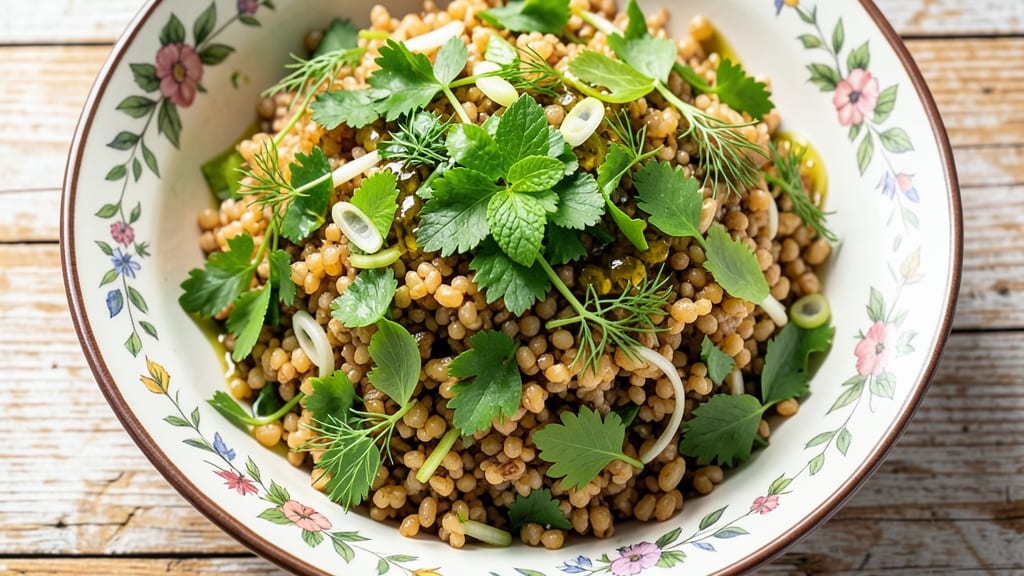
This authentic Lebanese tabbouleh salad recipe delivers the vibrant, herby brightness that makes it a staple across the Middle East. The secret lies in perfectly al dente bulgur wheat and a generous handful of finely chopped parsley, balanced with bursts of lemon and fresh mint.
I've perfected this version after years of testing—no soggy bulgur or bland flavors here, just the crisp, refreshing salad that belongs at every mezze table.
The key to authentic tabbouleh is proper preparation: soaking the bulgur just long enough to soften without turning mushy, then tossing it with herbs while still warm.
Fresh parsley takes center stage, but the combination of mint, dill, and scallions adds depth that transforms this from a simple salad into something truly special. The lemon juice brightens every bite, cutting through the earthiness of the bulgur and herbs.
What you'll end up with is a salad that's vibrant green, fragrant with fresh herbs, and perfectly balanced in texture—crisp bulgur that holds its shape alongside tender, finely chopped greens. Each forkful delivers that signature Lebanese flavor: bright, herby, and just tangy enough to make your taste buds dance.
This isn't just a side dish; it's the heart of any mezze spread.
The beauty of this recipe is its versatility—serve it as a refreshing starter, a light lunch, or alongside grilled meats for dinner. The flavors develop even better when rested for 30 minutes before serving, allowing the bulgur to absorb all those herbaceous notes.
Let's get started on making your most authentic tabbouleh yet.
Ingredients for authentic lebanese tabbouleh salad
Fresh herbs and perfectly soaked bulgur create this vibrant, herby salad that's the heart of any mezze spread.
| Ingredient | Amount | Notes |
|---|---|---|
| Fine Bulgur Wheat 🌾 | 1 cup | Rinsed thoroughly before soaking |
| Fresh Flat-Leaf Parsley 🌿 | 2 cups | Stems removed, finely chopped |
| Fresh Mint Leaves 🌿 | ½ cup | Finely chopped, stems removed |
| Fresh Dill 🌿 | ¼ cup | Finely chopped, stems removed |
| Green Onions 🧅 | 4 whole | Thinly sliced, white parts trimmed |
| Extra-Virgin Olive Oil 🫒 | ½ cup | High quality, fruity variety |
| Fresh Lemon Juice 🍋 | ¼ cup | From 2-3 medium lemons |
| Medium Tomatoes 🍅 | 2 whole | Diced, seeds removed |
| Kosher Salt 🧂 | 1 tsp | Diamond Crystal preferred |
| Ground Black Pepper 🌶️ | ¼ tsp | Freshly ground |
| Garlic Cloves 🧄 | 2 cloves | Minced, optional for extra flavor |
The bulgur is non-negotiable here—Bob's Red Mill or Trader Joe's brands are my go-tos, but any fine bulgur works. Soak it for exactly 20 minutes, then drain it well. The parsley needs to be the star, so grab the freshest bunch you can find—Middle Eastern markets often have the brightest. If you're short on mint, doubling the parsley keeps the authentic flavor. The tomatoes should be ripe but firm, and the green onions add that signature crunch that keeps the salad from feeling too heavy.
No fresh dill? Substitute with extra parsley or cilantro, though it won't be identical. Running out of lemon juice? Lime juice works in a pinch, but the flavor shifts slightly. The olive oil matters here—avoid the cheap stuff. If you've got a good Pompeian or California avocado oil, those work too. The garlic is optional but adds depth if you're feeling fancy. And if you're making this ahead, hold off on adding the tomatoes until serving—they'll get soggy otherwise.
This salad tastes even better the next day once the flavors meld. Store it in an airtight container with a paper towel pressed on top to keep the bulgur crisp. Keeps for 3 days in the fridge. I always double the recipe because it disappears fast—perfect for lunches or as a side for grilled meats. The herbs start to wilt after a day, so if you're prepping ahead, add them just before serving to keep that vibrant green color.
Why You'll Love This Recipe
- No-Soaking Needed: I swear by this shortcut—just toast the fine bulgur in hot water for 10 minutes, then let it sit. No overnight soaking, no fuss. That crispy texture? It’s the secret to not drowning in a mushy mess.
- Herb Overload: The parsley, mint, and dill don’t just happen—they punch you in the mouth with brightness. Toss in the green onions for a sharp bite, and suddenly, every bite feels like a burst of Lebanese sunshine. (Yes, even on a Tuesday night.)
- Meal Prep MVP: This keeps for days in the fridge, tasting fresher than store-bought. Pack it in lunches, serve it at picnics, or let it star at your summer BBQ. The bulgur holds up, and the herbs stay vibrant—no sad, wilted salad here.
- Budget Brightener: Fresh herbs can be pricey, but a big bunch of parsley and mint stretches across multiple meals. Bulgur? Cheap as dirt. This salad is my go-to for stretching groceries without sacrificing flavor—proof that good food doesn’t need a fancy budget.
Step-by-step instructions for authentic Lebanese tabbouleh salad
Here's how to make this classic Middle Eastern salad with vibrant herbs and perfectly textured bulgur.
Soak the Bulgur Wheat
Place the 1 cup fine bulgur wheat in a medium bowl and cover it completely with cold water. Let it soak for at least 30 minutes—I usually do 45 minutes for maximum tenderness. The bulgur should absorb the water and become translucent, with a slightly chewy texture when pressed between your fingers.
Drain the bulgur thoroughly in a fine-mesh strainer, shaking gently to remove all excess water. The reason for this soaking step is simple: it transforms the bulgur from hard grains to a fluffy, textured base that holds up to the fresh herbs. Don't skip this—under-soaked bulgur will taste gritty, and over-soaked bulgur will become mushy.
Prepare All the Fresh Herbs
In a large mixing bowl, combine the 2 cups finely chopped parsley, 0.5 cup mint leaves, and 0.25 cup dill. Add the 4 thinly sliced green onions and 2 diced medium tomatoes (seedless). Give everything a gentle toss with your hands to distribute the herbs evenly. The bright green color should be vibrant—this is what makes tabbouleh instantly recognizable.
Here's the thing about tabbouleh: the herbs need to be fresh, not wilted. If you're using store-bought parsley, give it a quick sniff test—it should smell clean and grassy, not bitter. The herbs should be chopped uniformly so each bite has balanced flavor. I like to use my fingers for this mixing—it helps distribute the herbs more gently than a spoon would.
Add the Bulgur and Seasonings
Transfer the drained bulgur to the herb mixture and add the 1 tsp kosher salt and 0.25 tsp ground black pepper. Toss everything together until the bulgur is evenly coated with herbs. The mixture should look like a vibrant green, herby grain salad at this point—almost like a fresh spring salad.
If you're using the optional 2 minced garlic cloves, add them now and toss again. The garlic adds depth but isn't traditional in all recipes, so it's up to you. The key is to season generously—tabbouleh should have a bright, slightly tangy flavor that makes your mouth water. Let the mixture sit for 10 minutes while you prepare the dressing.
Make the Lemon-Olive Oil Dressing
In a small bowl, whisk together the 0.5 cup extra-virgin olive oil and 0.25 cup fresh lemon juice. The dressing should be emulsified but still slightly separated—this is normal. Taste it plain to judge the balance: the lemon should be bright but not overpowering, and the olive oil should add richness without making it greasy.
I use a fruity olive oil for this because it adds subtle floral notes that complement the herbs. If you don't have lemon juice, you can use bottled lemon juice, but fresh is always better. The acidity in the lemon is what makes tabbouleh taste fresh and vibrant, not just a grain salad.
Combine and Chill for Maximum Flavor
Pour the dressing over the bulgur-herb mixture and toss gently until everything is evenly coated. Cover the bowl with plastic wrap and refrigerate for at least 1 hour—I usually do 2 hours if I can. This chilling time is crucial because it allows all the flavors to meld together and the bulgur to absorb the dressing.
When you're ready to serve, give the tabbouleh one final toss. It should be bright green, slightly sticky from the dressing, and cool to the touch. The texture should be a perfect balance: the bulgur should be tender but still hold its shape, and the herbs should be fresh and vibrant. If it looks too dry, add a splash more lemon juice or olive oil.
Pro Tips For Making Authentic Lebanese Tabbouleh Salad
- TOAST THE BULGUR DRY: I learned this the hard way—skipping the dry toast step leaves your tabbouleh gummy and sad. Spread the fine bulgur on a baking sheet and toast it in a 350°F (175°C) oven for 8-10 minutes until it smells nutty and looks slightly darker. This isn’t just about flavor; it’s what keeps the texture light and separate.
- CHOP HERBS IN BATCHES: Don’t dump all your parsley, mint, and dill into one pile and hack away—you’ll end up with uneven textures. Work in stages: finely chop the parsley first (it’s the base), then roughly mince the mint and dill separately, and finally slice the green onions thin. This way, the herbs stay bright and the parsley doesn’t turn to mush under your knife.
- SOAK THE BULGUR LONGER: The recipe probably says 15-20 minutes, but resist the urge to rush. Let that fine bulgur sit in the lemon juice and water for at least 30 minutes—closer to 45 if you’re impatient like me. This is when it absorbs the acid and softens just enough to hold the salad together without falling apart. Trust me, the extra wait makes a real difference.
- SALT THE WATER FIRST: Yes, even if your bulgur is fine and you’re using bottled water. Add a full teaspoon of salt to the soaking liquid (lemon juice + water) to mimic the mineral content of tap water. It’s a tiny detail, but it prevents the bulgur from tasting bland and ensures the herbs shine. I was skeptical until I tried it—now it’s non-negotiable.
Troubleshooting your authentic lebanese tabbouleh salad
Bulgur Too Mushy?
If your bulgur turns out mushy, you likely soaked it too long or didn’t drain it well. I’ve found that 30-45 minutes in cold water is perfect—any longer risks over-soaking. After draining, give it a good shake in a fine-mesh strainer to remove all excess water.
If it’s still too soft, spread it on a baking sheet and let it dry slightly at room temperature for 10-15 minutes before mixing with herbs. 🌾
Herbs Losing Color?
Wilted herbs kill the vibrant green color of tabbouleh. Always use the freshest herbs possible—Middle Eastern markets often have the brightest parsley and mint. If your herbs start wilting before serving, toss them with 1 teaspoon lemon juice and a pinch of salt to revive them.
For extra freshness, add herbs just before serving instead of mixing them in early.
Salad Too Dry?
If your tabbouleh feels dry, it’s usually because the bulgur absorbed too much liquid or the dressing wasn’t enough. To fix this, drizzle in 1-2 tablespoons extra olive oil or 1 tablespoon lemon juice and toss gently.
For future batches, adjust the dressing ratio—start with ¼ cup olive oil and ¼ cup lemon juice for every 1 cup bulgur, then taste and adjust as needed.
Bulgur Tasting Gritty?
Gritty bulgur means it wasn’t soaked long enough or wasn’t rinsed properly. Before soaking, rinse the bulgur under cold water to remove any dust or debris. Soak it for at least 30 minutes—I recommend 45 minutes—and press a grain between your fingers to check for tenderness.
If it’s still gritty, soak it 10-15 minutes longer and drain thoroughly.
Tomatoes Getting Soggy?
Tomatoes are the biggest culprit for soggy tabbouleh. To prevent this, add them just before serving instead of mixing them in with the bulgur. If you must add them earlier, pat them dry with a paper towel and toss them in last.
For extra texture, use Roma tomatoes—they hold up better than larger varieties and have fewer seeds.
Flavor Too Mild?
A bland tabbouleh usually means the herbs weren’t fresh enough or the seasoning was lacking. Double-check that your parsley and mint smell bright and grassy. Boost the flavor by adding 1 extra tablespoon lemon juice or a pinch of smoked paprika for depth.
If you’re using bottled lemon juice, switch to fresh—it makes a world of difference. 💛
Nutrition facts
Frequently asked questions
Why does authentic tabbouleh need to rest before serving?
Resting for 1-2 hours lets the bulgur absorb all those bright herb flavors and lemon juice. This is what transforms it from a simple grain salad to the vibrant, cohesive dish you know and love. The flavors meld beautifully during this time, creating that signature Lebanese brightness.
Can I make tabbouleh without parsley?
While parsley is the star, you can substitute with 2.5 cups cilantro or 1.5 cups dill if needed. However, the flavor won't be identical—parsley gives tabbouleh its classic taste. If you're missing parsley, try a mix of mint and dill to get closer to the authentic profile.
How do I store leftover tabbouleh?
Keep leftovers in an airtight container with a paper towel pressed on top to absorb moisture. It stays fresh for 3 days in the fridge. For best texture, add fresh herbs just before serving. The bulgur will soften slightly but still taste delicious.
What's the difference between tabbouleh and fatoush?
Tabbouleh uses bulgur wheat and fresh herbs, while fatoush includes toasted pita bread and more vegetables like cucumbers and radishes. Tabbouleh is lighter and herby, while fatoush has a crunchier texture from the toasted bread. Both are Lebanese staples but serve different purposes in a meal.