
Salads
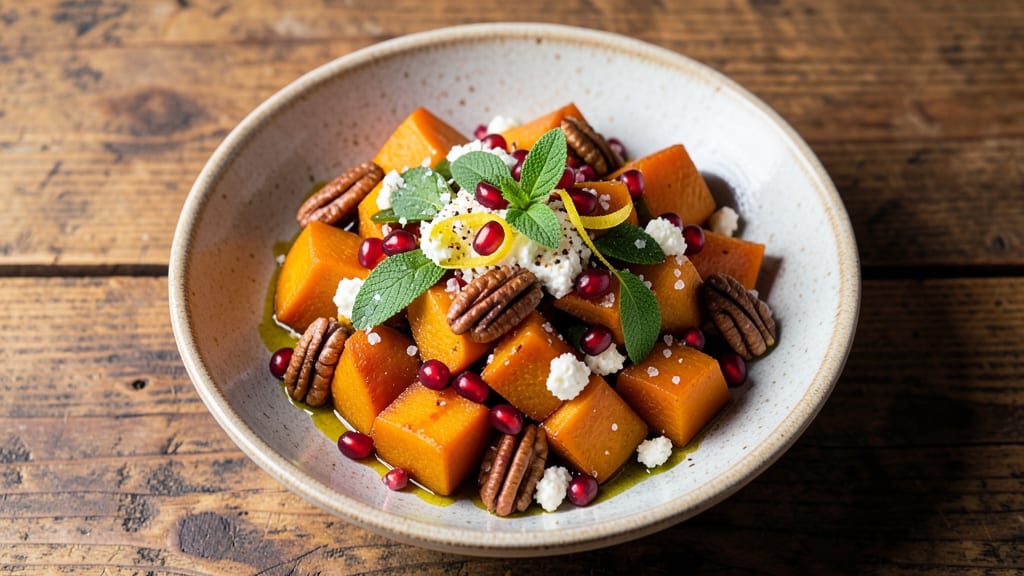
This autumn tossed salad recipe transforms seasonal ingredients into a warm, satisfying dish that feels like a hug on a crisp fall day. 🍂 The star is tender roasted butternut squash, its natural sweetness balanced by crispy sage leaves that add an unexpected texture.
Unlike your typical cold salad, this one delivers hearty warmth and rich flavors that make it perfect for chilly evenings or holiday gatherings.
What sets this salad apart is the combination of textures—creamy roasted squash, crispy sage, and crunchy toasted pecans—all tied together with a tangy maple-Dijon vinaigrette that cuts through the richness.
The recipe uses simple techniques: roasting the squash until caramelized, crisping the sage in a pan, and assembling everything just before serving to maintain that perfect crunch. It’s the kind of dish that feels special but comes together in under 30 minutes.
By the time you’re done, you’ll have a salad that’s far from basic—think golden-brown squash cubes, delicate sage leaves that shatter with each bite, and a dressing that’s both sweet and sharp.
The addition of pomegranate seeds or dried cranberries adds a pop of color and acidity, while a sprinkle of goat cheese or feta brings everything into perfect harmony. This isn’t just a salad; it’s a flavor-packed centerpiece for your table.
The beauty of this recipe is its versatility—swap in apples for extra sweetness, add roasted Brussels sprouts for more texture, or keep it exactly as written for a foolproof autumn classic. Whether you’re serving it as a side or a main dish, it’s guaranteed to impress. Let’s get started!
Ingredients for autumn tossed salad
Seasonal ingredients that turn ordinary into extraordinary autumn flavors in minutes.
| Ingredient | Amount | Notes |
|---|---|---|
| Butternut Squash 🎃 | 1 ½ lb | Cubed, skin removed |
| Fresh Sage Leaves 🌿 | ½ cup | Whole leaves, stems removed |
| Pecans 🥜 | ½ cup | Toasted, roughly chopped |
| Pomegranate Seeds 🍇 | ¼ cup | Fresh or frozen, thawed |
| Goat Cheese 🧀 | 4 oz | Crumbled, room temperature |
| Extra-Virgin Olive Oil 🫒 | ½ cup | High quality, fruity |
| Maple Syrup 🍁 | 2 tbsp | Pure, grade B preferred |
| Dijon Mustard 🥬 | 1 tbsp | Mild or strong |
| Apple Cider Vinegar 🍎 | 1 tbsp | Unfiltered preferred |
| Salt 🧂 | ½ tsp | Diamond Crystal kosher |
| Black Pepper 🌶️ | ¼ tsp | Freshly cracked |
| Honey 🍯 | 1 tsp | Optional, for extra sweetness |
The butternut squash is the star here—look for a small, firm squash with no soft spots. Trader Joe's or Whole Foods usually have pre-cubed squash in the fall, which saves time, but if you're cutting it yourself, aim for 1-inch cubes. Fresh sage is non-negotiable for that crispy texture—dried sage just won't cut it. If you're not using all the leaves, store the rest in a sealed container in the fridge for up to 5 days. Pecans? Toast them yourself for maximum flavor—just spread them on a baking sheet and bake at 350°F for 8-10 minutes until fragrant.
No goat cheese? Feta or crumbled blue cheese works beautifully—just adjust the amount to taste. Short on pomegranate seeds? Dried cranberries or chopped dried apricots add a similar tart-sweet contrast. For the vinaigrette, maple syrup is key—it balances the tangy Dijon and vinegar perfectly. If you're using honey, go for local raw honey for the best flavor. The dressing keeps for 5 days in the fridge, so make extra for another salad or drizzle over roasted veggies.
Roasted squash stays best in the fridge for 4-5 days—reheat gently in a skillet with a splash of water to keep it tender. Sage leaves crisp up quickly, so store them separately and add them fresh when serving. Pecans keep for months in an airtight container, but toast them again before using. The dressing can be made a day ahead, but hold off on adding the honey until just before serving to keep it fresh. This salad tastes even better the next day as the flavors meld—perfect for meal prep!
Why You'll Love This Recipe
- Here’s what sold me: butternut squash is cheaper than chicken, and a single bag lasts me three salads. The pecans and pomegranate seeds? I buy them in bulk and portion them out. It’s the kind of dish where you spend $15 on ingredients but feel like you’re serving a restaurant-quality meal. (Yes, even on a Tuesday night.)
- No Roasting Required: I’ll admit, I used to skip this salad in winter because roasting squash felt like a chore. Then I discovered roasting the cubes directly on the salad—same pan, same oven time, but zero extra cleanup. The edges caramelize while you toss the rest, and honestly? The smoky-sweet squash flavor is the star.
- Crunch Without the Hassle: Between us, I hate salads that go soggy in 10 minutes. But this one? The toasted pecans and pomegranate seeds stay crisp for hours. Even my toddler (who usually rejects anything "green") grabs a handful of seeds—proof it’s addictive without effort.
- Weeknight to Dinner Party: I’ve served this to skeptical in-laws and stressed-out coworkers alike. The goat cheese adds a creamy richness that feels fancy, but the sage and squash keep it cozy. Pro tip: Double the dressing and keep it in the fridge—perfect for last-minute gatherings when you’re too tired to cook.
Step-by-step instructions for warm butternut squash salad
This autumn salad delivers perfect crispy sage bites and tender roasted squash—here's how to nail it.
🔥 Step 1: Roast the Butternut Squash to Caramelized Perfection
Preheat your oven to 400°F and line a baking sheet with parchment paper. Toss the 1.5 lb butternut squash cubes with 2 tablespoons of the extra-virgin olive oil, ½ teaspoon salt, and ¼ teaspoon black pepper. Spread them in a single layer—they need room to caramelize, not steam.
Roast for 25-30 minutes until the edges are deep golden brown and a knife slides in easily. Here's the thing—don't peek too early. The squash needs that final 10 minutes at high heat to develop those sweet, caramelized flavors. If you're using the optional 1 teaspoon honey, drizzle it over the squash during the last 5 minutes of roasting for extra depth.
🍳 Step 2: Crisp the Sage Leaves in Olive Oil
While the squash roasts, heat 2 tablespoons of the remaining extra-virgin olive oil in a small skillet over medium-low heat. Add the ½ cup fresh sage leaves and cook for 1-2 minutes until they're just beginning to crisp at the edges—you want them to stay vibrant green, not turn brown.
Watch closely! Sage burns faster than you think. When they're perfectly crisp, transfer them to a paper towel-lined plate to drain excess oil. These crispy sage bites are the star of your salad—they should be tender enough to eat but still hold their shape. If they stick together, gently separate them with a fork before adding to the salad.
👨🍳 Step 3: Toast the Pecans and Make the Dressing
In the same skillet (no need to clean it—those browned bits add flavor), toast the ½ cup pecans over medium heat for 3-4 minutes, stirring constantly, until they're golden brown and fragrant. Transfer to a cutting board and roughly chop them with a knife—you want bite-sized pieces, not powder.
For the dressing, whisk together the remaining 2 tablespoons extra-virgin olive oil, 2 tablespoons maple syrup, 1 tablespoon Dijon mustard, 1 tablespoon apple cider vinegar, and any remaining ¼ teaspoon black pepper. Taste and adjust—you might want to add a pinch more salt or a touch more vinegar for brightness. This dressing should coat the back of a spoon but still be pourable.
🥘 Step 4: Assemble the Salad with Perfect Texture
In a large bowl, combine the roasted squash, crispy sage leaves, toasted pecans, and ¼ cup pomegranate seeds. Gently fold in the dressing using a spatula—you want everything lightly coated but still vibrant. The key here is to keep the crispy elements (sage and pecans) distinct, not soggy.
Just before serving, crumble the 4 oz goat cheese over the top and toss lightly. The cheese should melt slightly from the warm squash, creating little creamy pockets. Divide among plates and serve immediately while the squash is still warm and the sage leaves maintain their perfect crunch.
Pro Tips For Making Autumn Tossed Salad
- ROAST SQUASH UNTIL TENDER: I learned this the hard way—overcooked squash turns to mush, and no one wants that in a salad. Roast the butternut squash at 400°F (200°C) for 25-30 minutes, flipping halfway, until it’s fork-tender but still holds its shape. Cut it into ½-inch cubes first, and don’t skip the toss with olive oil and salt before roasting.
- TOAST PECANS LOW AND SLOW: Skip the high-heat blitz that burns them in seconds. Toast pecans in a dry skillet over medium-low heat for 5-7 minutes, stirring often, until they’re fragrant and just golden. High heat makes them bitter fast—trust the slow approach.
- CHOP SAGE SMALLER THAN YOU THINK: Whole sage leaves look pretty but get lost in the salad. Finely chop them into tiny pieces (almost like confetti) so their earthy flavor infuses every bite. I was skeptical until I tried it—now it’s non-negotiable.
- STORE GOAT CHEESE RIGHT: Take the goat cheese out of the fridge 10 minutes before using so it’s easier to crumble. If it’s too cold, it’ll clump like sad, hard little rocks. Warm hands work too—just don’t let it sit out too long, or it’ll turn into a greasy mess.
Essential equipment for perfect results
Roasting Pan Essentials
You don’t need anything fancy for roasting butternut squash—just a sturdy rimmed baking sheet that fits your oven racks. I love OXO Good Grips sheets because they’re non-stick and have ergonomic handles.
Line it with parchment paper for easy cleanup, or use a silicone baking mat if you want to skip the paper entirely. For even browning, choose a sheet that’s at least 13x18 inches to give your squash cubes plenty of space. 🔥
Skillet for Sage & Pecans
A 10-inch cast-iron skillet is my go-to for crisping sage and toasting pecans because it retains heat evenly and develops a natural non-stick patina over time.
If you don’t have cast iron, a stainless steel skillet (like All-Clad) works well too—just make sure it’s medium-sized so the sage doesn’t overcrowd. Avoid non-stick pans for toasting nuts; they can’t handle the heat as well. 🥘
Mixing Bowl & Tools
For assembling your salad, a large glass mixing bowl (at least 3-quart capacity) keeps everything contained and makes tossing easier. I use Pyrex bowls because they’re durable and microwave-safe if you ever want to reheat leftovers.
A flexible silicone spatula (like OXO Good Grips) is perfect for gently folding the dressing without crushing the crispy sage leaves. A small whisk (for the dressing) and a sharp chef’s knife (for chopping pecans) round out the essentials. ✨
Optional Upgrades
If you’re serious about fall salads, consider a mandoline slicer for perfectly even butternut squash cubes—just set it to ¼-inch thickness. For extra crispy sage, a mini deep fryer (like Ninja Foodi) lets you fry leaves in 350°F oil for 10-15 seconds until perfectly golden.
A microplane comes in handy for zesting citrus (like lemon) to brighten the dressing if you want to experiment. 💫
Nutrition facts
Frequently asked questions
Can I make this salad ahead of time?
Roast the squash and toast the pecans up to 2 days ahead—store separately in airtight containers. Reheat the squash gently in a skillet with a splash of water, and crisp fresh sage leaves just before serving. The dressing should be made fresh to keep it vibrant, but you can prep all ingredients except the cheese and assemble everything 1 hour ahead.
What if I don't have fresh sage?
Use thyme or rosemary as substitutes, but adjust the cooking time—they crisp faster. For a different flavor profile, try adding toasted pumpkin seeds or crispy fried shallots instead. If you must use dried sage, crush it lightly and add it directly to the salad without cooking.
How can I make this salad vegetarian?
This recipe is already vegetarian! The goat cheese, pecans, and squash provide plenty of plant-based protein. For extra substance, add white beans or quinoa to the base. If you want to skip cheese, try marinated artichoke hearts or avocado slices for creaminess.
Why did my sage leaves turn brown and bitter?
Overcooking is the most likely culprit—sage burns quickly at high heat. Keep the skillet at medium-low heat and watch closely for just 1-2 minutes until edges crisp. If they turn brown, they're past their prime. For next time, use less oil (1 tablespoon instead) to prevent burning.
Can I use this dressing on other dishes?
This maple-Dijon vinaigrette works beautifully on roasted Brussels sprouts, grilled chicken, or even as a marinade for tofu. For extra richness, stir in 1 tablespoon of tahini or Greek yogurt. Store leftovers in the fridge for up to 5 days—shake well before using.