
Salads
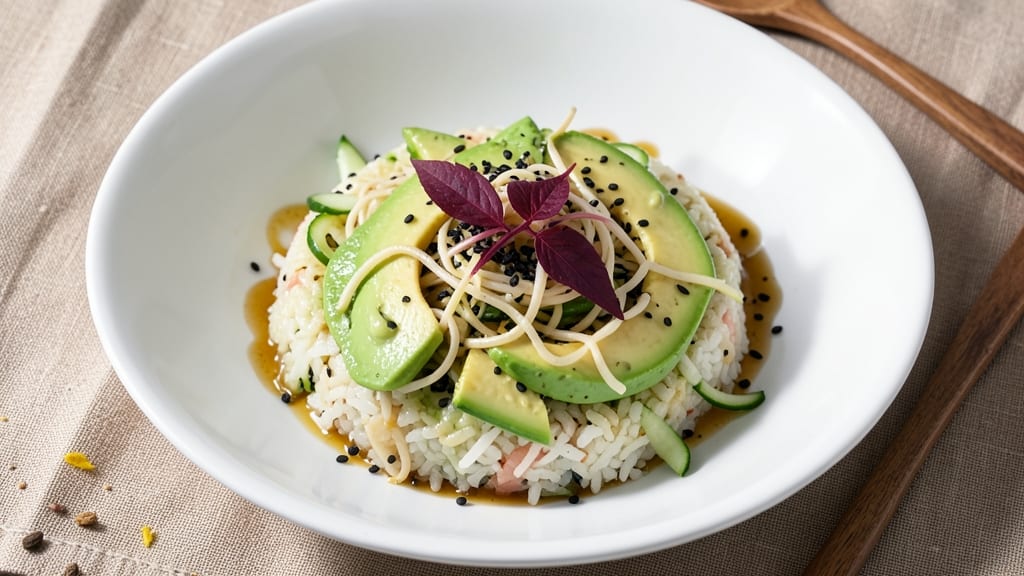
This avocado sushi salad recipe transforms classic Japanese flavors into a fresh, vibrant dish that’s perfect for lunch or dinner. The secret lies in perfectly vinegared sushi rice that stays crispy, paired with creamy avocado slices and crunchy rice noodles for texture.
I’ve adapted traditional sushi techniques to create a salad that’s light yet satisfying, with a dressing that balances sweet, tangy, and umami notes.
The foundation of this salad is the rice—cooked and seasoned with rice vinegar, sugar, and salt for that signature sushi flavor. Creamy avocado adds richness, while rice noodles provide a satisfying crunch.
You can keep it vegetarian or add smoked salmon for a touch of luxury. The dressing ties everything together with a zesty, slightly sweet profile that complements the avocado’s natural creaminess.
What you’ll end up with is a visually stunning salad that’s as delicious as it looks—golden rice, vibrant greens, and slices of avocado that stay perfectly creamy. The combination of textures and flavors makes this dish feel special without requiring complicated techniques.
It’s the ideal balance of freshness and indulgence, perfect for a quick meal or a light dinner.
This recipe is versatile enough to serve as a main dish or a side, and it keeps well in the fridge for up to 24 hours, making it great for meal prep.
Whether you’re a sushi lover or just looking for a fresh salad with a twist, this dish delivers. Let’s get started!
Ingredients for avocado sushi salad
Fresh avocado and crispy rice noodles meet tangy sushi rice for a salad that’s light yet satisfying.
| Ingredient | Amount | Notes |
|---|---|---|
| Sushi Rice 🍚 | 2 cups | Cooked and cooled |
| Rice Vinegar 🍶 | ¼ cup | Seasoned, not flavored |
| Granulated Sugar 🍚 | 2 tbsp | White or raw cane |
| Salt 🧂 | ½ tsp | Fine sea salt |
| Rice Noodles 🍜 | 6 oz | Thin, uncooked variety |
| Avocados 🥑 | 2 whole | Ripe but firm, pitted |
| Lemon Juice 🍋 | 2 tbsp | Freshly squeezed |
| Sesame Seeds 🌰 | 1 tbsp | Toasted, white or black |
| Cucumber 🥒 | 1 whole | English or Persian, sliced |
| Carrot 🥕 | 1 whole | Julienned or matchstick cut |
| Red Bell Pepper 🌶️ | ½ cup | Thinly sliced |
| Olive Oil 🫒 | 2 tbsp | Extra-virgin for richness |
| Soy Sauce 🍶 | 2 tbsp | Low-sodium preferred |
| Honey 🍯 | 1 tbsp | Wildflower or clover |
| Sesame Oil 🫒 | 1 tsp | Toasted, for aroma |
The avocados are the star—pick ones that yield slightly to gentle pressure but aren’t mushy. Trader Joe's or Whole Foods usually have the best selection. For the sushi rice, Japanese short-grain rice is ideal, but any sticky rice works. The rice vinegar should smell clean and bright—not musty. If you can’t find seasoned rice vinegar, mix 1 tbsp sugar and 1/4 tsp salt into regular rice vinegar. The rice noodles? Look for the thin, translucent kind—they’re perfect for this texture. Soak them in warm water for 10 minutes before draining.
No sesame seeds? Toasted sunflower seeds work in a pinch—they’ve got a similar crunch. Running out of honey? Maple syrup or agave at the same amount keeps things sweet. The dressing can be made ahead and stored in the fridge for 5 days, but add the sesame oil just before serving so it doesn’t overpower. For extra crunch, swap half the carrots for jicama or daikon radish. And if you’re feeling fancy, add a sprinkle of toasted coconut flakes for a tropical twist.
This salad keeps best in the fridge for 24 hours, but the avocado will darken faster if sliced ahead. To prevent browning, toss the avocado slices with a little extra lemon juice and store them separately until ready to serve. The dressing and rice can be prepped a day ahead—just assemble everything right before eating. For meal prep, store components in airtight containers and mix when ready. The rice noodles stay crispy for 12 hours if kept dry in the fridge.
Why You'll Love This Recipe
- No Rice Burner: That sticky, overcooked rice nightmare? Gone. Sushi rice here cooks fast—just 12 minutes—and stays fluffy because you’re not drowning it in water. Honestly, I’ve burned rice before, but this method is foolproof. The vinegar-sugar mix keeps it tender while adding that signature tang.
- Creamy Crunch Combo: Avocado (yes, we’re putting it in) brings that rich, buttery bite, while cold rice noodles add a satisfying chew. Between us, the texture is ridiculously good—no mushy bits, just that perfect contrast. Even my picky teenager finishes his bowl.
- Lunchbox Hero: Pack this for work or school—it holds up for hours without getting soggy. I’ll be real: my kids take it in their lunches, and I’ve had coworkers ask for the recipe. The rice vinegar dressing keeps everything fresh, so it’s not just a sad, wilted mess by noon.
- Budget Meal Magic: Sushi rice and rice noodles stretch like crazy—this feeds four for under $8. Between us, that’s a steal when you’re buying avocados on sale. Plus, leftovers taste just as good the next day, so you’re not scrambling to eat it all before it goes bad.
Step-by-step instructions for avocado sushi salad
Here's how to create this refreshing, creamy avocado sushi salad with perfect texture every time.
Prepare the Sushi Rice Base
Start by combining the 2 cups cooked and cooled sushi rice with the 0.25 cup rice vinegar, 2 tablespoons granulated sugar, and 0.5 teaspoon salt in a large mixing bowl. This ratio creates the perfect balance of tangy, slightly sweet flavor without overpowering the creamy avocado. Use a silicone spatula or clean hands to gently fold everything together until the rice is evenly coated and glistens slightly.
Here's the thing—don't skip cooling the rice completely. Warm rice will release excess moisture and make your salad soggy. Spread the rice on a tray and let it cool to room temperature before mixing. You'll know it's ready when it's no longer steaming and has a slightly dry surface. This step ensures your rice noodles stay crunchy instead of turning mushy.
Cook and Prepare the Rice Noodles
Bring a pot of water to a rolling boil and add the 6 ounces rice noodles. Cook for exactly 2 minutes—no longer or they'll turn to mush. Drain immediately in a colander and rinse under cold water for 30 seconds to stop the cooking process. This quick rinse removes excess starch that would otherwise make your noodles gummy.
Transfer the drained noodles to a large bowl and toss them with 1 tablespoon sesame seeds, 1 teaspoon sesame oil, and 1 tablespoon honey. The sesame seeds add nutty crunch while the honey gives a subtle sweetness that complements the creamy avocado. Let the noodles sit for 5 minutes while you prepare the vegetables—this allows the flavors to meld slightly.
Create the Avocado Dressing
In a separate bowl, mash the 2 whole avocados with a fork until completely smooth. Add the 2 tablespoons lemon juice, 2 tablespoons soy sauce, and 2 tablespoons olive oil. The lemon juice prevents browning while adding brightness, and the soy sauce ties all the flavors together. Mix vigorously until you achieve a thick, creamy consistency—this will be the base of your dressing.
I know it seems like too much avocado, but trust me. The creamy texture is what makes this salad special. If the mixture looks too thick, add 1-2 teaspoons of water to reach your desired consistency. The dressing should coat the back of a spoon smoothly without being runny. Taste and adjust seasoning—you might want to add a pinch more salt or a splash more lemon juice depending on your avocados' ripeness.
Assemble the Salad
In a large serving bowl, combine the prepared rice, rice noodles, and all the prepared vegetables: 1 whole cucumber (sliced into half-moons), 1 whole carrot (julienned), and 0.5 cup red bell pepper (thinly sliced). The vegetables should be cut into similar sizes so each bite has a balanced texture. Gently toss everything together with a silicone spatula, being careful not to break the vegetables.
Here's where it gets fun—pour the avocado dressing over the salad and toss gently but thoroughly. You want the dressing to coat everything evenly without making the rice soggy. If you're serving immediately, this is the perfect time to add the 1 tablespoon toasted sesame seeds on top for that final crunchy element. The salad should look vibrant with creamy green avocado streaks throughout.
Serve and Enjoy
Let the salad sit for 5 minutes before serving to allow the flavors to meld completely. This waiting period makes a huge difference in how cohesive the dish tastes. Divide among 4 servings and garnish each portion with an additional sprinkle of sesame seeds and a drizzle of sesame oil for extra aroma.
The perfect avocado sushi salad should have a delightful contrast of textures: creamy avocado, crunchy rice noodles, crisp vegetables, and fluffy rice all in one bite. Serve immediately while the vegetables are still crisp and the avocado maintains its vibrant green color. This dish keeps well in the refrigerator for up to 2 hours, but the texture will start to soften after that.
Pro Tips For Making Avocado Sushi Salad
- CHILL THE RICE PROPERLY: Spread your cooked sushi rice on a tray and fan it for 10 minutes before mixing with vinegar—this prevents gummy rice. I learned this the hard way after making a batch that turned into glue; now I treat it like cooling pasta.
- CUT AVOCADO LAST MINUTE: Hold off on slicing avocado until right before serving, or it’ll turn brown and sad. Toss the cut pieces with a tiny splash of rice vinegar and sugar (like 1 tsp each) to slow browning—it’s not fancy, but it works.
- SOAK NOODLES UNTIL AL DENTE: Rice noodles absorb water like sponges—test one after 5 minutes, not the full package time. They should bend slightly but still have a slight bite; over-soaking turns them mushy, and no one wants that in a salad.
- MIX DRESSING IN STAGES: Whisk the rice vinegar, sugar, and salt first, then fold it into the rice after it’s cooled. Adding it hot makes the rice turn into a sticky mess—like trying to shape wet sand. Do it room temp for perfect texture.
Essential equipment for this recipe
Rice Cooker Essentials
For perfect sushi rice, I recommend a Zojirushi NS-ZCC181NE rice cooker—it maintains consistent temperature and steams the rice to perfection. If you don’t have one, any sticky rice cooker with a keep-warm function works. The key is using Japanese short-grain rice (like Koshihikari or Calrose)—never substitute with long-grain varieties.
For the rice vinegar, Mizkan brand is my go-to because it’s seasoned with just the right balance of sugar and salt. 🍚
Vegetable Prep Tools
A mandoline slicer (like the OXO Good Grips) is a game-changer for even cucumber and carrot slices. For the red bell pepper, I use a sharp chef’s knife and the claw grip technique to keep fingers safe.
A microplane works well for julienning carrots quickly. For avocado prep, a serrated knife prevents crushing—slice against the grain for cleaner cuts. 🥒
Noodle Cooking Gear
Rice noodles cook in seconds, but timing is critical. A small saucepan with tight-fitting lid prevents water evaporation, ensuring even cooking. I use a fine-mesh colander with holes just right for draining noodles without breaking them.
For the sesame oil toss, a silicon spatula prevents sticking and helps distribute flavors evenly. Keep a timer handy—overcooking turns noodles mushy in seconds. ⏱️
Mixing and Serving
A large mixing bowl (at least 8-quart capacity) holds all components without overflowing. I use a silicone spatula to gently fold ingredients—it’s flexible enough to reach corners without damaging delicate vegetables.
For serving, individual glass bowls (like Pyrex) keep the salad fresh and showcase its vibrant colors. A small squeeze bottle (for sesame oil drizzle) makes garnishing effortless. 🍽️
Storage Containers
For meal prep, glass airtight containers (like Rubbermaid Brilliance) preserve texture best. Store rice and noodles separately from avocado to prevent sogginess. A small ramekin works for dressing storage—just add sesame oil fresh before eating.
Label containers with dates to track freshness. The salad keeps well for 24 hours in the fridge, but avocado should be added last-minute. ❄️
Nutrition facts
Frequently asked questions
Can I make this avocado sushi salad without rice noodles?
Swap the rice noodles for 1 cup cooked sushi rice (in addition to the rice used in the base) or 1 cup cooked quinoa for a heartier texture. For extra crunch, add 1/2 cup toasted edamame or cucumber ribbons. The key is maintaining that satisfying bite contrast—just adjust the dressing amount slightly if using more rice.
How do I prevent the avocado from turning brown?
Toss avocado slices with 1 tablespoon lemon juice immediately after cutting and store them separately in an airtight container. For extra protection, sprinkle a pinch of salt on the slices—it helps preserve color. Always add avocado to the salad just before serving to maintain that vibrant green appearance.
What's the best way to make this salad ahead of time?
Prepare all components separately and store them in airtight containers in the fridge for up to 24 hours. Keep the avocado dressing and fresh veggies (cucumber, bell pepper) in one container, and store rice, noodles, and sesame seeds separately. Assemble everything right before eating—this keeps the rice noodles crispy and the avocado fresh.
Can I add protein to this vegetarian salad?
Yes! For a non-vegetarian version, add 4 oz smoked salmon or 4 oz grilled shrimp to each serving. For vegetarian options, try 1/2 cup marinated tofu or 1/4 cup chickpeas. Just add protein after assembling the salad to prevent sogginess—it should be the last component mixed in.
Why does my sushi rice turn out mushy?
Mushy rice usually happens when the rice isn't cooled completely before mixing with vinegar or when too much liquid is added. Always spread cooked rice on a tray to cool to room temperature first, and use the exact vinegar-to-rice ratio specified. For extra insurance, let the rice sit for 10 minutes after mixing before assembling the salad.