
Salads
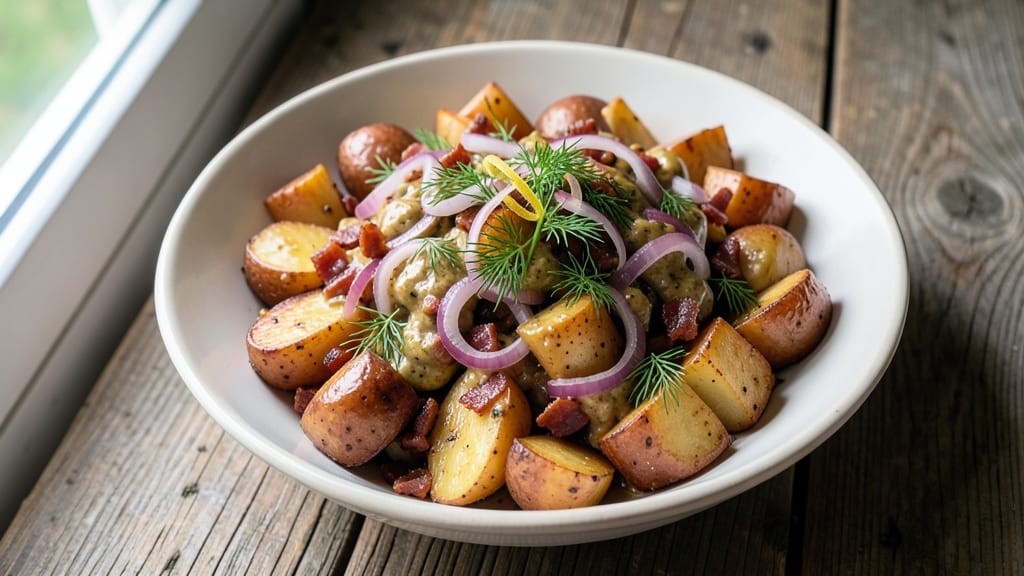
This baked German potato salad recipe transforms simple potatoes into a hearty, crispy-edged masterpiece that steals every meal. I first tried it after finding my grandmother's handwritten notes—her secret was baking the potatoes until golden and crispy, then mixing them with tangy mustard and vinegar.
The result? A dish that's rich enough for a main course but simple enough for weeknight dinners.
The magic happens in two stages: baking the potatoes until tender with crispy edges, then tossing them with a dressing of mustard, vinegar, and bacon (or vegan substitutes). This method ensures every bite delivers that perfect contrast—creamy potatoes with satisfying crunch.
My grandmother always said the onions were the game-changer, and she was right: crispy fried onion rings add a savory crunch that elevates everything.
What makes this recipe special is its versatility—serve it as a side for holiday dinners or as a main dish with a fresh salad. The dressing balances tangy and sweet, while the bacon (or smoked paprika for vegetarians) adds depth.
It's the kind of dish that tastes even better the next day, making it perfect for meal prep.
Ready in just 45 minutes, this salad delivers restaurant-quality results with minimal effort. The crispy edges and creamy centers make it impossible to resist, and the flavor only gets better as it sits. Let's get cooking!
Ingredients for baked german potato salad
These hearty ingredients transform ordinary potatoes into a crispy-edged, tangy masterpiece perfect for holiday feasts or weeknight dinners.
| Ingredient | Amount | Notes |
|---|---|---|
| Russet Potatoes 🥔 | 3 lb | Medium size, unpeeled for texture |
| Yellow Onions 🧅 | 2 whole | Thinly sliced for rings |
| Vegetable Oil 🫒 | ½ cup | For frying onions, high smoke point |
| Dijon Mustard 🍯 | ¼ cup | High-quality for tangy depth |
| Apple Cider Vinegar 🍎 | ¼ cup | For bright acidity |
| Granulated Sugar 🍚 | 2 tbsp | Balances tangy dressing |
| Salt 🧂 | 1 ½ tsp | Kosher or sea salt preferred |
| Black Pepper 🌶️ | ½ tsp | Freshly ground for warmth |
| Bacon (or Smoked Paprika for vegan) 🥓 | ½ cup | Crumbled, or 1 tbsp smoked paprika |
| Fresh Parsley 🌿 | ¼ cup | Chopped, for fresh finish |
| Heavy Cream (or Coconut Cream for vegan) 🥛 | ¼ cup | For richness, optional |
| Garlic Cloves 🧄 | 3 cloves | Minced for flavor depth |
The potatoes are the foundation—Russet gives the best crispy edges when baked. Look for medium-sized potatoes at Whole Foods or your local market; they hold their shape better than smaller ones. If you can't find Russets, Yukon Golds work too, but they'll be slightly creamier. The onions are non-negotiable—yellow onions add sweetness when caramelized, and thinly slicing them ensures perfect rings. For the best crisp, fry them in small batches until golden brown. My grandmother swore by using vegetable oil for its high smoke point, but avocado oil works just as well.
No bacon? Smoked paprika delivers that same smoky depth—use 1 tablespoon for the same amount of crumble. The mustard and vinegar are the tangy backbone, so don't skimp. Dijon mustard adds complexity, while apple cider vinegar keeps it bright. If you're making this ahead, let the dressing sit for 10 minutes before tossing with the potatoes—it mellows the sharpness. The sugar balances the acidity, but if you prefer less sweetness, reduce it to 1 tablespoon. For extra richness, coconut cream works perfectly as a vegan substitute for heavy cream. Fresh parsley is optional but adds a pop of color and freshness—dried won't cut it here.
This salad tastes even better the next day, so make it ahead if you can. Store the baked potatoes and fried onions separately in the fridge for up to 3 days, then toss with the dressing when ready to serve. The onions stay crispy for 2 days if kept in an airtight container. For meal prep, portion the dressing separately and mix it in just before serving to keep the potatoes from getting soggy. The crispy edges are best enjoyed fresh, so don't skip the final bake if you're reheating.
Why You'll Love This Recipe
- No Boiling Required: I’ll admit—skipping the boil is a game-changer here. You just toss those Russets with onions, oil, and a splash of vinegar, then bake until golden. No draining, no waiting for water to boil over, just hands-off perfection while you handle the rest of dinner.
- Tangy Crispy Magic: That Dijon mustard and apple cider vinegar combo? It’s the secret weapon. The vinegar cuts through the richness of the potatoes, while the mustard adds a sharp, almost umami depth. The onions caramelize right in the oven, giving you that sweet, jammy bite that makes every forkful irresistible.
- Picnic-Proof & Crowd-Friendly: Between us, this is my go-to for potlucks, barbecues, or even a lazy Sunday spread. The potatoes hold up for days in the fridge, and the flavors only get better as they mellow. Plus, it’s one of those dishes where everyone will ask for seconds—no one will care if it’s not the fanciest side on the table.
- Budget Breakthrough: Russets and onions are cheap staples, and you’re not wasting anything. The leftovers? Even better cold the next day, packed in lunches, or reheated for a quick weeknight dinner. Honestly, it’s the kind of recipe that makes grocery day feel like a win.
Step-by-step instructions for baked German potato salad
This method delivers tender, warm potatoes with perfectly crisp onion rings—no boiling required.
Bake the Potatoes Until Fork-Tender
Preheat your oven to 375°F. Scrub the 3 lb russet potatoes clean (no need to peel) and cut them into 1-inch chunks. Toss the potato pieces with 2 tablespoons granulated sugar and 1 teaspoon salt—this helps caramelize the edges and enhances flavor as they bake.
Spread the potatoes in a single layer on two rimmed baking sheets, leaving space between each piece. Bake for 35-40 minutes, stirring once halfway through, until the potatoes are golden brown and a knife slides in easily. The sugar will create a subtle caramelized crust, but don't let them brown too darkly or they'll dry out. Remove from the oven and let them cool slightly for 5 minutes before handling.
Fry the Onion Rings Until Crispy
While the potatoes bake, slice the 2 whole yellow onions into ¼-inch thick rings. Heat ½ cup vegetable oil in a large skillet over medium-high heat until it shimmers but isn't smoking. Add the onion rings in a single layer and cook for 2-3 minutes per side until they're deep golden brown and crispy. Transfer to a paper towel-lined plate to drain excess oil.
If you're using ½ cup bacon, cook it in the same skillet over medium heat until crispy, then crumble it into small pieces. Set aside for later—this will add a smoky depth to the dressing. For a vegan version, simply omit the bacon and use 1 tablespoon smoked paprika in the dressing instead.
Make the Tangy Mustard Dressing
In a medium bowl, whisk together the ¼ cup Dijon mustard, ¼ cup apple cider vinegar, ½ teaspoon black pepper, and the 3 minced garlic cloves. Gradually whisk in the ½ cup heavy cream (or coconut cream for vegan) until smooth. Taste and adjust seasoning—you want a balance of tangy, creamy, and slightly sweet. The dressing should coat the back of a spoon but still be pourable.
If the dressing feels too thick, add 1 tablespoon apple cider vinegar at a time until it reaches the right consistency. This dressing is the heart of the dish, so don't rush it—properly emulsified dressing ensures every bite is flavorful.
Combine Everything for Maximum Flavor
In a large bowl, gently fold the warm potatoes with the crispy onion rings and crumbled bacon (or smoked paprika). Pour the dressing over the top and toss carefully to coat everything evenly. Sprinkle with the ¼ cup chopped fresh parsley and the remaining ½ teaspoon salt. Let the salad sit for 5 minutes to allow the flavors to meld together—this is when the magic happens.
Serve immediately while the potatoes are still warm and the onions are crispy. The contrast of tender, warm potatoes with the crunchy onion rings and tangy dressing makes this salad a standout dish. If you're serving it at a gathering, assemble it just before serving to maintain the perfect texture.
Pro Tips For Making Baked German Potato Salad
- CUT POTATOES EVENLY: Use a mandoline or sharp knife to slice Russets into ¼-inch rounds—no thicker, no thinner. Uneven pieces mean some stay crunchy while others turn to mush, and nobody wants that texture fight in their salad.
- COOL POTATOES BEFORE DRESSING: Let baked potatoes sit 15 minutes after roasting before tossing with the mustard-vinegar mix. Warm potatoes absorb the dressing like a sponge, turning your salad into a soggy mess—trust me, you’ll regret it.
- CARAMELIZE ONIONS FIRST: Sauté thinly sliced yellow onions in oil until deep golden, not just soft. That sweetness cuts through the tang of apple cider vinegar and makes the whole dish sing—skip this, and you’re missing the flavor payoff.
- WHISK MUSTARD INTO OIL: Mix Dijon mustard directly into the warm oil before adding vinegar. It emulsifies better, giving the dressing a silky coat instead of separating like a sad, greasy puddle—no one wants to stir that back together.
Storing and reheating this baked german potato salad
Refrigerator Storage
Store the baked potatoes and fried onions separately in airtight containers for up to 3 days—this keeps the onions crispy and prevents soggy potatoes. My grandmother always said the secret to next-day perfection is letting everything cool completely before refrigerating.
I use glass Pyrex containers with tight lids because they keep flavors sealed in better than plastic. 🥔
If you're making the dressing ahead, store it separately in a small jar. The tangy mustard and vinegar flavors actually improve overnight, so don't hesitate to prep it the day before. Just give it a quick whisk before tossing with the potatoes to re-emulsify.
Freezer-Friendly Method
For longer storage, freeze the baked potatoes (without dressing) for up to 2 months. Spread them on a tray to freeze solid first, then transfer to freezer bags with all the air squeezed out.
When ready to use, thaw overnight in the fridge and reheat in a 350°F oven for 15-20 minutes with a drizzle of oil to restore crispiness.
The fried onions don't freeze well—they turn rubbery—but you can freeze the dressing separately. Thaw it in the fridge overnight, then toss with freshly fried onions and reheated potatoes for the best results.
Reheating for Best Texture
For the crispiest results, reheat the potatoes in a skillet over medium heat for 5-7 minutes, stirring occasionally. Add a splash of water or broth if they look dry. The onions should be reheated separately in the same skillet for 2-3 minutes to restore their crunch. 🔥
If using the microwave, cover with a damp paper towel and heat in 30-second intervals, stirring between each, until warmed through. This method works in a pinch but won't give you that perfect oven-baked texture.
Make-Ahead Tips
This salad tastes even better the next day, so I always make it ahead for gatherings. Assemble everything except the parsley, then store components separately. When ready to serve, toss with fresh parsley and a pinch of salt to brighten the flavors.
The onions will lose some crispness but still add great texture.
For meal prep, portion the dressing into small containers and mix it in just before serving. This keeps the potatoes from absorbing too much moisture and becoming soggy. The contrast of warm, creamy potatoes with crisp onions is what makes this dish special!
Nutrition facts
Frequently asked questions
Why does this German potato salad need to be baked instead of boiled?
The baking method creates that signature crispy edge on the potatoes while keeping the centers tender—boiling makes them mealy. The sugar in the baking process also caramelizes slightly, adding natural sweetness that balances the tangy mustard dressing. This traditional technique is what gives German potato salad its unique texture and depth of flavor.
Can I use sweet potatoes instead of russets?
You can try, but russet potatoes are ideal because they're starchier and hold their shape better when baked. Sweet potatoes will give you a different texture—more moist and slightly sweet—so the final dish will taste distinct. If you prefer sweet potatoes, reduce the sugar in the baking process to 1 tablespoon and add ½ teaspoon cinnamon to complement their natural sweetness.
How do I keep the onion rings crispy when reheating?
Reheat the onions separately in a dry skillet over medium heat for just 2-3 minutes—they'll crisp up again instantly. Never reheat them in the microwave or with the potatoes, as moisture will make them soggy. For make-ahead meals, fry extra onions and store them in an airtight container; they'll stay crisp for 2 days if kept completely dry.
What's the secret to getting the dressing just right?
The dressing needs to be emulsified properly—whisk the mustard and vinegar first, then slowly add the cream while whisking continuously. If it separates, add 1 teaspoon Dijon mustard at a time until it thickens slightly. The key is balance: tangy from vinegar, creamy from the mustard, and a touch of sweetness from the sugar. Taste as you go and adjust with more vinegar or cream as needed.
Can I make this vegetarian or vegan?
Skip the bacon and use 1 tablespoon smoked paprika in the dressing for depth. For vegan, replace heavy cream with coconut cream and ensure your mustard is vegan-friendly. The dish will still be rich and flavorful—just swap out the animal products without sacrificing texture. This version works perfectly as a hearty side for plant-based meals.