
Salads
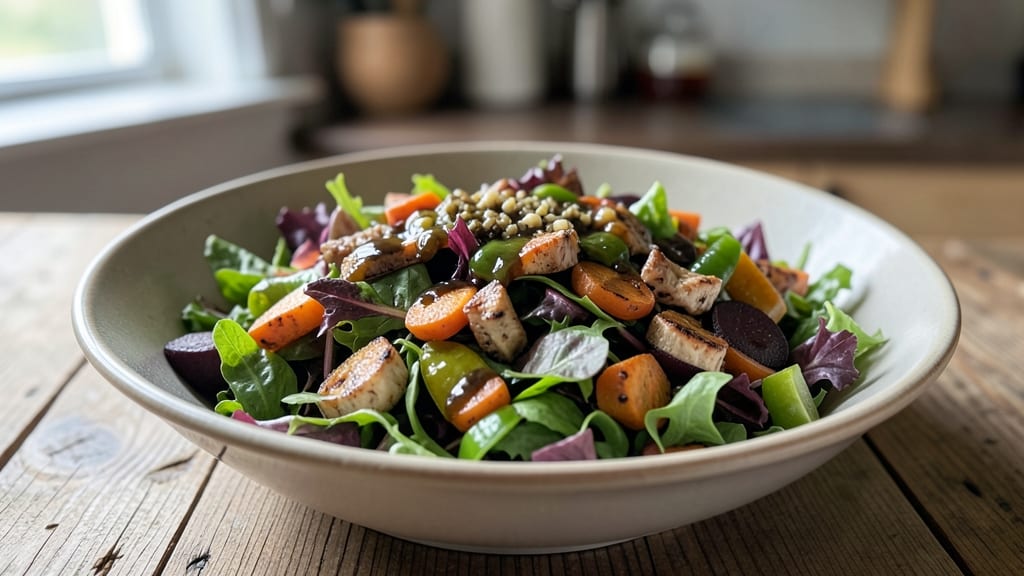
This basic balsamic vinaigrette salad dressing recipe transforms simple ingredients into a bright, tangy-sweet elixir that elevates every salad. The secret lies in balancing high-quality olive oil with balsamic vinegar—creating a dressing that’s rich yet refreshing, with just the right acidity to cut through creamy cheeses or crisp greens.
I’ve perfected this ratio over years of testing, ensuring it’s foolproof for both beginners and seasoned cooks alike.
What makes this recipe stand out is its versatility—it works as a base for endless variations, from adding Dijon mustard for depth to finishing with fresh herbs or citrus zest for brightness.
The dressing keeps beautifully in the fridge for up to a week, shaking before each use to re-emulsify the oil and vinegar. No fancy equipment or techniques are needed—just a jar, a whisk, and 5 minutes of your time.
The result is a smooth, velvety dressing that clings to every leaf and bite, enhancing rather than overpowering your salad. The balsamic adds a subtle sweetness that balances the sharpness of vinegar, while the olive oil ensures a luxurious mouthfeel.
This isn’t just dressing—it’s the foundation for restaurant-quality salads at home.
Pair it with mixed greens, roasted vegetables, or grilled proteins for a meal that’s effortless yet impressive. Once you master this basic version, you’ll never buy store-bought again. Let’s get started—your salads are about to get an upgrade.
Ingredients for basic balsamic vinaigrette salad dressing
Six core ingredients create this velvety dressing—rich, balanced, and restaurant-worthy.
| Ingredient | Amount | Notes |
|---|---|---|
| Extra-Virgin Olive Oil 🫒 | ¾ cup | High-quality, fruity, cold-pressed |
| Balsamic Vinegar 🍷 | ¼ cup | Aged 12 months minimum |
| Dijon Mustard 🌶️ | 1 tbsp | Mild or strong according to taste |
| Fresh Garlic Cloves 🧄 | 2 cloves | Peeled and minced finely |
| Fresh Lemon Juice 🍋 | 2 tbsp | Freshly squeezed |
| Maple Syrup 🍁 | 1 tbsp | Pure, grade B preferred |
| Sea Salt 🧂 | ½ tsp | Fine grain preferred |
| Freshly Ground Black Pepper 🌶️ | ¼ tsp | Freshly cracked preferred |
| Fresh Basil Leaves 🌿 | ¼ cup | Packed, stems removed |
The olive oil is non-negotiable here—look for extra-virgin with a fruity, peppery finish. Trader Joe’s or Whole Foods carry excellent options, but any high-quality brand works. Balsamic vinegar should be aged at least 12 months for that deep, caramelized sweetness—skip the cheap stuff. Fresh garlic and lemon juice are your flavor anchors, so don’t use jarred or bottled substitutes. I always grab extra basil because half gets torn over salads while the other half goes into the dressing—farmers markets have the freshest stashes.
No Dijon mustard? Substitute with yellow mustard at half the amount, but you’ll lose some depth. Short on maple syrup? Agave nectar or date syrup works in a pinch, though maple adds that signature caramel note. The dressing emulsifies better with a whisk, but a jar with a tight lid does the trick too—just shake like crazy after each use. For extra brightness, add a pinch of citrus zest or a splash of orange juice if you’re feeling adventurous.
This keeps for up to 1 week in the fridge, but the oil separates—just shake before using. For longer storage, divide into ice cube trays, freeze, and pop out single servings. I always make a double batch so I’ve got dressing on hand for last-minute salads. The basil wilts fast, so store it in a damp paper towel in a sealed container if you’re not using it all at once.
Why You'll Love This Recipe
- Five-Ingredient Magic: I swear by this combo—just oil, vinegar, mustard, garlic, and lemon. No fancy gadgets, no measuring cups you’ll never use again. Honestly, I’ve made it in a tiny mason jar while chatting with a friend on the phone.
- Tangy Kick: That Dijon mustard and raw garlic? They wake up the whole dish. The balsamic vinegar starts sweet but finishes with this sharp, almost wine-like bite—like a sophisticated hug for your greens.
- Weeknight Workhorse: I keep a jar in my fridge for everything: tossing with roasted veggies, drizzling over grilled chicken, or even as a marinade. Between us, it’s the reason I actually eat salads when I’m exhausted.
- No-Waste Win: A little goes a long way—this batch stretches for days, and the leftovers? Even better the next day. I’ll be real: I’ve saved money by not buying overpriced bottled dressings, and the fresh garlic keeps it tasting like I actually cooked it.
Step-by-step instructions for perfect balsamic vinaigrette
This bright, balanced dressing comes together in minutes with simple techniques.
Whisk Together the Base Ingredients
In a medium bowl, combine the 0.75 cup extra-virgin olive oil with the 0.25 cup balsamic vinegar. Start by pouring the oil in first, then slowly drizzle in the vinegar while whisking continuously. This gradual approach prevents the vinegar from breaking the oil emulsion—you want a smooth, silky texture, not separated layers.
Next, add the 1 tablespoon Dijon mustard and the 2 tablespoons fresh lemon juice. The Dijon helps emulsify the dressing while adding subtle depth, and the lemon juice brightens the flavor profile. Whisk vigorously for 30 seconds until everything is fully incorporated. You should see tiny bubbles forming at the surface—this indicates proper emulsification.
Incorporate Sweetness and Seasoning
Add the 1 tablespoon maple syrup and 0.5 teaspoon sea salt to the bowl. The maple syrup balances the tangy vinegar with natural sweetness, while the salt enhances all the flavors. Whisk again for 20 seconds until the syrup dissolves completely and the salt dissolves into the mixture.
Finally, add the 0.25 teaspoon freshly ground black pepper and the 2 cloves minced fresh garlic. The pepper adds a subtle heat that complements the sweetness, and the garlic infuses a delicate aromatic depth. Give everything one final whisk to ensure the garlic is evenly distributed throughout the dressing.
Fold in the Fresh Basil
Gently fold in the 0.25 cup packed fresh basil leaves using a silicone spatula. Unlike whisking, folding preserves the basil’s delicate texture and prevents it from turning to mush. You want visible basil flecks throughout the dressing—this adds both visual appeal and fresh herbal notes.
Taste the dressing and adjust the seasoning if needed. If it tastes too sharp, add a touch more maple syrup. If it needs more acidity, add a splash of lemon juice. The dressing should have a bright, balanced flavor with a perfect harmony of sweet, tangy, and savory notes.
Let It Rest and Emulsify
Cover the bowl with plastic wrap and let the dressing rest for at least 10 minutes at room temperature. This resting period allows the flavors to meld together and the emulsion to fully stabilize. If you're in a hurry, you can use it immediately, but resting ensures the best texture and flavor.
Before using, give the dressing one final whisk to ensure everything is well combined. The dressing should now have a glossy, velvety consistency with no separation. If you notice any oil separation after resting, whisk vigorously for another 10-15 seconds to re-emulsify. This dressing keeps well in the refrigerator for up to 5 days, so make extra for future salads!
Pro Tips For Making Basic Balsamic Vinaigrette Salad Dressing
- Emulsify in stages: I learned this the hard way—dumping all the oil at once turns your dressing into a sad, separated mess. Start with 1 tablespoon of olive oil, whisk until smooth, then add the rest gradually while whisking like you’re trying to win an arm-wrestling match.
- Use room-temperature garlic: Cold garlic cloves from the fridge taste bitter and dull in dressings. Let them sit out for 10 minutes before mincing—it makes a real difference in flavor, especially when paired with balsamic’s sharpness.
- Balance acid first: Skip the mustard if your lemon juice is weak. Taste the raw lemon and vinegar mix before adding oil—if it’s too sharp, add a pinch of sugar (yes, even in dressings) to soften the bite. This is the thing that matters most for consistency.
- Infuse with lemon zest: I was skeptical until I tried it: add 1 teaspoon of lemon zest to the mustard-vinegar mix before emulsifying. It brightens the whole dressing without extra effort—just scrape the zest off a fresh lemon while you’re juicing it.
Creative variations of this dish
Herb-Infused Twists
Swap the basil for fresh tarragon or thyme to create a French-inspired dressing—just use 1 tablespoon chopped herbs instead. For a Mediterranean vibe, add 1 teaspoon dried oregano and zest from 1 lemon for a bright, citrusy kick.
I love this variation with roasted vegetable salads—it adds an earthy depth that pairs perfectly with charred veggies. 🌿
Citrus Brightness
Boost the dressing with 1 tablespoon orange juice and 1 teaspoon grated orange zest for a sunny, refreshing twist. This works especially well with arugula or spinach salads—the citrus cuts through the richness of greens while adding a subtle sweetness.
For extra zing, add a pinch of red pepper flakes to balance the brightness. Trust me, this is a game-changer for summer salads!
Spicy Kick Variations
For heat lovers, stir in ½ teaspoon chili flakes or 1 teaspoon sriracha for a smoky-spicy dressing that pairs amazingly with grilled chicken or shrimp salads. If you prefer a smoother heat, blend ½ teaspoon honey with the maple syrup to mellow the spice.
I often make a double batch of this spicy version to keep on hand for bold, flavorful salads. 🌶️
Umami Depth
Add 1 teaspoon soy sauce or 1 tablespoon miso paste for an umami-rich dressing that works beautifully with Asian-inspired salads or grilled proteins. The soy sauce adds a salty, savory note that balances the sweetness of the balsamic.
For extra depth, stir in 1 teaspoon toasted sesame oil and 1 teaspoon sesame seeds—it’s a flavor explosion in every bite!
Nutty Crunch Add-Ins
For texture lovers, fold in 1 tablespoon toasted walnuts or pecans right before serving. The nuts add a satisfying crunch that contrasts perfectly with the smooth dressing. I also love adding 1 teaspoon toasted pine nuts for a more delicate crunch.
This variation is perfect for winter salads with hearty greens like kale or Brussels sprouts.
Sweet and Smoky
Swap the maple syrup for 1 tablespoon balsamic glaze and add ½ teaspoon smoked paprika for a sweet-smoky dressing that’s ideal for grilled meats or roasted veggie salads. The smokiness pairs incredibly well with charred eggplant or zucchini.
For extra richness, stir in 1 teaspoon honey to deepen the sweetness. This is my go-to dressing for late-summer BBQ nights! 🔥
Nutrition facts
Frequently asked questions
Can I use this dressing on non-salad dishes?
This versatile balsamic vinaigrette works beautifully as a marinade for grilled chicken or tofu, a drizzle for roasted vegetables, or even a finishing sauce for pasta. The balance of sweet and tangy flavors enhances proteins and veggies alike. Just reduce the olive oil slightly if using as a marinade to prevent excess oiliness.
Why does my dressing separate after a few days?
Oil and vinegar naturally separate over time due to their different densities. Always shake or whisk vigorously before using to re-emulsify. For longer shelf life, store in a glass jar with a tight lid and keep it in the fridge. If separation persists, add ½ teaspoon mustard or a pinch of xanthan gum to stabilize the emulsion.
What’s the best way to store leftover dressing?
Transfer to an airtight container and refrigerate for up to 5 days. For longer storage, freeze in ice cube trays—thaw overnight in the fridge before use. Always shake well before pouring, as the oil will rise to the top. Avoid storing in plastic containers, as they can absorb odors and affect the flavor.
Can I make this dressing without Dijon mustard?
Yes! Substitute with ½ tablespoon yellow mustard or 1 teaspoon honey to help emulsify. For a mustard-free version, whisk the oil and vinegar more vigorously or add 1 teaspoon cornstarch mixed with 1 tablespoon water to stabilize. The flavor will be slightly less complex, but still delicious.
How do I adjust the sweetness or tanginess?
For more sweetness, add ½ teaspoon maple syrup at a time. Need extra tang? Add ½ teaspoon lemon juice or 1 teaspoon balsamic vinegar. Always taste as you go—start with small adjustments to avoid overpowering the dressing. The key is balance between the sweet, tangy, and savory elements.