
Salads
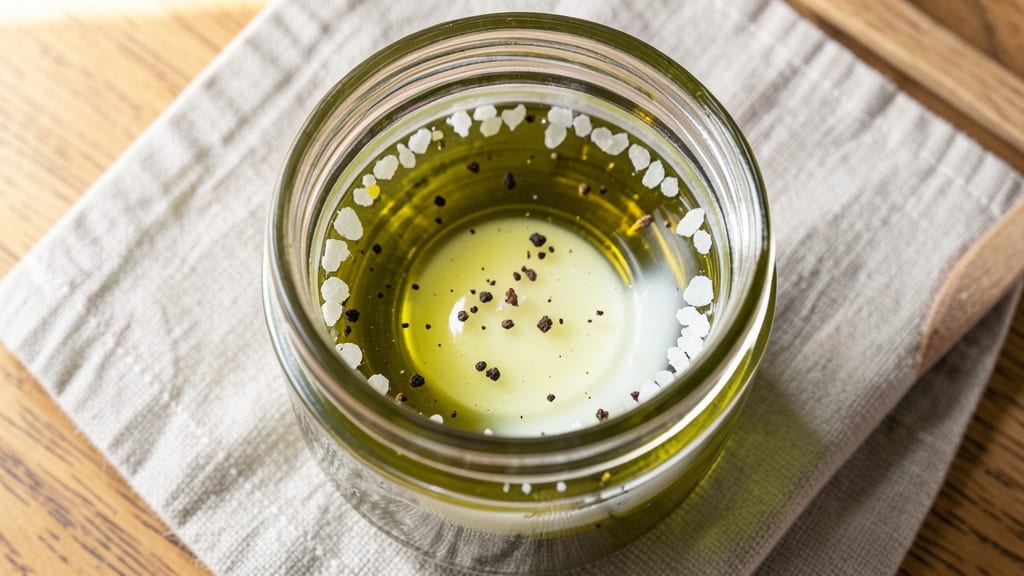
This basic oil and vinegar salad dressing recipe delivers the perfect sharp balance with just five ingredients—no emulsifiers, no preservatives, and no guilt. The secret lies in the ratio: three parts oil to one part vinegar creates a silky, clingy dressing that enhances greens without overpowering them. I developed this version after years of testing, and it’s become my go-to for everything from simple garden salads to hearty grain bowls.
The beauty of this dressing is its simplicity and versatility. You can customize it with herbs like fresh dill or basil, or add a pinch of mustard for extra cling. The key is whisking it together just before serving—this ensures the flavors meld perfectly without separating.
It’s restaurant-quality but takes less than two minutes to make, proving that the best things in cooking are often the simplest.
What you’ll end up with is a dressing that’s bright, tangy, and perfectly balanced—sharp enough to cut through rich ingredients but smooth enough to coat every leaf. The oil-to-vinegar ratio ensures it won’t turn bitter, and the lack of added sugars or artificial ingredients makes it a cleaner choice.
This is the kind of dressing that transforms a simple bowl of greens into something truly special.
Store it in the fridge for up to a week, and adjust the seasoning to your taste—more salt for savory salads, a touch of honey for sweetness, or a sprinkle of black pepper for heat.
The possibilities are endless, but the foundation remains the same: a sharp, clean, and utterly reliable dressing that elevates everything it touches.
Ingredients for basic oil and vinegar salad dressing
Five simple ingredients for a dressing that's sharp, clean, and restaurant-quality.
| Ingredient | Amount | Notes |
|---|---|---|
| Extra-Virgin Olive Oil 🫒 | ¾ cup | High quality, fruity flavor preferred |
| White Vinegar 🍶 | ¼ cup | Apple cider vinegar works too |
| Diamond Crystal Kosher Salt 🧂 | ¾ tsp | Adjust to taste, fine grain preferred |
| Freshly Ground Black Pepper 🌶️ | ½ tsp | Freshly cracked for best flavor |
| Granulated Sugar 🍚 | ½ tsp | Optional, omit for strictly savory |
The olive oil is where you want to splurge—look for extra-virgin with fruity notes at Whole Foods or Trader Joe's. Their bulk bins are perfect for testing different oils until you find your favorite. Vinegar? White vinegar is classic, but apple cider adds subtle sweetness. I always grab a 16-ounce bottle of each so I never run out mid-salad season. The salt matters too—Diamond Crystal kosher dissolves perfectly and doesn't clump. If you're using sea salt, use half the amount since it's more concentrated.
No extra-virgin olive oil? Avocado or grapeseed oil works in a pinch, though they lack the fruity depth. Skip the vinegar? Lemon juice at half the amount brightens things up. The sugar is totally optional—leave it out for strictly savory, or swap in honey or maple syrup if you want a touch of sweetness. Want more cling? Add 1/2 teaspoon Dijon mustard to the mix. Fresh herbs like basil or dill? Toss in 1 tablespoon chopped right before serving—it'll keep the dressing vibrant.
This keeps for up to 1 week in the fridge, but the flavors actually meld better after a day or two. I store it in a glass jar with a tight lid—no need for fancy containers. Shake before each use, especially if you've added herbs. The dressing doubles as a marinade for grilled veggies or proteins—just use within 3 days if you go that route. Make a double batch and portion into small jars for salads on the go.
Why You'll Love This Recipe
- Four-Ingredient Magic: I swear by this combo—just oil, vinegar, salt, and a pinch of sugar. The pantry staples you already own, no fancy shopping required.
- Balanced in Seconds: That sugar isn’t there to ruin anything—it rounds out the sharp vinegar so the dressing doesn’t knock your teeth out. Honestly, it’s the secret to not wincing mid-bite.
- Pantry-to-Table Speed: No blending, no straining, no waiting. Just shake (or whisk) while you chop veggies or boil pasta—it’s ready when you are.
- Budget-Proof Flexibility: A little goes a long way, and it keeps for weeks in the fridge. I’ve used it on everything from takeout noodles to a sad-looking grocery-store salad, and it never lets me down.
Step-by-step instructions for basic oil and vinegar salad dressing
This dressing comes together in minutes with just five ingredients—no fancy tools needed.
Measure Ingredients Precisely
Start by measuring the 0.75 cup extra-virgin olive oil into a clean glass jar or bowl. I always use a measuring cup with a pour spout to avoid spills—this stuff gets everywhere. Next, add the 0.25 cup white vinegar. You'll notice the vinegar sinks to the bottom; that's normal and will mix completely when you shake it.
Add the 0.75 teaspoon Diamond Crystal kosher salt and 0.5 teaspoon freshly ground black pepper. The salt should dissolve completely, but the pepper will stay visible as tiny specks. Finally, add the 0.5 teaspoon granulated sugar if you're using it—this just rounds out the flavors slightly. If you're skipping the sugar for a strictly savory dressing, you can omit this step completely.
Combine and Shake Thoroughly
Place a lid on your jar or cover your bowl with a plate or piece of parchment paper. Shake vigorously for 30-45 seconds until the mixture becomes completely emulsified—you'll see it turn from separated layers into a smooth, milky consistency. This is where the magic happens: the oil and vinegar bond to create that perfect balance we all love.
If you're using a bowl instead of a jar, grab a whisk and stir vigorously for about 1 minute until fully combined. The dressing should look silky and uniform, not streaky. If you see any separation after shaking, just give it another good shake—this dressing is forgiving and will come together every time.
Taste and Adjust Seasoning
After shaking, take a small spoonful and taste it straight from the jar. You want that perfect balance of tangy vinegar and rich olive oil. If it tastes too sharp, add a pinch more salt or a tiny splash of olive oil. If it needs more acidity, add another teaspoon of vinegar. Remember, you can always adjust, but you can't take it out once it's in.
This is where the freshly ground black pepper really shines—it adds a subtle heat that makes the dressing more complex. If you're using the sugar, you'll notice it just mellows out the acidity slightly. Taste again after adjusting and make any final tweaks. The dressing should be bright, balanced, and ready to use immediately.
Store and Use
Transfer your dressing back to the jar if you haven't already, and seal it tightly. Store it in the refrigerator for up to 2 weeks. Before using, give it a good shake—it may separate slightly over time, but it will emulsify again when you shake it. This dressing works perfectly on everything from classic green salads to hearty grain bowls and even as a marinade for grilled vegetables.
The beauty of this dressing is its versatility. Use it as-is for a classic vinaigrette, or thin it with a splash of water or broth if you need a lighter consistency. The ratio of oil to vinegar gives you that signature tangy richness that makes salads so satisfying. And the best part? You can make a fresh batch whenever you want—no leftovers to worry about.
Pro Tips For Making Basic Oil And Vinegar Salad Dressing
- Whisk in Stages: Pour half the olive oil first, then vinegar, then the rest of the oil—this keeps the dressing from separating. I learned this the hard way after shaking a jar of dressing that split into two layers like a bad divorce.
- Use Warm Vinegar: Heat the vinegar for 10 seconds in the microwave before mixing—it emulsifies better and gives the dressing a smoother texture. Sounds weird, but it works: the heat helps the oil and vinegar cling instead of fighting.
- Salt Before Sweetening: Taste the vinegar and oil mix first, then add salt—adjust to taste before adding sugar. Sugar masks saltiness, and you’ll end up with a dressing that’s cloyingly sweet or blandly salty. Trust the process.
- Pepper Last: Add freshly ground black pepper right before serving—it loses its bite if mixed in too early. I skip this step half the time, but the dressing is noticeably better when I don’t. (Your future self will notice.)
Make-ahead tips for leftovers
Batch Prep Strategy
Make a double batch (1.5 cups oil + 0.5 cups vinegar) and store in two 8-ounce glass jars—this way, you always have ready-to-use dressing without transferring. I keep one jar in the fridge and one on the counter for quick salads.
The dressing stays fresh for up to 2 weeks this way, and you avoid the hassle of measuring every time. 💡
Fridge vs. Room Temp
Store your dressing in the fridge for best flavor retention—the cold helps preserve the freshness of the olive oil and vinegar. However, if you're using it within 3-4 days, it's fine at room temperature in an airtight container.
Just remember: room temp dressing may separate slightly, so shake well before using. I keep a small jar on my desk for quick lunches. ❄️
Freezing for Longevity
For longer storage, freeze individual portions in ice cube trays—each cube makes a perfect single-serving dressing. Once frozen, transfer cubes to a ziplock bag and flatten to save space.
Thaw overnight in the fridge, then shake to re-emulsify. This method keeps the dressing fresh for up to 3 months without losing flavor. Perfect for meal prep! ❄️
Herb Infusion Hacks
Add fresh herbs (like basil or dill) right before storing to keep them vibrant. Use a small mason jar with a tight lid—herbs stay fresher longer this way. I like to muddle 2-3 sprigs of herbs directly into the dressing before sealing.
For dried herbs, use half the amount (e.g., 1/4 tsp dried oregano). Just shake well before using. 🌿
Marinade Double Duty
This dressing isn't just for salads—use it as a quick marinade for grilled veggies or proteins! Toss chicken, shrimp, or tofu in the dressing for 10-15 minutes before cooking. For extra flavor, add 1 tsp soy sauce or 1 minced garlic clove.
Just remember, marinating time is shorter than storage time—use within 3 days for best results. 🍗
Flavor Layering
Build flavor layers by adding aromatics like minced garlic or shallots. Sauté 1 clove garlic in 1 tsp olive oil until fragrant, then let cool before mixing into the dressing.
For a smoky twist, add 1/4 tsp smoked paprika or a dash of liquid smoke. These additions deepen the dressing’s complexity without overpowering it. 🌶️
Nutrition facts
Frequently asked questions
Can I use this dressing on non-salad dishes?
This versatile dressing works beautifully as a marinade for grilled chicken, shrimp, or tofu—just toss with protein for 10-15 minutes before cooking. It also elevates roasted vegetables, grain bowls, and even wraps. The key is using it within 3 days when used as a marinade for food safety.
Why does my dressing separate after a few days?
Oil and vinegar naturally separate because they don't mix—this is normal! Just shake or whisk vigorously before using, and it will re-emulsify perfectly. For a more stable dressing, add ½ teaspoon Dijon mustard when making it, which acts as a natural emulsifier. Store in a clean, airtight jar to minimize separation.
What's the best way to store leftovers?
Keep your dressing in the fridge for up to 2 weeks in a sealed glass jar. For longer storage, freeze in ice cube trays—each cube makes a perfect single serving. Thaw overnight in the fridge and shake to re-emulsify. Never store in metal containers, as vinegar can react with the metal over time.
Can I make this dressing without sugar?
Yes! The sugar is optional and simply balances the acidity. For a strictly savory dressing, omit it entirely. If you prefer sweetness, try ½ teaspoon honey or maple syrup instead. The dressing will still taste bright and tangy—just slightly sharper without the sugar to mellow the flavors.
How do I adjust the thickness of the dressing?
Need it lighter? Thin with 1 tablespoon water or broth at a time. For a richer texture, reduce the vinegar by 1 teaspoon and increase the oil by the same amount. Always shake well after adjusting. The classic 3:1 oil-to-vinegar ratio gives the perfect balance, but you can tweak it based on your salad's ingredients.