
Salads
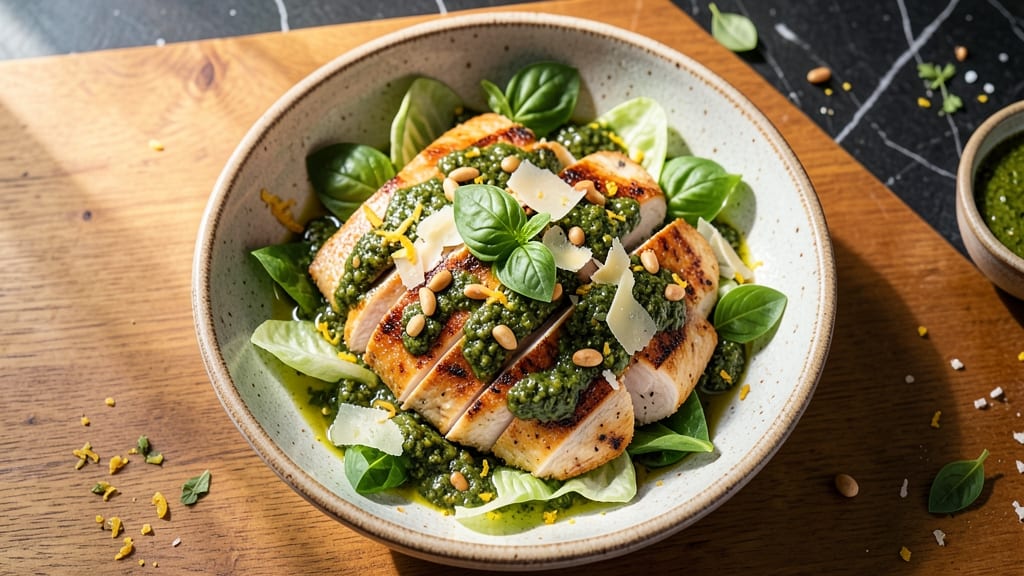
This basil pesto chicken salad recipe transforms simple ingredients into a restaurant-worthy meal that balances fresh herbs, tender protein, and crisp vegetables. The secret lies in homemade pesto—bright, herby, and packed with flavor—that elevates every component, while perfectly cooked chicken ensures each bite delivers satisfying texture.
I developed this dish during a particularly busy week when I needed a meal that felt special but required minimal effort, and it’s since become a staple in my rotation.
The foundation of this salad is a foolproof basil pesto that comes together in minutes with fresh basil, garlic, Parmesan, and olive oil. The pesto isn’t just a garnish—it’s the star, binding the chicken, celery, and greens into a cohesive, flavorful dish.
For the chicken, I recommend pan-searing or baking until it reaches 165°F, ensuring it stays juicy and tender while developing a subtle golden crust. The crisp celery crowns add a satisfying crunch that contrasts beautifully with the creamy pesto and fluffy chicken.
What you’ll end up with is a salad that’s vibrant, protein-rich, and packed with layers of flavor—herbaceous pesto, savory chicken, crisp celery, and fresh greens all working in harmony.
It’s the kind of dish that feels indulgent yet light, perfect for lunch or dinner when you want something hearty but not heavy. The best part? It comes together in under 30 minutes, making it ideal for weeknights or meal prep.
Serve it as-is for a fresh, herb-forward salad, or add optional toppings like toasted pine nuts, crumbled feta, or a squeeze of lemon for extra brightness. This recipe is versatile enough to adapt to your preferences while delivering restaurant-quality results at home. Let’s get started!
Ingredients for basil pesto chicken salad
Fresh basil, creamy Parmesan, and juicy chicken—this salad is all about bold flavors and crisp textures.
| Ingredient | Amount | Notes |
|---|---|---|
| Fresh Basil Leaves 🌿 | 2 cups | Packed, stems removed |
| Pine Nuts 🥜 | ½ cup | Toasted for richness |
| Garlic Cloves 🧄 | 3 cloves | Peeled, roughly chopped |
| Parmesan Cheese 🧀 | ¾ cup | Freshly grated from block |
| Extra-Virgin Olive Oil 🫒 | ¾ cup | High-quality, fruity |
| Lemon Juice 🍋 | 1 tbsp | Freshly squeezed |
| Salt 🧂 | ½ tsp | Diamond Crystal preferred |
| Black Pepper 🌶️ | ¼ tsp | Freshly ground |
| Boneless, Skinless Chicken Breast 🍗 | 1 ½ lb | Pounded to even thickness |
| Celery Crowns 🧅 | 2 whole | Thinly sliced, crisp |
| Mixed Greens 🥬 | 6 cups | Butter lettuce or spring mix |
| Red Wine Vinegar 🍷 | 1 tbsp | For optional dressing |
| Honey 🍯 | 1 tsp | For optional dressing |
The basil is non-negotiable here—farmers market basil is ideal, but anything bright and fragrant works. Trader Joe's has the best pre-packed bunch for convenience, though. Toasting the pine nuts in a dry pan for 2-3 minutes brings out their nutty flavor (don't walk away—burn fast!). For the Parmesan, grate it yourself—pre-shredded has anti-caking agents that make it grainy. The chicken should be room temperature when cooking for even doneness. I always buy organic chicken breast from Costco when I can—it's worth the extra few bucks for the texture.
No pine nuts? Walnuts or pecans work just as well—just toast them first. Running short on basil? Spinach or arugula can stretch it, but you'll lose that signature pesto flavor. The optional dressing (vinegar + honey) is a game-changer if you're serving this for lunch—it cuts through the richness. For the celery, buy the freshest crowns you can find—they should snap when bent. If they're rubbery, skip 'em. The greens? Pre-washed mixed greens from the store are fine, but I always rinse them one last time to remove any dirt from the packaging.
Pesto keeps best in the fridge with a thin layer of olive oil on top—prevents browning and keeps it fresh for 5 days. The chicken salad itself holds up for 3 days in the fridge, though the greens will get sad. I always make extra pesto and freeze it in ice cube trays—6 months in the freezer, no problem. For meal prep, store the pesto and chicken separately, then toss with greens when ready to eat. The celery stays crisp if you wrap it in damp paper towels and store it in a sealed container.
Why You'll Love This Recipe
- No Pulse Required: I swear, this comes together faster than my coffee order at the drive-thru. Toss the chicken in the oven, pulse the basil-pine nut mix in a food processor, and boom—you’ve got a meal that tastes like you spent hours.
- Pesto Perfection: That bright garlic-basil punch with crunchy pine nuts? It’s the kind of flavor that makes you pause mid-bite. The olive oil ties it all together so smoothly—no blandness here.
- Lunchbox Hero: Pack it cold for work or school—it stays fresh for days. Honestly, I’ve sent this in thermoses and it’s still the star of the lunch table. (Yes, even next to the fancy salads.)
- Pantry-Friendly Power: Uses what you already have—no specialty ingredients. The Parmesan adds that salty kick without breaking the bank, and leftovers? They disappear faster than I can say “second helping.”
Step-by-step instructions for basil pesto chicken salad
This vibrant salad brings together creamy pesto with tender chicken and crisp celery for a refreshing, protein-packed meal.
Cook the Chicken Breast to Perfect Tenderness
Place the 1.5 lb boneless, skinless chicken breast between two sheets of plastic wrap and pound it evenly to about ½-inch thickness using a meat mallet. This ensures even cooking. Season both sides generously with 0.5 tsp salt and 0.25 tsp black pepper, then heat 0.75 cup extra-virgin olive oil in a large skillet over medium-high heat.
Add the chicken and cook for 5-6 minutes per side until the internal temperature reaches 165°F and the juices run clear. The chicken should be golden on the outside but still moist inside—overcooking leads to dryness. Transfer to a cutting board, tent loosely with foil, and let it rest for 10 minutes before slicing into thin strips. This resting period keeps the meat juicy and makes slicing easier.
Make the Basil Pesto Dressing
In a food processor, combine the 2 cups fresh basil leaves, 3 cloves peeled garlic, and 0.5 cup toasted pine nuts. Pulse until finely chopped but not completely pureed—you want texture. With the processor running, slowly drizzle in the 0.75 cup extra-virgin olive oil until the mixture forms a thick paste. Add 0.75 cup freshly grated parmesan cheese and 1 tbsp freshly squeezed lemon juice, then pulse again until fully incorporated.
Taste and adjust seasoning with more salt or black pepper if needed. The pesto should be vibrant green, tangy, and rich with nutty depth. If it’s too thick, add 1-2 tsp water to loosen it slightly. Transfer to a bowl and set aside—this will be the base for your salad.
Prepare the Crisp Celery Crowns and Mixed Greens
Thinly slice the 2 whole celery crowns into ¼-inch ribbons using a sharp chef’s knife. The slices should be crisp and bright green—avoid crushing them, as this makes them soggy. In a large salad bowl, combine the 6 cups mixed greens and celery ribbons. The greens should look fresh and vibrant, not wilted.
Drizzle half of the basil pesto dressing over the greens and toss gently to coat evenly. The pesto should cling to the greens without pooling at the bottom. Set aside while you prepare the chicken.
Assemble and Serve the Chicken Salad
Add the sliced chicken strips to the salad bowl and toss lightly to combine. The chicken should be evenly distributed, with each bite offering a mix of creamy pesto, tender protein, and crisp celery. For an optional dressing upgrade, whisk together 1 tbsp red wine vinegar and 1 tsp honey with 1 tbsp extra-virgin olive oil for a sweet-tangy drizzle.
Serve immediately while the chicken is still warm and the celery remains crisp. Garnish with additional fresh basil leaves or a sprinkle of parmesan cheese for extra flavor. This salad is best enjoyed fresh—every bite delivers a perfect balance of herby pesto, juicy chicken, and refreshing crunch.
Pro Tips For Making Basil Pesto Chicken Salad
- Crush Pine Nuts First: I learned this the hard way—tossing whole pine nuts into the pesto just means you’ll end up with a few chewy bits and a lot of frustration. Lightly toast them first, then pulse in a food processor until they’re finely chopped (but not paste). This keeps the texture smooth and the flavor evenly distributed.
- Use Cold Chicken: If your chicken is still warm when you dice it, the pesto will turn into a sad, greasy mess. Let it cool completely before mixing—this keeps the salad bright and the pesto from separating. Pro tip: Slice while it’s still warm, then dump it into an ice bath for 5 minutes to speed things up.
- Toast Garlic Lightly: Raw garlic in pesto can taste bitter and overpower the basil. Sear the minced cloves in olive oil for 30 seconds until fragrant but not browned. Let them cool before mixing—this mellows the flavor and prevents a harsh bite.
- Pulse the Basil: Don’t just dump basil leaves into the food processor and hope for the best. Pulse them in batches with the Parmesan first, then add the oil and nuts. This keeps the texture vibrant and prevents a watery, mushy pesto. If it’s too thick, add olive oil 1 teaspoon at a time—you can always fix it, but you can’t undo a ruined texture.
Common mistakes when making perfect results
Overcooking the Chicken
I can’t stress this enough: 165°F is your target, not 170°F or higher. Chicken that’s even slightly overdone becomes dry and chewy, ruining the delicate texture this salad relies on.
I’ve learned this the hard way—once, I let my chicken rest too long after hitting 165°F, and by the time I served it, it was tough. Always use a meat thermometer and check the thickest part.
If you’re pan-searing, 5-6 minutes per side is your sweet spot for ½-inch thick breasts. 🔥
Skipping the Resting Period
That 10-minute rest after cooking is non-negotiable for juicy chicken. When I first started making this salad, I’d slice the chicken immediately, and it always ended up dry. The resting time lets the juices redistribute throughout the meat.
Pro tip: Tent the chicken loosely with foil to keep it warm without steaming. If you’re short on time, 5 minutes is the absolute minimum—but I promise, you’ll taste the difference. 💡
Using Wilted Celery
Celery is the backbone of this salad’s crunch, so don’t skimp on freshness. I’ve seen people use celery that’s been sitting in the fridge for days, and it turns mushy when tossed with the pesto. Always pick celery crowns that are bright green and crisp—they should snap when bent.
If your celery is already limp, slice it just before serving and store it separately in the fridge until ready to use. For extra crunch, chill the sliced celery in the fridge for 30 minutes before adding it to the salad. 🧅
Overprocessing the Pesto
Blending the basil pesto until it’s completely smooth kills its texture and flavor. You want a chunky, vibrant green paste with visible flecks of basil and pine nuts. I’ve made this mistake too—once, I blended mine into a paste, and it lost all its character.
Pulse the basil, garlic, and pine nuts just until finely chopped, then stream in the olive oil slowly. Taste it halfway through—it should still have texture. If it’s too thick, add 1 tsp water at a time. 🌿
Neglecting the Greens
Wilted greens ruin the salad’s freshness. I’ve seen people toss in greens straight from the fridge without drying them, and they turn soggy from the pesto’s moisture. Always dry your greens thoroughly with a salad spinner or clean kitchen towel before adding them to the bowl.
For extra vibrancy, add the greens to the salad just before serving. If you’re prepping ahead, store the pesto and chicken separately and toss with the greens when ready to eat. 🥬
Ignoring the Lemon Juice
That 1 tbsp lemon juice in the pesto isn’t just for flavor—it brightens the entire dish and prevents the pesto from turning bitter. I’ve made pesto without it, and after 30 minutes, it starts to lose its freshness.
The acidity also helps balance the richness of the Parmesan and pine nuts. If you forget to add it, a splash of red wine vinegar in a pinch works, but fresh lemon juice is always better. 🍋
Nutrition facts
Frequently asked questions
Can I use store-bought pesto instead of homemade?
You can, but the flavor won't be the same! Store-bought pesto often contains preservatives and lacks the fresh, vibrant taste of homemade. If you're short on time, choose a high-quality brand with minimal ingredients (just basil, olive oil, Parmesan, and pine nuts). For best results, though, I recommend making your own—it takes just 5 minutes in a food processor and makes a huge difference.
What's the best way to store leftovers?
Store the pesto, chicken, and celery separately in airtight containers. The pesto keeps for 5 days in the fridge (cover with olive oil to preserve freshness) or 6 months frozen in ice cube trays. The chicken salad holds for 3 days, but add the greens fresh when serving. For best texture, slice celery just before serving and store whole crowns wrapped in damp paper towels.
How can I make this salad gluten-free?
This recipe is naturally gluten-free, but check your Parmesan cheese for additives. Use certified gluten-free Parmesan if needed. For extra insurance, verify all ingredients (like olive oil and vinegar) are processed in gluten-free facilities. The pine nuts, celery, and greens are naturally gluten-free, so no other substitutions are required.
Can I grill the chicken instead of pan-searing?
Grilling adds a delicious smoky flavor. Marinate the chicken in 2 tbsp olive oil, 1 tsp garlic powder, and ½ tsp salt for 30 minutes before grilling over medium-high heat for 6-8 minutes per side until 165°F. Let it rest 10 minutes before slicing. The grilled version pairs especially well with the herby pesto.
What if I don't have pine nuts?
No problem! Swap pine nuts for walnuts or pecans (toast them first for better flavor). For a seed option, use sunflower seeds or pumpkin seeds