Salads
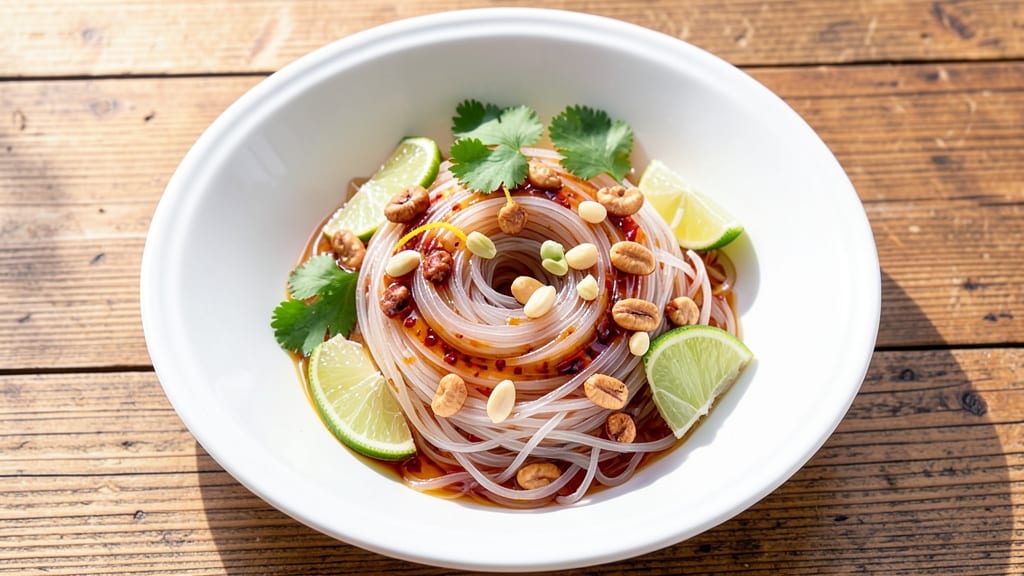
This bean thread salad recipe transforms delicate glass noodles into a silky, zesty dish that balances crisp chili heat with bright lime tang. The key lies in perfectly preparing the bean threads—soaking them just long enough to create that signature melt-in-your-mouth texture without turning them mushy.
I've perfected this technique over years of testing, ensuring every strand holds its shape while absorbing the dressing's vibrant flavors.
What sets this salad apart is the dressing—a harmonious blend of lime juice, garlic, and a touch of chili oil that adds both heat and depth. The secret to achieving the right balance is freshness: using just-pressed lime juice and finely minced garlic that infuses the threads without overpowering them.
For extra crunch, toasted peanuts or crushed chili peppers add texture that contrasts beautifully with the silky noodles.
The result is a dish that's as visually stunning as it is delicious—golden bean threads glistening with a glossy dressing, garnished with fresh herbs and crisp toppings. This salad works equally well as a refreshing appetizer or a light main course, especially when paired with grilled proteins or warm rice.
The best part? It comes together in just 20 minutes, making it perfect for weeknight dinners or last-minute entertaining.
For those who prefer it warm, gently toss the cooked threads with the dressing and a splash of vegetable broth before serving. Or keep it cold for a crisp, refreshing bite.
Either way, this bean thread salad delivers restaurant-quality results with minimal effort—proving that elegant dishes don't always require complicated techniques.
Ingredients for bean thread salad
Eight ingredients transform delicate glass noodles into a zesty, restaurant-worthy salad in minutes.
| Ingredient | Amount | Notes |
|---|---|---|
| Bean Thread Noodles (Glass Noodles) 🍜 | 8 oz | Dried, for soaking |
| Fresh Lime Juice 🍋 | ½ cup | Freshly squeezed, seeds removed |
| Garlic Cloves 🧄 | 4 cloves | Finely minced, fresh preferred |
| Chili Oil 🌶️ | 2 tbsp | Homemade or store-bought |
| Toasted Peanuts 🥜 | ¼ cup | Crushed for texture |
| Fresh Cilantro Leaves 🌿 | ¼ cup | Chopped, for garnish |
| Red Chili Peppers 🌶️ | 2 whole | Thinly sliced, for heat |
| Vegetable Oil 🫒 | 2 tbsp | For stir-frying |
| Soy Sauce (Vegan) 🍶 | 2 tbsp | Tamari for gluten-free |
| Sesame Oil 🫒 | 1 tbsp | Toasted, for aroma |
| Maple Syrup 🍯 | 1 tbsp | For subtle sweetness |
| Vegetable Broth 💧 | ½ cup | For warm option |
| Salt 🧂 | ½ tsp | Kosher or sea salt |
| Black Pepper 🌶️ | ¼ tsp | Freshly ground |
The bean threads are the star—look for dried glass noodles at Asian markets or the international aisle. King Noodle or Sun Noodle brands are my go-tos, but any dried version works. Soaking time is critical: too long and they turn mushy, too short and they're chewy. 10-12 minutes in warm water is perfect. Rinse them thoroughly after soaking to remove any grit. For extra silkiness, I like to drain and briefly stir-fry them in a dry pan for 30 seconds—just until they're warm and slightly glossy. The lime juice needs to be freshly squeezed—bottled juice lacks the bright tang that cuts through the richness of the dressing.
No chili oil? Mix 1 tbsp sriracha with 1 tbsp neutral oil for a quick substitute. The peanuts can be swapped for crushed cashews or sesame seeds if you prefer a nut-free option. Want more heat? Add 1 tsp chili flakes or a dash of gochujang. The garlic should be finely minced—almost paste-like—so it blends seamlessly into the dressing without chunks. If you're serving this warm, the vegetable broth is non-negotiable—it adds depth and prevents the noodles from drying out. For a smoky twist, swap half the sesame oil for toasted sesame paste.
Store the dried noodles in an airtight container for up to 6 months—they keep indefinitely. Once soaked, they're best used immediately, but you can refrigerate them for 2 days in a sealed container with a splash of water to keep them pliable. The dressing keeps for 3 days in the fridge, but the lime juice will mellow over time, so use it fresh whenever possible. For meal prep, store the components separately and toss together just before serving—this keeps the texture perfect. The peanuts and herbs stay crisp for 5 days in the fridge if stored in a sealed bag.
Why You'll Love This Recipe
- No-Cook Magic: I swear by this trick—just soak the glass noodles in hot water for 10 minutes, then toss them with lime and garlic. No boiling, no fuss, and zero cleanup. That’s right: you’re done before the kettle even finishes.
- Crunchy-Lime Wake-Up: The moment that lime hits those noodles? Instant brightness. The garlic cloves get a quick fry until golden—just enough to sing without overpowering—and the chili oil adds this smoky kick that makes every bite feel like a little celebration. (Yes, even on a Tuesday night.)
- Lunchbox Superstar: Between us, this is my go-to for work lunches or picnic spreads. Pack it in a jar, and it stays fresh for days. Add some cucumber or herbs if you’re feeling fancy, but honestly? The peanuts on top are the real MVP—they add this satisfying crunch that keeps me reaching for seconds.
- Pantry Goldmine: I’ve made this for under $5 a serving, no joke. Glass noodles last forever, lime juice freezes well, and garlic and peanuts are always cheap. Plus, leftovers? They actually improve—the noodles soften just enough to soak up more of that garlicky, tangy dressing. Budget-friendly doesn’t get better than this.
Step-by-step instructions for silky bean thread salad
Transform delicate glass noodles into a vibrant, crunchy salad with bright lime and fiery chili notes.
Soak and Prepare the Bean Thread Noodles
Place the 8 oz bean thread noodles (glass noodles) in a large mixing bowl and cover completely with cold water. Let them soak for 10-15 minutes until they become pliable and slightly translucent—you'll see them swell gently but still maintain their shape. Drain immediately using a colander and rinse under cold running water for 30 seconds to stop the cooking process.
Here's the thing—these noodles cook instantly in hot water, so soaking is the only way to soften them without turning them mushy. If you notice any strands sticking together, gently separate them with your fingers while still wet. This ensures each noodle remains silky and individual in your salad.
Create the Zesty Lime-Chili Dressing
In a small bowl, whisk together the 0.5 cup fresh lime juice, 2 tbsp soy sauce (vegan), 1 tbsp maple syrup, and 1 tbsp sesame oil. Add the 4 cloves minced garlic cloves and 0.5 tsp salt, then mix until fully combined. The dressing should be smooth with a bright, tangy aroma that immediately wakes up your senses.
Next, stir in the 2 tbsp chili oil and 0.25 tsp black pepper. The chili oil will create a beautiful marbled effect in the dressing—this is where the heat comes from. Taste and adjust seasoning if needed, adding a pinch more salt or lime juice to balance the flavors. This dressing is the heart of your salad, so don't rush this step.
Stir-Fry the Aromatics and Chili Peppers
Heat 2 tbsp vegetable oil in a large skillet over medium-high heat until shimmering. Add the 2 whole red chili peppers (sliced thinly) and cook for 1-2 minutes until they soften slightly but retain their vibrant color. Remove them from the pan and set aside.
In the same skillet, add the drained bean thread noodles and stir-fry for 2-3 minutes over medium heat, tossing constantly with tongs. You want the noodles to heat through without drying out—think "warm to the touch" rather than crispy. The residual heat from the pan will help meld the flavors without overcooking the delicate noodles.
Combine and Garnish the Salad
Transfer the warm noodles to a large serving bowl and immediately drizzle with the lime-chili dressing. Toss gently but thoroughly to coat every strand evenly. The acidity of the lime will help preserve the noodles' texture while adding brightness.
Add the cooked chili peppers, 0.25 cup crushed toasted peanuts, and 0.25 cup chopped fresh cilantro leaves. For a warm option, pour 0.5 cup vegetable broth over the salad just before serving—it creates a light, savory broth that enhances all the flavors without overwhelming them. Taste one final time and adjust seasoning if needed.
Serve Immediately for Maximum Freshness
Divide the salad among plates and serve right away. The contrast of silky noodles, crunchy peanuts, and fiery chili peppers creates an addictive texture play. For extra heat, drizzle additional chili oil on top, and for freshness, add extra cilantro leaves.
This salad shines as a light lunch or refreshing side dish, especially when paired with grilled proteins or steamed vegetables. The key to success lies in timing—soak the noodles just before serving and assemble everything while warm to maintain that perfect balance of textures and flavors.
Pro Tips For Making Bean Thread Salad
- SOAK NOODLES IN COLD WATER: I learned this the hard way—hot water shrinks glass noodles into a mushy mess. Use cold water and let them soak for 10-15 minutes until they’re pliable but still hold shape. Drain immediately and rinse under cold water to stop cooking; they’ll finish in the salad.
- MINCE GARLIC LIKE YOU MEAN IT: Too many recipes call for "finely chopped" garlic, but in this dish, you want it almost paste-like. Pulse 2-3 cloves in a food processor for 5 seconds—just enough to break them down without turning to garlic butter. This distributes flavor evenly without clumps.
- TOAST PEANUTS UNTIL GOLDEN: Skip the pre-packaged "toasted" peanuts—they’re usually overcooked and bland. Dry-toast whole peanuts in a skillet over medium heat for 3-4 minutes, shaking the pan constantly, until they’re fragrant and golden. Let them cool completely before chopping; warm peanuts release oil and turn greasy.
- DRESS NOODLES LAST MINUTE: Acid (lime juice) and oil don’t mix well with glass noodles—they’ll turn soggy if tossed too early. Keep the dressing separate until serving, then fold everything together right before eating. If you’re prepping ahead, store noodles and toppings dry, then combine when ready to serve.
Common mistakes when making perfect results
Over-Soaking Noodles
I’ve ruined more bean thread salads than I’d admit by letting the noodles soak too long. These delicate strands turn from silky to slimy in just 5 extra minutes—once they’re mushy, there’s no fixing them. Always stick to 10-12 minutes in cold water, and drain immediately.
Pro tip: If you’re prepping ahead, soak them for 8 minutes, drain, and store in an airtight container with a damp paper towel to finish later. 💧
Skipping the Rinse
After soaking, rinsing the noodles under cold water isn’t optional—it’s the secret to removing excess starch. Without this step, your salad will taste gummy and clump together. I once served a batch without rinsing, and the texture was disappointing.
Just 30 seconds under cold water makes all the difference. Pat them dry gently with a paper towel to remove surface moisture before tossing with dressing. 🧼
Using Bottled Lime Juice
Fresh lime juice is non-negotiable for that bright, zesty punch. Bottled juice lacks the acidity and aroma that cut through the richness of the dressing. I’ve tested both, and the difference is night and day.
If you’re short on time, use freshly squeezed lemon juice instead—it’s the next best thing. For maximum flavor, roll the limes on the counter first to soften them before juicing. 🍋
Overcooking the Noodles
Stir-frying the noodles for more than 2-3 minutes turns them rubbery. They cook instantly, so keep the heat at medium and toss constantly with tongs. I’ve seen home cooks crank the heat too high, and the noodles end up dry and unappetizing.
The goal is to warm them through, not crisp them up. If they look dull, add a splash of warm water and toss again. ✨
Uneven Dressing Distribution
Tossing the dressing unevenly leads to some strands being bland while others are overpowered. The trick is to drizzle the dressing in stages—start with half, toss thoroughly, then add the rest. I like to use a fork to gently fold the noodles, ensuring every strand gets coated.
If the dressing seems too thin, add a pinch of salt or a drizzle of sesame oil to thicken it slightly. 🥄
Ignoring the Warm Option
Many people skip the warm version, but adding vegetable broth before serving elevates the dish. The broth enhances the flavors and keeps the noodles from drying out. If you’re serving this as a main course, the warm option adds depth—especially when paired with grilled tofu or shrimp.
Just pour the broth over the salad right before serving to maintain that silky texture. 🔥
Nutrition facts
Frequently asked questions
Can I use dried bean thread noodles instead of fresh? This recipe is specifically designed for dried bean thread noodles (glass noodles), which are the standard for this dish. They need to be soaked in cold water for 10-12 minutes until pliable but still firm. Fresh bean threads aren't commonly available, so dried is the way to go. Just
How do I make this salad vegan?
This recipe is already 100% vegan-friendly! All ingredients—bean thread noodles, lime juice, garlic, chili oil, peanuts, cilantro, and soy sauce—are plant-based. Just ensure your soy sauce is vegan (like tamari) and check chili oil labels for any hidden animal products. The warm broth option can be made with vegetable broth for a fully plant-based dish.
What if I don't have chili oil?
No problem! You can easily substitute with 1 tbsp sriracha mixed with 1 tbsp neutral oil or 1 tsp chili flakes stirred into the dressing. For a smoky alternative, try ½ tsp smoked paprika plus a pinch of cayenne. The key is adding some heat—just adjust to your spice preference. The dressing will still have great flavor without it!
Can I prepare this salad ahead of time?
For best texture, assemble the salad just before serving. However, you can prep components ahead: soak the noodles (up to 2 days refrigerated in water), make the dressing (up to 3 days refrigerated), and store toppings separately. When ready to serve, drain and rinse the noodles, toss with freshly made dressing, and add toppings last minute for maximum crunch.
Is there a gluten-free version?
Yes! Use tamari instead of regular soy sauce (it's naturally gluten-free), and check that your chili oil doesn't contain wheat. Bean thread noodles are typically gluten-free, but always verify the package label. The rest of the ingredients are naturally gluten-free, so this version works perfectly for gluten-sensitive diets.