
Salads
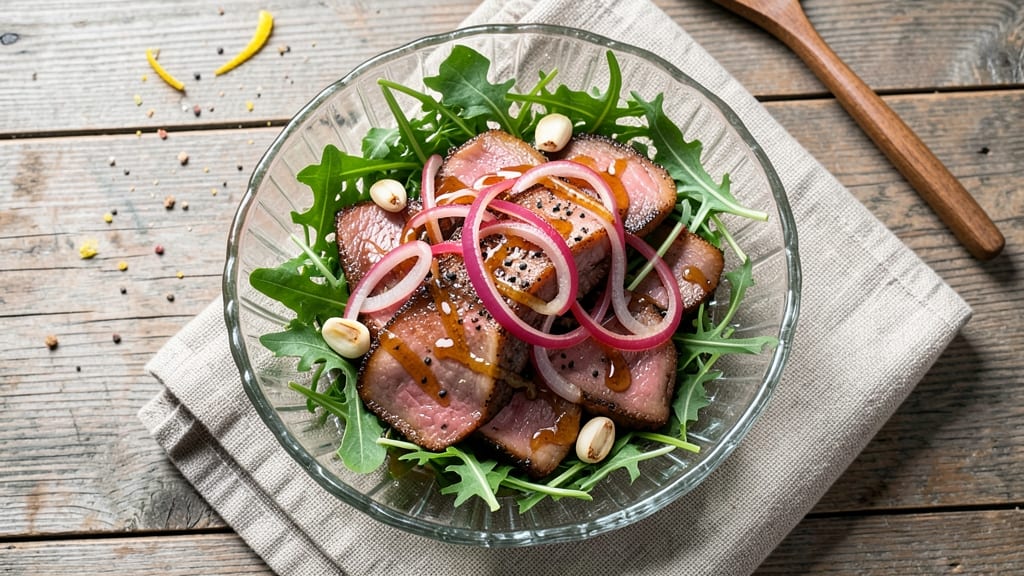
This beef tongue salad recipe transforms an unusual protein into a luxurious centerpiece with silky texture and deep smoky umami. The key lies in proper preparation—soaking, boiling, and peeling the tongue to achieve that signature tender yet firm bite.
What starts as a daunting ingredient becomes a showstopping dish when braised to perfection and paired with crisp greens and tangy dressing.
The process begins with soaking the tongue overnight to remove impurities, followed by a gentle boil to tenderize it. After peeling away the skin, you'll braise it low and slow until fork-tender, developing that rich, meaty depth.
The result? A protein so tender it melts in your mouth yet holds its shape beautifully when sliced. This isn't just a salad—it's a restaurant-worthy main course with a satisfying, meaty backbone.
Assembling the salad is where the magic happens. Thinly sliced tongue rests atop a bed of crisp arugula and shaved radishes, dressed in a bright lemon-dill vinaigrette that cuts through the richness.
Add toasted walnuts for crunch and pickled onions for a tangy contrast. The presentation is elegant yet approachable—perfect for impressing guests without sacrificing ease.
Serve with crusty bread to soak up the dressing or alongside a simple green salad for balance. The smoky, savory notes of the tongue pair beautifully with bright, acidic elements, making every bite harmonious. This isn't your average salad—it's a bold, flavorful statement that elevates any meal.
Ingredients for beef tongue salad
Fourteen ingredients to transform beef tongue into a restaurant-worthy salad masterpiece.
| Ingredient | Amount | Notes |
|---|---|---|
| Beef Tongue (raw, whole) 🦄 | 2 lb | Fresh, skin-on preferred |
| Yellow Onions 🧅 | 2 whole | For soaking and braising |
| Bay Leaves 🌿 | 4 whole | Fresh or dried |
| Garlic Cloves 🧄 | 6 cloves | Peeled, for braising |
| Apple Cider Vinegar 🍎 | 1 cup | For soaking liquid |
| Arugula 🌱 | 6 oz | Baby leaves preferred |
| Radishes 🥕 | 1 lb | Shaved thinly |
| Walnuts 🌰 | ½ cup | Toasted, roughly chopped |
| Red Wine Vinegar 🍷 | ¼ cup | For vinaigrette |
| Extra-Virgin Olive Oil 🫒 | ½ cup | High-quality, fruity |
| Fresh Dill 🌿 | ¼ cup | Chopped, stems removed |
| Lemon Juice 🍋 | ⅛ cup | Freshly squeezed |
| Salt 🧂 | 2 tsp | Kosher or sea salt |
| Black Peppercorns 🌶️ | 1 tsp | Freshly cracked |
| Honey 🍯 | 1 tbsp | For pickled onions |
| Red Onions 🧅 | 1 whole | Thinly sliced, for pickling |
The beef tongue is the star—look for a fresh, whole tongue at specialty butchers or high-end grocery stores like Whole Foods or D'Agostino. The skin should be intact and the color a vibrant reddish-pink. If you're nervous about the texture, start with a smaller cut—this recipe scales easily. The soaking process is non-negotiable; it removes impurities and makes the tongue tender. I always double-check the weight at checkout to avoid surprises (trust me, you don't want to come home with a 3-pound tongue for this recipe).
No fresh dill? Substitute with 1 tbsp dried dill, but fresh has that bright, herby punch that cuts through the richness. Running low on walnuts? Pecans or hazelnuts work in a pinch, though walnuts have that perfect crunch. The radishes can be swapped for thinly sliced fennel if you prefer a sweeter note. For the pickled onions, if you're short on time, grab a jar of quick-pickled red onions from Trader Joe's—it saves 15 minutes of waiting. The vinegar in the braising liquid? Apple cider vinegar adds depth, but white wine vinegar works too.
This salad tastes even better the next day—the tongue continues to tenderize and the flavors meld beautifully. Store the braised tongue in its juices in the fridge for up to 5 days, then slice it fresh before serving. The arugula and radishes keep for 3-4 days wrapped in damp paper towels, but I always buy them fresh the day before to keep everything crisp. The walnuts? Store them in the freezer to maintain their crunch. The dressing can be made a day ahead and keeps for 5 days in the fridge—just give it a shake before using.
Why You'll Love This Recipe
- No Fuss, Big Payoff: The beef tongue simmers in its own juices while you chop onions—no fancy techniques, just set it and forget it. Honestly, the hardest part is waiting for the garlic-vinegar punch to infuse that rich, tender meat.
- Umami Bomb: That slow-cooked tongue? It’s like a velvet glove wrapped around a flavor fist—sweet, deep, and just a hint of tang from the apple cider vinegar. The bay leaves add this mysterious earthiness that makes it taste like a restaurant secret.
- Meals for Days: Slice it thin, toss with greens, or pile it on toast—this salad keeps for ages in the fridge and only gets better as the flavors meld. Between us, I’ve fed a crowd with leftovers and never heard a complaint.
- Budget Hero: You’re getting way more meat for your money here, and the ingredients? Mostly pantry staples. I’ll be real: this is the kind of dish that makes grocery day feel like a win, especially when one tongue stretches into three lunches.
Step-by-step instructions for braising and preparing beef tongue
Transforming tough beef tongue into silky, flavorful slices takes patience—but the results are worth every minute.
Prepare the Beef Tongue for Soaking
Begin by rinsing the 2 lb beef tongue (raw, whole) under cold water and patting it completely dry with paper towels. This step is crucial—any moisture left on the surface will prevent the seasoning from adhering properly and can lead to uneven cooking.
In a large bowl, combine 1 cup apple cider vinegar, 2 tsp salt, and 1 tsp black peppercorns. Submerge the beef tongue in this mixture, ensuring it's fully covered. Add 2 whole yellow onions, quartered, and 4 whole bay leaves to the bowl. Cover and refrigerate for 24 hours, turning the tongue occasionally. This soak tenderizes the meat and infuses it with deep, tangy flavor. Don’t skip this step—it’s what transforms tough beef into melt-in-your-mouth slices.
Braise the Beef Tongue Low and Slow
After soaking, remove the beef tongue from the vinegar mixture and rinse it under cold water to remove any excess acid. In a large Dutch oven or heavy pot, combine the rinsed tongue, 6 peeled garlic cloves, and 1 whole red onion, thinly sliced. Add enough cold water to cover the tongue by about 1 inch—you’ll need roughly 4 cups total. Bring to a boil over high heat, then immediately reduce to a gentle simmer.
Cover the pot and simmer for 3 to 3.5 hours, maintaining a low, steady temperature. Check the liquid level occasionally and add hot water as needed to keep the tongue submerged. The tongue is done when it’s fork-tender and pulls apart easily. If you press it gently with a fork and it offers no resistance, it’s ready. Let it cool in the braising liquid for 30 minutes before proceeding—this resting period ensures the meat stays juicy when sliced.
Slice and Assemble the Salad Components
Once cooled, peel off the skin from the beef tongue and slice it into ¼-inch thick slices against the grain. You should have enough for 4 servings, with each slice silky and rich with umami depth. Set aside.
While the tongue rests, prepare the remaining salad components. Shave the 1 lb radishes into thin ribbons using a mandoline or sharp knife. Toast the 0.5 cup walnuts in a dry skillet over medium heat for 3-4 minutes, stirring constantly, until fragrant and lightly golden. Chop the 0.25 cup fresh dill and zest the lemon for the vinaigrette.
Create the Vinaigrette and Pickled Onions
In a small bowl, whisk together 0.25 cup red wine vinegar, 0.125 cup lemon juice, 0.5 cup extra-virgin olive oil, 1 tbsp honey, and 1 tsp black peppercorns. Taste and adjust the balance of acidity and sweetness—you want a bright, tangy dressing that complements the rich beef.
For the pickled onions, thinly slice 1 whole red onion and place it in a small jar. Heat 0.25 cup red wine vinegar with 1 tbsp honey in a saucepan until the honey dissolves, then pour over the onions. Let them sit at room temperature for at least 30 minutes to develop a sweet-tangy flavor. Finally, toss the 6 oz arugula with half of the vinaigrette just before serving to keep it crisp.
Pro Tips For Making Beef Tongue Salad
- BLANCH FIRST, SIMMER LONG: Start by blanching the raw tongue in boiling water for 10 minutes to remove blood and sliminess—this isn’t optional. Then switch to a low simmer (160°F/71°C) for 3-4 hours with bay leaves and onions, or the meat stays tough. I used to rush this, and the texture was always disappointing.
- PEEL ONIONS IN RINGS: Thinly slice yellow onions into rings, not chunks—this keeps them crisp when pickled later. Toss them with vinegar and garlic before adding to the pot; they’ll mellow the tongue’s richness and add bite. (Yes, even if you’re lazy, do this.)
- TEST DONENESS WITH A FORK: The tongue is done when it separates cleanly from the bone with no resistance—no guessing. If it’s still chewy, it’s not ready. I learned this the hard way after serving a batch that needed another hour. Patience here saves embarrassment later.
- UPGRADE: ADD A SPLASH OF BEER: Swap half the vinegar for a dark beer (like stout) during the last 30 minutes of cooking—it deepens the flavor without extra effort. Skip this if you’re in a hurry, but the texture and taste improve noticeably. (Your future self will notice.)
Wine and beer pairings for this dish
Red Wine Pairings
For this rich, umami-packed salad, I always reach for a medium-bodied red wine like a Pinot Noir from Oregon or a Chianti Classico from Tuscany. The bright acidity and red fruit notes in these wines mirror the tangy lemon-dill dressing while standing up to the beef's deep flavor.
A glass of 2019 La Crema Pinot Noir (around $45) has been my go-to—its earthy undertones complement the walnuts and radishes beautifully. 🍷
Crisp White Options
If you prefer white wine, a dry Riesling from Germany or Alsace cuts through the richness without overpowering. Look for a Kabinett-level Riesling with 10-12% alcohol—the crisp acidity and hints of green apple refresh your palate between each rich bite of tongue.
I love Dr. Loosen Blue Slate Riesling (about $20), which balances the salad's sweet and savory elements perfectly.
Beer Pairings
A Belgian-style witbier like Hoegaarden or Stella Artois is my ideal beer match—its citrusy coriander notes and effervescence cleanse your palate between bites. For something heartier, a German Helles Lager (like Weihenstephaner Original) provides a malty contrast that enhances the beef's umami.
Avoid heavy stouts or IPAs, which would clash with the delicate salad components. 🍺
Cocktail Complements
For a festive touch, serve a gin-based cocktail like a Tom Collins with its lemon and cucumber notes, or a negroni for a bold, bitter contrast. The herbal notes in gin complement the dill in the dressing, while the citrus brightens the dish.
If you're feeling adventurous, try a smoky mezcal margarita—the smokiness echoes the braised tongue's depth while keeping the meal lively. 🍹
Non-Alcoholic Choices
Don't overlook sparkling water with a splash of lemon juice and honey—it mimics the vinaigrette's brightness.
For something more substantial, a cucumber-mint infused iced tea (steep 2 tbsp fresh mint and ½ cucumber in hot tea, then chill) adds a refreshing herbal note that pairs beautifully with the walnuts and radishes. 💧
Nutrition facts
Frequently asked questions
Why does beef tongue need soaking before cooking?
The 24-hour soak in vinegar removes impurities, tenderizes the tough connective tissue, and infuses deep umami flavor. Skipping this step results in a chewier texture—think of it as the secret to unlocking that signature silky mouthfeel. The acid also helps break down the skin for easier peeling later.
Can I substitute beef tongue with another protein?
While beef tongue is ideal for its rich texture, you can use pork tongue (cook 1 hour less) or even extra-firm tofu for a vegetarian version. The key is maintaining that tender-yet-firm bite—braise tofu in the same liquid for 45 minutes instead of hours. Just note the flavor profile will differ significantly.
How do I know when the beef tongue is fully cooked?
The tongue is done when it's fork-tender—press gently with a fork and it should offer no resistance. A 3.5-hour simmer is standard, but check at 3 hours if using a smaller cut. The internal temperature should reach 195°F (though beef tongue doesn't have a bone to guide by). Always let it rest 30 minutes before slicing.
What's the best way to store leftovers?
Store sliced beef tongue in its braising liquid in an airtight container for up to 5 days in the fridge. The juices keep it moist, and the flavors deepen overnight. For the salad base (greens, radishes, walnuts), store components separately—toss arugula with dressing only when ready to serve to maintain crispness. Reheat tongue gently in a skillet.
Can I make this salad ahead of time?
Prep everything 1 day ahead: braise and slice the tongue, make the dressing, and pickle the onions. Store components separately—combine just before serving to keep textures perfect. The only exception is the toasted walnuts, which should be added fresh for maximum crunch. This makes it perfect for meal prep!