
Salads
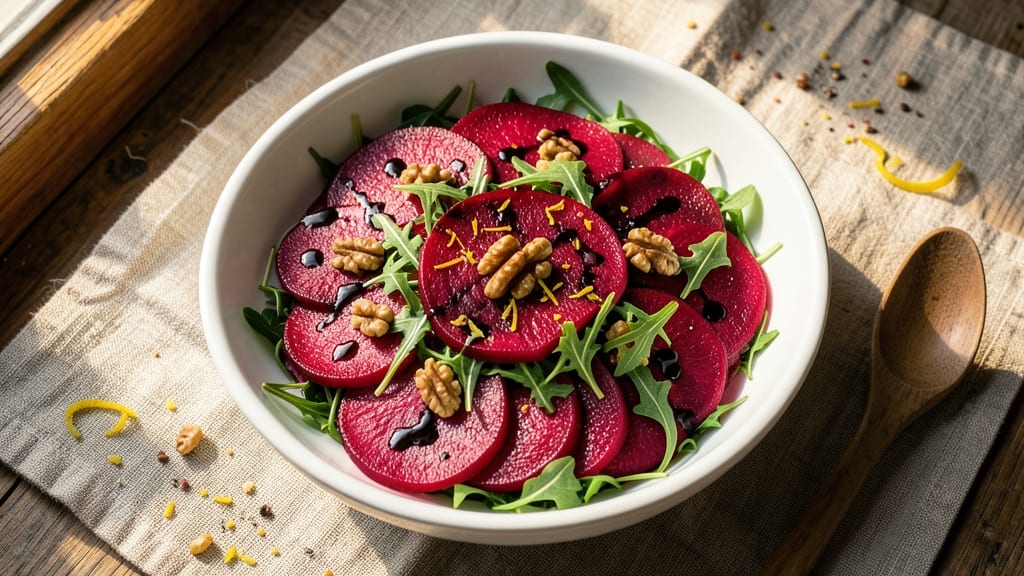
This beetroot carpaccio salad transforms humble beets into an elegant, earthy masterpiece with crispy walnut crunch and vibrant textures. The secret lies in thinly slicing raw beets with a mandoline for perfectly even layers—no cooking required.
What makes this dish special is how it balances naturally sweet beets with tangy dressings and nutty crunch, creating a salad that feels both sophisticated and effortless.
Unlike traditional carpaccio, this version skips the raw meat entirely, making it a vegan showstopper that still delivers restaurant-quality presentation. The key steps—slicing, resting, and carefully assembling—ensure the beets stay crisp and vibrant while the walnuts toast to golden perfection.
A light balsamic reduction ties everything together with just the right amount of acidity.
By the time you plate this salad, you'll have a visually stunning dish with layers of deep pink beets, crisp greens, and crispy walnut crunch that adds satisfying texture. The earthy sweetness of the beets pairs beautifully with the tangy dressing, while the toasted walnuts provide a nutty contrast.
It's the kind of salad that elevates any meal from ordinary to extraordinary.
Perfect for spring and summer gatherings, this recipe scales easily for parties or makes a stunning solo meal. The optional variations—like adding citrus zest or fresh herbs—let you customize it to your taste while keeping the core technique foolproof. Let's get started on this vibrant, plant-powered creation.
Ingredients for beetroot carpaccio salad
Crisp beets, toasted walnuts, and tangy dressing—this salad brings restaurant flair to your table.
| Ingredient | Amount | Notes |
|---|---|---|
| Medium Beets 🍠 | 2 whole | Raw, peeled, uniform size |
| Walnuts 🥜 | 1 cup | Raw, un salted, lightly toasted |
| Baby Arugula 🌿 | 4 cups | Fresh, organic preferred |
| Extra-Virgin Olive Oil 🫒 | ½ cup | High quality, fruity |
| Balsamic Vinegar 🍷 | ¼ cup | Aged, 25+ years preferred |
| Fresh Lemon Juice 🍋 | 2 tbsp | Freshly squeezed, organic |
| Maple Syrup 🍯 | 1 tbsp | Pure, grade B preferred |
| Diamond Crystal Kosher Salt 🧂 | ½ tsp | Fine grain for seasoning |
| Freshly Ground Black Pepper 🌶️ | ¼ tsp | Freshly cracked for best flavor |
| Crumbled Goat Cheese 🧀 | ¼ cup | Vegan alternative: cashew cream |
| Fresh Thyme Leaves 🌿 | ¼ cup | Chopped, organic preferred |
| Microgreens 🌱 | ¼ cup | Optional garnish, any variety |
The beets are the star—organic, medium-sized ones work best for even slicing. Whole Foods or Trader Joe's usually carry perfect ones, but any grocery store's pre-peeled beets will do in a pinch. Look for deep red, firm beets with no soft spots. The walnuts? Costco sells them in bulk for the best price, but any raw walnuts will toast beautifully. For the arugula, baby leaves add the perfect peppery crunch—skip the big leaves, they get too tough. Pro tip: slice the beets with a mandoline for perfectly even layers, but a sharp knife works too if you're patient.
No mandoline? Use a sharp chef's knife and take your time—thin, even slices are key. Swapping goat cheese? Cashew cream (blend soaked cashews with lemon juice) mimics that tangy richness. Running low on balsamic? Age your own by simmering regular balsamic vinegar in a saucepan for 10 minutes. The thyme can be fresh or dried—dried at 1/3 the amount. Microgreens are optional but add that gourmet touch—any variety works, even sprouts from your fridge. For extra crunch, toast the walnuts in a dry pan until golden—don't walk away, they burn fast.
Store sliced beets in an airtight container with a damp paper towel for up to 3 days—they'll stay crisp. Toasted walnuts keep for 1 week in a sealed jar. The dressing? Make it fresh—it only takes 2 minutes. Portion the salad just before serving to keep everything crisp. Leftovers? The beets soften overnight, so toss them into grain bowls or wraps for a hearty meal. This salad reheats beautifully—microwave 30 seconds to revive the crunch.
Why You'll Love This Recipe
- No-Peel Hassle: I’ll be real—roasting those beets whole means zero peeling mess. Just score, roast, and slice. The skin stays on, adding a subtle earthiness that actually enhances the flavor.
- Earthy-Creamy Magic: That first bite? Crispy beet edges with a tender, almost buttery center—thanks to the walnuts and olive oil. The arugula’s peppery kick cuts through like a fresh breeze, while the balsamic ties it all together in one ridiculously balanced bite.
- Weeknight Superstar: Honestly, this is my go-to when I’m too tired to cook. Toss the roasted beets and walnuts together, drizzle, and serve—no fancy plating needed. It’s the kind of salad that feels special but takes less time than boiling pasta.
- Budget Bright Spot: Beets last forever in the fridge, and walnuts stretch a long way. I make a big batch on Sunday, and it keeps me covered for lunches all week. Plus, the arugula adds that fresh, restaurant-worthy touch without breaking the bank.
Step-by-step instructions for beetroot carpaccio salad
This earthy, vibrant salad delivers restaurant-quality texture and flavor with minimal effort.
Prepare the Beets for Perfect Slicing
Peel the 2 whole medium beets using a vegetable peeler, working carefully to remove all skin without damaging the flesh. I like to cut them lengthwise into ¼-inch thick slices using a sharp mandoline or chef's knife—this ensures uniform thickness for even cooking. Arrange the slices on a parchment-lined baking sheet, leaving space between each slice for even air circulation.
Drizzle the beet slices lightly with the 0.5 cup extra-virgin olive oil, then sprinkle with the 0.5 tsp diamond crystal kosher salt. This preliminary seasoning enhances flavor while preventing the beets from drying out during roasting. The oil also helps create a subtle caramelization that deepens their natural sweetness.
Roast Beets Until Tender with Crisp Edges
Preheat your oven to 400°F. Roast the beets for 25-30 minutes, flipping them halfway through, until they're tender when pierced with a fork but still hold their shape. You're aiming for a perfect balance—soft enough to eat without chewing, but with enough structure to maintain the carpaccio presentation. The edges should develop a slight crispness, which contrasts beautifully with the tender centers.
Let the roasted beets cool completely before assembling the salad. This resting period prevents the delicate arugula from wilting when placed on warm beets. While they cool, you can prepare the remaining components—this keeps the workflow efficient and ensures everything comes together at the perfect moment.
Toast Walnuts to Achieve Crispy Perfection
Spread the 1 cup walnuts on a separate baking sheet and toast them in the same 400°F oven for 8-10 minutes, stirring halfway, until they're fragrant and develop golden-brown spots. You want them to be crispy rather than fully browned—this texture provides the perfect contrast to the tender beets and arugula. Let them cool completely before chopping roughly with a knife or food processor for even texture.
Here's the thing—walnuts release their oils when toasted, which intensifies their flavor. The slight crispness from proper toasting is what makes this salad truly special. If you prefer extra crunch, you can lightly toast them again in a dry skillet over medium heat for 1 minute just before assembling.
Create the Balsamic-Lemon Dressing
In a small bowl, whisk together the 0.25 cup aged balsamic vinegar, 2 tbsp fresh lemon juice, 1 tbsp maple syrup, and 0.25 tsp freshly ground black pepper. The acidity from the lemon and vinegar brightens the earthy beets, while the maple syrup adds subtle sweetness that balances the salad's flavors. This dressing should be thick enough to coat the back of a spoon but still flow easily when drizzled.
Taste and adjust the balance—if it's too sharp, add a touch more maple syrup; if too sweet, a splash of lemon juice. The dressing should complement, not overpower, the natural flavors of the beets and arugula. I like to let it sit for 5 minutes before using, which allows the flavors to meld slightly for better integration.
Assemble the Salad with Textural Layers
Arrange the 4 cups baby arugula on serving plates, creating a bed for the beets. Place the cooled beet slices in an overlapping pattern, slightly staggered for visual appeal. Drizzle evenly with the prepared dressing, allowing it to pool slightly between the beets. The arugula's peppery bite contrasts beautifully with the beets' sweetness, while the dressing ties everything together.
Scatter the toasted walnuts evenly over the beets, then sprinkle with the 0.25 cup chopped fresh thyme leaves and 0.25 cup crumbled goat cheese. Finish with the 0.25 cup microgreens for a pop of color and freshness. The goat cheese adds a creamy element that balances the salad's earthy flavors, while the microgreens contribute a delicate crunch. Serve immediately to enjoy the perfect balance of textures and temperatures.
Pro Tips For Making Beetroot Carpaccio Salad
- Peel Beets Cold: I used to peel them after roasting—messy, uneven slices, and half the flavor went down the drain. Grab a bowl of ice water, drop in whole beets (unpeeled), and let them chill for 15 minutes. The cold shocks the skin loose, and a paring knife glides right off. No charred edges, no wasted time scrubbing.
- Toast Walnuts Low: Skip the high-heat blitz in a pan—it burns them before they’re crisp. Instead, spread walnuts on a dry baking sheet and bake at 300°F (150°C) for 8–10 minutes. Stir once halfway. They’ll be golden, fragrant, and not a single one will turn to ash. (Yes, even if you’re impatient like me.)
- Dress Arugula Last: Baby arugula wilts faster than you’d think, especially when beets release moisture. Toss the greens with olive oil right before assembling the salad. Add balsamic just as you plate—its acidity cuts through the richness of the beets and walnuts while keeping the leaves crisp. No sad, soggy bites.
- Slice Beets Thin: Thin doesn’t mean paper—aim for 1/8-inch slices, no thicker. Use a sharp mandoline or a steady hand with a chef’s knife. Thicker slices mean undercooked centers (even if roasted) and a muddled texture. Test with one slice: if it bends, it’s ready. If it cracks, go thinner.
Essential equipment for great beetroot carpaccio salad
Mandoline Mastery
For perfectly even beet slices, a mandoline slicer is your best friend—like the OXO Good Grips model, which has a safety guard for those tricky slices. Set it to ¼-inch thickness and work carefully from the flat side of the beet to avoid uneven cuts.
If you don’t own one, a sharp chef’s knife and steady hand work, but take your time to keep slices uniform. 🌟
Oven Essentials
Your oven needs to hit 400°F consistently for roasting the beets and toasting walnuts. I use a Thermoworks Smoke thermometer to verify accuracy—some ovens run hot or cold.
A parchment-lined baking sheet prevents sticking and makes cleanup effortless. For extra crisp edges, I swap in a wire rack over a baking sheet to allow airflow.
Dressing Tools
A small whisk or fork works perfectly for emulsifying the balsamic-lemon dressing. For precise measurements, a scale ensures accuracy with the maple syrup and aged balsamic vinegar.
A microplane for zesting lemons (if adding) or a garlic press for minced garlic (optional) adds pro-level texture. Store-bought dressings won’t cut it—this one’s worth making fresh!
Plating Gear
For restaurant-worthy presentation, I use white oval plates to highlight the vibrant colors. A small offset spatula helps arrange beet slices neatly, while tweezers make it easy to place microgreens without crushing them.
A fine-mesh sieve strains any sediment from the dressing if needed. Don’t skip the goat cheese crumbler—it’s a game-changer for texture!
Optional Upgrades
Want to take it further? A food processor with a pulse function chops walnuts evenly in seconds. For extra crunch, a mini dehydrator at 165°F for 2 hours dries walnuts to perfection.
If you love balsamic glaze, simmer ½ cup balsamic vinegar in a small saucepan until thickened—it’s worth the wait for that glossy finish. 💫
Nutrition facts
Frequently asked questions
Why do I need to roast the beets instead of serving them raw?
Roasting enhances the beets' natural sweetness and tenderizes them without cooking completely—keeping that perfect carpaccio texture. Raw beets can be tough and bitter, while roasting at 400°F for 25-30 minutes brings out their earthy depth while maintaining crisp edges. This method also prevents the salad from wilting when assembled.
Can I substitute walnuts for another nut or seed?
Swap walnuts for pecans (toast until golden) or pumpkin seeds (roast with a pinch of salt). For extra crunch, try toasted almonds or hazelnuts. Just adjust toasting time—nuts burn faster than seeds. The key is achieving that satisfying contrast to the tender beets.
How do I prevent the arugula from getting soggy?
Assemble the salad just before serving—never more than 10 minutes ahead. Use chilled plates to keep the greens crisp, and avoid over-dressing. For extra insurance, toss the arugula with a tiny bit of olive oil before adding beets, creating a protective barrier. Pro tip: Let the roasted beets cool completely before arranging them on top.
What if I can't find aged balsamic vinegar?
Use regular balsamic vinegar and simmer it in a saucepan for 5-10 minutes until slightly thickened. For extra depth, add 1 tsp maple syrup or 1 tsp honey while heating. The result mimics aged balsamic's richness. If you're in a rush, a mix of red wine vinegar + 1 tsp balsamic glaze works too!
Can I make this salad ahead of time?
Roast the beets and toast the walnuts 1 day ahead, then store separately in airtight containers. Assemble only when ready to serve—this keeps the arugula crisp. For the dressing, make it fresh or store it in the fridge for up to 3 days. Reheat the beets briefly in a 200°F oven for 5 minutes to revive their texture before plating.