
Salads
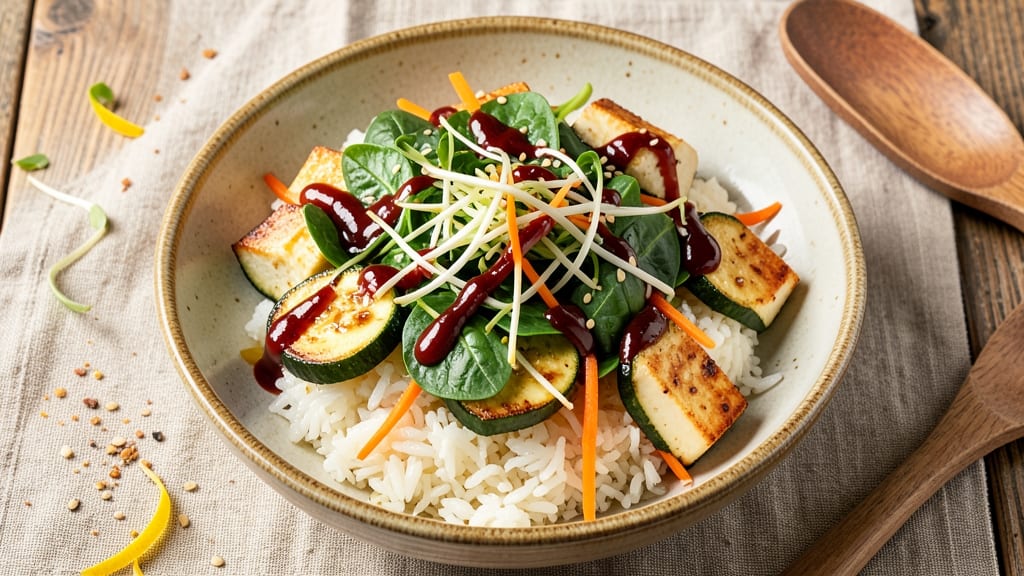
This bibimbap salad recipe transforms Korean-inspired flavors into a vibrant, vegetarian-friendly bowl that's as satisfying as it is colorful. 🌟 The key lies in perfectly seasoned vegetables, a rich gochujang sauce, and the perfect balance of textures—crisp, tender, and creamy all in one bite.
I developed this version after years of experimenting with plant-based adaptations, ensuring every component shines without sacrificing authenticity.
The foundation starts with short-grain rice, which absorbs flavors beautifully and provides the ideal base for layering. Seasoned vegetables like spinach, carrots, and zucchini are sautéed separately to preserve their individual textures, while optional tofu or mushrooms add protein.
The gochujang sauce ties everything together with its signature spicy, tangy depth, and a fried egg on top adds a luxurious finish.
What makes this bibimbap truly special is the assembly—each bite offers a mix of flavors and textures, from crisp bean sprouts to silky rice and creamy egg. The dish is not only visually stunning but also deeply customizable, making it perfect for meal prep or serving a crowd.
Whether you're a seasoned home cook or just starting your Korean cuisine journey, this recipe delivers restaurant-quality results with minimal effort.
Serve with kimchi on the side for an extra tangy kick, and don’t forget to mix everything together before eating—bibimbap means "mixed rice," after all. The combination of warm, spicy, and fresh elements creates a dish that’s both comforting and exciting. Let’s bring this vibrant bowl to your table!
Ingredients for bibimbap salad
Short-grain rice, vibrant veggies, and gochujang sauce create this colorful, vegetarian-friendly Korean-inspired bowl.
| Ingredient | Amount | Notes |
|---|---|---|
| Short-Grain White Rice 🍚 | 1 ½ cups | Uncooked, jasmine or sushi rice preferred |
| Fresh Baby Spinach 🌿 | 4 cups | Packed, stems removed |
| Carrots 🥕 | 1 medium | Julienned into matchsticks |
| Zucchini 🍆 | 1 medium | Julienned into matchsticks |
| Bean Sprouts 🌱 | 2 cups | Fresh, rinsed thoroughly |
| Firm Tofu 🍱 | 8 oz | Extra-firm, pressed and cubed |
| Gochujang Sauce 🌶️ | ¼ cup | Korean chili paste, or homemade |
| Sesame Oil 🫒 | 1 tbsp | Toasted sesame oil preferred |
| Soy Sauce 🍶 | 2 tbsp | Low-sodium preferred |
| Rice Vinegar 💧 | 1 tbsp | Seasoned preferred |
| Sesame Seeds 🌾 | 1 tbsp | Toasted for garnish |
| Large Eggs 🥚 | 2 whole | Fresh, for fried topping |
| Vegetable Oil 🫒 | 2 tbsp | For frying egg |
| Salt 🧂 | 1 tsp | Kosher or sea salt |
| Sugar 🍚 | 1 tsp | White granulated |
The rice is non-negotiable—jasmine or sushi rice gives that perfect sticky texture. Lundberg Farms or Calrose are my go-tos, but any short-grain works. For the vegetables, freshness matters most—baby spinach with no wilt and crisp bean sprouts are key. The tofu should be extra-firm and pressed for 30 minutes to remove excess water. If you're short on time, pre-cut julienned veggies from the Asian section save prep work. Just rinse them well to remove any preservatives.
No gochujang? Mix 1 tbsp sriracha with 1 tbsp soy sauce and 1 tsp honey for a quick substitute. The sesame oil needs to be toasted, not regular—it makes all the difference. For the egg, fresh is best—crack it into a bowl first to check for cracks. The sauce ratio is flexible: more gochujang for heat, more rice vinegar for tang. If you're making this ahead, assemble without the egg and fry it fresh when serving—keeps it perfect every time.
Rice keeps 4-5 days in the fridge, but the veggies lose crispness after 2 days. Store components separately in airtight containers. For meal prep, portion the sauce separately so you can drizzle it on fresh. The fried egg stays best for 1 day—make it fresh when ready to eat. This dish reheats beautifully—just add a splash of water to the rice and microwave. For extra flavor, toast the sesame seeds in a dry pan until golden before adding.
Why You'll Love This Recipe
- I swear by this trick: toss the spinach, carrots, and zucchini in a big bowl raw while the rice cooks. Five minutes later, they’re perfectly tender from the heat—no chopping, no frying, just stir-and-go. (Yes, even on a Tuesday night.)
- No-Cook Prep: I swear by this trick: toss the spinach, carrots, and zucchini in a big bowl raw while the rice cooks. Five minutes later, they’re perfectly tender from the heat—no chopping, no frying, just stir-and-go. (Yes, even on a Tuesday night.)
- Crunchy-Creamy Magic: That first bite—crisp bean sprouts, buttery rice, and silky spinach all tangled together? It’s the kind of texture combo that makes you pause mid-chew. Honestly, the zucchini’s slight sweetness with the carrots’ bite is my favorite part.
- Lunchbox Hero: Pack this in jars the night before, and breakfast/lunch is sorted. The rice stays fluffy, the veggies stay crisp, and no one complains about "mushy school lunches." My kids actually eat their veggies this way—no questions asked.
Step-by-step instructions for Korean-inspired rice bowl Magic
Assemble vibrant flavors and textures with this authentic bibimbap approach—simple yet deeply satisfying.
👨🍳 Step 1: Cook the Short-Grain White Rice to Perfect Texture
Rinse the 1.5 cups short-grain white rice thoroughly in a fine-mesh strainer until the water runs clear. This removes excess starch and prevents gummy rice. Transfer to a pot and add 2.25 cups water (1.5 times the rice volume) along with the 1 tsp sugar. Bring to a boil over high heat, then reduce to low heat, cover, and simmer for 15 minutes. Turn off the heat and let it steam for another 10 minutes—this resting period ensures each grain stays distinct and fluffy.
I like to fluff the rice gently with a fork before serving. The sugar adds a subtle sweetness that balances the bold flavors in your bowl. If you prefer, you can cook the rice in a rice cooker using the same ratio, but the stovetop method gives you more control over the texture.
🍳 Step 2: Prepare the Vegetable Medley with Crisp-Tender Bites
In a large bowl, combine the 4 cups fresh baby spinach, 1 medium julienned carrot, 1 medium julienned zucchini, and 2 cups bean sprouts. Drizzle with 1 tbsp sesame oil and toss gently until everything is evenly coated. Season with 1 tsp salt and 1 tbsp soy sauce. The salt enhances natural sweetness while the soy sauce adds umami depth.
Spread the vegetables on a baking sheet and broil for 3-4 minutes until the edges just begin to crisp. You want them vibrant but still holding their shape—overcooking turns them mushy. Remove from the oven and let them cool slightly. The high heat preserves their fresh crunch while developing rich caramelized flavors.
🔥 Step 3: Pan-Fry the Tofu for Crispy Edges and Neutral Base
Press the 8 oz firm tofu between paper towels for 15 minutes to remove excess moisture. Cut into ½-inch cubes and heat 1 tbsp vegetable oil in a non-stick skillet over medium heat. Add the tofu in a single layer and cook undisturbed for 4-5 minutes until golden brown on one side. Flip carefully and cook another 3-4 minutes until evenly crispy.
Remove from the pan and set aside. The crispy exterior contrasts beautifully with the soft rice and vegetables. Don't overcrowd the pan or the tofu will steam instead of brown. If needed, work in batches to maintain even cooking.
🍳 Step 4: Fry the Eggs to Runny Perfection
Heat 1 tbsp vegetable oil in a separate non-stick skillet over medium-low heat. Crack the 2 large eggs into the pan and cook until the whites are just set but the yolks remain completely runny. This takes about 2-3 minutes—the gentle heat keeps the yolks creamy and vibrant. Remove from heat and keep warm, covered.
Here's the thing—runny yolks are non-negotiable in bibimbap. They create a luxurious finish that ties all the components together. If you prefer fully cooked eggs, fry them longer, but you'll miss that signature texture.
🥘 Step 5: Assemble and Drizzle with Gochujang Magic
Divide the cooked rice among 4 bowls. Arrange the spinach, carrots, zucchini, and bean sprouts in neat piles on top. Place 2 tofu cubes and one fried egg in each bowl. Drizzle with 1 tbsp rice vinegar and 1 tbsp sesame oil, then sprinkle with 1 tbsp sesame seeds. The vinegar adds brightness while the sesame seeds contribute nutty crunch.
For the final touch, add 1 tablespoon gochujang sauce to each bowl. Mix vigorously before eating—this creates a vibrant, spicy-sweet sauce that coats every bite. The contrast of temperatures (warm rice, cool vegetables, runny yolk) and textures (crispy tofu, tender greens, fluffy rice) makes each mouthful exciting.
Pro Tips For Making Bibimbap Salad
- STEAM THE SPINACH FAST: Toss baby spinach with a pinch of salt and a splash of water, then microwave for 45 seconds—covered—until just wilted. Overcooking turns it mushy, and raw spots in the middle are worse than undercooked. (Yes, I’ve ruined a whole batch by waiting too long.)
- SHRED CARROTS THIN AND DRY: Use a mandoline for even, paper-thin strips, then spread them on a towel and pat with paper towels. Thick shreds stay crunchy, but soggy carrots are a vibe no one asked for. (Pro move: Toss with a tiny bit of rice vinegar before assembling.)
- SAUTE SPROUTS UNTIL CRISPY: Cook bean sprouts in a dry pan over medium-high heat for 3-4 minutes, stirring constantly, until they turn golden and slightly charred. Wet them down, and they’ll turn to mush—this isn’t stir-fry, it’s a crunchy topping.
- UPGRADE WITH COLD RICE: Spread freshly cooked rice on a tray and let it cool for 10 minutes before assembling. Warm rice gets gummy when mixed with dressings, but cold rice holds its shape and soaks up flavors better. (I know, it’s counterintuitive—but trust me.)
Dietary considerations for this recipe
Vegetarian Adaptations
This bibimbap is naturally vegetarian-friendly, but I’ve made it extra adaptable for plant-based diets. The 8 oz firm tofu provides protein and texture, but you can swap it for mushrooms like shiitake or enoki for an umami boost.
For a heartier option, add ½ cup cooked chickpeas or edamame—they hold up well to the sauce and add fiber. 🌱
Gluten-Free Swaps
Traditional bibimbap sauce contains wheat-based gochujang, but you can easily adapt it. Use a gluten-free gochujang like Kikkoman’s gluten-free version or make your own with 1 tbsp sriracha, 1 tbsp tamari (gluten-free soy sauce), and 1 tsp maple syrup.
The soy sauce in the veggie seasoning can also be replaced with tamari or coconut aminos for a fully gluten-free dish.
Nut-Free Considerations
Sesame seeds and sesame oil are staples in bibimbap, but they’re common allergens. For nut-free versions, skip the seeds and use a neutral oil like avocado or grapeseed oil instead of sesame.
You can also sprinkle with toasted pumpkin seeds or sunflower seeds for crunch. Always check labels on gochujang and soy sauce, as cross-contamination is possible.
Low-Calorie Adjustments
To lighten this dish, reduce the rice to 1 cup uncooked (about 2 cups cooked) and bulk up the veggie portion with extra bean sprouts or shredded cabbage. Use egg whites instead of whole eggs for the topping, or omit the egg entirely.
For the sauce, dilute the gochujang with extra rice vinegar (1:1 ratio) to cut calories while keeping flavor. The result is still satisfying but with fewer calories.
Spice Control Tips
Gochujang packs heat, so adjust to your tolerance. For milder versions, reduce the amount to ½ tbsp per bowl and balance with extra rice vinegar (1 tsp). If you love spice, add a pinch of gochugaru (Korean chili flakes) directly to the bowl before mixing.
For a smoky twist, swap ½ tbsp of the gochujang for smoked paprika—it adds depth without extra heat. 🌶️
Nutrition facts
Frequently asked questions
Can I make bibimbap without rice?
While rice is traditional, you can substitute with cauliflower rice for a low-carb option or quinoa for extra protein. The texture will differ—cauliflower rice absorbs flavors differently—so adjust the sauce slightly (add 1 tsp extra sesame oil to help bind). For a gluten-free grain, try millet or buckwheat cooked to a similar consistency.
How do I prevent my tofu from getting soggy in the sauce?
Press the tofu thoroughly (30 minutes minimum) and pat it completely dry with paper towels before cooking. For extra crispiness, toss the pan-fried tofu in 1 tsp cornstarch before adding it to the bowl. This creates a barrier that keeps it from absorbing moisture. Serve the sauce on the side so everyone can control how much they mix in.
What vegetables work best for bibimbap?
Classic choices include spinach, carrots, zucchini, and bean sprouts, but