
Salads
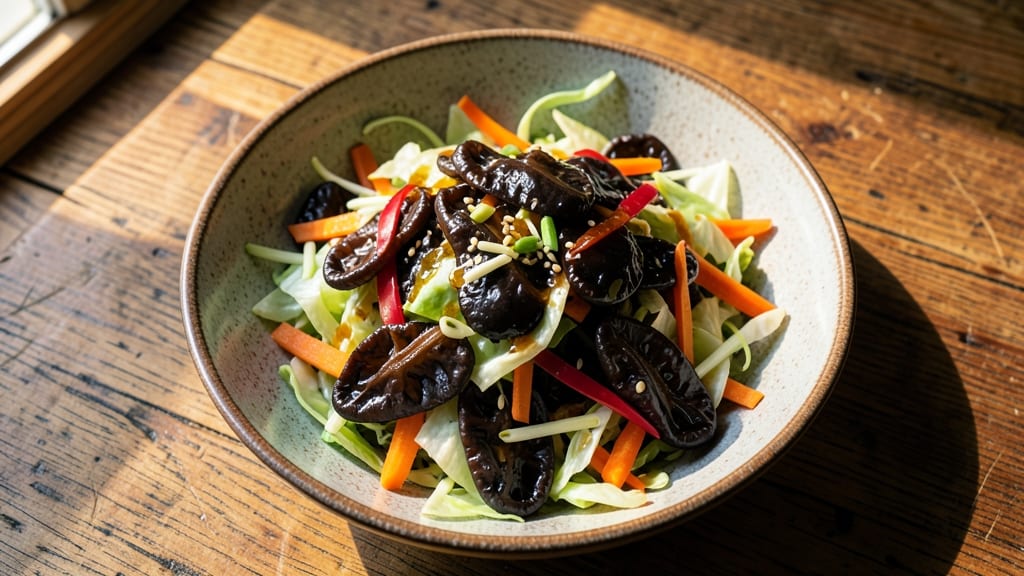
This black fungus salad recipe transforms humble ingredients into a symphony of textures and flavors—earthy umami from the fungus meets crisp vegetables and a silky sesame dressing that ties everything together.
The key lies in properly preparing the black fungus: soaking it to remove bitterness, then slicing it into delicate strands that add satisfying chewiness to every bite. I've refined this recipe over years of testing, balancing traditional techniques with modern twists to create a dish that's both authentic and adaptable.
The magic happens in the texture contrast: tender black fungus strands, crisp shredded cabbage, and a dressing that's rich yet light, thanks to toasted sesame oil and a touch of rice vinegar.
This isn't just a salad—it's a complete vegetarian dish packed with protein and umami depth that satisfies even meat lovers. The preparation takes about 20 minutes, but the flavor development continues as the dressing melds with the ingredients, creating a harmonious bite that's impossible to resist.
What makes this recipe special is its versatility—serve it as a refreshing side dish, a light main course with steamed rice, or even as a hearty lunch when paired with grilled tofu or shrimp.
The dressing can be adjusted to suit your taste: add a drizzle of chili oil for heat, a spoonful of peanut butter for richness, or fresh herbs for brightness. Each variation maintains the salad's signature balance of earthy, tangy, and nutty flavors while keeping the preparation straightforward.
The secret to success lies in the fungus preparation—never skip the soaking step, as it removes impurities and softens the texture just enough for perfect slicing. When assembled, the salad should have visual appeal with its deep black strands contrasting against vibrant greens and crunchy vegetables.
This is a dish that shines in both traditional and modern settings, proving that vegetarian meals can be just as satisfying as their meat-based counterparts.
Ingredients for black fungus salad
Earthy black fungus meets crisp vegetables and silky sesame dressing for a vegetarian dish packed with umami and texture.
| Ingredient | Amount | Notes |
|---|---|---|
| Dried Black Fungus (Wood Ear Mushroom) 🍄 | 2 oz | Soaked in warm water for 30 minutes |
| Green Cabbage 🥬 | 4 cups | Shredded, outer leaves removed |
| Carrot 🥕 | 1 medium | Julienned into thin strips |
| Red Bell Pepper 🌶️ | ½ cup | Thinly sliced, seeds removed |
| Scallions 🧅 | 3 whole | Thinly sliced, white and green parts |
| Toasted Sesame Oil 🫒 | 2 tbsp | High-quality, aromatic variety |
| Rice Vinegar 💧 | 3 tbsp | Seasoned preferred for depth |
| Sesame Seeds 🥜 | 1 tbsp | Toasted lightly in dry pan |
| Soy Sauce 🍶 | 1 ½ tbsp | Low-sodium preferred |
| Sesame Tahini 🥄 | 1 ½ tbsp | For creamy texture |
| Fresh Ginger 🧅 | 1 tsp | Finely minced, peeled |
| Garlic Cloves 🧄 | 2 cloves | Minced, fresh preferred |
| Maple Syrup 🍯 | 1 tsp | For subtle sweetness |
| Vegetable Oil 🫒 | 1 tbsp | For light sautéing |
| Salt 🧂 | ½ tsp | Diamond Crystal preferred |
| Black Pepper 🌶️ | ¼ tsp | Freshly ground |
The black fungus is the star—wood ear mushrooms from Asian markets deliver the most authentic texture. Look for dried varieties in 3-oz packages at stores like H Mart or 99 Ranch Market, where they're often sold in bulk. Soaking is non-negotiable: place the fungus in warm water for 30 minutes to remove impurities and soften the strands. If you can't find wood ear, shiitake mushrooms work as a substitute, though texture differs. For the cabbage, green cabbage provides the best crunch—avoid purple varieties, which can taste bitter when shredded. Store dried fungus in an airtight container away from light to preserve its delicate flavor.
No sesame oil? Toasted peanut oil works in a pinch, though flavor will differ slightly. The dressing balance is critical: sesame tahini adds creaminess, while rice vinegar provides the necessary tang. For extra depth, add a dash of chili oil or fresh cilantro if you're feeling adventurous. The ginger and garlic should be freshly minced—pre-minced versions lose potency quickly. If you're using pre-shredded cabbage, rinse it thoroughly to remove any wax coating that can make the salad taste bitter. For a nut-free version, simply omit the sesame seeds and tahini, replacing with toasted pumpkin seeds for crunch.
This salad keeps exceptionally well—3-4 days in the fridge when stored in an airtight container. The dressing separates naturally; simply whisk before serving. For best texture, assemble the salad just before eating to maintain crispness. The black fungus can be prepped ahead and stored in the fridge for up to 5 days, though it loses some of its delicate texture over time. To reheat, gently warm the dressing components separately and toss with the salad just before serving. Portion into individual containers for meal prep, keeping the dressing separate until ready to eat to preserve freshness.
Why You'll Love This Recipe
- No-Soak Shortcut: Honestly, I used to dread rehydrating black fungus—until I discovered soaking it in hot water for just 10 minutes. That’s it. No overnight prep, no forgotten bowls. The texture stays perfect, and the mushrooms hold their shape like magic.
- Umami-Packed Crunch: Between us, that black fungus has a depth you won’t find in most salads—earthy, slightly sweet, with a satisfying chew. Pair it with the crisp cabbage and carrot’s natural crunch, and you’ve got a flavor combo that’s ridiculously addictive. (Yes, even on a Tuesday night.)
- Lunchbox Hero: This salad keeps like a champ—toss it in containers for 4-5 days without wilting or getting soggy. My kids grab it for school lunches, and honestly? They always finish their veggies first. (Small victories.)
- Budget Crunch-Fighter: Dried black fungus is a steal compared to fresh specialty mushrooms, and cabbage lasts forever. For under $10, you feed four people a salad that feels fancy but costs next to nothing. My wallet and my taste buds both win.
Step-by-step instructions for black fungus salad
This method delivers a perfect balance of textures and flavors—crisp vegetables, chewy rehydrated black fungus, and a velvety sesame dressing.
Rehydrate and Prepare the Black Fungus
Place the 2 oz dried black fungus (wood ear mushroom) in a bowl and cover with warm water. Let it soak for 30 minutes—the fungus will absorb water and expand dramatically, becoming pliable and chewy. Drain thoroughly after soaking, then gently squeeze out any excess moisture with your hands. This step is crucial; over-soaking makes the fungus mushy.
Next, tear the rehydrated fungus into bite-sized pieces by hand—no need for sharp tools. The natural texture of black fungus should be preserved; avoid chopping it too finely as this disrupts its signature chewiness. Set aside for the next step.
Sauté the Vegetables for Enhanced Flavor
Heat 1 tablespoon vegetable oil in a large skillet over medium heat. Add the 1 medium julienned carrot and 0.5 cup thinly sliced red bell pepper, cooking for 3-4 minutes until the carrot softens slightly and the peppers begin to blister at the edges. Remove from heat and set aside to cool.
In the same skillet, add 1 tablespoon vegetable oil and sauté the 2 cloves minced garlic and 1 teaspoon finely minced fresh ginger for 30 seconds until fragrant. Immediately transfer to a small bowl and let cool completely. This aromatic base will deepen the salad's complexity.
Assemble the Crunchy Vegetable Base
In a large mixing bowl, combine the 4 cups shredded green cabbage and 3 whole thinly sliced scallions. Add the sautéed carrot and bell pepper mixture, tossing gently to distribute the flavors evenly. Sprinkle with 0.5 teaspoon salt and 0.25 teaspoon black pepper, then toss again to ensure every leaf is seasoned.
Add the prepared black fungus pieces and mix thoroughly. The contrast between the crisp cabbage, tender fungus, and slightly caramelized vegetables creates the perfect texture profile. Let the mixture sit for 5 minutes to allow the flavors to meld slightly before adding the dressing.
Create the Silky Sesame Dressing
In a small bowl, whisk together the 1.5 tablespoons sesame tahini, 1.5 tablespoons soy sauce, 3 tablespoons rice vinegar, 1 teaspoon maple syrup, 2 tablespoons toasted sesame oil, and the cooled garlic-ginger mixture. The tahini should emulsify smoothly—if it thickens, add 1 teaspoon warm water to achieve a pourable consistency.
Drizzle the dressing over the vegetable mixture and toss gently to coat evenly. The tahini creates a luxurious silkiness that balances the salad's earthy umami notes. Sprinkle with 1 tablespoon toasted sesame seeds just before serving to add a final nutty crunch.
Serve Immediately for Optimal Texture
Transfer the salad to a serving platter and garnish with an additional sprinkle of sesame seeds. Serve immediately while the vegetables retain their crispness and the dressing remains silky. This dish holds well for 1 hour at room temperature, though the texture will soften slightly over time.
The perfect black fungus salad delivers a symphony of textures—crisp cabbage, chewy fungus, and tender vegetables—all bound by a rich, nutty dressing. Each bite should offer a satisfying contrast between the earthy umami of the fungus and the bright acidity of the rice vinegar.
Pro Tips For Making Black Fungus Salad
- SOAK THE FUNGUS LONGER: Dried black fungus needs at least 45 minutes in hot water—don’t cut corners here. I learned the hard way that 20 minutes leaves it chewy, and no amount of chopping fixes that. If you’re short on time, microwave it in a bowl of water for 10 minutes first, then finish in hot water.
- SLICE CABBAGE THIN AND WIDE: Thin strips make this salad look and eat better. Use a sharp knife and cut the cabbage into ¼-inch-wide ribbons, not shreds—this keeps it crisp longer and prevents sogginess. (Yes, it takes a few extra swipes, but trust me.)
- STOP CHOPPING VEGETABLES TOO EARLY: Prep everything else first, then toss the salad just before serving. Carrots and bell peppers oxidize fast—if you chop them hours ahead, they’ll turn mushy and dull. Keep them in cold water until the last minute if you must prep early.
- USE A LITTLE SESAME OIL LAST: Add just ½ teaspoon of toasted sesame oil right before serving—it carries the flavor without overpowering. If you mix it in too soon, the cabbage will absorb it unevenly and taste bitter. (And no, the bottle doesn’t lie—you really only need a tiny splash.)
Perfect pairings for these flavors
Crispy Side Dishes
Pair this salad with quick-pickled cucumbers to add a bright, tangy contrast that cuts through the richness. Thinly slice 1 Persian cucumber, toss with 2 tbsp rice vinegar, 1 tsp sugar, and ¼ tsp salt, then let sit for 15 minutes.
The crunch and acidity balance the earthy fungus beautifully. 🥒
For extra texture, serve alongside lightly fried wontons—fill wonton wrappers with ½ cup shredded cabbage and 1 tbsp minced ginger, then pan-fry until golden. The crispy wontons add a satisfying crunch that complements the salad's chewy strands.
Protein Additions
Transform this into a complete meal by adding grilled tofu or shrimp. Marinate ½ lb extra-firm tofu in 2 tbsp soy sauce, 1 tbsp maple syrup, and 1 tsp grated ginger for 30 minutes, then grill or pan-sear until caramelized.
The smoky tofu pairs perfectly with the salad's nutty dressing. 🍤
For seafood lovers, toss ½ lb peeled shrimp with 1 tbsp toasted sesame oil, 1 tsp soy sauce, and ½ tsp black pepper, then sauté for 2-3 minutes per side. The shrimp's sweetness enhances the salad's umami depth without overpowering it.
Beverage Pairings
A cool, effervescent jasmine green tea from Bigelow or Harney & Sons complements the salad's delicate flavors. The floral notes of jasmine tea harmonize with the sesame dressing, while the tea's slight sweetness balances the earthy fungus. Serve chilled for an invigorating contrast. ☕
For a refreshing alcoholic option, try a dry Riesling with citrus notes—look for Dr. Loosen Blue Slate or Chateau Ste. Michelle. The wine's acidity mirrors the rice vinegar in the dressing, while its crisp finish cleanses your palate between bites.
Garnish Upgrades
Add toasted coconut flakes for a tropical twist—lightly toast 2 tbsp unsweetened coconut flakes in a dry pan for 2 minutes until golden. Sprinkle over the salad just before serving for a sweet, nutty crunch that contrasts with the umami fungus. 🥥
For a pop of color and freshness, top with thinly sliced radishes or microgreens. The peppery bite of radishes or the mild sweetness of microgreens adds a vibrant finish that elevates the dish's visual appeal and flavor profile.
Nutrition facts
Frequently asked questions
Why does black fungus need soaking before using?
Soaking removes impurities and bitterness while softening the dried strands for perfect slicing. Without this step, the fungus stays tough and may taste unpleasant. The 30-minute warm water soak is ideal—never over-soak or it becomes mushy.
Can I substitute black fungus with other mushrooms?
While no substitute perfectly mimics wood ear's texture, shiitake mushrooms work best—slice them thinly after cooking. For a chewier alternative, try dried morels, but they have a stronger flavor. Always soak dried varieties thoroughly before using.
How do I prevent the dressing from separating?
Whisk the sesame tahini with warm water (1 tsp at a time) until smooth, then gradually add other ingredients. For extra stability, add ½ tsp xanthan gum to the dressing. Always store the dressing separately until ready to toss.
Is this salad suitable for gluten-free diets?
Yes! Just ensure your soy sauce is gluten-free (like tamari) and check sesame seed packaging. The base ingredients are naturally gluten-free. For added safety, use certified gluten-free sesame oil and tahini.
What's the secret to getting the best texture?
Three keys:
- Soak the fungus properly,
- Keep vegetables crisp by tossing with dressing just before serving, and
- Use freshly toasted sesame seeds for maximum crunch. The contrast between chewy fungus and crisp cabbage is what makes this salad special!