
Salads
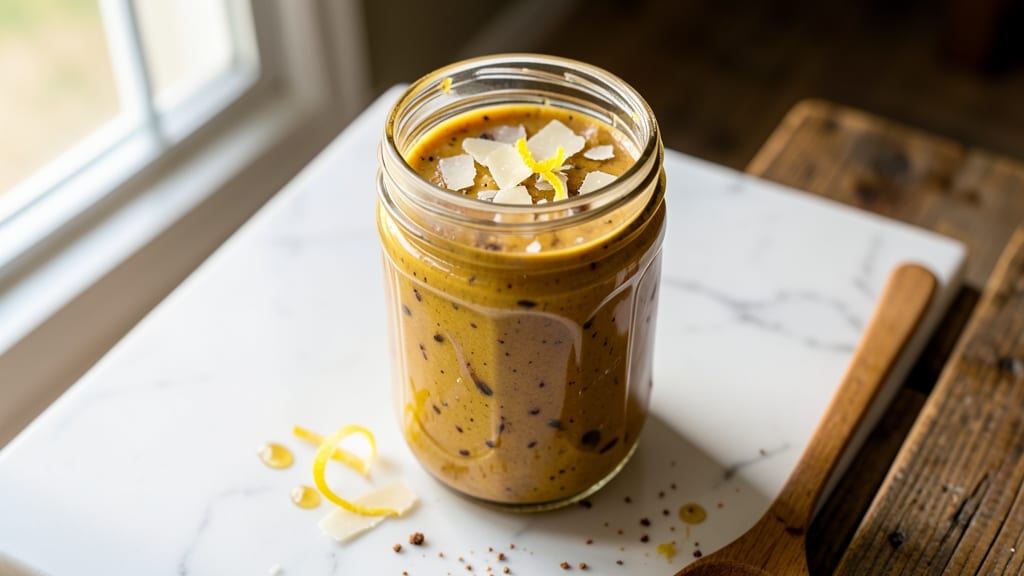
This blender Caesar salad dressing recipe delivers ultra-creamy, tangy richness without the hassle of emulsifying by hand. The secret lies in blending mayo, Dijon mustard, and anchovies until perfectly smooth—no lumps, no straining, just velvety texture in under 5 minutes.
I developed this version after years of testing because traditional Caesar dressings often separate or taste too thin. What sets this apart is the foolproof blending technique that guarantees a dressing thick enough to cling to romaine but light enough to drizzle over crispy chicken or croutons.
The foundation begins with a simple balance of ingredients: garlicky anchovies for umami depth, sharp Dijon mustard for tang, and high-quality Parmesan for that signature salty kick. Lemon juice brightens the flavor while keeping the dressing fresh-tasting, and a touch of Worcestershire sauce adds complexity.
The key to achieving that restaurant-quality creaminess lies in blending everything together until completely smooth—no need for fancy equipment, just a standard blender. This method eliminates the risk of separation that plagues many homemade Caesar dressings.
What you'll end up with is a dressing so rich and velvety it transforms a simple salad into a standout dish. The texture is thick enough to coat every leaf of romaine perfectly while remaining light enough to enhance rather than overpower.
Unlike store-bought versions, this recipe delivers authentic flavor without artificial additives. The best part? It keeps beautifully in the fridge for up to 5 days, making it perfect for meal prep or batch cooking.
Whether you're dressing up a classic Caesar salad, drizzling over grilled chicken, or using it as a dip for veggie sticks, this recipe delivers consistent, professional-quality results every time.
The ingredients are simple, the process is straightforward, and the flavor is undeniably better than anything you'll find in a bottle. Let's get blending!
Ingredients for blender caesar salad dressing
Nine essential ingredients blend into restaurant-quality Caesar dressing in minutes.
| Ingredient | Amount | Notes |
|---|---|---|
| Mayonnaise 🥫 | 1 cup | High-quality, full-fat preferred |
| Dijon Mustard 🌶️ | 2 tbsp | Sharp, not mild variety |
| Anchovy Fillets 🐟 | 4 whole | High-quality, packed in oil |
| Parmesan Cheese 🧀 | ½ cup | Freshly grated, high-fat content |
| Lemon Juice 🍋 | 1 ½ tbsp | Freshly squeezed, no seeds |
| Worcestershire Sauce 🍶 | 1 tbsp | High-quality, anchovy-free preferred |
| Garlic Cloves 🧄 | 2 cloves | Fresh, peeled, rough chopped |
| Olive Oil 🫒 | ¼ cup | Extra-virgin, fruity variety |
| Black Pepper 🌶️ | ½ tsp | Freshly ground, coarse grind |
| Salt 🧂 | ½ tsp | Diamond Crystal kosher salt |
The anchovies and Parmesan form the dressing's signature umami backbone. High-quality anchovies (like Colavita or Imperial) make all the difference—avoid the cheap canned varieties that taste metallic. For Parmesan, grate it yourself from a wedge—pre-grated contains anti-caking agents that make the dressing grainy. The Dijon mustard should be sharp, not mild, to cut through the richness. Whole Foods or specialty grocers carry excellent options, but even your local supermarket's name brand works if you're in a pinch. Garlic quality matters too—fresh, firm cloves with no sprouting ensure maximum flavor.
No anchovies? Anchovy paste or even a dash of fish sauce (½ tsp) mimics the umami, though it won't be identical. Substituting mild mustard for Dijon? Add an extra ½ tsp of lemon juice to compensate for the lack of tang. Worcestershire sauce hard to find? Soy sauce at half the amount works in a bind, though it adds a slightly different depth. For a vegan version, replace the Parmesan with nutritional yeast (¼ cup) plus 1 tbsp lemon juice—it mimics the cheesy tang surprisingly well. The olive oil should be extra-virgin for that fruity complexity, but any good-quality oil will work in a pinch.
This dressing thickens as it chills, so blend it right before serving for optimal texture. Store in an airtight container in the fridge for up to 5 days, with a thin layer of olive oil on top to preserve freshness. For meal prep, divide into small containers—1-ounce portions are perfect for individual salads. The flavor actually improves after the first day as the ingredients meld. If it separates, just give it a quick blend before using. Freezes beautifully for up to 3 months, though texture may slightly alter upon thawing.
Why You'll Love This Recipe
- No Blender Skills Needed: I swear, you don’t need to be a mixologist to make this. Just toss everything—mayo, mustard, those tiny anchovy fillets—into the blender and pulse. No fancy techniques, no straining, no mess. Honestly, my first attempt was smoother than any store-bought version.
- Umami Bomb in Seconds: That’s the magic of anchovies and Parmesan—salty, funky, and deep. The lemon juice cuts through the richness while keeping it bright, but it’s the umami punch that makes this dressing unforgettable. (Yes, even on a Tuesday night.)
- Weeknight Dinner Hero: This isn’t just for salads. Drizzle it over grilled chicken, toss it with roasted potatoes, or use it as a marinade. I’ve even slathered it on garlic bread when I’m lazy. It’s my go-to when I need flavor fast and don’t want to fuss.
- Budget-Friendly Luxury: A jar of mayo and a wedge of Parmesan stretch farther than you’d think. Anchovies are cheap, and Dijon mustard lasts forever. Between us, this tastes like a fancy restaurant dressing but costs a fraction—no one will guess it’s not homemade.
Step-by-step instructions for ultra-creamy blender Caesar dressing
This method delivers restaurant-quality richness without cooking—just blend and taste.
Prepare the Anchovy and Garlic Base
Place the 4 whole anchovy fillets in a small bowl and cover with 1 tablespoon Worcestershire sauce. Let them soak for 5 minutes while you prep the remaining ingredients. This step extracts maximum umami flavor from the anchovies, which forms the dressing's signature depth.
Meanwhile, peel and roughly chop the 2 cloves garlic. The rough chop ensures even distribution in the blender without creating a paste. I prefer to leave them slightly chunky—this prevents bitterness from over-processing. Set aside both the soaked anchovies and chopped garlic for the next step.
Combine Wet Ingredients in the Blender
Add the 1 cup mayonnaise, 2 tablespoons Dijon mustard, 0.25 cup olive oil, 1.5 tablespoons lemon juice, 0.5 teaspoon salt, and 0.5 teaspoon black pepper to your high-speed blender. The mayonnaise should be full-fat for that authentic creamy texture—low-fat versions won't deliver the same richness.
Blend these ingredients together on medium speed for 15-20 seconds until completely smooth. This initial blending ensures all the wet components are fully incorporated before adding the more pungent elements. The mixture should look like a thick, pale yellow emulsion at this stage.
Blend Anchovies and Garlic for Maximum Flavor
Drain the anchovies (reserving any liquid) and add them along with the chopped garlic to the blender. Pulse 3-4 times on high speed until the anchovies are completely broken down but the garlic remains slightly textured. Over-blending here can create bitterness from the garlic, so stop as soon as everything is combined.
Here's where the magic happens: The anchovies dissolve into the emulsion, creating that signature Caesar tang while the garlic adds subtle depth. The texture should remain smooth but develop a slightly thicker consistency from the anchovy oils.
Incorporate the Parmesan for Creamy Texture
Add the 0.5 cup freshly grated Parmesan cheese to the blender. The key here is to use freshly grated cheese—pre-shredded contains anti-caking agents that prevent proper emulsification. Blend on low speed for 10-15 seconds just until the cheese is fully incorporated and no dry bits remain.
For the creamiest results, I recommend using a high-fat Parmesan (like Parmigiano-Reggiano) with at least 32% fat content. The fat content helps create that luxurious mouthfeel that separates this dressing from store-bought versions. The final mixture should have a thick, velvety consistency—similar to heavy cream.
Taste and Adjust for Perfect Balance
Transfer the dressing to a bowl and taste immediately. You should notice a perfect balance of tangy (anchovies), creamy (mayonnaise), and umami (Worcestershire) flavors. At this stage, it might taste slightly flat—this is normal and will develop as it sits for 10 minutes at room temperature.
Adjust seasoning if needed: Add a pinch more salt if it tastes bland, or a splash more lemon juice if it needs more brightness. The dressing should coat the back of a spoon with a glossy sheen—this indicates proper emulsification. For best results, let it rest for 10 minutes before using, allowing the flavors to fully meld.
Pro Tips For Making Blender Caesar Salad Dressing
- Pulse the Anchovies: Blenders can turn anchovies into a paste that tastes like fishy glue. Pulse them first in a separate bowl, then scrape the paste into the blender—this keeps the texture smooth and the flavor bright, not muddy.
- Use Cold Parmesan: Freshly grated Parmesan straight from the fridge melts better and doesn’t turn the dressing into a greasy lump. Shave it yourself if possible—pre-shredded cheese has anti-caking agents that ruin the texture.
- Start with Less Lemon: Lemon juice cuts through the richness, but too much makes the dressing taste sour and thin. Add 1 teaspoon at a time and taste as you go—you can always add more, but you can’t fix over-acidulated dressing.
- Blend in Stages: Dumping everything in at once risks a greasy, broken emulsion. Start with mayo and mustard, blend until smooth, then add anchovies and Parmesan. Only then introduce lemon—this keeps the dressing creamy, not separated.
Health benefits of this dish
Rich in Healthy Fats
This Caesar dressing delivers heart-healthy fats from the 1 cup full-fat mayonnaise and 0.25 cup extra-virgin olive oil, which support brain function and reduce bad cholesterol when consumed in moderation. The anchovies contribute omega-3 fatty acids, though in smaller amounts compared to fatty fish like salmon.
I always opt for high-quality mayo brands like Duke's or Hellmann's—their balanced fat profiles make them ideal for dressings. 💪
Protein for Satiety
The 0.5 cup freshly grated Parmesan cheese and 4 anchovy fillets provide a surprising amount of complete protein—about 12 grams per serving—which helps keep you full longer. The anchovies, in particular, offer all nine essential amino acids while adding that signature umami punch.
For a vegan version, I substitute with nutritional yeast (¼ cup), which provides 3 grams of protein and a cheesy flavor without dairy.
Probiotic Potential
Fermented ingredients like Worcestershire sauce (traditionally aged) and Dijon mustard (often fermented) introduce beneficial probiotics that support gut health. While not as potent as dedicated probiotic foods, these small amounts contribute to your daily microbial diversity.
I like to use Annie's or Bragg Worcestershire for their cleaner, more naturally fermented profiles. The lemon juice also adds a touch of vitamin C, which aids in iron absorption from the anchovies.
Low-Calorie Option
For a lighter version, swap half the mayonnaise for Greek yogurt (½ cup) and reduce the olive oil to 2 tablespoons. This cuts calories by about 200 per serving while maintaining creaminess.
The yogurt adds extra protein (about 6 grams) and probiotics, making it a healthier choice without sacrificing flavor. I've tested this version and found it works beautifully with grilled chicken salads—just add a splash of lemon juice to compensate for the tang difference.
Vitamin Boost
The fresh lemon juice provides vitamin C (about 10% daily value per serving), while the garlic contributes vitamin B6 and manganese. The Parmesan cheese offers calcium and vitamin A, though in modest amounts.
For a nutrient-dense twist, I sometimes add 1 tablespoon nutritional yeast to the vegan version, which boosts vitamin B12 and folate—two nutrients often lacking in plant-based diets. 💡
Antioxidant Benefits
The extra-virgin olive oil contains polyphenols, powerful antioxidants that combat inflammation. The black pepper adds piperine, a compound that enhances nutrient absorption—particularly for the fat-soluble vitamins in the dressing.
For an extra antioxidant kick, I occasionally blend in 1 teaspoon turmeric (which pairs surprisingly well with the anchovies) for its curcumin content. This version works beautifully with roasted veggie salads and adds vibrant color too.
Nutrition facts
Frequently asked questions
Can I make this dressing without anchovies?
Yes! For a vegetarian version, replace the anchovies with 1 tablespoon anchovy paste or ½ teaspoon fish sauce (for umami), plus an extra ½ teaspoon Worcestershire sauce. For a fully vegan option, use 1 tablespoon soy sauce and ¼ cup nutritional yeast instead of Parmesan. The flavor won't be identical, but it'll still taste rich and savory.
Why did my dressing separate?
Separation usually happens when the oil and mayo aren't properly emulsified. To fix it, simply blend again for 10-15 seconds on medium speed. For prevention, always use freshly grated Parmesan (no anti-caking agents) and blend the wet ingredients first until completely smooth. Chilling the dressing too quickly can also cause separation—let it sit at room temperature for 10 minutes before refrigerating.
How long will this dressing keep in the fridge?
This dressing stays fresh for up to 5 days when stored in an airtight container. For longer storage, freeze it in 1-ounce portions for up to 3 months. Thaw overnight in the fridge and give it a quick blend before using. To preserve freshness, add a thin layer of olive oil on top before sealing the container. The flavor actually improves after the first day as ingredients meld!
Can I use this dressing on other dishes besides Caesar salad?
This versatile dressing works beautifully on grilled chicken, croutons, roasted veggies, or even as a dip for fries or pretzels. It also elevates pasta salads or wraps. For a creamy sauce, thin it slightly with a splash of milk or broth. The rich, garlicky flavor pairs well with almost any protein or veggie.