
Salads
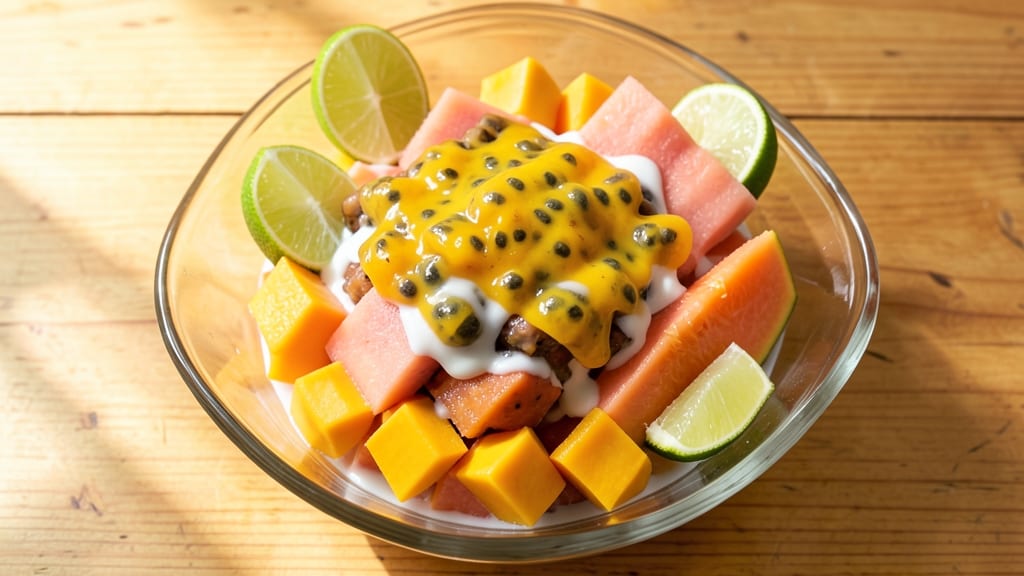
This Brazilian fruit salad recipe transforms simple tropical ingredients into a vibrant, citrus-kissed masterpiece that captures the essence of salada de frutas—just like my grandmother used to make.
The secret lies in balancing ripe mango, juicy papaya, and tart passion fruit with a bright lime dressing that enhances every flavor without overpowering them.
I developed this recipe after years of experimenting with Brazilian-inspired dishes, and it’s become a staple in my kitchen for its refreshing simplicity and bold tropical notes.
The beauty of this salad is its versatility—it works as a light main dish, a refreshing side, or even a dessert when topped with toasted coconut. The key technique is cutting the fruit into uniform pieces so they mix evenly, and letting the dressing coat each bite for maximum freshness.
I always use ripe fruit for natural sweetness, but the dressing’s zesty lime and orange zest keeps things balanced. This isn’t just a fruit salad; it’s a celebration of Brazilian flavors in every bite.
What makes this recipe special is how it highlights the natural sweetness of tropical fruits while adding depth with a citrus-lime dressing that’s tangy yet light. The optional garnishes—like toasted coconut or fresh mint—elevate it further, but even without them, the flavors shine.
It’s the kind of dish that feels indulgent yet healthy, perfect for summer gatherings or a quick weeknight meal when you crave something bright and refreshing.
Once you try this Brazilian fruit salad, you’ll understand why it’s a favorite in Brazilian homes—it’s simple, vibrant, and impossible to resist. The prep takes just 15 minutes, and the flavors keep improving as the fruit mingles with the dressing.
Whether you’re serving it at a party or enjoying it solo, this recipe delivers tropical brightness with every spoonful.
Ingredients for brazilian fruit salad
Ripe tropical fruits and zesty citrus transform into this vibrant Brazilian fruit salad masterpiece.
| Ingredient | Amount | Notes |
|---|---|---|
| Ripe Mango 🥭 | 1 ½ lb | Peeled, diced into uniform cubes |
| Ripe Papaya 🍈 | 1 ½ lb | Seeded, diced into bite-sized pieces |
| Passion Fruit 🍈 | 4 whole | Pulped for tartness, seeds included |
| Fresh Limes 🍋 | 3 whole | Juiced, zest reserved for dressing |
| Orange 🍊 | 1 whole | Zest only, organic preferred |
| Coconut Milk 🥥 | ¼ cup | Full-fat for creaminess, chilled |
| Maple Syrup 🍯 | 2 tbsp | Pure grade B for depth of flavor |
| Fresh Mint Leaves 🌿 | ¼ cup | Chopped, optional garnish |
| Toasted Coconut Flakes 🥥 | ¼ cup | Lightly toasted, optional garnish |
| Agave Nectar 🍯 | 1 tbsp | Substitute for maple syrup if needed |
| Sea Salt 🧂 | ¼ tsp | Fine grain, enhances flavors |
| Fresh Pineapple 🍍 | 1 cup | Diced, optional for extra sweetness |
The mango and papaya are the stars here—look for fruit that's ripe but firm, with vibrant color and no bruises. Whole Foods or Latin markets usually carry the juiciest varieties, but any grocery store should have decent options. Passion fruit is trickier to find, so if you can't locate it, substitute with extra lime juice and a touch of honey substitute—though nothing matches that unique tartness. I always buy organic oranges for the zest since conventional ones can have a bitter peel. The coconut milk should be full-fat for that creamy texture that balances the bright citrus notes.
No passion fruit? Double the lime juice and add a splash of grenadine for depth. Want to skip the coconut milk? Plain coconut yogurt thinned with a bit of lime juice works beautifully. The maple syrup is non-negotiable for that caramel note, but agave or date syrup are perfect swaps. Fresh mint is ideal, but dried mint at one-third the amount gets you close. For the pineapple, fresh is best, but canned pineapple in juice (not syrup) works in a pinch—just drain well. The dressing ratio is key: for every cup of fruit, use about 1 tablespoon of dressing to keep it bright and refreshing.
This salad keeps best when assembled just before serving—prep the fruit 1 hour ahead, store in airtight containers with parchment between layers to prevent browning. The dressing should be made fresh, but you can prep it up to 2 days ahead if stored in the fridge. Garnishes like toasted coconut and mint stay fresh for 3 days in sealed containers. For parties, I like to arrange the fruit in clear bowls with the dressing on the side—guests can mix to taste. The flavors actually improve as the fruit absorbs the dressing, so it's perfect for make-ahead gatherings.
Why You'll Love This Recipe
- I’ll be real: I often eyeball the fruit sizes instead of measuring. The mango and papaya practically melt in your mouth when they’re ripe, and the passion fruit pulp adds that tangy punch without needing perfect dice.
- No-Cut Chaos Allowed: I’ll be real: I often eyeball the fruit sizes instead of measuring. The mango and papaya practically melt in your mouth when they’re ripe, and the passion fruit pulp adds that tangy punch without needing perfect dice.
- Tropical Brightness Explosion: That first bite—juicy, sweet, with a citrus zing from the lime and orange? It’s like sunshine in a bowl. The passion fruit’s sour notes cut through the mango’s richness, and honestly, it’s the kind of flavor that makes you want to eat it straight from the fridge.
- Party in a Bowl: Between us, this is my go-to for potlucks or lazy summer days. Serve it chilled as a side with grilled fish or just scoop it straight into bowls for a refreshing dessert. (Yes, even on a Tuesday night.)
Step-by-step instructions for Brazilian fruit salad
Here's how to assemble this vibrant tropical salad with perfect balance and texture.
Prepare the Fruit Base
Start by peeling and dicing the 1.5 lb ripe mango into uniform ½-inch cubes. I use a sharp chef's knife and cut against the grain for even pieces that hold their shape. Transfer to a large mixing bowl as you work.
Next, remove the seeds from the 1.5 lb ripe papaya and cut the flesh into bite-sized pieces. For passion fruit, twist open each of the 4 whole passion fruit and scoop out the pulp and seeds—this adds a tangy depth that brightens the sweet tropical flavors. Add all prepared fruit to the bowl.
If using, dice the 1 cup fresh pineapple into similar-sized pieces and fold gently into the mixture. The pineapple adds a subtle sweetness that complements the other fruits beautifully. Keep this bowl in the fridge until ready to assemble the dressing.
Create the Citrus-Kissed Dressing
In a small bowl, combine the juice from 3 whole fresh limes and zest from 1 whole orange. I use a microplane for the zest to get fine, fragrant strips that dissolve into the dressing. Add the 2 tbsp maple syrup and 1 tbsp agave nectar, whisking until fully dissolved.
Pour in the ¼ cup chilled coconut milk and whisk vigorously to emulsify. The coconut milk adds a creamy richness that balances the bright citrus. Finish by sprinkling in the ¼ tsp sea salt and ¼ cup chopped fresh mint leaves, stirring gently to distribute. This dressing is the secret to the perfect tropical brightness.
Toss and Chill for Perfect Texture
Pour the dressing over the fruit mixture and toss gently with your hands or a large spoon. You want the fruit to be evenly coated but not crushed—this preserves the individual textures. The salad should look vibrant and inviting, with juices just beginning to pool at the bottom of the bowl.
Cover and refrigerate for at least 30 minutes before serving. This chilling time allows the flavors to meld and the dressing to fully absorb into the fruit, creating a cohesive tropical experience. The longer it chills, the better the flavors develop.
Garnish and Serve
Just before serving, sprinkle the ¼ cup toasted coconut flakes evenly over the top. The toasted coconut adds a delightful crunch that contrasts beautifully with the soft fruit. I like to arrange the salad in a shallow bowl or on a platter for easy serving.
Serve immediately while the coconut flakes are still crisp. This Brazilian fruit salad makes a perfect light lunch, refreshing dessert, or elegant appetizer. The combination of sweet, tart, and creamy elements creates a truly tropical experience that's perfect for warm weather gatherings.
Pro Tips For Making Brazilian Fruit Salad
- CUT FRUIT SMALLER THAN YOU THINK: Brazilian fruit salads rely on texture contrast, but big chunks of papaya or mango can make the dish feel uneven. Dice everything into ½-inch pieces—yes, even the passion fruit pulp—so every bite has that same juicy pop. (I used to eyeball it and ended up with a salad where half the pieces were still whole while the rest dissolved.)
- SQUEEZE LIMES OVER ICE: Fresh lime juice is non-negotiable, but squeezing straight into the bowl means you’re adding heat and diluting the flavor with warm juice. Run the limes through a juicer over a glass of ice first—it cools the juice instantly and makes the salad taste brighter right away. (This is especially important if your kitchen is warm.)
- DON’T SKIP THE ORANGE ZEST: The juice alone isn’t enough—scrape the zest from one orange and mix it in. It adds a subtle citrusy depth that cuts through the sweetness of the mango and papaya without overpowering. I learned this the hard way when I only juiced and wondered why the flavor felt flat.
- MIX IN PASSION FRUIT LAST: The pulp’s seeds and membranes can turn the salad into a mushy mess if tossed in too early. Reserve the passion fruit until the very end, then fold it in gently with a spoon. This keeps the texture light and prevents the other fruits from breaking down prematurely. (Yes, even if you’re eager to combine everything at once.)
Regional styles of this dish
Salada de Frutas
This classic Brazilian fruit salad, called salada de frutas, is a staple at family gatherings and festive occasions. My grandmother always made it for Festa Junina celebrations, where it served as both a refreshing side and a sweet dessert.
The key is balancing the natural sweetness of tropical fruits with the bright acidity of citrus—just like she did. The name itself translates to "fruit salad," but the technique elevates it beyond ordinary fruit mixes. 🌴
Northern Brazil Style
In the northern regions like Pará and Amazonas, this salad often includes cupuaçu (a tropical fruit similar to chocolate) and acai berries for a deeper, earthier flavor profile.
I've adapted this by adding 1 cup diced cupuaçu pulp (available in specialty Latin markets) and a touch of acai powder to the dressing. The result is richer and more complex, with a hint of chocolatey undertones that pairs beautifully with the citrus.
Southern Brazil Twist
Southern Brazil brings a more temperate approach, often incorporating kiwi and strawberries alongside traditional tropical fruits. For this version, I add 1 cup diced kiwi and ½ cup sliced strawberries to the mix, along with a splash of white grape juice in the dressing.
This creates a sweeter, more balanced flavor that's perfect for cooler climates. The grape juice adds a subtle grapefruit note that complements the citrus beautifully.
Carnival Special
During Carnival season, Brazilians love to serve this salad with a festive touch—often adding lychee and longan fruit for extra sweetness. I like to include ½ cup diced lychee and a sprinkle of toasted sesame seeds on top for crunch.
The lychee's floral notes contrast wonderfully with the tropical fruits, while the sesame adds an unexpected nutty depth that feels celebratory. This version is perfect for parties and gatherings where you want to impress guests with authentic Brazilian flavors.
Amazon-Inspired Version
For a truly Amazonian-inspired twist, I incorporate camu camu powder (a superfood with intense vitamin C) into the dressing. Start with ½ tsp camu camu powder mixed into the lime juice before adding other ingredients. This adds a tart, almost lemony brightness that enhances the tropical flavors.
Pair it with guava slices and banana slices for a more familiar Amazonian fruit combination. The camu camu gives it a nutritional boost while keeping the refreshing, citrusy profile intact. 💫
Modern Fusion Adaptation
For a contemporary take, I blend in coconut yogurt instead of coconut milk for the dressing and add diced persimmon and pomegranate seeds to the fruit mix. The yogurt adds a tangy creaminess, while the persimmon brings a subtle caramel note that pairs perfectly with the citrus.
Top with toasted coconut and edible flowers for a visually stunning presentation that still feels authentically Brazilian. This version works beautifully as a brunch dish or a light dessert option.
Nutrition facts
Frequently asked questions
Can I use frozen tropical fruit instead of fresh?
Fresh fruit gives the best texture and flavor, but frozen works in a pinch! Just thaw the fruit completely first and drain any excess liquid. For mango and papaya, look for "no sugar added" frozen varieties. The texture will be slightly softer, but the tropical flavors still shine—especially when tossed with the citrus dressing.
How do I find passion fruit if my grocery store doesn't carry it?
Passion fruit is key for that authentic Brazilian tang! Try Latin markets, specialty Asian stores, or order online from tropical fruit suppliers. If unavailable, substitute with 2 tbsp extra lime juice + 1 tbsp grenadine for depth. The dressing will still taste bright, though not quite as complex.
Can I make this salad ahead of time?
Prep the fruit 1 day ahead and store in airtight containers with parchment between layers to prevent browning. Make the dressing fresh day-of and toss just before serving. The flavors actually improve as they marry—perfect for parties! For longer storage, freeze the dressing separately for up to 1 month.
Is there a dairy-free version of the dressing?
This recipe is already vegan-friendly, but you can make it even lighter by omitting the coconut milk entirely. Replace it with ¼ cup coconut water + 1 tbsp agave nectar for a refreshing, dairy-free alternative. The citrus and maple syrup will still provide perfect sweet-tart balance without any creaminess.
What's the best way to serve this as a dessert?
For a dessert presentation, arrange the salad in a shallow glass bowl and top with toasted coconut flakes and fresh mint leaves. Serve with chilled coconut yogurt on the side for dipping. The contrast of warm toasted coconut with cool fruit creates a restaurant-worthy finish. Garnish with edible flowers for extra elegance!