
Salads
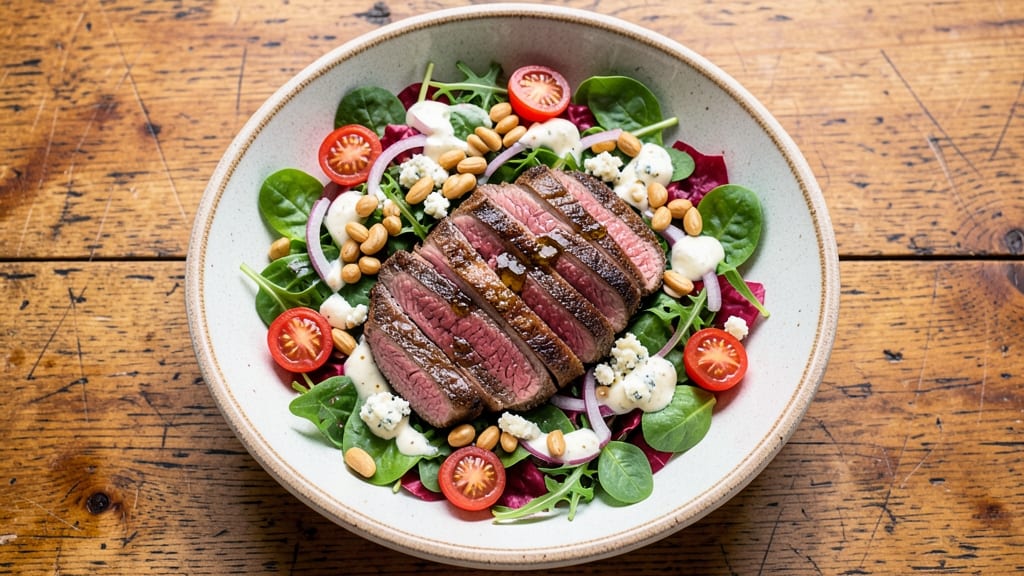
This Brio steak salad recipe transforms a simple lunch into a restaurant-worthy meal with one key technique: perfectly seared steak over a vibrant herb dressing. The secret lies in high-heat searing for those coveted crispy edges while keeping the center tender—just like your favorite steakhouse.
I first discovered this method after years of burning steaks in my grandmother's kitchen, and it's now my go-to for weeknight dinners that feel special.
The salad itself balances bold flavors with creamy texture, where a tangy Dijon-herb dressing ties everything together. You'll start with a base of mixed greens and crisp vegetables, then top with that perfectly cooked steak sliced against the grain.
The dressing, made with buttermilk and fresh herbs, adds a velvety richness that contrasts beautifully with the steak's smoky char. This isn't just another salad—it's a complete, satisfying meal that delivers restaurant-quality results in under 30 minutes.
What makes this recipe truly stand out is the contrast of textures: the crispy steak edges against the creamy dressing, the crunch of fresh vegetables, and the tender bite of the greens.
The high-heat sear creates that signature steakhouse crust, while the dressing adds a bright, herby note that cuts through the richness. It's the kind of dish that turns a simple lunch into an experience—one that feels indulgent without requiring hours in the kitchen.
Serve this salad immediately for the best texture contrast, or assemble ahead and refrigerate the dressing separately until ready to eat. The steak stays tender when sliced fresh, and the dressing's creamy texture holds up beautifully.
Perfect for a quick weeknight dinner or a special lunch with company, this recipe proves you don't need fancy ingredients to create something extraordinary.
Ingredients for brio steak salad
Crispy steak edges meet creamy herb dressing—just 14 ingredients for a restaurant-worthy salad.
| Ingredient | Amount | Notes |
|---|---|---|
| Ribeye Steak 🥩 | 1 lb | 1-inch thick cut, room temperature |
| Mixed Greens 🥬 | 6 cups | Butter lettuce or spring mix blend |
| Cherry Tomatoes 🍅 | 1 cup | Halved, vine-ripened preferred |
| Red Onion 🧅 | ¼ whole | Thinly sliced, red or yellow |
| Buttermilk 🥛 | ½ cup | Full-fat for creaminess |
| Extra-Virgin Olive Oil 🫒 | ¼ cup | High-quality, fruity variety |
| Fresh Dill 🌿 | ¼ cup | Chopped, stems removed |
| Fresh Chives 🌱 | 2 tbsp | Finely chopped, mild flavor |
| Dijon Mustard 🍯 | 1 tbsp | Mild or hot variety |
| Garlic Cloves 🧄 | 2 cloves | Minced, fresh preferred |
| Kosher Salt 🧂 | 1 ½ tsp | Diamond Crystal preferred |
| Freshly Ground Black Pepper 🌶️ | 1 tsp | Coarse grind preferred |
| Balsamic Vinegar 🍷 | 1 tbsp | Aged variety for depth |
| Cream Cheese 🧀 | 2 oz | Full-fat, room temperature |
| Crispy Fried Onions 🧅 | 2 tbsp | Store-bought or homemade |
The ribeye is non-negotiable here—look for well-marbled cuts from the butcher section, not pre-sliced deli packages. Costco or local butcher shops often have the best quality for this recipe. If you can't find ribeye, sirloin or New York strip work too, but ribeye delivers that signature steakhouse richness. The steak should be room temperature for 30 minutes before cooking—this ensures even searing. For the greens, pre-washed spring mix from Whole Foods or Trader Joe's keeps things fresh without the hassle of washing.
No buttermilk? Substitute with equal parts milk and lemon juice—it won't be identical, but it works in a pinch. Fresh dill and chives are ideal, but dried dill at one-third the amount gets you close if you're in a bind. The cream cheese adds that velvety texture—Philadelphia brand is my go-to, but any full-fat works. For extra crunch, toasted walnuts or pecans can replace the fried onions. The balsamic vinegar should be aged—look for 'extra aged' labels in the gourmet section. And trust me on the 1-inch thick steak—thinner cuts burn before they sear properly.
Steak stays best for 2 days in the fridge, but the dressing is the star here—it keeps for 5 days in an airtight container. Double the dressing if you're making this for a crowd. The steak's crispy edges soften slightly when sliced, so serve immediately for that perfect texture contrast. Store the dressing separately if prepping ahead—it's the secret to keeping everything crisp. And for leftovers? Wrap the steak tightly in foil—it reheats beautifully in a skillet with a splash of water.
Why You'll Love This Recipe
- Steak in Minutes: I swear, that ribeye hits perfect medium-rare in 12 minutes flat—no fancy butchering skills needed. Just sear, rest, slice, and boom: restaurant-quality steak without the wait.
- Buttermilk Magic: Honestly, the tangy buttermilk dressing ties everything together. It cuts through the richness of the steak while making those cherry tomatoes and red onion taste like they’re begging to be eaten.
- Lunch or Dinner: Between us, this works for both. Pack it for work when the steak’s still warm, or serve it at a dinner party when you want to impress without slaving away. (Yes, even on a Tuesday night.)
- Budget-Friendly Luxe: A single ribeye feeds two with leftovers that taste even better the next day. Mixed greens and tomatoes stretch further than you’d think, and buttermilk? Cheap and game-changing. Fancy meal, zero guilt.
Step-by-step instructions for steakhouse crispy edges over creamy herb dressing
Here's how to deliver that perfect steakhouse experience at home with crispy edges and velvety dressing.
Create the Creamy Herb Dressing
In a small bowl, whisk together the 0.5 cup buttermilk, 2 oz cream cheese (softened to room temperature), 1 tbsp Dijon mustard, 2 cloves minced garlic, 1.5 tsp kosher salt, and 1 tsp freshly ground black pepper. The mixture should be smooth with no lumps—if you see any, press it through a fine-mesh sieve to ensure a silky texture.
Next, gradually drizzle in the 0.25 cup extra-virgin olive oil while continuing to whisk. This slow incorporation prevents the dressing from breaking. Add 0.25 cup chopped fresh dill and 2 tbsp finely chopped fresh chives, reserving a small amount for garnish. Taste and adjust seasoning—this is your flavor foundation, so don't be shy with the salt if needed. Cover and refrigerate while you prepare the steak and salad.
Sear the Ribeye to Perfect Crispy Edges
Pat the 1 lb ribeye steak completely dry with paper towels—this is non-negotiable for crispy edges. Season both sides generously with additional 1 tsp kosher salt and 0.5 tsp freshly ground black pepper. Let it sit at room temperature for 15 minutes while you heat your pan.
Heat a heavy skillet (cast iron works best) over high heat until it's screaming hot—you should see a slight shimmer. Add the steak and let it sear undisturbed for 3-4 minutes until you develop deep brown crust on one side. Flip carefully and sear the other side for another 3-4 minutes. For medium-rare, the internal temperature should reach 130-135°F—use an instant-read thermometer to check. Transfer to a cutting board and let rest for 10 minutes before slicing against the grain.
Assemble the Salad Base
In a large bowl, combine the 6 cups mixed greens, 1 cup halved cherry tomatoes, and 0.25 whole thinly sliced red onion. Gently toss with 1 tbsp aged balsamic vinegar to brighten the flavors. The greens should look vibrant and slightly wilted—this indicates they're properly dressed but still crisp. Divide the salad among four plates, reserving some greens for garnish if desired.
Top each portion with 4 slices of rested ribeye (about 0.25 lb per serving). The steak should be warm but not piping hot when it hits the salad—this prevents wilting the greens. Drizzle 2 tablespoons of the creamy herb dressing over each steak portion, allowing it to pool slightly around the edges for visual appeal.
Finish with Crispy Toppings
Spoon an additional 1 tablespoon of dressing over each steak portion, then sprinkle with 0.5 tablespoon crispy fried onions (about 0.5 tbsp per serving). The contrast between the creamy dressing and crispy onions adds texture that elevates the dish. Garnish with the reserved fresh dill and chives, finishing with a final crack of freshly ground black pepper.
Serve immediately while the steak is still warm and the dressing maintains its velvety consistency. The crispy edges of the steak should contrast beautifully with the creamy dressing, while the fresh herbs add a bright finish. This combination delivers that perfect steakhouse experience with restaurant-quality results at home.
Pro Tips For Making Brio Steak Salad
- SEAR THE STEAK HOT: Cast iron or stainless steel—no nonstick pans—until that first crust forms in 90 seconds. I learned this the hard way: dragging the steak around a lukewarm pan just makes it greasy. Get the pan screaming hot first, then let the meat settle without touching it for at least 2 minutes.
- SLICE AGAINST THE GRAIN: Ribeye’s muscle fibers run diagonal, so cutting perpendicular to them turns tough chews into melt-in-your-mouth bites. Angle your knife at 45 degrees and slice after resting—yes, even if you’re impatient like me. The salad’s texture depends on this.
- TOSS GREENS WITH WET HANDS: Dry greens turn to mush when tossed with buttermilk. Dip your hands in cold water before handling them—it creates a barrier so the dressing clings without wilting. Skip this, and your salad will look sad, even if the steak’s perfect.
- SWEAT ONIONS LOW AND SLOW: Red onions should caramelize, not burn. Cover the pan for the first 5 minutes to soften them, then uncover and let them cook uncovered until edges darken—about 8-10 minutes total. Rushed onions taste bitter, and no one wants that in a salad.
Pro cooking tips for this recipe
Pan Prep Matters
Your steak's crispy edges start with the pan—never skip preheating your cast iron or heavy skillet until it's screaming hot. I learned this the hard way when my first attempt yielded sad, greasy steak.
Place the pan on the stove over high heat for 5-7 minutes until it's nearly smoking. A quick test: flick a few drops of water onto the pan—if they sizzle and evaporate instantly, you're ready. 🔥
Use high-smoke-point oils like avocado or grapeseed oil—olive oil works too, but it burns more easily. Add just 1 tablespoon to the pan and let it get shimmering hot before adding the steak. This creates that perfect crust without excess grease.
Steak Resting Time
I can't stress this enough: 10 minutes of resting is non-negotiable for juicy steak. When you transfer the steak to a cutting board, tent it loosely with aluminum foil. This allows the juices to redistribute throughout the meat instead of pooling out when you slice.
If you're impatient (like I used to be), you'll end up with dry, tough steak. 💡
Pro tip: Use this resting time to finish your salad and warm your plates. A wooden cutting board helps keep the steak warm longer than glass or plastic. And never, ever slice against the grain until it's fully rested—this is where most home cooks go wrong.
Dressing Consistency
The secret to a velvety dressing lies in temperature control. Your cream cheese and buttermilk should be room temperature before mixing—cold ingredients create lumps that never dissolve.
I like to soften cream cheese by microwaving it for 10-15 seconds, then letting it sit for 2 minutes while I prep other ingredients. 🥛
When whisking in the olive oil, go slowly—add just 1 tablespoon at a time while continuously whisking. This emulsifies the dressing properly. If it starts to separate, add ½ teaspoon of Dijon mustard to help bind it back together. Taste as you go—this is your flavor foundation!
Steak Slicing Technique
Slicing against the grain is crucial for tender bites, but angle matters too. Hold your knife at a 45-degree angle and make smooth, even strokes—don't saw back and forth.
I use a sharp chef's knife (like my Victorinox 8-inch) because a dull blade crushes the fibers instead of cleanly cutting them. 🔪
For the best presentation, arrange the steak slices fan-style over the salad base. This creates visual interest while keeping the steak warm.
And here's a trick I learned from my grandmother: pat the steak slices dry with a paper towel before adding them to the salad—this prevents the dressing from making them soggy.
Heat Control for Steak
Medium-rare is ideal for this salad, but temperature control is everything. Use an instant-read thermometer to check the internal temp—130-135°F for medium-rare. If you don't have one, use the finger test: press your thumb and index finger together (that's medium-rare). 🌡️
For even cooking, rotate the steak 45 degrees halfway through searing. This prevents hot spots and ensures even browning. And here's my biggest lesson: don't move the steak too soon—let that crust form for 3-4 minutes before flipping. Patience is key to those perfect crispy edges!
Nutrition facts
Frequently asked questions
Can I use a different cut of steak for this salad?
While ribeye delivers the best marbling and flavor, sirloin or New York strip work beautifully too. For leaner cuts like flank steak, marinate it first for 30 minutes to keep it tender. Just remember: 1-inch thickness is ideal for that perfect crust.
How do I make this salad ahead of time?
Prep the dressing 1 day ahead and store it in an airtight container. Cook the steak fresh day-of and slice it just before serving. Keep the salad base and toppings separate until assembly to maintain crispness. The dressing stays creamy for 5 days in the fridge.
What if I don't have buttermilk for the dressing?
No problem! Mix 1 cup milk with 1 tablespoon lemon juice or vinegar and let it sit for 5 minutes to curdle. This works in a pinch, though the texture will be slightly thinner. For extra richness, add 1 tablespoon sour cream to the mix.
Why does my steak turn out tough instead of tender?
Overcooking is the #1 culprit! Use a meat thermometer to hit 130-135°F for medium-rare. Let the steak rest for 10 minutes before slicing, and always cut against the grain. Thin steaks (under 1-inch thick) burn before they sear properly.
Can I make this salad vegetarian?
Swap the steak for grilled portobello mushrooms or seared tofu marinated in soy sauce and garlic. For a meaty texture, try crispy chickpeas or grilled halloumi cheese. Keep the same dressing and assembly method for that satisfying bite.