
Salads
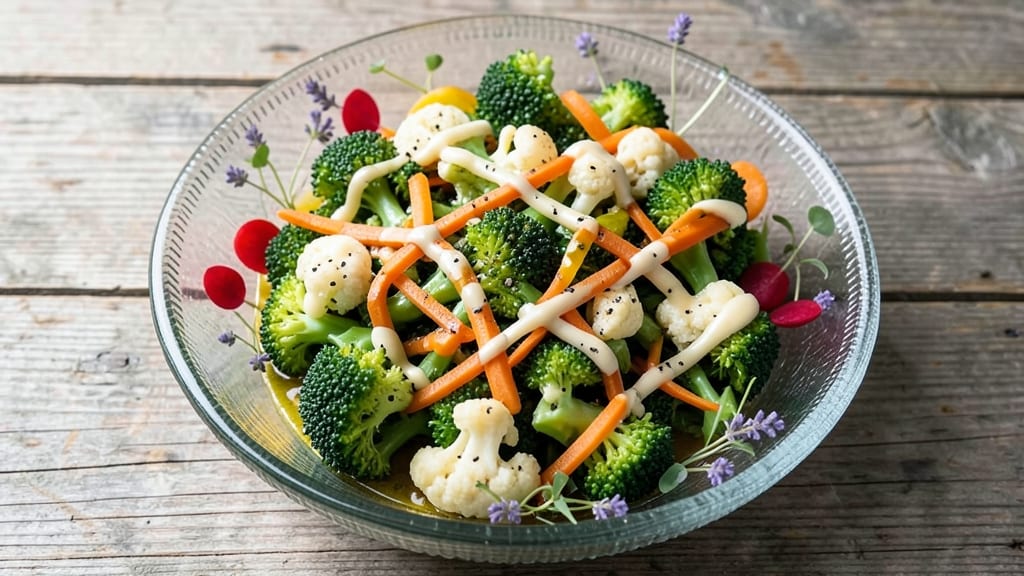
This broccoli cauliflower carrot salad delivers crunchy florets and bright citrus-herb flavors that transform simple vegetables into a restaurant-worthy dish. I created it after realizing how often these three vegetables sat forgotten in my fridge—until I discovered how their textures and flavors complement each other perfectly.
The key is cutting them into uniform bite-sized pieces so every forkful offers that satisfying crunch.
What makes this salad special is the citrus-herb vinaigrette, which cuts through the natural bitterness of the vegetables while adding a zesty brightness. I developed this dressing to balance the earthy flavors of the cruciferous vegetables with something refreshing—just enough lemon and herbs to make every bite exciting.
The salad holds up beautifully for meal prep, making it perfect for busy weeknights or packed lunches.
By the time you're done assembling, you'll have a vibrant salad with crisp-tender florets, creamy carrot shavings, and a dressing that clings perfectly to each piece. The texture contrast alone makes this dish irresistible—crunchy vegetables against the smooth, tangy dressing.
This is the kind of salad that proves healthy eating can be delicious without compromise.
Add toasted nuts or seeds for extra crunch, or keep it simple with just the fresh vegetables and dressing. The recipe scales easily for crowds or single servings, and it's fully customizable to your taste preferences.
Let's get started on this bright, satisfying salad that's as nourishing as it is flavorful.
Ingredients for broccoli cauliflower carrot salad
Bright citrus-herb vinaigrette meets crisp florets for this restaurant-worthy vegan salad.
| Ingredient | Amount | Notes |
|---|---|---|
| Fresh Broccoli Florets 🥦 | 4 cups | Cut into uniform bite-sized pieces |
| Fresh Cauliflower Florets 🥬 | 4 cups | Cut into uniform bite-sized pieces |
| Carrots 🥕 | 3 medium | Instructions: Peel and julienne lengthwise |
| Extra-Virgin Olive Oil 🫒 | ½ cup | High quality, fruity variety |
| Fresh Lemon Juice 🍋 | ⅓ cup | Freshly squeezed, about 1 lemon |
| Apple Cider Vinegar 🍶 | 2 tbsp | Raw, unfiltered preferred |
| Fresh Flat-Leaf Parsley 🌿 | ¼ cup | Finely chopped, stems removed |
| Fresh Dill 🌿 | ¼ cup | Finely chopped, stems removed |
| Diamond Crystal Kosher Salt 🧂 | 1 ½ tsp | Adjust to taste |
| Freshly Ground Black Pepper 🌶️ | ½ tsp | Freshly cracked preferred |
| Raw Cashews 🥜 | ¼ cup | Toasted for crunch, optional |
| Maple Syrup 🍯 | 1 tbsp | Pure, grade B preferred |
The vegetables are the stars here—look for fresh, vibrant broccoli and cauliflower with tight florets and no yellowing. Whole Foods or local farmers markets usually have the best quality. For carrots, choose ones with smooth skin and no cracks—organic varieties often have better flavor. Pre-cut florets save time, but cutting them yourself ensures perfect uniformity for every crunchy bite. The key is cutting all pieces to similar size so they cook evenly in the dressing. I always grab extra parsley and dill—half goes in the dressing, half gets sprinkled on top for that fresh finish.
No fresh herbs? Dried parsley and dill at half the amount work in a pinch, but fresh is ideal. Out of maple syrup? Agave nectar or date syrup keeps it vegan. The cashews are optional but add incredible crunch—toast them in a dry pan for 3-4 minutes until golden. For extra brightness, add a pinch of red pepper flakes. The dressing keeps for 5 days in the fridge, but the veggies are best eaten fresh. If prepping ahead, store dressing and veggies separately until ready to toss.
This salad tastes even better the next day once the flavors meld. Store the dressing separately in an airtight container for up to 1 week, and keep the veggies wrapped in damp paper towels for 3 days to maintain crispness. For meal prep, I portion the dressing and veggies into separate containers—just toss when ready to eat. The dressing thickens when chilled, so give it a quick whisk before using. Freezes beautifully for 3 months if you want to make a big batch for later.
Why You'll Love This Recipe
- I’ll be real: broccoli and cauliflower are cheap, and carrots last forever. This salad costs me pennies per serving, and I can stretch it into five meals without breaking the bank. Plus, the olive oil and lemon are staples I already have—no fancy shopping needed.
- No-Cook Crunch: I swear by this—just toss the florets and shredded carrots with olive oil and lemon, let them sit while I handle dinner. The broccoli and cauliflower stay crisp, no sad wilted bits, and the lemon brightens everything like a morning breeze.
- Lemon-Oil Magic: Here’s what sold me—drizzling that extra-virgin olive oil and fresh lemon juice right over the raw veggies. It’s not just dressing; it’s a flavor bomb. The oil pulls the crunch, the lemon cuts through the earthiness, and suddenly, raw veggies taste like they belong at a picnic.
- Packable Anywhere: Between us, this is my go-to for lunches. I prep a big bowl on Sunday, and it’s in my kids’ school lunches by Wednesday—no reheating, no complaints. Honestly, the carrots stay sweet and the florets hold their shape better than any pre-cut salad I’ve bought.
Step-by-step instructions for crunchy broccoli cauliflower carrot salad
Here's how to assemble this vibrant, textured salad with perfect balance every time.
Blanch and Refresh the Vegetables
Bring a large pot of water to a rolling boil. Add the 4 cups fresh broccoli florets and 4 cups fresh cauliflower florets, cooking for exactly 90 seconds until bright green and just tender-crisp. Immediately drain and plunge into an ice bath for 3 minutes to halt cooking and preserve color. This blanching step removes any bitterness while keeping the florets firm.
While the vegetables cool, peel the 3 medium carrots using a vegetable peeler to remove the outer skin, then julienne them lengthwise into thin strips. The julienne cut creates elegant, uniform pieces that hold up well in the salad. Set aside all prepared vegetables in a large mixing bowl.
Prepare the Citrus-Herb Vinaigrette
In a small bowl, whisk together the 0.5 cup extra-virgin olive oil, 0.33 cup fresh lemon juice, 2 tbsp apple cider vinegar, and 1 tbsp maple syrup until completely emulsified. The acidity from the lemon and vinegar will naturally bind with the oil, creating a silky dressing without needing emulsifiers.
Add the 1.5 tsp diamond crystal kosher salt and 0.5 tsp freshly ground black pepper to the dressing mixture, whisking until fully dissolved. Taste and adjust seasoning - this is your flavor foundation, so don't be shy with the salt. The dressing should be tangy, slightly sweet, and perfectly balanced.
Toast the Cashews for Crunch
Spread the 0.25 cup raw cashews in a single layer on a baking sheet. Toast in a 350°F oven for 6-8 minutes, stirring once halfway, until fragrant and lightly golden. The cashews should develop a nutty aroma and subtle crunch - this is your textural anchor in the salad. Let them cool completely before adding to the salad.
While the cashews toast, finely chop the 0.25 cup fresh flat-leaf parsley and 0.25 cup fresh dill, removing stems first. The herbs should be minced finely enough to distribute evenly but not so fine that they dissolve into the dressing. This herb blend will add fresh brightness to every bite.
Assemble and Toss the Salad
In the bowl with the blanched vegetables and julienned carrots, pour the prepared dressing and toss gently but thoroughly to coat all surfaces. The vegetables should glisten slightly from the dressing, indicating even distribution. Add the toasted cashews and chopped herbs, tossing again to combine.
Let the salad sit for 10 minutes at room temperature before serving. This resting period allows the flavors to meld together and the dressing to fully penetrate the vegetables. The result should be a perfect balance of crisp-tender vegetables, nutty crunch, and bright citrus dressing in every bite.
Pro Tips For Making Broccoli Cauliflower Carrot Salad
- CUT VEGETABLES UNIFORM: Broccoli and cauliflower florets should be roughly the same size—about 1-inch chunks—so they cook evenly. I used to leave the broccoli stems attached, but they turn mushy while the florets stay crisp; trim them off first.
- ROAST IN SINGLE LAYER: Overcrowding the pan steams the veggies instead of browning them. Spread florets and carrots in one even layer on the sheet pan—no stacking—and give them space to crisp. (Yes, it means two batches if your pan’s small, but it’s worth it.)
- SALT THE CARROTS FIRST: Toss the carrots with a pinch of salt and olive oil before adding broccoli and cauliflower. They absorb moisture differently, and salting them early keeps them from turning bland while the greens roast.
- LEMON JUICE AFTER ROASTING: Add the lemon juice after the veggies cool slightly—around 10 minutes off the heat. Warm lemon juice cooks off faster and loses its bright punch, so wait until everything’s just cool enough to handle. (Your future self will notice the difference.)
Pro cooking tips for perfect results
Blanching Perfection
The 90-second boil is critical for keeping your broccoli and cauliflower bright green and crisp-tender. I use a timer and stir the vegetables halfway through to ensure even cooking. After draining, plunge them into ice water immediately—this stops the cooking process and preserves their vibrant color.
If you skip the ice bath, your florets will turn mushy. For extra efficiency, I keep a bowl of ice water prepped in the sink before starting. 🌡️
Uniform Cutting Matters
Cutting all vegetables to the same size ensures they cook evenly in the dressing. I use a sharp chef's knife and cut broccoli and cauliflower into 1-inch florets, while julienning carrots into ¼-inch strips.
For the julienne cut, I hold the carrot vertically and slice at a 45-degree angle—this creates elegant, uniform pieces that look restaurant-worthy. The key is consistency in both size and shape for that perfect crunch in every bite.
Dressing Emulsification
The secret to a silky dressing is proper emulsification. I whisk the olive oil and lemon juice together vigorously for at least 30 seconds before adding vinegar and maple syrup. The acidity from the lemon and vinegar will naturally bind with the oil, creating a smooth, clingy dressing.
If your dressing separates, simply whisk it again. For extra insurance, I add the dressing to the salad in a slow stream while tossing continuously—this helps distribute it evenly. 💫
Toast Cashews Properly
Toast your cashews in a 350°F oven for 6-8 minutes, stirring once halfway through. They're done when they're fragrant and just beginning to turn golden—over-toasting will make them bitter. I like to spread them on a baking sheet in a single layer so they toast evenly.
Let them cool completely before adding to the salad; warm cashews will release their oils and make the dressing greasy. For extra crunch, I pulse them briefly in a food processor after toasting.
Herb Freshness Tip
Fresh herbs make all the difference in this salad. I always remove stems before chopping, as they can make the herbs taste bitter. For the parsley and dill, I use a sharp knife and make small, controlled chops rather than a rocking motion.
This gives you finely chopped herbs that distribute evenly without dissolving into the dressing. If you're short on time, I've found that dried herbs at half the amount work in a pinch, but fresh is always better.
Resting for Flavor
Let your salad rest for 10 minutes before serving. This allows the dressing to fully penetrate the vegetables and the flavors to meld together. I like to cover the bowl loosely with plastic wrap while it rests—this keeps the vegetables from drying out while still allowing the flavors to develop.
The resting time also lets the cashews cool completely, preventing them from releasing their oils and making the salad greasy. Trust me, this small step makes a big difference in the final result. ✨
Nutrition facts
Frequently asked questions
Can I make this salad without blanching the broccoli and cauliflower?
You can try, but blanching is key for that perfect crisp-tender texture and bright color. Without it, the florets will turn mushy when tossed with the dressing. If you're short on time, try steaming for 3-4 minutes instead—just be sure to shock them in ice water immediately after. The blanching step removes natural bitterness too, making the flavors more balanced.
How do I keep the carrots from getting soggy?
Julienned carrots stay crisp best when they're fresh and you work quickly. Peel them just before using and store them in cold water in the fridge until ready to slice. When tossing with the dressing, add the carrots last and give them a gentle stir rather than rough mixing. For extra crunch, add them to the salad bowl just before serving.
What's the best way to store leftovers?
Store the dressing and vegetables separately in airtight containers for up to 3 days. The dressing keeps for 1 week in the fridge. To maintain crispness, store the vegetables in a single layer on a paper towel before sealing. When ready to eat, toss everything together and let it sit for 5 minutes to re-crisp the edges.
Can I substitute other vegetables?
Try adding red bell pepper strips for sweetness or shredded kale for heartiness. For a different texture, swap the carrots for jicama sticks or sweet potato julienne. Just adjust cooking times—kale needs a quick massage with lemon juice to soften, while sweet potatoes should be roasted first for 15 minutes at 400°F before adding.
Why does my dressing separate?
Dressing separates when the oil and acid aren't properly emulsified. Whisk vigorously for 30 seconds before adding vinegar and maple syrup. For extra insurance, add 1 tsp Dijon mustard to help bind the ingredients. If it separates later, just whisk again before using—it'll come together beautifully.