
Salads
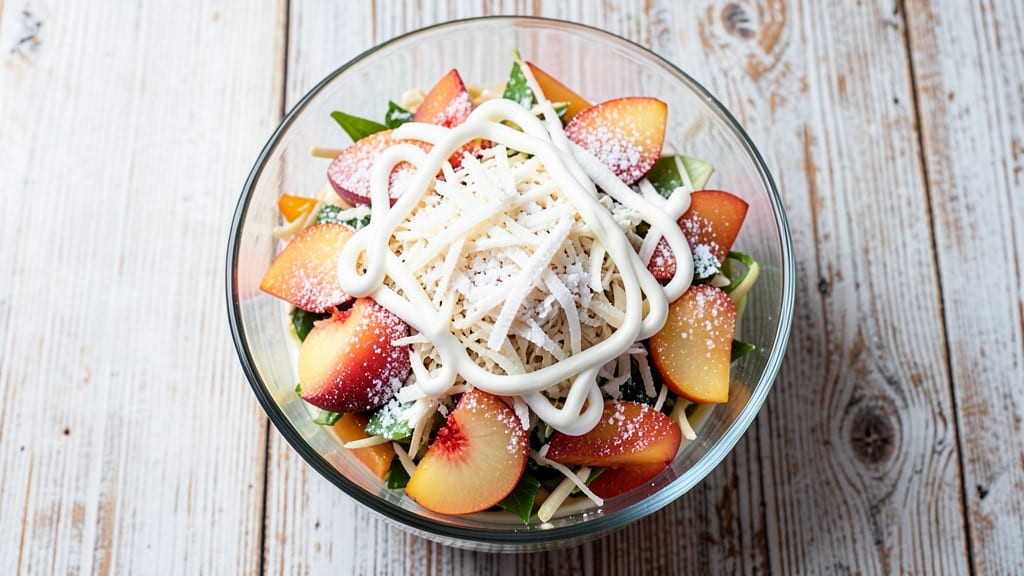
This buko salad ingredients and recipe brings together the creamy, chewy, and crunchy textures that make it a Filipino comfort classic.
My grandmother's handwritten notes for this dessert salad always mentioned "the magic happens in the layers," and she was right—the gelatin mixture, young coconut, and fruit create a perfect balance of sweet and tangy flavors.
The key is getting the gelatin just right so it sets without becoming rubbery, and layering everything carefully for that signature wobble when you cut into it.
The beauty of this recipe lies in its flexibility—you can use whatever tropical fruits are in season, from mango and pineapple to nectarines and guava. I've included a foolproof method for making the gelatin mixture that ensures it stays creamy and holds its shape, even after hours in the fridge.
The cream cheese adds a luxurious richness that ties everything together, while the young coconut provides that essential chewy texture that makes buko salad unforgettable.
What you'll end up with is a dessert salad that's as impressive to look at as it is to eat—layers of translucent gelatin, chunks of creamy coconut, juicy fruit, and fluffy leche flan.
The contrast of temperatures (chilled salad with room-temperature fruit) and textures (crunchy coconut, creamy gelatin, soft fruit) makes every bite exciting. This is the kind of dessert that feels special but comes together with simple ingredients and a little patience.
Perfect for potlucks, family gatherings, or when you want something refreshing that doesn't require baking. The recipe scales easily too—just adjust the gelatin mixture proportionally. Here's everything you need to create this Filipino classic in your own kitchen.
Ingredients for buko salad ingredients and
Here's what you need to make this creamy, chewy, and refreshing Filipino classic.
| Ingredient | Amount | Notes |
|---|---|---|
| Young Coconut Meat 🥥 | 2 cups | Freshly grated or finely chopped |
| Nectarines 🍑 | 3 medium | Peeled, pitted, cubed |
| Cream Cheese 🧀 | 8 oz | Full-fat, room temperature |
| Unsweetened Coconut Milk 🥥 | 1 can | 13.5 oz can, full-fat preferred |
| Granulated Sugar 🍚 | 1 cup | White or brown preferred |
| Powdered Sugar 🍚 | ½ cup | For dusting top layer |
| Knockbox or Gelatin 🍬 | 2 packages | 1.75 oz each, or 1.4 oz gelatin |
| Leche Flan Mix 🍮 | 1 box | 15 oz box, or homemade equivalent |
| Vanilla Extract 🌿 | 1 tsp | Pure vanilla preferred |
| Lime Juice 🍋 | 2 tbsp | Freshly squeezed |
| Salt 🧂 | ¼ tsp | Fine sea salt |
| Toothpicks 🪥 | 24 whole | For securing layers |
| Shredded Coconut 🥥 | ½ cup | Sweetened, for garnish |
Young coconut is the star here—Filipino markets or specialty stores have the best fresh options, but canned young coconut works in a pinch. Look for vibrant, white meat with no browning. The nectarines? Ripe but firm ones hold their shape best. I always grab extra because they make the salad look stunning. Cream cheese should be full-fat and room temperature—it blends smoother and gives that luxurious texture. For the gelatin, Knockbox is my go-to because it's foolproof, but regular gelatin works too if you're careful with the timing.
No young coconut? Canned coconut milk plus extra sugar can mimic the texture, though it won't be as chewy. Stuck with overripe nectarines? Mango or pineapple work perfectly—just adjust the sugar to taste. The leche flan mix can be swapped for homemade flan or even a layer of custard or pudding. For the gelatin, if you're using regular powdered gelatin, bloom it in cold water first—this is non-negotiable for that perfect set. The lime juice is key for brightness, so don't skip it unless you're using bottled lime juice (which is fine in a bind).
This salad needs at least 4 hours to set, so plan ahead. Store it in the fridge for up to 3 days—it actually tastes better the next day as the flavors meld. To serve, run a knife around the edges and let it wobble onto plates. The toothpicks are just for assembly; no one eats them. I always make a double batch because it disappears fast at gatherings. Garnish with shredded coconut right before serving so it stays crisp.
Why You'll Love This Recipe
- No Chopping Chaos: I swear by this recipe because the buko and nectarines just need a quick rinse and dice—no fancy knife skills required. The cream cheese and coconut milk mix in seconds, and honestly, the hardest part is resisting seconds while you wait for the sugar to dissolve.
- Sweet-Creamy Magic: That first bite? Pure bliss. The young coconut meat stays chewy and fresh, while the nectarines add just enough tartness to cut through the rich cream cheese. Between us, the unsweetened coconut milk makes it taste like a tropical vacation without the travel.
- Party in a Bowl: I’ve served this as a dessert after dinner, a snack for potlucks, and even a breakfast treat (yes, really). It’s the kind of dish that feels special but doesn’t scream "holiday meal"—perfect for birthdays, BBQs, or just because.
Step-by-step instructions for buko salad
Here's how to assemble this creamy, tropical dessert that's perfect for parties or a special treat.
Prepare the Coconut Mixture
In a large mixing bowl, combine the 2 cups young coconut meat with the 1 can unsweetened coconut milk. Stir well to ensure the coconut meat is fully coated and softened. Let this mixture sit for 10 minutes while you prepare the other ingredients—this helps the coconut absorb the milk and become tender.
Add the 8 oz cream cheese to the bowl and mix until completely dissolved and smooth. The cream cheese should blend seamlessly with the coconut mixture, creating a thick, creamy base. If the mixture feels too thick, stir in 1-2 tablespoons of the reserved coconut milk from the can to loosen it slightly. This ensures the perfect texture for layering later.
Mix the Leche Flan and Gelatin
In a separate bowl, whisk together the 1 box leche flan mix with 1 cup granulated sugar, 1 tsp vanilla extract, and 2 tbsp lime juice. This combination creates the signature caramelized flavor of leche flan, which pairs beautifully with the tropical coconut. Stir until the sugar is fully dissolved and the mixture is smooth.
In a small saucepan, gently heat ½ cup of the reserved coconut milk from the can (about ¼ cup) over low heat until it's just warm to the touch—not boiling. Sprinkle the 2 packages knockbox or gelatin over the warm milk and let it sit for 5 minutes to bloom. Then, whisk until fully dissolved. Pour this gelatin mixture into the leche flan mix and stir well to combine. The mixture should thicken slightly as it cools.
Layer the Salad
In a 6-quart glass bowl (or individual serving glasses if making single portions), start by layering ½ of the coconut mixture at the bottom. Press down gently with a spatula to create an even base. Next, sprinkle ½ of the cubed nectarines evenly over the coconut layer. Repeat with another layer of coconut mixture, followed by the remaining nectarines. This creates a visually appealing and flavorful contrast.
Pour the leche flan mixture evenly over the top layer of nectarines, spreading it out to cover completely. Use a spatula to gently press down on the top layer, ensuring everything is compacted. This step is crucial for preventing the layers from shifting when you add the final garnish. Chill the salad in the refrigerator for at least 4 hours, or until fully set and firm.
Add the Final Garnish
Once the salad is fully chilled, carefully remove it from the refrigerator. In a small bowl, mix the 0.5 cup powdered sugar with 0.25 tsp salt to create a fine, even dusting. Sprinkle this mixture evenly over the top of the salad, allowing it to settle into the creamy layers. The powdered sugar adds a sweet, crunchy texture that contrasts beautifully with the soft coconut and nectarines.
Gently press the 0.5 cup shredded coconut into the top layer, ensuring it sticks to the powdered sugar. Use 24 toothpicks to secure the layers if needed, especially if serving in individual glasses. Let the salad sit at room temperature for 10-15 minutes before serving to allow the powdered sugar to fully adhere. Serve immediately for the best texture and flavor.
Pro Tips For Making Buko Salad Ingredients And
- SHRED COCONUT FRESH: DESCRIPTION:
- CHILL CREAM CHEESE FIRST: DESCRIPTION:
- DRAIN NECTARINES WELL: DESCRIPTION:
- SWEETEN THE MILK LAST: DESCRIPTION:
Common mistakes when making this recipe
Overcooking Gelatin
I learned the hard way that gelatin turns rubbery if you heat it too much. Always dissolve the Knockbox or gelatin in warm (not boiling) coconut milk—just enough to feel slightly heated to the touch.
Overheating breaks down the proteins, and your salad will end up with a chewy, unappetizing layer instead of that perfect jelly-like texture. If you're using regular gelatin, bloom it in cold water first for 5 minutes before adding it to the warm liquid.
This two-step process is non-negotiable for that silky set. 🌡️
Skipping the Chill Time
Patience is key with buko salad—rushing the 4-hour chill time is a recipe for disaster. The layers need this time to fully set so they hold their shape when you cut into it.
I once served it after only 2 hours because I was in a hurry, and the gelatin layer slid right off the coconut. If you're short on time, make the salad ahead and store it in the fridge overnight.
The flavors actually deepen as it rests, and the texture becomes even more luxurious.
Uneven Layers
The secret to that wobbly, restaurant-quality presentation is even layers. Don't just dump everything in—press each layer gently with a spatula to create a solid base. Start with the coconut mixture at the bottom, then add fruit, then repeat.
If you're serving in individual glasses, use a ramkin or small bowl to portion the leche flan mixture evenly. Uneven layers mean shifting when you cut, and no one wants their dessert collapsing onto their plate.
I like to tap the sides of the bowl lightly after each layer to help everything settle.
Wrong Fruit Ripeness
Overripe nectarines (or any fruit) will turn mushy and ruin the texture contrast. Choose ripe but firm fruit that holds its shape when cut. If your nectarines are too soft, swap them for pineapple or mango—they hold up better in the chilled salad.
For extra flavor, toss the fruit in 1 tsp lime juice before layering. This brightens the fruit and prevents it from turning bland after sitting in the coconut mixture. I always cut the fruit into even ½-inch cubes for consistent texture throughout.
Using Low-Quality Ingredients
This isn't the time to skimp on young coconut or cream cheese. Freshly grated young coconut from a Filipino market or specialty store makes all the difference—it should be white, tender, and slightly sweet.
Canned coconut milk should be full-fat (none of that light stuff), and the cream cheese must be full-fat and room temperature for that perfect creamy texture. I've tried store-brand cream cheese, and while it works, nothing beats the richness of Philadelphia brand for this recipe.
The same goes for the leche flan mix—opt for a high-quality brand for that authentic caramelized flavor.
Forgetting the Powdered Sugar Step
That final dusting of powdered sugar isn't just for looks—it adds a crunchy, sweet contrast that balances the creamy coconut. Mix it with ¼ tsp salt to enhance the flavors even more. I once skipped this step because I thought it was optional, and the salad tasted flat.
Sprinkle it evenly and let it sit for 10-15 minutes before serving so it adheres properly. For extra flair, I like to add a drizzle of caramel sauce along the side of the serving bowl right before plating. 💫
Nutrition facts
Frequently asked questions
Can I make buko salad without young coconut?
Yes! If you can't find fresh young coconut, use 1 can (13.5 oz) full-fat coconut milk plus ½ cup extra sugar to mimic the chewy texture. For best results, blend the coconut milk with 1 cup shredded coconut (sweetened or unsweetened) until smooth. This won't be identical, but it still delivers that creamy coconut flavor.
How long does buko salad keep in the fridge?
This dessert stays fresh for up to 3 days when stored properly in an airtight container. The flavors actually improve after the first day as the gelatin sets perfectly and the layers meld together. For best texture, serve within 3 days—after that, the fruit may start to soften.
What fruits can I substitute for nectarines?
Nectarines work beautifully, but you can swap them for ripe mango, pineapple, or even peaches. For tropical flair, try kiwi or papaya—just cut them into ½-inch cubes for even texture. Toss the fruit in 1 tsp lime juice before layering to prevent browning and add brightness. The key is using fruit that's ripe but firm to maintain that perfect crunch.
Can I make buko salad ahead of time?
This is one of the best make-ahead desserts. Assemble the salad 1 day in advance and refrigerate uncovered for 24 hours—this helps the layers set perfectly. The day you serve it, simply add the final powdered sugar and shredded coconut. The flavors develop beautifully over time, making it even more delicious when served chilled.
Why did my gelatin layer turn rubbery?
Overheating the gelatin mixture is the most common cause. Always dissolve gelatin in warm (not boiling) liquid—just enough to feel slightly heated to the touch. If using regular gelatin, bloom it in cold water first for 5 minutes before adding to warm liquid. This two-step process prevents rubbery texture. Also, never boil the mixture after adding gelatin.