
Salads
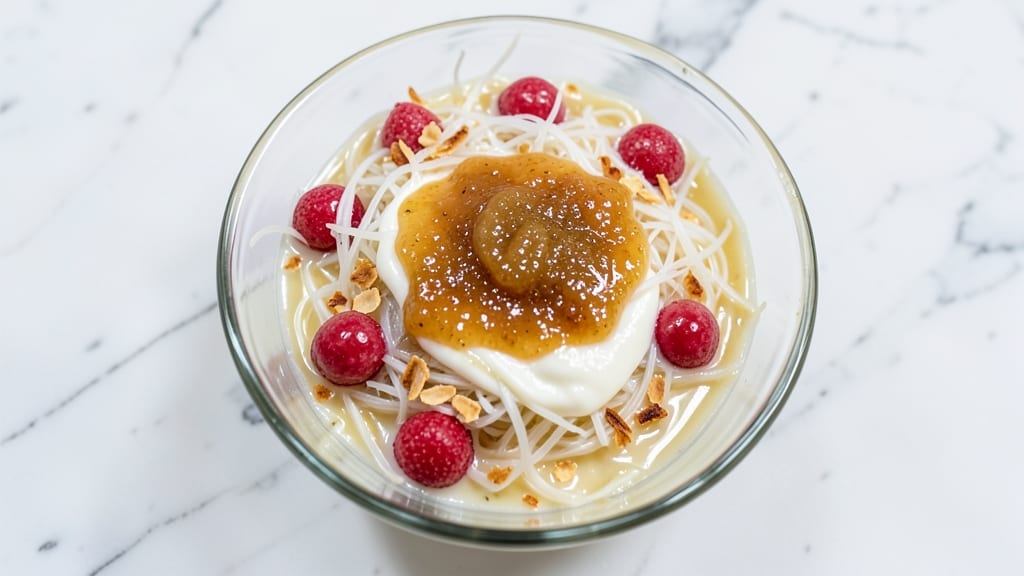
This creamy buko salad recipe Tagalog brings the beloved Filipino dessert to life with tender nata de coco, sweetened condensed milk, and just the right crunch.
The traditional Tagalog technique involves soaking the buko for hours to achieve that signature melt-in-your-mouth texture, then layering it with creamy coconut and fluffy gelatin for the perfect balance of sweetness and crunch.
What makes this recipe special is how it transforms simple ingredients into a dessert that feels like a hug—rich, nostalgic, and impossible to resist.
The secret to authentic buko salad lies in the preparation: properly soaking the nata de coco removes excess starch, ensuring each strand is tender yet holds its shape. I’ve included a foolproof method for achieving that ideal texture, plus tips for adjusting sweetness to your preference.
The creaminess comes from a perfect blend of sweetened condensed milk and coconut milk, which coats every piece of buko for a velvety finish.
Once chilled, this dessert delivers layers of satisfaction—crisp nata de coco, creamy coconut, and a hint of vanilla or ube for depth. It’s the kind of treat that feels indulgent yet light, perfect for gatherings or as a comforting solo dessert.
The recipe also includes variations like adding leche flan or ube jam for extra richness, proving how versatile this classic can be.
Whether you’re making it for a celebration or a quiet night in, this buko salad is a celebration of Filipino flavors. The process is straightforward, but the result is anything but ordinary—creamy, crunchy, and utterly addictive. Let’s get started on creating this timeless dessert.
Ingredients for buko salad recipe tagalog
Creamy buko salad transforms simple ingredients into Filipino comfort in every bite.
| Ingredient | Amount | Notes |
|---|---|---|
| Nata De Coco (Buko) 🍈 | 2 packages (14 oz each) | Soaked for 2 hours, drained well |
| Sweetened Condensed Milk 🥛 | 1 ½ cups | Full-fat for creaminess |
| Coconut Milk 🥥 | 1 can (13.5 oz) | Full-fat preferred |
| Granulated Sugar 🍚 | ½ cup | Adjust to taste |
| Unflavored Gelatin 🍬 | 2 tsps | Bloomed in 3 tbsp cold water |
| Hot Water 💧 | ½ cup | For gelatin blooming |
| Vanilla Extract 🌸 | 1 tsp | Pure, high-quality |
| Shredded Coconut 🥥 | ½ cup | Sweetened, toasted lightly |
| Lime Juice 🍋 | 1 tbsp | Freshly squeezed |
| Salt 🧂 | ¼ tsp | Fine sea salt |
| Ice Cubes ❄️ | 1 cup | For chilling quickly |
| Ube Jam (optional) 🍠 | ¼ cup | For purple hue |
The nata de coco is non-negotiable—Filipino markets or Asian grocery stores carry the best quality, often in small jars or packages. Look for strands that are firm yet pliable, not mushy or overly dry. Soaking for 2 hours removes excess starch, giving you that perfect tender-crunch texture. I always buy extra because it disappears fast—this recipe uses two packages, but I’ll make a double batch and freeze half. The coconut milk should be full-fat; Goya or Thai Kitchen brands are my go-tos for that rich, authentic flavor. If you can’t find ube jam, purple yam puree works too for that signature color.
No sweetened condensed milk? Mix 1 cup evaporated milk with 1 cup sugar, heated gently until dissolved. Running short on gelatin? Agar-agar powder at half the amount creates a firmer set. The lime juice brightens everything—Mexican Key lime juice has more zing than regular. For the shredded coconut, toast it lightly in a dry pan for 2-3 minutes to enhance its flavor. Want extra richness? Swap half the condensed milk for coconut cream. The ice cubes aren’t just for chilling—they help set the gelatin faster, so don’t skip them. And trust me on the vanilla: Nestlé Pure or McCormick Pure extract makes all the difference.
This dessert tastes even better the next day once everything melds. Store leftovers in an airtight container in the fridge for up to 5 days. For freezing, portion into individual servings—3 months max, and thaw overnight in the fridge. The buko stays crisp, while the gelatin keeps its set. Pro tip: Serve in hollowed-out pineapples or coconut shells for a showstopping presentation. And if you’re making this for a crowd, double the gelatin and ice cubes—it sets faster with larger batches.
Why You'll Love This Recipe
- No-Chop Required: I swear, this is the only dessert where I actually enjoy the prep—just drain the buko, mix the liquids, and let the gelatin do the work. No peeling, no dicing, no mess. Honestly, it’s the kind of recipe that makes me feel like I’ve won the week.
- Creamy-Crunch Magic: That perfect bite—chewy buko, silky gelatin, and the thick, caramelized sweetness from the condensed milk and coconut milk? It’s dangerously addictive. I’ll be real: I’ve caught myself sneaking spoonfuls straight from the bowl.
- Party in a Bowl: Serve it chilled for birthdays, pack it in lunchboxes for school kids, or bring it to potlucks—it’s always a crowd-pleaser. The gelatin sets it up like a no-bake mousse, so it holds together whether you’re eating it at room temp or straight from the fridge.
- Budget Bliss: Three cans of coconut milk, a block of gelatin, and a bag of buko—this feeds six for under $10. Plus, the leftovers? They last forever in the fridge, so I’m always stocked for last-minute cravings or lazy Sundays. (Yes, even on a Tuesday night.)
Step-by-step instructions for buko salad recipe Tagalog
Here's how to create the perfect creamy, crunchy buko salad with that signature Tagalog texture.
Prepare the Gelatin-Coconut Base
In a medium bowl, sprinkle the 2 teaspoons unflavored gelatin evenly over the 0.5 cup hot water. Let it bloom for 5 minutes until it becomes a gel-like consistency. This step is crucial for that signature creamy texture that holds everything together. I like to press the gelatin with my finger occasionally to ensure it dissolves completely.
While the gelatin blooms, open the 1 can (13.5 oz) coconut milk and pour it into a separate bowl. Add the 1.5 cups sweetened condensed milk, 0.5 cup granulated sugar, 1 teaspoon vanilla extract, and 0.25 teaspoon salt. Whisk vigorously until the mixture is smooth and fully combined. The sweetened condensed milk should dissolve completely without any graininess.
Combine and Chill the Mixture
Add the bloomed gelatin mixture to the coconut milk blend and stir until fully incorporated. The texture should transform from thick to smooth and slightly syrupy. Pour this mixture into a large mixing bowl and gently fold in the 0.5 cup shredded coconut and 1 tablespoon lime juice. The lime juice adds a bright contrast that balances the sweetness perfectly.
Add the 1 cup ice cubes and stir gently to chill the mixture quickly. This step prevents the gelatin from setting too soon while keeping the texture light and airy. Place the bowl in the refrigerator and let it chill for 10 minutes. You'll see the mixture begin to thicken slightly, but it should still be pourable.
Add the Buko and Optional Ube Jam
Drain the 2 packages (14 oz each) nata de coco (buko) thoroughly after soaking for 2 hours. Rinse them gently under cold water to remove any excess water, then pat dry with paper towels. Add the buko to the chilled coconut mixture and fold gently using a spatula. Be careful not to break the buko strands—this maintains that delightful crunch we all love.
If you're using the 0.25 cup ube jam, add it now and fold it in until evenly distributed. The ube jam adds a beautiful purple hue and a subtle sweetness that complements the coconut perfectly. The buko should be evenly coated in the creamy mixture, but each strand should still be distinct and visible.
Final Chill and Serve
Transfer the buko salad to a serving dish and cover it with plastic wrap. Refrigerate for at least 2 hours to allow the gelatin to fully set and the flavors to meld together. This chilling time is essential for achieving that perfect balance of creamy and crunchy textures. The salad should be firm enough to hold its shape when scooped but still yield slightly when pressed.
Serve the buko salad chilled in individual bowls or glasses. The contrast of the cool, creamy mixture with the crunchy buko strands creates a sensory experience that's truly special. Each bite should deliver a perfect harmony of sweet, creamy, and slightly tangy flavors with that satisfying crunch from the buko. Enjoy immediately for the best texture!
Pro Tips For Making Buko Salad Recipe Tagalog
- CHILL THE GELATIN FIRST: I learned this the hard way—dumping cold gelatin into hot coconut milk makes it clump like glue. Soak the gelatin in ice water for 5 minutes first, then squeeze out excess liquid before dissolving in warm (not boiling) coconut milk. This keeps your salad silky, not grainy.
- DRAIN BUKO WELL: That leftover syrup in the nata de coco? It’s the reason your salad gets watery. Rinse the buko under cold water, then drain it in a colander for 10 minutes. Press it gently with a paper towel to remove every last drop—your texture will thank you.
- WHISK THE MILK MIX: Stirring condensed milk and coconut milk is lazy. Whisk them together vigorously until smooth—this cuts through the thickness and makes the sauce blend like a dream. I skip this step, and the salad tastes like two separate liquids fighting for space.
- SWEETEN IT LAST: Add sugar after mixing everything else, not before. The gelatin and condensed milk already pack enough sweetness, and sprinkling sugar at the end lets you taste the buko’s natural flavor first. Adjust to taste—some brands of condensed milk are sweeter than others.
Pro cooking tips for perfect results
Soaking Secrets
The key to perfect buko texture starts with a 2-hour soak in cold water. This removes excess starch that makes strands mushy. I use a large bowl with enough water to fully submerge the buko, gently stirring every 30 minutes.
For extra-tender strands, add 1 tablespoon white vinegar to the soaking water—it breaks down starches faster without affecting flavor. 🌊
Gelatin Timing
Blooming gelatin properly prevents graininess. Sprinkle 2 teaspoons gelatin over 0.5 cup hot water and let sit for 5 minutes—no longer, or it won't dissolve fully. I use a whisk to gently break up clumps before adding to the coconut mixture.
For firmer set, bloom gelatin in cold water instead, then heat the mixture to 160°F while stirring constantly. This creates a smoother texture.
Creamy Balance
The perfect ratio is 1.5 cups condensed milk to 1 can coconut milk. For extra richness, replace 0.5 cup of condensed milk with coconut cream. I always taste the mixture before adding buko—adjust sweetness with granulated sugar or tartness with lime juice.
The coconut milk should be full-fat; Goya or Thai Kitchen brands give the best authentic flavor. 🥥
Layering Technique
Fold buko strands gently to avoid breaking them. Use a spatula to create pockets of creaminess between strands. For presentation, layer in clear glasses with buko strands standing upright—this creates a stunning visual effect.
Add ube jam swirls on top for color contrast. The final chilling time (2 hours) is crucial for setting the gelatin while keeping buko crisp.
Chilling Hacks
Speed up chilling by placing the bowl in an ice bath for 10 minutes before final refrigeration. This prevents gelatin from setting too soon. For large batches, divide into smaller containers to ensure even cooling.
I always let it sit at room temperature for 10 minutes after removing from fridge—this makes scooping easier without melting. The texture should be firm but still yield slightly when pressed. ❄️
Serving Style
Serve in hollowed-out pineapples or coconut shells for an authentic touch. Garnish with extra shredded coconut or a sprinkle of toasted sesame seeds for crunch. For a modern twist, layer with leche flan crumbles or mango chunks.
Always serve chilled—room temperature buko loses its satisfying crunch. The contrast of cool creaminess with crisp buko is what makes this dessert unforgettable.
Nutrition facts
Frequently asked questions
Can I use regular coconut instead of nata de coco?
Nata de coco (buko) is essential for that signature crunch and jelly-like texture. Regular coconut flakes or shredded coconut won't provide the same satisfying bite. However, you can add extra shredded coconut for texture if you're missing buko—but the dish won't be authentic. Filipino markets or Asian grocery stores carry nata de coco in jars or packages.
How do I make buko salad without gelatin?
For a gelatin-free version, replace it with 1 cup agar-agar powder (mixed with 1 cup water and boiled for 5 minutes), or use 1 cup coconut cream thickened with 2 tablespoons cornstarch. The texture will be softer but still creamy. Chill for 4 hours to set properly. The buko will stay crisp, but the overall consistency will be more like a pudding.
Why did my buko salad turn out too sweet?
Sweetened condensed milk is already concentrated sugar, so taste the coconut mixture before adding buko. If it's too sweet, balance it with 1-2 tablespoons lime juice or a pinch of salt. For a less sweet version, reduce the condensed milk to 1 cup and add 1 cup evaporated milk instead. The key is adjusting before the final chill—once set, it's harder to modify.
Can I make buko salad ahead of time?
Yes! This dessert actually tastes better the next day as flavors meld. Store in an airtight container in the fridge for up to 5 days. For freezing, portion into individual servings and freeze for up to 3 months. Thaw overnight in the fridge—never at room temperature. The buko stays crisp, while the gelatin maintains its set. Pro tip: Let it sit at room temperature for 10 minutes before serving for easier scooping.
What’s the best way to serve buko salad?
For an authentic touch, serve in hollowed-out pineapples or coconut shells. Garnish with extra shredded coconut, toasted sesame seeds, or a swirl of ube jam. For a modern twist, layer with leche flan crumbles or fresh mango chunks. Always serve chilled—room temperature buko loses its satisfying crunch. The contrast of cool creaminess with crisp buko is what makes this dessert unforgettable!