
Salads
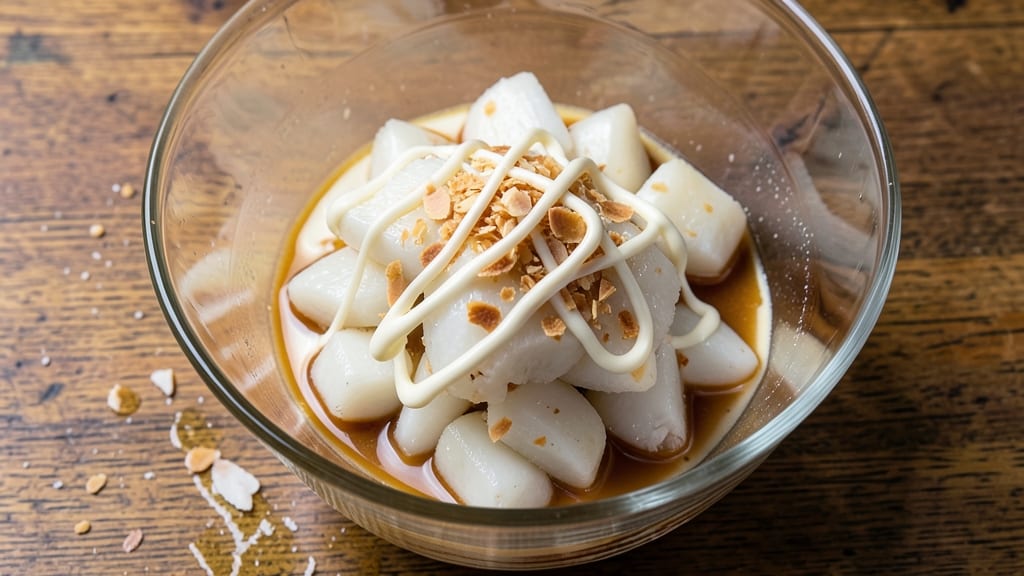
This buko salad recipe with ingredients and procedure delivers the perfect balance of creamy coconut, tender young coconut, and refreshing fruit—a Filipino classic that’s become a beloved dessert worldwide.
The secret lies in properly preparing the buko (young coconut) by soaking and peeling it to achieve that signature tender-crisp texture, while the coconut cream cheese layer adds luxurious richness without overpowering the natural sweetness.
What sets this recipe apart is the traditional technique of reducing coconut milk for depth, paired with modern flexibility for dietary preferences.
The assembly process is where the magic happens: layering soaked buko, fresh fruit, and that velvety coconut cream cheese mixture creates a visually stunning dessert that’s just as impressive to eat.
Each bite delivers a harmonious blend of textures—crunchy coconut, creamy cheese, and juicy fruit—all held together by a subtle vanilla or pandan infusion.
This recipe serves as both a nostalgic comfort and a showstopping centerpiece for gatherings, proving that traditional Filipino flavors can shine in contemporary settings.
What makes this buko salad truly special is its versatility—whether you stick to the classic version with cream cheese or opt for vegan alternatives like coconut yogurt, the result remains equally satisfying. The procedure is straightforward yet precise, ensuring every element comes together perfectly without requiring advanced skills.
By the time you’re done, you’ll have a dessert that’s as beautiful as it is delicious, with layers that practically sing with tropical flavors.
Perfect for celebrations, potlucks, or simply treating yourself, this buko salad recipe is designed to be both foolproof and restaurant-quality. The step-by-step instructions guide you through every phase—from preparing the buko to assembling the final presentation—so you can achieve that signature Filipino touch with confidence.
Let’s get started on creating this creamy, crunchy masterpiece.
Ingredients for buko salad recipe with ingredients and procedure
Creamy coconut layers meet tropical fruit crunch—this buko salad delivers restaurant-quality texture and flavor.
| Ingredient | Amount | Notes |
|---|---|---|
| Young Coconuts (Buko) 🥥 | 2 cups | Fresh, peeled, and soaked for tenderness |
| Sweetened Condensed Milk 🥛 | 1 can | 14 oz can, full-fat preferred |
| Coconut Milk 🥥 | 1 can | 13.5 oz can, full-fat for creaminess |
| Cream Cheese 🧀 | 8 oz | Full-fat, room temperature |
| Granulated Sugar 🍚 | ½ cup | Fine grain preferred |
| Vanilla Extract 🍯 | 1 tsp | Pure vanilla preferred |
| Pandan Juice 🌿 | 1 tbsp | Or pandan extract if unavailable |
| Fresh Pineapple 🍍 | 1 cup | Diced, small chunks |
| Fresh Strawberries 🍓 | ½ cup | Hulled and sliced |
| Fresh Kiwi 🥝 | 1 whole | Peeled and sliced |
| Shredded Coconut 🥥 | ¼ cup | Toasted for extra flavor |
| Salt 🧂 | ¼ tsp | Fine sea salt |
| Lime Juice 🍋 | 1 tbsp | Freshly squeezed |
The buko is the heart of this dessert. Fresh young coconuts from Asian markets or specialty stores are ideal—look for vibrant green husks and firm flesh. If you can't find them fresh, pre-packaged buko in water from Filipino grocery stores works too, but drain and rinse thoroughly. The cream cheese should be full-fat and room temperature—this ensures that velvety texture. For the coconut milk, full-fat canned varieties like Goya or Thai Kitchen provide the richest flavor. Pro tip: reduce the coconut milk first to intensify its flavor, but don't let it boil dry—just until it thickens slightly.
No cream cheese? Vegan cream cheese or coconut yogurt works beautifully for a dairy-free version. Short on pandan? Vanilla bean paste or a pinch of turmeric adds warmth without the same floral note. The fruit selection is flexible—mango or papaya are classic additions, but whatever's in season will do. For the shredded coconut, toasted unsweetened works best—sweetened can overpower the delicate balance. If you're using pre-shredded coconut, toast it in a dry pan for 2-3 minutes to revive its flavor. The lime juice brightens everything—don't skip it, even if the recipe seems sweet enough.
Buko salad keeps beautifully for 3-4 days in the fridge, though it's best enjoyed within 24 hours for optimal texture. Store it in an airtight container with parchment paper between layers to prevent sogginess. For serving, chilled glass bowls enhance presentation—garnish with extra toasted coconut and lime zest. This dessert freezes surprisingly well too: portion into individual servings before freezing, then thaw overnight in the fridge. The fruit will soften slightly but remains delicious when served cold.
Why You'll Love This Recipe
- No-Chop Required: I swear, the only prep is peeling those young coconuts—no dicing, no sautéing, just scooping the jelly-like meat into a bowl. The rest? Stir, chill, serve. That’s it.
- Creamy-Chewy Magic: That first bite—cool, chewy buko with the rich, velvety condensed milk and coconut milk? It’s like dessert and snack had a baby. The cream cheese ties it all together with a smooth, tangy finish that keeps me going back for more.
- Party in a Bowl: Honestly, this is my go-to for potlucks, family gatherings, or even a lazy Sunday brunch. It’s cold, it’s refreshing, and it’s the one dish everyone asks for seconds of. Plus, it stays fresh for days in the fridge—no one’s left wanting.
- Dollar Stretch: Between us, this is one of the most budget-friendly treats I make. A few coconuts, a can of condensed milk, and a block of cream cheese go a long way. I’ll be real: it’s the perfect way to use up leftover coconut milk or stretch a dessert budget without sacrificing flavor.
Step-by-step instructions for buko salad with cream cheese coconut bliss
Create this luxurious dessert with perfect texture and vibrant flavors using precise techniques.
Prepare the Young Coconut Base
Drain and rinse the 2 cups Young Coconuts (Buko) thoroughly under cold water to remove any excess liquid. Pat them completely dry with paper towels—this prevents a watery salad. Place them in a large mixing bowl and set aside. The buko should be tender but still hold its shape when pressed gently with your spoon.
In a separate medium saucepan, combine the 1 can Coconut Milk and 1 can Sweetened Condensed Milk. Heat over medium-low heat until the mixture reaches 160°F, stirring constantly to prevent scorching. Remove from heat and let cool for 5 minutes—this warm milk will help emulsify the cream cheese later.
Create the Cream Cheese Coconut Mixture
In a separate bowl, beat the 8 oz Cream Cheese with an electric mixer until completely smooth, about 2-3 minutes. This ensures no lumps remain when combined with the other ingredients. Gradually add the 0.5 cup Granulated Sugar, 1 tsp Vanilla Extract, 1 tbsp Pandan Juice, and 1 tbsp Lime Juice, mixing on low speed until fully incorporated.
Slowly pour the warm coconut milk mixture into the cream cheese while mixing on low speed. Add the 0.25 tsp Salt and continue mixing until the sauce is perfectly smooth and glossy. The mixture should coat the back of a spoon and hold its shape when drizzled—this indicates proper emulsification. If it's too thick, add 1-2 tablespoons of cold water to reach a pourable consistency.
Combine All Ingredients
Gently fold the prepared buko into the cream cheese mixture using a rubber spatula. Work carefully to avoid crushing the buko pieces—you want them to remain intact for that signature texture. Add the 1 cup Fresh Pineapple, 0.5 cup Fresh Strawberries, and 1 whole Fresh Kiwi (peeled and sliced), distributing them evenly throughout the mixture.
Sprinkle the 0.25 cup Shredded Coconut over the top and gently fold it in just before serving. The toasted coconut adds a delightful crunch that contrasts perfectly with the creamy buko and fruit. For best results, prepare the salad at least 1 hour before serving—this allows the flavors to meld and the buko to absorb the coconut cream mixture.
Chill and Serve
Cover the buko salad and refrigerate for at least 4 hours, preferably overnight. Chilling enhances the flavors and creates the ideal creamy texture. Before serving, give it a final stir to redistribute any settled ingredients. The salad should be cool but not icy, with a smooth, velvety cream cheese base that coats every bite.
Serve in individual bowls or glasses, garnished with additional shredded coconut if desired. Each spoonful should deliver a perfect balance of creamy coconut, tender buko, sweet fruit, and aromatic pandan notes. For an extra touch, drizzle with a little extra lime juice just before serving to brighten the flavors.
Pro Tips For Making Buko Salad Recipe With Ingredients And Procedure
- CHOP BUKO SMALL: Fresh buko breaks easily—cut it into 1-inch chunks instead of thin slices. The smaller pieces soak up the condensed milk faster and stay intact when mixing, so you don’t end up with a mushy salad after 10 minutes.
- CHILL CREAM CHEESE FIRST: Room-temperature cream cheese melts into a greasy blob in buko salad. Scoop it straight from the fridge, cut into small cubes, and let it sit in the cold coconut milk for 5 minutes before folding—it’ll blend smoothly without curdling.
- DON’T SKIP THE ICE: Add 1 cup of ice to the final mix, even if the recipe doesn’t say so. The coldness cuts through the sweetness and keeps the cream cheese from separating later, especially if you’re serving it in a warm kitchen.
- WEIGH THE SUGAR: Granulated sugar packs differently—eyeballing it leads to clumps or a too-sweet mess. Use a scale for ¼ cup (50g) instead of guessing, then adjust to taste. This is the thing that matters most for balancing the creaminess.
Wine and beer pairings for this dish
Tropical Fruit Harmony
Buko salad’s bright, tropical fruit base pairs beautifully with light, refreshing wines that complement the coconut cream without overpowering it.
A dry Riesling from Germany—like Dr. Loosen Blue Slate—cuts through the richness with its crisp acidity and citrus notes, while a Moscato d’Asti from Italy adds a delicate floral sweetness that mirrors the pandan flavor. 🍷 These wines highlight the fruit’s natural sweetness while balancing the creamy coconut texture.
Creamy Coconut Contrast
For those who prefer beer, a light lager with tropical notes works wonders. Try a Hawaiian Kona Longboard Lager—its subtle pineapple and coconut undertones echo the salad’s flavors, while its light body won’t clash with the dessert’s texture.
Alternatively, a Belgian Witbier like Stella Artois brings a touch of spice and citrus that brightens the dish, especially if you’ve added lime zest to the buko salad.
Pandan-Inspired Pairings
The pandan juice in this recipe calls for wines or beers with floral or herbal undertones. A Gewürztraminer from Alsace—like Domaine Weinbach Gewürztraminer—delivers lychee and rose aromas that harmonize with the pandan’s vanilla-like depth.
For beer lovers, a German Hefeweizen with its banana and clove notes creates a surprising but delightful contrast to the coconut cream.
Serving Temperature Tip
Serve your buko salad chilled (around 45°F) to enhance the wine or beer pairing. The cool temperature intensifies the flavors, making the coconut cream’s richness more pronounced while the fruit’s acidity remains vibrant.
A slightly sweeter dessert wine like Moscato or a honey lager can stand up to the chilled dessert, especially on warm days when the coconut flavors feel even more refreshing. 🍹
Nutrition facts
Frequently asked questions
Why does the buko need to be soaked before using?
Soaking the buko for 30-60 minutes softens the young coconut flesh, making it tender and easier to eat. This step also removes excess water from the canned buko, preventing a soggy salad. For fresh buko, soaking helps break down the fibrous texture while preserving its natural sweetness. Pro tip: Pat the buko completely dry after soaking to maintain the perfect creamy texture.
Can I make this buko salad without cream cheese?
For a dairy-free version, substitute the cream cheese with 8 oz vegan cream cheese or 1 cup coconut yogurt blended with 1 tbsp cornstarch to thicken. The coconut milk mixture will still emulsify beautifully, creating a rich, creamy base. Just reduce the sugar slightly since coconut yogurt is naturally sweeter. This version works equally well for those avoiding dairy.
How do I prevent the buko salad from getting watery?
Watery buko salad usually happens from excess liquid in the coconut or improper draining. Always pat the buko completely dry after soaking, and avoid overmixing the cream cheese mixture. For extra insurance, strain any excess liquid from the coconut milk before heating it. Also, use full-fat coconut milk—the higher fat content helps stabilize the cream cheese mixture. Chilling the salad properly (at least 4 hours) also helps set the texture.
What's the best way to store leftover buko salad?
Store leftovers in an airtight container with parchment paper between layers to prevent sogginess. Keep it refrigerated for up to 3-4 days, though it's best enjoyed within 24 hours for optimal texture. For longer storage, portion into individual servings and freeze for up to 1 month. Thaw overnight in the fridge before serving—never microwave from frozen. The fruit may soften slightly but remains delicious.
Can I use frozen fruit instead of fresh?
Yes, but with some adjustments. Use thawed, drained frozen fruit (pineapple, strawberries, kiwi) to avoid excess moisture. For best results, toss the fruit with 1 tsp cornstarch before adding to the salad—this helps absorb any remaining liquid. The texture will be slightly softer than fresh fruit, but the flavors remain vibrant. For tropical varieties like mango or papaya, fresh is ideal as frozen versions can lose their delicate texture.