
Salads
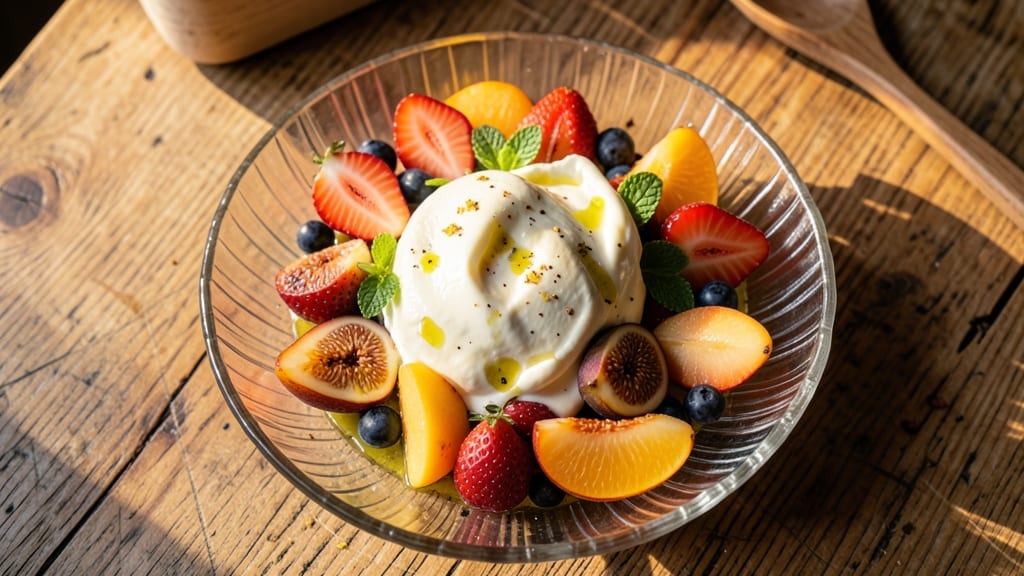
This burrata fruit salad recipe transforms a simple salad into a luxurious summer centerpiece where creamy cheese meets vibrant fruit. The key lies in balancing rich, velvety burrata with crisp, juicy fruit—each bite delivers a perfect harmony of textures and flavors.
After years of experimenting with fruit salads, I've found the right combination of fruits and techniques to make this dish truly special.
What sets this recipe apart is the careful preparation of both components. The burrata must be chilled and torn into generous pieces to maintain its signature creaminess, while the fruit should be washed, sliced, and arranged to highlight its natural beauty.
Seasonal fruits like berries, peaches, and figs work beautifully, but the technique applies to any combination you prefer.
The result is a visually stunning dish that's as impressive as it is delicious. The creamy burrata provides a rich contrast to the bright, juicy fruit, creating a balance that's both satisfying and refreshing.
This salad is perfect for summer gatherings, elegant lunches, or even a special weekend brunch—it's a dish that elevates any meal.
With just a few simple techniques and fresh ingredients, you'll create a salad that looks and tastes like it came from a high-end restaurant. Let's get started on making this creamy, juicy masterpiece that's sure to impress everyone at the table.
Ingredients for burrata fruit salad
Fresh, velvety burrata paired with seasonal fruit creates a luxurious summer dish that's simple yet elegant.
| Ingredient | Amount | Notes |
|---|---|---|
| Fresh Burrata Cheese 🧀 | 1 whole | Chilled, torn into pieces |
| Fresh Strawberries 🍓 | 1 lb | Hulled, sliced into halves |
| Fresh Blueberries 🫐 | ½ cup | Rinsed, left whole |
| Fresh Peaches 🍑 | 2 whole | Ripe, sliced into wedges |
| Fresh Figs 🍈 | 4 whole | Ripe, quartered |
| Extra-Virgin Olive Oil 🫒 | 2 tbsp | For drizzling |
| Fresh Mint Leaves 🌿 | ¼ cup | Finely chopped |
| Honey 🍯 | 1 tbsp | For drizzling |
| Flaky Sea Salt 🧂 | ½ tsp | For garnish |
| Balsamic Glaze 🍷 | 2 tbsp | Reduced for drizzling |
| Lemon Juice 🍋 | 1 tbsp | Freshly squeezed |
| Toasted Almond Slices 🥜 | ¼ cup | For crunch |
The burrata is the star of this salad—look for high-quality, fresh burrata from a specialty cheese shop or well-stocked grocery store. Whole Foods and Trader Joe's often carry excellent options, but if you're unsure, ask the cheese counter for recommendations. The fruit should be vibrant and ripe: strawberries with bright red color, peaches with a slight give, and blueberries that are plump but not mushy. Figs can be a bit tricky—choose ones that are soft to the touch but not overly ripe. Freshness is key here, as these ingredients should shine without overpowering each other. If you're prepping ahead, store the fruit and burrata separately until ready to assemble.
No fresh figs? Substitute with sliced pears or grapes for a similar texture. If you're avoiding honey, a drizzle of agave nectar or maple syrup works beautifully. For extra flair, swap the almonds for toasted pecans or walnuts. The balsamic glaze can be made quickly by simmering balsamic vinegar in a small saucepan until it thickens slightly—about 3-5 minutes. If you're short on time, a high-quality store-bought glaze will do. The mint leaves add a refreshing touch, but if you don't have any, basil or tarragon can work in a pinch. Just ensure the fruit is thoroughly washed and dried to maintain its crispness.
Assemble the salad just before serving to keep the burrata creamy and the fruit fresh. Store any unused fruit in the fridge for up to 3 days, covered with a damp paper towel to retain moisture. The burrata should be used within 2 days for optimal texture. If you're prepping ahead, slice the fruit and store it separately from the burrata, then combine just before serving. This salad keeps its best appearance and flavor when served immediately, but if you must refrigerate it, do so for no longer than 4 hours. The toasted almonds can be made ahead and stored in an airtight container for up to 1 week.
Why You'll Love This Recipe
- No-Cook Magic: This salad comes together in minutes—just slice those peaches and figs, toss in the berries, and let the burrata’s creamy goodness do the rest. Honestly, I’ve made it while waiting for dinner to cook, and it still feels like a special treat.
- Sweet-Savory Balance: The burrata’s buttery richness cuts through the juicy strawberries and peaches, while the blueberries add that bright pop. Between us, it’s the kind of flavor combo that makes you want to lick the bowl clean (and I have).
- Picnic Perfection: Pack it in a mason jar for a lunchbox, bring it to a summer BBQ, or serve it as a fancy appetizer at dinner parties. Here’s what sold me—it’s just as impressive on a blanket as it is on a plate.
- Zero Waste, Double Use: Use up those overripe peaches or figs instead of tossing them. Plus, the burrata keeps the salad fresh for days—so you can make a big batch and enjoy it all week without stress. My secret weapon for lazy Sundays.
Step-by-step instructions for burrata and fruit salad
Assemble this elegant salad where creamy burrata meets vibrant summer fruits in perfect harmony.
Prepare the Fruit Components
Begin by washing all fruits thoroughly under cool water. Using a sharp knife, slice the 1 lb fresh strawberries into halves, removing any green stems. For the 2 whole fresh peaches, cut them into wedges, removing the pit first. Quarter the 4 whole fresh figs by slicing them crosswise through the stem end. Finally, rinse the 0.5 cup fresh blueberries gently to remove any dirt or debris.
Arrange all fruit pieces on a large platter or serving bowl. The goal is to distribute them evenly so each serving gets a balanced mix of textures and flavors. I like to place the strawberries and peaches toward the edges, with the figs and blueberries clustered in the center for visual appeal. Keep the burrata separate at this stage—it'll be added last to maintain its creamy texture.
Create the Mint-Honey Dressing
In a small bowl, combine the 0.25 cup finely chopped fresh mint leaves with the 1 tbsp honey and 1 tbsp freshly squeezed lemon juice. Using a fork, gently mash the mint leaves to release their aromatic oils. The mixture should take on a vibrant green color with a glossy sheen from the honey.
This dressing serves two purposes: it brightens the flavors of the fruit and provides a subtle contrast to the rich burrata. The lemon juice prevents the fruit from browning while the honey adds a delicate sweetness that complements the natural sugars in the berries and stone fruits. Set this mixture aside until you're ready to toss the salad.
Assemble the Salad Base
In a separate bowl, gently toss the prepared fruit with 2 tbsp extra-virgin olive oil and 2 tbsp reduced balsamic glaze. The olive oil helps distribute the flavors evenly while the balsamic glaze adds a sophisticated tang. Toss just until everything is lightly coated—you want to preserve the individual textures of each fruit piece.
This is where the magic happens. The acidity from the balsamic cuts through the natural sweetness of the fruit, while the olive oil enhances their natural flavors. Work quickly to prevent the figs and peaches from releasing too much liquid, which could make the salad soggy. Spread the dressed fruit evenly on a large serving platter or individual plates, creating a colorful base for the burrata.
Add the Burrata and Garnish
Working quickly, tear the 1 whole chilled burrata cheese into large, irregular pieces using your hands. The cheese should be cold but not frozen—this helps it hold its shape while still being creamy. Arrange the burrata pieces on top of the fruit, gently pressing them slightly into the fruit to create a cohesive presentation.
Sprinkle the 0.25 cup toasted almond slices evenly over the top for added texture and crunch. Finish with a final sprinkle of 0.5 tsp flaky sea salt, which enhances all the flavors by bringing out their natural sweetness. The salt should be distributed lightly—just enough to taste, not enough to overpower. Serve immediately while the burrata is still creamy and the fruit is fresh.
Serve with Confidence
The salad should look vibrant with layers of deep reds, purples, and greens from the fruit, contrasted by the creamy white of the burrata and the golden-brown almonds. Each bite should deliver a perfect balance of creamy cheese, juicy fruit, and subtle sweet-savory flavors from the dressing.
For the best experience, serve this salad immediately after assembly. The burrata will begin to soften as it sits, so timing is everything. Pair with a crisp white wine or sparkling water to complement the fresh flavors. The combination of textures—creamy, juicy, crunchy—makes this more than just a salad; it's an experience that highlights the best of summer produce.
Pro Tips For Making Burrata Fruit Salad
- CHILL THE BURRATA FIRST: Take that burrata straight from the fridge—no thawing, just cold. The creamier it is, the better it’ll hold its shape when mixed with the fruit, and it won’t turn into a soupy mess in 10 minutes. (Yes, even if you’re impatient like me.)
- CUT FRUIT SMALLER THAN YOU THINK: Burrata’s delicate, so slice strawberries into ½-inch chunks, dice peaches into ¼-inch cubes, and halve blueberries—no whole berries. The smaller pieces distribute the creamy goodness evenly, and you won’t end up with a salad where half the fruit is just sitting in a pool of burrata.
- SALT THE FRUIT JUICE: Toss your sliced fruit with a pinch of flaky salt (½ tsp) right after cutting. It enhances the natural sweetness and balances the richness of the burrata—especially important if your fruit is on the tart side. (I learned this the hard way with bland, underwhelming peaches.)
- USE A SLOTTED SPOON: When plating, grab a slotted spoon and let the excess burrata cream drain back into the bowl. This keeps your presentation clean and prevents a soggy pile of cheese at the bottom. (Does it look weird? Yes. Does it work? Every single time.)
Essential equipment for burrata fruit salad
Chilling Essentials
The most important tool for this salad is a wide, shallow serving platter—I love the Le Creuset stoneware variety because it keeps everything cold while showcasing the colors beautifully. Place your platter in the fridge for 10-15 minutes before assembling to maintain the burrata's creamy texture.
A small glass bowl (like the Pyrex 8-cup kind) works perfectly for tossing the mint-honey dressing without making a mess. 🧊
Fruit Prep Tools
For slicing fruit efficiently, grab a sharp chef's knife (I use Victorinox Fibrox) and a cutting board with a non-slip mat—this prevents the peaches and figs from sliding around while you work. A mandoline isn't necessary, but if you have one, it makes uniform strawberry halves a breeze.
Keep a small bowl of cold water nearby to rinse each fruit as you slice—this keeps colors vibrant and removes any dirt or pesticides. 🍓
Cheese Handling
Burrata is delicate, so avoid metal utensils—your hands are your best tool for tearing it into generous pieces.
I keep a small ceramic bowl chilled in the fridge to hold the burrata while I work, and I use tongs (like OXO Good Grips) to transfer it to the platter without squishing it.
A microplane comes in handy for zesting lemon rind if you want to add an extra citrusy touch to the dressing. 🧀
Dressing & Garnish
For the mint-honey dressing, a small mixing bowl (I prefer Corelle stoneware) is perfect for combining ingredients. A mini whisk or fork works well for mashing the mint, but I find a rolling pin (lightly tapped) gives the best texture.
For toasting almonds, a small skillet over medium heat is ideal—just watch them closely to avoid burning. Keep a fine-mesh strainer handy if you need to drain any excess liquid from the fruit. 🌿
Plating Presentation
To create that restaurant-worthy look, I use a large wooden serving board (like West Elm's simple designs) for rustic charm or a white ceramic platter for elegant contrast. A small squeeze bottle (for balsamic glaze) and a spoon for drizzling honey make plating effortless.
For extra flair, I keep edible flowers (like nasturtiums) nearby to garnish—just a few petals elevate the dish instantly. 🌸
Nutrition facts
Frequently asked questions
Can I make this salad ahead of time?
While the fruit can be prepped up to 3 days in advance, assemble the salad just before serving. Keep the burrata separate until the last moment to maintain its creamy texture. Store fruit pieces in airtight containers with a damp paper towel to preserve freshness.
What fruits work best with burrata?
Seasonal fruits like berries, stone fruits (peaches, nectarines), and figs pair beautifully with burrata. For a tropical twist, try mango or pineapple. The key is balancing sweet, juicy fruits with the rich, creamy cheese. Avoid overly acidic fruits that might overpower the burrata's delicate flavor.
How do I keep the burrata from getting soggy?
Add the burrata last and serve immediately. If you must refrigerate, place the assembled salad in the fridge for no longer than 4 hours. Keep the fruit and cheese separate until serving to maintain texture. A chilled serving platter also helps preserve the burrata's creaminess.
Can I substitute burrata with another cheese?
For a similar texture, try ricotta salata or mozzarella di bufala. Avoid soft cheeses like goat cheese that may not hold their shape. If using a firmer cheese, tear it into smaller pieces to mimic burrata's creamy consistency. The flavor pairing is what matters most!