
Salads
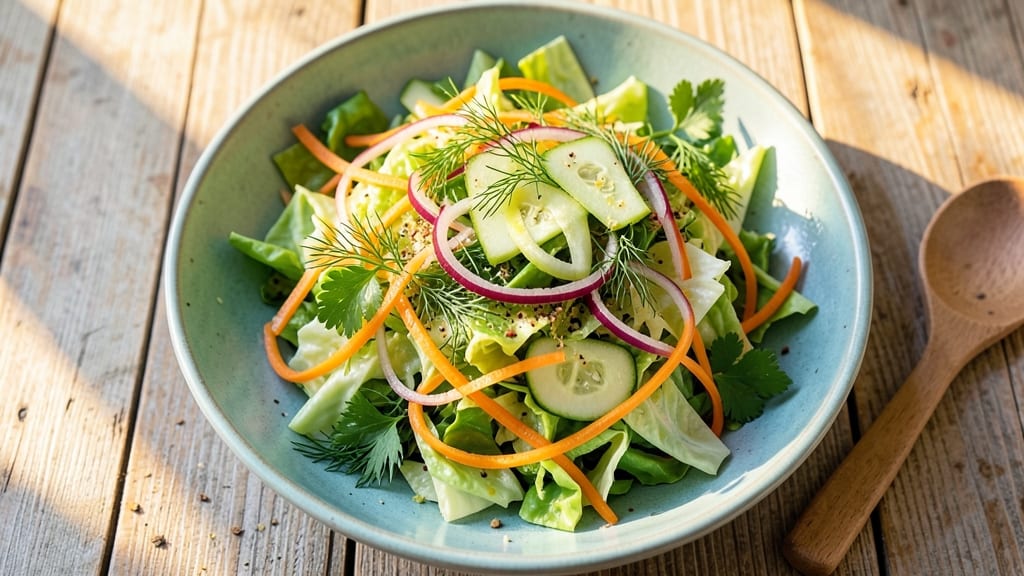
This cabbage carrot cucumber salad recipe delivers a crisp, refreshing bite that transforms simple vegetables into a vibrant, textured dish in just 15 minutes. The secret lies in the perfect balance of crunchy cabbage, sweet carrots, and cool cucumbers—each ingredient playing its part to create a salad that’s light yet satisfying. I developed this recipe during a particularly hot summer when I needed something quick, fresh, and packed with flavor without heavy ingredients.
The beauty of this salad is its versatility—it works as a light main dish or a refreshing side, and the dressing options (vinaigrette, yogurt-based, or lemon-tahini) let you tailor it to your taste.
The key is chopping the vegetables uniformly for even texture and letting the salad sit for 10 minutes before serving, which allows the flavors to meld beautifully. Trust me, this is one of those salads that gets better as it sits, making it perfect for meal prep.
What you’ll end up with is a salad that’s crisp, tangy, and bursting with freshness—ideal for picnics, potlucks, or a quick weeknight dinner. The combination of textures (crunchy, creamy, and slightly sweet) makes every bite exciting, while the bright flavors cut through richer dishes.
This is the kind of salad that proves healthy eating can be delicious and effortless.
Serve it alongside grilled meats, fish, or as a standalone meal with crusty bread. The recipe scales easily, so you can make it for a crowd or just for two. Here’s how to create this refreshing, foolproof salad that’s as beautiful as it is tasty.
Ingredients for cabbage carrot cucumber salad
Fresh veggies and simple pantry staples make this salad crisp, tangy, and ready in minutes.
| Ingredient | Amount | Notes |
|---|---|---|
| Green Cabbage 🥬 | 4 cups | Shredded, outer leaves removed |
| Carrots 🥕 | 2 medium | Julienned or thinly sliced |
| Cucumber 🥒 | 1 large | Seedless, thinly sliced |
| Red Onion 🧅 | ¼ cup | Thinly sliced, white part only |
| Fresh Dill 🌿 | ¼ cup | Chopped, stems removed |
| Fresh Parsley 🌿 | 0.15 cup | Chopped, flat-leaf preferred |
| Lemon Juice 🍋 | 3 tbsp | Freshly squeezed |
| Extra-Virgin Olive Oil 🫒 | ¼ cup | Light, fruity variety |
| Apple Cider Vinegar 🍎 | 1 ½ tbsp | Raw, unfiltered preferred |
| Maple Syrup 🍁 | 1 ½ tbsp | Pure, grade B preferred |
| Salt 🧂 | ½ tsp | Diamond Crystal preferred |
| Black Pepper 🌶️ | ¼ tsp | Freshly ground |
| Sesame Seeds 🌰 | 1 tbsp | Toasted for garnish |
The cabbage is the star—green or purple both work, but green is milder. Trader Joe's and Whole Foods have the freshest options, but any grocery store's produce section will do. Look for heads that feel heavy for their size and have crisp outer leaves. For the carrots, organic baby carrots save time, but regular carrots julienned with a peeler work just as well. The cucumber should be firm with no soft spots—English cucumbers are seedless and perfect for this. Fresh herbs are non-negotiable here—they bring the brightness that makes this salad shine. If you're short on time, dried dill at one-third the amount works in a pinch, but fresh is definitely better.
No fresh dill? Substitute with mint or basil at the same amount, though the flavor will shift slightly. Running low on maple syrup? Agave nectar or date syrup works just as well. The dressing can be prepped ahead—store it in a jar in the fridge for up to 1 week. For extra crunch, add 1/4 cup toasted sunflower seeds or crispy chickpeas before serving. The red onion adds a nice bite, but if you're sensitive to strong flavors, reduce it to 1/8 cup or skip it entirely. The salad keeps its best texture for 2 days in the fridge, but the flavors meld beautifully after sitting for 10 minutes before eating.
Prep the veggies first—they'll keep in the fridge for 3-4 days if stored in airtight containers. The dressing can be made a day ahead, but shake it well before using since the olive oil and vinegar separate. For meal prep, store the veggies and dressing separately, then toss right before serving. This salad doubles easily, so make a big batch for potlucks or lunches. It's also freezer-friendly if you blanch the veggies first—just store them separately and dress when ready to eat. The sesame seeds should be toasted in a dry pan for 1-2 minutes until fragrant, then sprinkled on top right before serving for maximum crunch.
Why You'll Love This Recipe
- No Knife Skills Needed: I swear by this one—just shred the cabbage and carrots with a box grater, slice the cucumber into half-moons, and dice the onion. No julienne peeling, no fancy techniques. My kids even help with the grating (well, after I supervise the first three times).
- Crunch That Never Quits: Between the raw cabbage’s sharp bite, the carrots’ sweet crunch, and the cucumber’s cool snap, this salad stays fresh-tasting for days. The dill ties it all together with that bright, herby punch—like a breath of fresh air in every bite.
- Lunchbox Legend: Pack this in mason jars or containers for work lunches, potlucks, or picnic spread. It holds up better than most salads (no wilted lettuce here) and pairs perfectly with grilled meats, sandwiches, or even as a standalone meal. Honestly, I’ve eaten it cold, at room temp, and even slightly warmed—it’s that adaptable.
- Pantry Staple Power: Uses ingredients you already have—no specialty items, no last-minute grocery runs. A whole head of cabbage lasts weeks, carrots stay crisp, and dill freezes beautifully. Between us, this is my go-to when I’m low on cash but still want something that feels special.
Step-by-step instructions for cabbage carrot cucumber salad
This refreshing salad comes together faster than you can say "crunchy freshness."
Prepare the Vegetables
Start by removing the outer leaves from the 4 cups green cabbage and shredding it finely using a sharp knife or mandoline. I like to work in batches to keep the cabbage from wilting. For the 2 medium carrots, use a julienne peeler or sharp knife to create thin, matchstick-like strips—about ⅛-inch thick. The 1 large cucumber should be peeled if the skin isn't smooth, then sliced into ¼-inch thick rounds or half-moons.
Next, thinly slice the white part only of the 0.25 cup red onion into half-moons. I always soak the onion slices in ice water for 5 minutes before draining to mellow their sharpness. Chop the 0.25 cup fresh dill and 0.15 cup fresh parsley separately, removing stems first—they're tough and won't add pleasant texture. You'll want the herbs finely chopped so they distribute evenly throughout the salad.
Combine Vegetables and Dressing Ingredients
In a large mixing bowl, combine all the prepared vegetables. Give them a gentle toss with your hands to distribute everything evenly. In a separate bowl, whisk together the 3 tbsp lemon juice, 0.25 cup extra-virgin olive oil, 1.5 tbsp apple cider vinegar, 1.5 tbsp maple syrup, 0.5 tsp salt, and 0.25 tsp black pepper. The maple syrup might seem unusual, but it balances the acidity beautifully while adding subtle sweetness.
Here's the thing—don't pour the dressing over the vegetables right away. Instead, let the dressing sit for 5 minutes at room temperature. This allows the flavors to meld slightly, creating a more cohesive dressing. You'll notice the colors of the vegetables start to brighten as they begin to absorb some of the dressing's moisture.
Toss and Chill for Maximum Freshness
Pour the dressing over the vegetables and toss gently but thoroughly with your hands. You want every bite to have that perfect balance of crunch, tang, and freshness. Work in batches if needed to ensure even coating. Once everything is well combined, transfer the salad to an airtight container and refrigerate for at least 30 minutes before serving.
This chilling time is crucial—it allows the flavors to truly meld together while keeping the vegetables crisp. When you're ready to serve, give it one final toss to redistribute any settled dressing. The salad should look vibrant with the green cabbage holding its shape, the carrots maintaining their bright orange color, and the cucumber slices still plump and fresh.
Garnish and Serve Immediately
Just before serving, toast the 1 tbsp sesame seeds in a dry skillet over medium heat for 1-2 minutes, stirring constantly until they're golden brown and fragrant. This adds an extra layer of texture and nutty flavor that complements the fresh salad perfectly. Sprinkle the toasted sesame seeds evenly over the top right before serving.
Serve this salad immediately while it's still crisp and vibrant. The contrast of temperatures—cool salad against warm sesame seeds—makes each bite even more satisfying. It pairs beautifully with grilled meats, sandwiches, or even as a light lunch on its own. The combination of textures and flavors ensures every mouthful is refreshing and full of character.
Pro Tips For Making Cabbage Carrot Cucumber Salad
- SHRED CABBAGE THIN: A mandoline makes this easy, but if you’re doing it by hand, aim for ribbons no thicker than 1/8-inch—any thicker and the salad gets chewy instead of crisp. I learned this the hard way after eating a bowl that felt like I’d swallowed a mouthful of sandpaper.
- SAUTE ONIONS LOW: Skip the high heat—caramelizing red onion takes patience. Cook it on medium-low for 8-10 minutes until soft and translucent, stirring occasionally. Rushing this step turns the onion bitter, and no one wants that sharp edge cutting through the salad’s freshness.
- SALT CUCUMBER FIRST: Toss cucumber slices with a pinch of salt right after cutting and let them sit for 5 minutes. This draws out excess water, so your salad stays crisp instead of soggy. (Yes, even if you’re impatient like me.)
- DILL AT THE END: Add fresh dill last—right before serving—so its bright flavor doesn’t wilt in the dressing. A handful torn by hand (not chopped) keeps it vibrant and makes the salad look like you actually put effort in. (Spoiler: It’s the thing that matters most.)
Pro cooking tips for great cabbage carrot cucumber salad
Uniform Chopping
This is where the magic happens—consistent texture means every bite is perfect. Use a mandoline for even slices, but a sharp knife works too. I slice carrots into ⅛-inch strips and cucumbers into ¼-inch rounds for that ideal crunch.
For the cabbage, aim for thin shreds—no thicker than ⅛-inch—so it stays crisp. The red onion should be thinly sliced too, but soak it in ice water for 5 minutes first to mellow the bite. 🥕
Dressing Timing
Never pour dressing on vegetables immediately—let it sit for 5 minutes at room temperature first. This gives the flavors time to meld, creating a smoother, more balanced taste. The lemon juice and apple cider vinegar will brighten, while the maple syrup softens slightly, making the dressing more cohesive.
I also like to whisk the dressing right before tossing to maintain its emulsified texture. 🍋
Chill for Crispness
Refrigerating the salad for 30 minutes before serving is non-negotiable. This lets the flavors meld while keeping the vegetables crisp. I transfer it to an airtight container lined with a paper towel to absorb excess moisture.
If you're short on time, even 10 minutes in the fridge helps, but the longer it chills, the better the texture. Pro tip: Give it a final toss right before serving to redistribute any settled dressing. ❄️
Toasted Sesame Seeds
These little seeds add a nutty crunch that elevates the salad to restaurant-quality. Toast 1 tbsp sesame seeds in a dry skillet over medium heat for 1-2 minutes, stirring constantly, until golden and fragrant. Sprinkle them right before serving so they stay crisp.
I also like to add a pinch of salt while toasting to enhance their flavor. This step takes less than 2 minutes but makes a huge difference. 🌰
Batch Prep Tips
Make this salad ahead of time—it actually tastes better the next day as the flavors meld. Store the vegetables and dressing separately in airtight containers for up to 2 days. When ready to eat, toss everything together and let it sit for 10 minutes before serving.
For meal prep, double the recipe and store in quart-sized containers—perfect for lunches or potlucks. The cabbage stays crisp if you blanch it first, but I find it’s not necessary for this recipe. 📅
Flavor Balancing
Adjust the dressing to your taste—more lemon juice for tang, more maple syrup for sweetness, or a pinch of salt for depth. I like to taste the dressing before tossing it with the veggies.
If the salad tastes too sharp, add a drizzle of olive oil; if it’s too mild, squeeze in more lemon juice. The goal is a harmonious blend of sweet, tangy, and fresh. Trust your taste buds—they know best! 💡
Nutrition facts
Frequently asked questions
Can I use purple cabbage instead of green?
Purple cabbage adds beautiful color and a slightly sweeter, earthier flavor. Just note it will stain your hands and cutting board purple—use a non-porous surface. For best results, remove the outer leaves first and shred finely like green cabbage. The color will mellow slightly as it sits, blending beautifully with the other ingredients.
How do I keep the cabbage from getting soggy?
Prevent sogginess by keeping the cabbage dry before adding dressing. Toss the vegetables with just a pinch of salt first, then let them sit for 10 minutes to release moisture. Use a paper towel to blot any excess liquid before adding the dressing. Also, store in an airtight container lined with a paper towel to absorb moisture while chilling.
What if I don't have fresh dill?
No problem! Substitute with fresh mint or basil in equal amounts, though the flavor will shift slightly. For a dried option, use one-third the amount of dried dill (so 1/8 cup instead of 1/4 cup fresh). If you're completely herb-free, try 1 tsp dried tarragon or even a pinch of asafetida powder for depth—just use sparingly.
Can I make this salad ahead of time?
Yes, this salad actually tastes better the next day as flavors meld! Store the vegetables and dressing separately in airtight containers for up to 2 days. When ready to eat, toss together and let sit for 10 minutes before serving. For longer storage (3 days), blanch the cabbage and carrots first (boil for 2 minutes, then ice bath) to maintain crispness.
What's the best way to serve this salad?
This versatile salad works as a refreshing main dish or light side. Serve it alongside grilled meats, fish, or sandwiches. For a complete meal, pair with warm pita bread or crusty rolls. It's also perfect for picnics, potlucks, or as a topping for grain bowls. The crisp textures and bright flavors make it ideal for balancing richer dishes.