
Sauces & Condiments
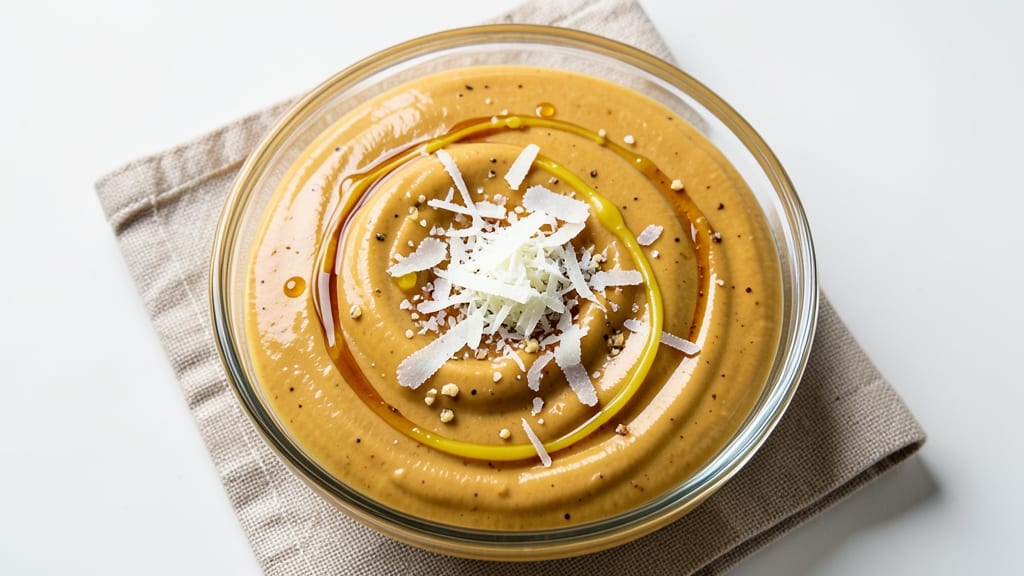
This Caesar salad dressing recipe made with mayonnaise delivers the ultra-creamy, tangy richness you crave without a single spoonful of yogurt. The secret lies in balancing mayonnaise with sharp lemon juice and a touch of Worcestershire sauce, creating a velvety texture that clings perfectly to romaine.
I developed this version after realizing traditional recipes often feel too thin or overly tangy—this one hits the sweet spot every time.
The foundation starts with high-quality mayonnaise as the base, which provides that signature creamy consistency while keeping the dressing stable. Anchovies (or vegetarian substitutes) add umami depth, while minced garlic and Parmesan contribute savory complexity.
The real magic happens when you emulsify everything together, creating a dressing that's rich, flavorful, and perfectly balanced between creamy and tangy.
What sets this recipe apart is how it maintains that luxurious creaminess without relying on yogurt or heavy cream. The result is a dressing that's smooth enough to coat every leaf of romaine while still delivering that classic Caesar punch.
It's the kind of dressing that transforms a simple salad into a restaurant-worthy dish in minutes.
This ultra-creamy version works equally well for classic Caesar salads, croutons, or even as a dip for grilled chicken. The flavor profile remains consistent whether you're making a single serving or a batch for entertaining. Let's get started on this foolproof recipe!
Ingredients for caesar salad dressing recipe made with mayonnaise
Mayonnaise, lemon, and Worcestershire—three ingredients that transform into restaurant-quality Caesar dressing.
| Ingredient | Amount | Notes |
|---|---|---|
| High-Quality Mayonnaise 🥫 | 1 cup | Duck or avocado oil preferred for richness |
| Fresh Lemon Juice 🍋 | ½ cup | From 2-3 large lemons, freshly squeezed |
| Worcestershire Sauce 🍶 | 1 ½ tbsp | Anchovy-based for authentic umami |
| Granulated Garlic 🧄 | 1 tbsp | Minced fine for smooth texture |
| Parmesan Cheese 🧀 | ¾ cup | Freshly grated from block |
| Dijon Mustard 🌶️ | 1 tbsp | For subtle tang and emulsification |
| Anchovy Fillets 🐟 | 2 whole | Packed in oil, minced finely |
| Extra-Virgin Olive Oil 🫒 | ¼ cup | For finishing and richness |
| Kosher Salt 🧂 | 1 tsp | Diamond Crystal preferred |
| Black Pepper 🌶️ | ½ tsp | Freshly cracked for heat |
The mayonnaise is non-negotiable here—Hellmann's or Duke's are my go-tos, but anything with a smooth texture works. Fresh lemon juice is a must; bottled just won't cut it. Anchovies might sound intimidating, but they're the secret to that classic Caesar depth. Bulgari or 365 brand are easy to find and pack a punch. For the Parmesan, skip the pre-grated stuff—it's full of anti-caking agents that make the dressing grainy. Grab a wedge from the deli counter and grate it yourself. The Worcestershire sauce should be the real deal—A.1. Steak Sauce is my go-to for that authentic tang.
No anchovies? Vegetarian Worcestershire plus 1 tbsp nutritional yeast gets you close. Short on lemon juice? Substitute 2 tbsp apple cider vinegar, but add 1 extra tsp sugar to balance. The Dijon mustard can be swapped for whole-grain mustard if you're out, but it won't emulsify as well. For a lighter version, reduce the mayonnaise to 3/4 cup and add 2 tbsp Greek yogurt (though this isn't the no-yogurt version). The olive oil is just for finishing—don't skip it, but don't overdo it either. A generous drizzle is all you need to tie everything together.
This dressing keeps beautifully in the fridge for up to 1 week, though I usually make a fresh batch every 3-4 days. Store it in a clean jar with a tight seal, and give it a good shake before each use. If it separates, just whisk it back together—it'll come right back. For extra creamy texture, add 1 tbsp extra mayonnaise when storing. The flavor actually improves overnight as everything melds together, so making it ahead is a great idea. Just remember to shake it before serving—this isn't one of those dressings that stays perfectly smooth without a little effort.
Why You'll Love This Recipe
- I’ll be real: this dressing comes together with five ingredients and a whisk. No fancy techniques, no last-minute grocery runs—just mayo, lemon, a splash of Worcestershire, and that magical garlic-parmesan punch. Honestly, I’ve made it while waiting for chicken to bake.
- No Fuss, Big Payoff: I’ll be real: this dressing comes together with five ingredients and a whisk. No fancy techniques, no last-minute grocery runs—just mayo, lemon, a splash of Worcestershire, and that magical garlic-parmesan punch. Honestly, I’ve made it while waiting for chicken to bake.
- Umami Bomb: The Worcestershire and granulated garlic hit different—like a creamy, tangy hug with a little bite. That sharp lemon cuts through the richness, but the parmesan? It’s the star, giving it that salty, nutty finish that makes you want to drizzle it on everything.
- Weeknight Hero: Between us, this is my go-to for quick lunches, sandwiches, or even a fancy-ish dinner when I’m too tired to think. Drizzle it over grilled chicken, toss it with pasta, or slather it on crostini—it’s the dressing equivalent of a good multitasker.
Step-by-step instructions for ultra-creamy Caesar dressing
This no-yogurt version delivers restaurant-style richness using mayonnaise as the secret weapon.
Whisk Together the Base Ingredients
In a medium bowl, combine the 1 cup high-quality mayonnaise, 0.5 cup fresh lemon juice, and 1.5 tablespoons Worcestershire sauce. Use a whisk to blend vigorously for 30 seconds until fully incorporated. The lemon juice will initially separate slightly, but keep whisking—this emulsification step is critical for that velvety texture.
Here's the thing—don't rush this part. You're building the foundation, and proper emulsification prevents that dreaded oil separation later. The mixture should become smooth and homogeneous, with no visible streaks of lemon juice. If it looks too thick, that's okay; we'll adjust consistency in the next step.
Incorporate the Garlic, Anchovies, and Mustard
Add the 1 tablespoon granulated garlic, 2 whole anchovy fillets (minced finely), and 1 tablespoon Dijon mustard to the bowl. The anchovies might look like too much at first, but trust me—they dissolve completely and add that authentic umami depth without overpowering. Use a fork to break up any remaining garlic clumps before whisking everything together again.
This is where the flavor really starts to come alive. The anchovies provide that classic Caesar depth, while the Dijon mustard adds subtle tang that balances the richness. Whisk for another 20-30 seconds until you see the mixture lighten in color and become more cohesive. The texture should be thick but still pourable.
Gradually Add the Parmesan and Olive Oil
Now for the star ingredient: slowly sprinkle in the 0.75 cup freshly grated Parmesan cheese while whisking continuously. The cheese should dissolve completely, creating a thick, creamy paste. Once fully incorporated, begin drizzling in the 0.25 cup extra-virgin olive oil very slowly—just 1 teaspoon at a time—whisking vigorously after each addition.
This gradual addition is key to maintaining that ultra-creamy consistency. If you add the oil too quickly, you'll break the emulsion and end up with a separated dressing. The mixture should become noticeably thicker as the cheese and oil combine with the mayonnaise base. You're aiming for a texture that coats the back of a spoon but still flows smoothly.
Season and Adjust Consistency
Finally, add the 1 teaspoon kosher salt and 0.5 teaspoon black pepper, then give everything one final whisk to combine. Taste immediately—this is crucial. The dressing should be tangy, salty, and rich with umami from the anchovies and Worcestershire. If it needs more acidity, add another 1-2 teaspoons lemon juice. For extra richness, incorporate 1 more teaspoon olive oil.
For a thinner dressing suitable for tossing salads, gradually add 1-2 tablespoons water or reserved pasta water while whisking continuously. You want it to coat a spoon but still flow easily. If it's too thick, it'll clump when tossed with greens; if too thin, it'll pool at the bottom of your bowl. The perfect consistency should cling lightly to a spoon and drip slowly.
Pro Tips For Making Caesar Salad Dressing Recipe Made With Mayonnaise
- Mix Slowly in Stages: Start by whisking the mayo and lemon juice together—this keeps the dressing from breaking. Then, very gradually add the Worcestershire and garlic, a teaspoon at a time, while tasting. I learned this the hard way: dumping everything in at once turns your creamy dressing into a sad, lumpy mess.
- Zest Before Grating: Use a microplane to zest the lemon before juicing—it adds bright, aromatic oils that regular zest misses. Toss the zest into the dressing while it’s still loose, then fold in the grated Parmesan last. (Yes, even if you’re impatient like me.)
- Salt the Mayo First: Sprinkle a pinch of salt directly into the mayo before adding anything else. This balances the acidity of the lemon and Worcestershire upfront, so you won’t end up overcorrecting later. Trust me, your taste buds will notice the difference.
- Toast the Garlic: Lightly toast the granulated garlic in a dry pan for 30 seconds until fragrant—it deepens the flavor without burning. Let it cool completely before mixing, or your dressing will turn bitter. (I know, it’s an extra step, but it’s the thing that matters most.)
Regional styles of this recipe
Classic Roman Roots
The Caesar salad we know today has its origins in Tijuana, Mexico, not Rome, but the dressing's inspiration comes straight from Italian traditions.
The original Caesar Cardini—a Mexican chef of Italian descent—created his signature dressing in the 1920s using anchovies, garlic, lemon, and olive oil, a nod to his Italian heritage. This version keeps that authentic foundation while modernizing it with mayonnaise for extra creaminess.
The Roman influence shines in the freshly grated Parmesan and Worcestershire sauce, which were staples in Italian-American kitchens. 🌍
Italian-American Twist
In the 1950s, the Caesar salad became a staple in American diners, where chefs adapted the dressing to suit local tastes. This version mirrors that evolution by incorporating Dijon mustard (a French-Italian hybrid) and high-quality mayonnaise, which became popular in mid-century American cooking.
The granulated garlic and fresh lemon juice pay homage to Italian agrodolce (sweet-sour) balance, while the black pepper adds a touch of warmth inspired by Northern Italian flavors. It’s a perfect blend of old-world techniques and New World ingredients.
Modern California Adaptation
California’s farm-to-table movement reimagined the Caesar salad in the 1990s, and this dressing reflects that shift. The extra-virgin olive oil and freshly squeezed lemon juice highlight the region’s emphasis on high-quality, unprocessed ingredients.
Unlike traditional recipes that rely on yogurt or heavy cream, this version uses mayonnaise for a richer, more stable texture—ideal for California’s love of bold, creamy dressings. The freshly grated Parmesan (not pre-shredded) aligns with the state’s focus on artisanal, unadulterated flavors. 🍃
Global Vegetarian Versions
For those avoiding anchovies, this dressing can be adapted using vegetarian Worcestershire sauce and nutritional yeast to mimic umami depth. The technique remains the same—slowly whisking in the Parmesan and adding olive oil gradually—but the flavor profile shifts to appeal to global vegetarian diets.
In India, a similar creamy dressing might use miso paste instead of anchovies, while in Japan, dashi powder could replace Worcestershire for a lighter touch. The core method stays true to Caesar’s creamy legacy while embracing cultural adaptations. 🌎
Southern U.S. BBQ-Inspired
In the American South, Caesar dressing often gets a smoky twist by adding a dash of smoked paprika or a splash of hot sauce. This version keeps the classic balance but lets you experiment with 1 teaspoon of chipotle powder or ½ teaspoon of cayenne for a Southern-inspired kick.
The Worcestershire sauce already has a deep, savory profile that pairs well with BBQ flavors, making this dressing a versatile side for grilled meats or crispy fried chicken. It’s a fun way to bridge Italian roots with Southern comfort food traditions. 🔥
French Bistro Influence
French bistros often elevate Caesar salads with a touch of Dijon mustard and shallots, which is why this recipe includes both. The slow emulsification technique (whisking in olive oil gradually) is a French culinary method that ensures a silky, stable dressing—perfect for bistro-style plating.
In Paris, you might find Caesar salads topped with crispy duck confit or seared scallops, and this dressing holds up beautifully to rich proteins. The freshly cracked black pepper adds a refined finish, just like in a Parisian kitchen. 🍷
Nutrition facts
Frequently asked questions
Why does this recipe use mayonnaise instead of yogurt?
Mayonnaise creates a richer, ultra-creamy texture that clings beautifully to romaine without thinning out. Traditional recipes often use yogurt for tanginess, but this version balances richness with sharp lemon juice and Worcestershire sauce while maintaining that signature velvety consistency. The result is a dressing that feels luxurious yet stays stable for hours.
Can I make this dressing without anchovies?
For a vegetarian version, replace the anchovies with 1 tablespoon nutritional yeast plus 1 extra teaspoon Worcestershire sauce. The nutritional yeast adds umami depth similar to anchovies, though the flavor will be slightly milder. For extra richness, add ½ teaspoon smoked paprika to mimic the savory notes.
How do I fix separated dressing?
If your dressing separates, simply whisk in 1 teaspoon Dijon mustard or 1 tablespoon water while whisking vigorously. The mustard acts as an emulsifier, while water thins it enough to recombine. For stubborn separation, blend the dressing in a food processor for 10-15 seconds—this breaks up any oil pockets and restores the creamy texture.
What's the best way to store leftover dressing?
Transfer to an airtight container and refrigerate for up to 5 days. Before using, shake or whisk vigorously to redistribute any separated oil. For extra insurance, add ½ teaspoon mustard when storing. The flavor actually improves overnight as the ingredients meld together—just give it a good mix before serving.
Can I use this dressing for other dishes besides salads?
This versatile dressing works perfectly as a dip for grilled chicken, garlic bread, or even crispy fries. For pasta, toss it with cacio e pepe or use it as a sauce for Caesar-style pasta. The creamy texture makes it ideal for any dish that needs a rich, tangy element—just adjust the consistency by adding a splash of water or olive oil as needed.