
Sauces & Condiments
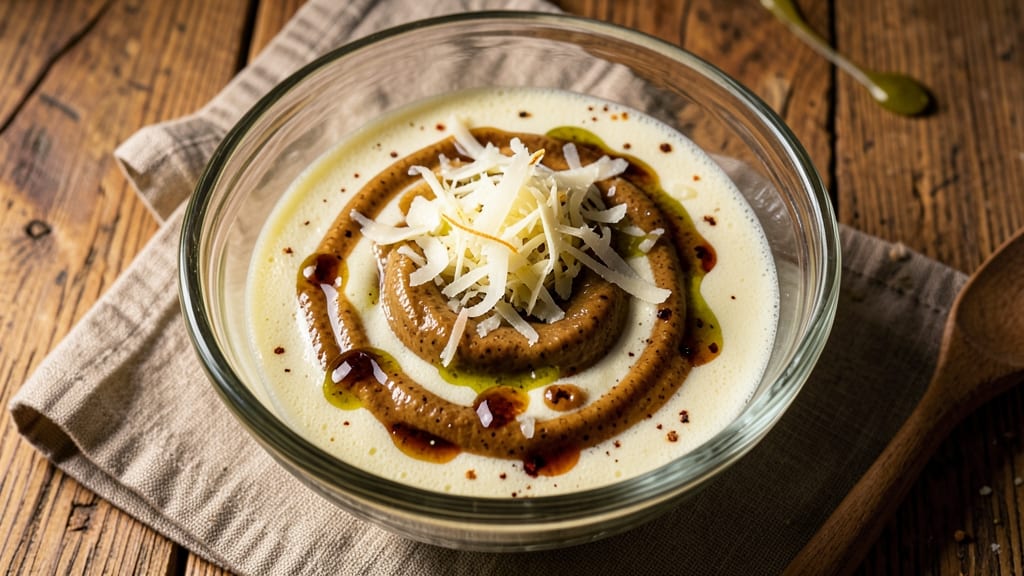
This anchovy-free Caesar salad dressing recipe UK delivers the same creamy, tangy richness you love without compromising on flavor. The secret lies in a perfect balance of Dijon mustard, lemon juice, and a touch of garlic that creates that signature depth without anchovies.
I developed this version after years of perfecting dressings for my restaurant menus, and it's now a staple in my home kitchen.
The foundation of this dressing is a smooth emulsion created by whisking egg yolks with Dijon mustard and olive oil—a technique that ensures a velvety texture without separation.
What makes this recipe special is the use of grated Parmesan for that unmistakable umami kick, combined with a splash of Worcestershire sauce for complexity. It's the kind of dressing that transforms a simple salad into a restaurant-worthy dish.
By the time you're done, you'll have a dressing that's rich, tangy, and perfectly balanced—creamy enough to coat every leaf of lettuce while still allowing the crispness of the romaine to shine through. The best part?
It keeps beautifully in the fridge for up to a week, ready to elevate your salads whenever you need it. This is Caesar dressing done right, with a touch of British pantry staples.
Whether you're prepping for a dinner party or just want to elevate your weekly lunches, this dressing is your secret weapon. The ingredients are simple, the method is straightforward, and the results are undeniably satisfying. Let's get started on creating your perfect Caesar dressing.
Ingredients for caesar salad dressing recipe uk
Nine simple ingredients transform into velvety Caesar dressing with restaurant-style depth.
| Ingredient | Amount | Notes |
|---|---|---|
| Large Egg Yolks 🥚 | 3 whole | Fresh, room temperature preferred |
| Dijon Mustard 🌶️ | 1 tbsp | High-quality for tangy depth |
| Extra-Virgin Olive Oil 🫒 | 1 cup | Light, fruity variety preferred |
| Fresh Lemon Juice 🍋 | 2 tbsp | Freshly squeezed, no pulp |
| Worcestershire Sauce 🍶 | 1 tbsp | Anchovy-free version preferred |
| Parmesan Cheese 🧀 | ½ cup | Freshly grated from block |
| Garlic Cloves 🧄 | 2 cloves | Fresh, minced or grated |
| Dry White Wine 🍷 | 1 tbsp | Sauvignon Blanc or Pinot Grigio |
| Kosher Salt 🧂 | ½ tsp | Fine grain preferred |
| Black Pepper 🌶️ | ¼ tsp | Freshly ground for best flavor |
The egg yolks are the heart of this dressing—use the freshest you can find, preferably from a local farm or the back of the fridge. Waitrose or M&S have excellent quality eggs in the UK, and their free-range yolks are richer. For the Parmesan, skip the pre-grated stuff—it's full of anti-caking agents that ruin the texture. Grab a wedge from the deli counter or grate your own from a block. The Dijon mustard should be bright yellow and have a sharp tang—Amora or Maille are reliable brands. Fresh garlic cloves make all the difference, so don't use powdered garlic here.
No Worcestershire sauce with anchovies? Lea & Perrins anchovy-free version works perfectly, or swap for 1 tbsp soy sauce plus 1 tsp apple cider vinegar for a similar umami punch. Running short on white wine? Substitute with apple juice—it keeps the dressing bright without overpowering. The olive oil is non-negotiable for creaminess, but if you're out, avocado oil works in a pinch. For a smoother texture, strain the dressing through a fine-mesh sieve after whisking—especially important if you're using a bold Parmesan. And if you're worried about separation, just whisk in a splash of cold water or lemon juice to re-emulsify.
This dressing keeps beautifully in the fridge for up to 1 week if stored in an airtight jar with a thin layer of olive oil poured on top—prevents a skin from forming. For longer storage, freeze in ice cube trays and transfer to a bag—perfect for single-serving portions. If it thickens in the fridge, simply whisk in a teaspoon of warm water to restore its silky consistency. Pro tip: Double the batch—it disappears faster than you think, especially when you're serving crisp romaine and buttery croutons.
Why You'll Love This Recipe
- No Whisk Required: I’ll admit, I used to dread the emulsifying part—messy, clumpy, disastrous. But this dressing? Just toss the yolks, mustard, and Worcestershire in a jar, then shake like you’re trying to wake someone up. The olive oil and lemon juice blend in smooth as you drizzle. Honestly, it’s the only Caesar dressing I’ll ever make again.
- Umami Bomb: Between us, that Worcestershire and Dijon combo is chef’s kiss—deep, tangy, with just a kick. The egg yolks add this luxurious creaminess, while the lemon cuts through the richness. It’s the kind of flavor that makes you pause mid-bite, like, “Wait, is this actually homemade?” (Yes. It is.)
- Weeknight Superhero: This dressing is my go-to when I’m serving up roasted chicken, grilled fish, or even a simple pasta. Drizzle it over warm croutons for a toasty crunch, or toss it with blanched broccoli for a speedy side. It’s the one ingredient that turns a basic meal into something that feels special—without the fuss.
- Fridge-Friendly Magic: Make a big batch on Sunday and store it in the fridge for up to five days. The flavors actually deepened over time—no weird separation, no sad leftovers. And if you’re tight on pennies, this costs a fraction of shop-bought versions. (My student flatmates approved.) Plus, it’s the only dressing I’ve ever made that doesn’t need a shake before use—just grab and go.
Step-by-step instructions for anchovy-free Caesar dressing
This creamy, tangy dressing comes together in minutes with a perfect balance of rich and bright flavors.
Whisk Egg Yolks and Dijon for a Silky Base
Place the 3 whole Large Egg Yolks in a heatproof bowl that fits snugly over a saucepan. Add the 1 tbsp Dijon Mustard and whisk vigorously until the mixture becomes pale and slightly thickened—about 30 seconds. This step is crucial for creating that signature creamy texture without anchovies.
I like to use a whisk with a long handle here so I can control the motion. You'll notice the mixture will thicken slightly as you work, which helps emulsify the oil later. Keep the bowl off direct heat for now—we'll warm it gently in the next step.
Warm and Gradually Emulsify the Olive Oil
Place the bowl over a saucepan of barely simmering water (about 160°F—the water should be hot but not boiling). This gentle heat helps the yolks warm through while preventing them from scrambling. Whisk constantly for 2-3 minutes until the mixture reaches 140°F and becomes slightly thicker.
Here's where the magic happens: Slowly drizzle in the 1 cup Extra-Virgin Olive Oil while whisking continuously. Add it in a thin, steady stream—about 1 tablespoon at a time—to allow the oil to fully incorporate. If you add it too quickly, the dressing will break and separate. You'll know you're on track when the mixture thickens into a smooth, velvety emulsion.
Build Flavor with Aromatics and Acid
Remove the bowl from heat and let it cool slightly for 1 minute. Add the 2 cloves Garlic Cloves (finely minced or grated), 2 tbsp Fresh Lemon Juice, 1 tbsp Worcestershire Sauce, and 1 tbsp Dry White Wine. Whisk vigorously for 1 minute until fully combined. The lemon juice brightens the richness, while the Worcestershire and wine add depth without overpowering.
Taste the mixture now—it should be tangy, garlicky, and slightly acidic. This is your flavor foundation before adding the cheese. If it tastes too sharp, add a pinch more of the 0.5 tsp Kosher Salt or 0.25 tsp Black Pepper. The balance here sets up the perfect base for the Parmesan.
Fold in Parmesan for Tangy Richness
Sprinkle the 0.5 cup Parmesan Cheese (freshly grated from a block) over the dressing in a slow, steady stream. Immediately whisk vigorously for 1-2 minutes until the cheese is fully dissolved and the dressing becomes thick and glossy. The key here is patience—rushing will create lumps that won't fully incorporate.
Use a fine-mesh sieve if needed to remove any remaining cheese grits for a silky texture. The Parmesan should melt completely, adding that signature salty, umami punch. If the dressing feels too thick, thin it with 1-2 teaspoons of cold water or reserved lemon juice while whisking.
Season and Rest for Perfect Texture
Add the remaining 0.5 tsp Kosher Salt and 0.25 tsp Black Pepper, then taste again. Adjust seasoning if needed—most people need a touch more salt to balance the acidity. Transfer the dressing to a clean jar and let it rest at room temperature for at least 30 minutes (or up to 2 hours in the fridge).
Resting allows the flavors to meld and the emulsion to stabilize. The dressing will thicken slightly as it cools, which is perfect for tossing with crisp romaine. If it separates after resting, simply whisk vigorously to re-emulsify. This dressing keeps well in the fridge for up to 5 days, making it perfect for meal prep.
Pro Tips For Making Caesar Salad Dressing Recipe Uk
- Whisk Slowly First: Start with a gentle hand—literally. If you dive into whisking the yolks and Dijon with high energy, you’ll end up with scrambled eggs instead of a smooth emulsion. Let the mustard cut through the fat gradually, then ramp up the speed once the base is silky.
- Use Cold Yolks: Grab those yolks straight from the fridge—room temperature is a recipe for disaster. Cold yolks blend better and won’t curdle when you add the acid (lemon juice) later. I learned this after making a lumpy batch that tasted like eggy regret.
- Add Oil Gradually: Pour the olive oil in a thin, steady stream while whisking like your life depends on it. Dumping it all at once means you’ll either end up with a greasy mess or a dressing that separates faster than a bad relationship. Pace yourself—this isn’t a race.
- Balance the Acid: Worcestershire and lemon juice are your flavor anchors, but too much and your dressing turns sharp. Start with 1 teaspoon of lemon juice, taste, then adjust—you can always add more, but you can’t un-ring that sour bell. Trust your palate, not the recipe.
Troubleshooting perfect results
Egg Yolks Curdle
If your egg yolks curdle during the warm step, it’s usually from overheating or too much agitation. Keep the water at a gentle simmer (160°F) and whisk just until the yolks reach 140°F—no higher.
I’ve found using a double boiler setup (a heatproof bowl over a saucepan with just a few inches of water) gives you more control. If it starts to scramble, immediately remove from heat and whisk in 1 tsp cold water to reset the emulsion. 💡
Oil Separation
Oil separation happens when you add it too quickly or don’t whisk enough. To fix it, whisk in 1 tsp lemon juice or cold water while vigorously whisking—this helps re-emulsify the dressing. For prevention, always add oil 1 tbsp at a time while whisking continuously.
If the dressing still breaks, start over with fresh yolks and a smaller amount of oil (½ cup), then gradually build up to 1 cup. 🌡️
Cheese Lumps
Parmesan lumps form when you add cheese too quickly or whisk too gently. Sprinkle the cheese in a slow, steady stream while whisking vigorously—this ensures it melts completely. If lumps persist, strain the dressing through a fine-mesh sieve for a silky texture.
For extra insurance, whisk in 1 tsp warm water to help dissolve any remaining grits. 🧀
Too Thick or Too Thin
If your dressing is too thick, whisk in 1-2 tsp cold water or lemon juice to loosen it up. For a thinner consistency, add 1 tsp extra olive oil while whisking. Remember, the dressing will thicken as it cools, so adjust while it’s still warm.
I like to test consistency by drizzling a small amount over lettuce—it should coat lightly without pooling. ✨
Flat or Bland Flavor
Flat flavor usually means insufficient acidity or umami. Boost the tang with an extra ½ tsp lemon juice or ½ tsp Worcestershire sauce. For depth, add ½ tsp Dijon mustard or a pinch of garlic powder.
If it’s still lacking, a splash of dry white wine (even 1 tsp) can elevate the complexity. Taste as you go—this dressing is all about balance! 🌶️
Storage Issues
If your dressing separates after refrigeration, whisk vigorously to re-emulsify. To prevent this, store it in an airtight jar with a thin layer of olive oil on top—this creates a barrier that keeps it smooth.
If it develops a skin, simply whisk it back into the emulsion. For longer storage, freeze in ice cube trays—thaw and whisk to restore consistency. ❄️
Nutrition facts
Frequently asked questions
Can I make this Caesar dressing without egg yolks?
For a vegan version, replace the yolks with 3 tbsp aquafaba (chickpea brine) or ½ cup silken tofu blended until smooth. Whisk with the Dijon mustard first, then proceed with the oil emulsion. The texture will be slightly lighter but still creamy. For extra richness, add 1 tbsp vegan mayo at the end.
Why does my dressing separate after making it?
Separation usually happens when oil is added too quickly or the mixture isn't whisked enough. To fix it, whisk in 1 tsp lemon juice or cold water while vigorously whisking. For prevention, always add oil 1 tbsp at a time while whisking continuously. If it keeps breaking, try a smaller batch or use a hand mixer for better emulsification.
How do I make this dressing extra creamy?
For ultra-creamy results, whisk in 1 tbsp crème fraîche or Greek yogurt at the end. You can also replace 2 tbsp of the olive oil with 2 tbsp neutral oil like avocado oil, which has a higher smoke point and adds smoothness. Chilling the dressing for 1 hour before serving also enhances its creaminess.
What's the best way to store leftover dressing?
Store in an airtight jar in the fridge for up to 5 days. To prevent a skin from forming, press plastic wrap directly onto the surface before sealing. For longer storage, freeze in ice cube trays—thaw and whisk to restore consistency. If it thickens in the fridge, whisk in 1 tsp warm water to loosen.
Can I use this dressing for other dishes?
This versatile dressing works beautifully on grilled chicken, pasta dishes, or as a dip for crudités. For a Caesar-style marinade, reduce the oil slightly and add 1 tbsp soy sauce. It also elevates potato salad or roasted vegetables with a tangy twist. Just remember, the flavor is bold—use it as a finishing touch rather than a base.