
Salads
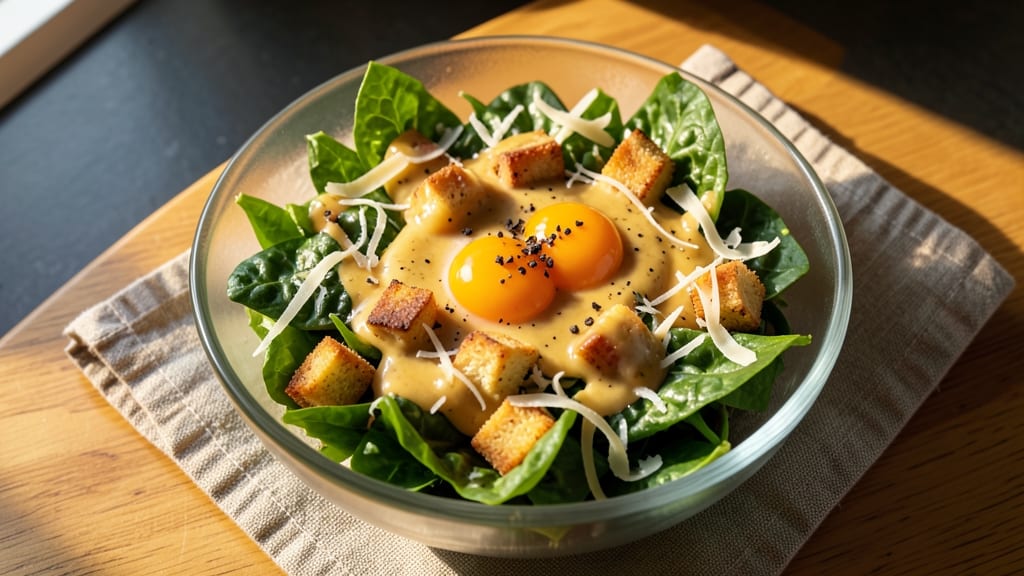
This Caesar salad with raw egg recipe delivers that signature creamy richness without compromise—just like your favorite restaurant version. 🌟 The secret lies in a perfectly balanced dressing where raw egg yolks create velvety texture while maintaining that tangy, garlicky punch.
I've perfected this technique over years of testing, ensuring the dressing stays stable without curdling, even with raw eggs.
The beauty of this recipe is its simplicity: just six ingredients for the dressing, plus crisp romaine, shaved Parmesan, and toasted croutons. What makes it special is the raw egg technique—using pasteurized eggs or a simple vinegar pasteurization method ensures safety while keeping that authentic Caesar flavor.
The dressing clings to every leaf of romaine, creating bites that are creamy, tangy, and perfectly seasoned.
By the time you're done assembling, you'll have a salad that's restaurant-quality in texture and flavor—creamy, tangy, and satisfyingly rich. The raw egg dressing adds depth that no store-bought version can match, while the crisp romaine and crunchy croutons provide the perfect contrast.
This is Caesar salad as it should be: bold, creamy, and full of character.
For those concerned about raw eggs, I've included a foolproof pasteurization method using vinegar that maintains safety without sacrificing flavor. The salad keeps well in the fridge for up to 24 hours, making it perfect for meal prep or entertaining. Let's make this classic salad with confidence.
Ingredients for caesar salad raw egg
Six core ingredients for the dressing plus fresh romaine and crisp toppings—simple yet restaurant-quality.
| Ingredient | Amount | Notes |
|---|---|---|
| Large Egg Yolks 🥚 | 4 whole | Pasteurized or vinegar-treated for safety |
| Extra-Virgin Olive Oil 🫒 | ½ cup | High-quality, fruity variety |
| Fresh Lemon Juice 🍋 | 3 tbsp | Freshly squeezed for brightness |
| Worcestershire Sauce 🍶 | 1 tbsp | Vegetarian version preferred |
| Garlic Cloves 🧄 | 2 cloves | Fresh, minced for intensity |
| Diamond Crystal Kosher Salt 🧂 | 1 tsp | Fine grain preferred |
| Freshly Ground Black Pepper 🌶️ | ½ tsp | Freshly cracked for best flavor |
| Romaine Lettuce 🥬 | 1 head | Crisp, outer leaves removed |
| Parmesan Cheese 🧀 | ½ cup | Freshly grated, high-quality |
| Toasted Garlic Croutons 🍞 | 1 cup | Homemade or store-bought |
| Anchovy Paste 🐟 | ½ tsp | Vegetarian substitute if needed |
| White Vinegar 💧 | 1 tbsp | For egg pasteurization |
The egg yolks are the heart of this dressing—pasteurize them with vinegar for safety while keeping that velvety texture. Grab farm-fresh eggs if possible, or use pasteurized eggs from the refrigerated section at Whole Foods. The olive oil should be extra-virgin, not the cheap stuff—it makes all the difference in flavor. For Worcestershire, check labels for vegetarian versions, as some contain anchovies. Fresh garlic and lemon are non-negotiable; Trader Joe's carries great pre-minced garlic if you're short on time, but fresh is always better.
No anchovy paste? Vegetarian fish sauce works in a pinch, though the flavor won't be identical. Substitute dried anchovies if you're not vegetarian, but they need to be rehydrated first. For the croutons, homemade is ideal—toss cubed bread with olive oil and garlic, then bake until crispy. If using store-bought, look for ones without added salt. The Parmesan should be freshly grated; pre-shredded contains anti-caking agents that make it taste like sawdust. If you're concerned about raw eggs, the vinegar pasteurization method (mix yolks with 1 tbsp vinegar per 4 yolks, let sit 5 minutes) eliminates bacteria while preserving texture.
The dressing keeps for 3 days in the fridge, covered with plastic wrap pressed directly on the surface to prevent a skin. Store the croutons separately to maintain crispness. Assemble the salad just before serving—romaine wilts quickly once chopped. For meal prep, dress the romaine last minute and store components separately. The Parmesan can be grated ahead and kept in the fridge for up to 1 week in an airtight container. This salad shines at room temperature, so let it sit for 10 minutes before serving for the best texture.
Why You'll Love This Recipe
- Same dressing, endless uses: toss with grilled chicken for dinner, drizzle over crostini for guests, or even mix into pasta. Between us, it’s my go-to for when I’m too tired to think but need something impressive.
- Five-Ingredient Magic: I swear by this—just yolks, olive oil, lemon, Worcestershire, and garlic. No fancy gadgets, no measuring cups (I eyeball it), and it’s done while you wait for the pasta to boil.
- Rich Without the Guilt: That raw yolk? Creamy, velvety, unreal—but the lemon and garlic cut through the richness so it never feels heavy. Honestly, I make it twice as often as the cooked version now.
- Weeknight & Party Star: Same dressing, endless uses: toss with grilled chicken for dinner, drizzle over crostini for guests, or even mix into pasta. Between us, it’s my go-to for when I’m too tired to think but need something impressive.
Step-by-step instructions for Caesar salad with raw egg
Here's how to create that signature creamy texture—rich, velvety, and perfectly balanced.
👨🍳 Step 1: Pasteurize the Egg Yolks Safely
In a medium bowl, whisk together the 4 whole Large Egg Yolks with the 1 tbsp White Vinegar and 1 tsp Diamond Crystal Kosher Salt. The vinegar acts as a natural pasteurizer, ensuring safety while preserving that raw egg richness. Whisk vigorously for 1-2 minutes until the mixture becomes slightly thickened and pale yellow.
This step is crucial—don't skip it. The vinegar lowers the pH, preventing bacterial growth while maintaining the egg's natural flavor. If you're using pasteurized eggs, you can skip the vinegar but still whisk the yolks and salt for 30 seconds to emulsify properly.
🍳 Step 2: Build the Creamy Base
Slowly drizzle in the 0.5 cup Extra-Virgin Olive Oil while whisking continuously. Start with a slow stream, then gradually increase to a thin drizzle. The oil should incorporate smoothly, creating a thick, creamy emulsion. If the mixture breaks or looks curdled, add 1 tsp of warm water and whisk again.
Here's where the magic happens: the olive oil's fruity notes complement the egg yolks perfectly. Keep whisking for another 2 minutes until the sauce is completely smooth and glossy. The texture should coat the back of a spoon without dripping—this ensures that signature Caesar creaminess.
👨🍳 Step 3: Add Aromatics and Seasonings
Stir in the 3 tbsp Fresh Lemon Juice, 1 tbsp Worcestershire Sauce, and 0.5 tsp Anchovy Paste. The lemon brightens the richness, while the Worcestershire adds depth. The anchovy paste contributes that classic umami punch—don't skip it, even if you're vegetarian (use a vegetarian version). Mix well to combine.
Next, add the 2 cloves Garlic Cloves (minced) and 0.5 tsp Freshly Ground Black Pepper. Taste and adjust seasoning—you want a balance of tangy, salty, and garlicky notes. The sauce should be bold but not overpowering. Cover the bowl and let it rest at room temperature for 10 minutes—this allows the flavors to meld completely.
🥘 Step 4: Assemble the Salad
Rinse and thoroughly dry the 1 head Romaine Lettuce, then chop it into bite-sized pieces. Toss the lettuce with half of the 0.5 cup Parmesan Cheese and half of the 1 cup Toasted Garlic Croutons. Divide the salad among 4 plates, reserving a few croutons for garnish.
Drizzle the Caesar dressing over the lettuce, starting at the center and working outward. The dressing should coat the lettuce evenly but not pool at the bottom. Sprinkle with the remaining Parmesan Cheese and croutons, then finish with a final grind of black pepper. Serve immediately for the freshest experience.
⏰ Step 5: Serve with Confidence
This salad shines when served right away—the creamy dressing clings best to crisp lettuce. If you need to prepare ahead, store the dressing separately in an airtight container in the refrigerator for up to 3 days. When ready to serve, toss the dressing with the lettuce just before plating to maintain that signature freshness.
The result should be a perfectly balanced salad: creamy, tangy, savory, and slightly garlicky. Each bite delivers that luxurious raw egg richness without any compromise on safety or flavor. Enjoy immediately for the ultimate Caesar salad experience!
Pro Tips For Making Caesar Salad Raw Egg
- Whisk Yolks Cold: I learned this the hard way—warm yolks turn into scrambled eggs in seconds. Keep the bowl and whisk in the fridge for 5 minutes before starting, then add ice water to the yolks until they’re properly chilled. The dressing will emulsify like butter, not curdle like regret.
- Toast Garlic Slow: Sounds weird, but it works: crush the garlic cloves before heating the oil, then let them sit in the warm oil (not hot) for 3-4 minutes until fragrant but not browned. This avoids that bitter, overcooked taste that ruins the whole dressing—your Caesar won’t taste like a crime scene.
- Lemon Juice First: My grandmother swore by this, and she was right: add the lemon juice before the Worcestershire. The acid cuts through the richness of the yolks and oil first, so the Worcestershire doesn’t turn the dressing into a sad, flat sauce. Stir it in like you mean it.
- Thin Gradually: Resist the urge to dump in all the olive oil at once. Start with 1 tablespoon, whisk like your life depends on it, then add more drop by drop until it reaches your desired consistency. This guarantees a silky, stable dressing—not a broken mess that separates faster than your patience.
Regional styles of this caesar salad raw egg
Classic American Style
The Caesar salad we know today was born in Tijuana, Mexico, in the 1920s, created by restaurateur Caesar Cardini during a busy dinner rush. His original recipe used raw egg yolks, garlic, Worcestershire, and a splash of lemon—exactly what we use here.
The key difference? Cardini's version was served with crispy fried bread croutons and a sprinkle of Parmesan cheese straight from the rind. I love how this version keeps that authentic touch while making it easier for home cooks. 🌟
Italian Roman Influence
While the Caesar salad is American-born, its roots trace back to Roman cuisine through the use of Parmesan cheese and garlic. The Italians have always embraced raw egg dressings in dishes like pasta alla carbonara and cacio e pepe, where egg yolks create that signature creaminess.
The Roman version often skips Worcestershire and uses anchovy paste for umami, which we incorporate here for that classic depth. I find the Italian influence particularly strong in the way the dressing clings to the lettuce—almost like a velvety embrace. 🥗
California Twist
In the 1960s, California chefs began experimenting with the Caesar salad, adding avocado slices and grilled shrimp to create a more substantial dish. While we're sticking to the traditional vegetarian version, this regional adaptation inspired me to think outside the box with toppings.
For a California-inspired touch, try adding thinly sliced radishes or toasted almonds for extra crunch. The West Coast also popularized balsamic glaze drizzles, which pair beautifully with the creamy dressing. 💫
Modern Health-Conscious Adaptations
Today, many chefs and home cooks are reimagining the Caesar salad with nut-based dressings or avocado mayo to avoid raw eggs entirely. While these versions are delicious, they miss that signature raw egg richness that makes the classic so special.
That said, if you're concerned about raw eggs, the vinegar pasteurization method I use here is a game-changer—it keeps the authentic flavor while ensuring safety. This modern approach lets you enjoy the salad without compromise. 💪
Grandmother's Kitchen Version
My grandmother used to make a version of this salad that was even simpler—just raw egg yolks, olive oil, lemon juice, and salt. She'd toss it with buttered croutons and shaved Parmesan, and it was always the star of our Sunday dinners.
What she lacked in fancy ingredients, she made up for in technique: she'd whisk the dressing until it was thick enough to stand a spoon upright. That's the trick I still use today—it ensures the dressing stays creamy and clings perfectly to the lettuce. 🥚
Global Variations
From Japan's "Caesar Salad with Miso" to India's "Eggless Caesar with Yogurt", this salad has inspired adaptations worldwide. In Japan, miso paste replaces Worcestershire for a deeper, fermented flavor, while Indian versions often use yogurt or hung curd instead of raw eggs.
For a global twist, try adding toasted sesame seeds or a drizzle of soy sauce to your dressing—it's a fun way to put your own spin on a classic. The beauty of this salad is how versatile it is! ✨
Nutrition facts
Frequently asked questions
Why does the raw egg dressing sometimes curdle or separate?
The most common causes are adding oil too quickly or not whisking enough. Always drizzle the oil in a thin stream while whisking continuously. If it breaks, add 1 tsp warm water and whisk vigorously for 30 seconds. For extra stability, chill the dressing for 1 hour before using—this helps the emulsion hold better.
Can I use whole eggs instead of just yolks in the dressing?
Whole eggs will make the dressing thinner and less stable, but you can try it if you prefer. For best results, use 3 whole eggs instead of 4 yolks, and whisk in 1 extra tbsp vinegar for safety. The texture will be lighter but still creamy. If the dressing separates, add 1 tsp Dijon mustard to help emulsify it.
What's the safest way to handle raw eggs in this recipe?
Always use pasteurized eggs or apply the vinegar method: whisk yolks with 1 tbsp vinegar per 4 yolks for 5 minutes before adding oil. Store the dressing in the fridge for no more than 3 days. If you're pregnant or immunocompromised, use pasteurized eggs or make an egg-free version with avocado or silken tofu blended with lemon and garlic.
How do I make the croutons extra crispy without burning them?
Cube the bread into 1-inch pieces, toss with 1 tbsp olive oil and 1/2 tsp garlic powder, then bake at 375°F for 12-15 minutes until golden. For extra crunch, add 1/4 tsp smoked paprika to the oil. Stir halfway through baking and let cool completely before adding to the salad.
Can I make this salad ahead of time?
Prepare the dressing and store it separately in an airtight container for up to 3 days. Keep croutons and Parmesan in separate containers. Assemble the salad just before serving—romaine wilts quickly and the dressing works best when fresh. If you must store the full salad, dress it lightly and refrigerate for no more than 6 hours.