
Salads
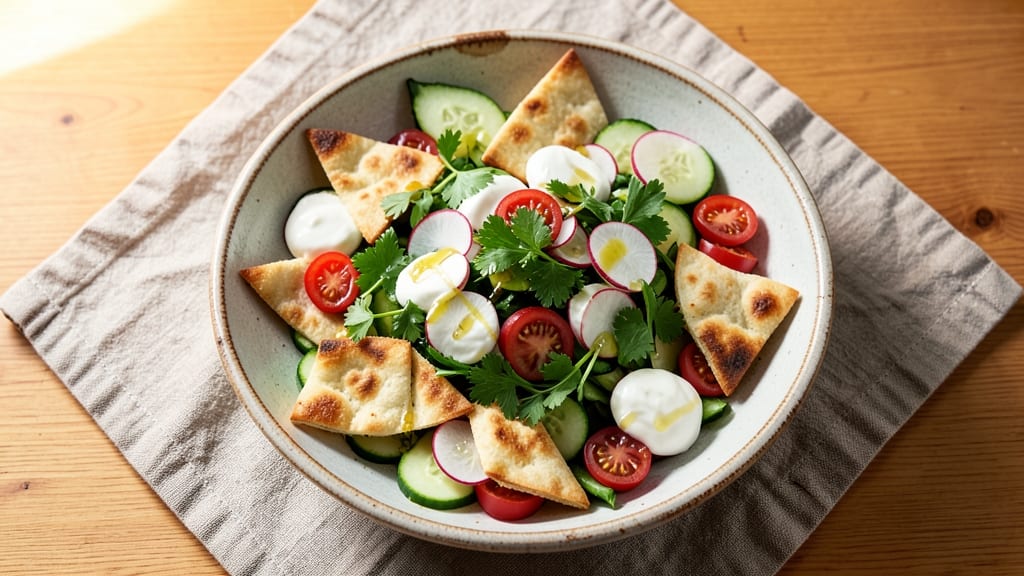
Ottolenghi's fattoush salad transforms a simple bowl of greens into a symphony of textures and flavors—crispy pita shards, tangy yogurt dressing, and bright vegetables all coming together in one irresistible bite.
The secret lies in toasting the pita until it's golden and shatteringly crisp, then balancing that crunch with a cooling yogurt-mint dressing infused with sumac. I've perfected this recipe over years of testing, ensuring every component delivers maximum impact without overwhelming the palate.
What sets this fattoush salad apart is Ottolenghi's signature touch: a dressing that marries thick Greek yogurt with lemon juice, garlic, and fresh herbs, then finishes with a sprinkle of sumac for that signature Middle Eastern tang.
The vegetables—cucumbers, tomatoes, radishes, and parsley—are tossed just before serving to maintain their crispness, while the pita adds a satisfying crunch that keeps you reaching for seconds. This isn't just a salad; it's a complete meal in one bowl.
The result is a dish that's as visually stunning as it is delicious—vibrant colors, contrasting textures, and layers of flavor that dance on your palate. The crispy pita shards provide the perfect counterpoint to the creamy yogurt dressing, while the fresh vegetables add brightness and freshness.
It's the kind of salad that elevates any meal, from a casual weeknight dinner to a festive gathering with friends.
Best of all, this recipe is designed to be foolproof. With just a few key techniques—properly toasting the pita, assembling the dressing correctly, and timing the final toss—you'll achieve restaurant-quality results every time.
Serve it as a light lunch, a refreshing side, or even as a main course with warm pita bread on the side. Here's how to make it perfect every time.
Ingredients for fattoush salad recipe ottolenghi
Crispy pita meets herbed yogurt zing—here’s what makes Ottolenghi’s fattoush unforgettable.
| Ingredient | Amount | Notes |
|---|---|---|
| Pita Bread 🍞 | 1 whole | Store-bought or homemade, 10-inch size |
| Greek Yogurt 🧀 | 1 cup | Thick, full-fat preferred |
| Fresh Mint Leaves 🌿 | ½ cup | Stems removed, loosely packed |
| Fresh Parsley Leaves 🌿 | ¼ cup | Curly or flat-leaf variety |
| Lemon Juice 🍋 | ¼ cup | Freshly squeezed, strained |
| Extra-Virgin Olive Oil 🫒 | ¼ cup | Light, fruity variety preferred |
| Sumac 🌶️ | 2 tbsp | Finely ground, for tangy finish |
| Garlic Cloves 🧄 | 2 cloves | Minced, for dressing depth |
| Cucumber 🥒 | 1 medium | English or Persian, peeled |
| Cherry Tomatoes 🍅 | 1 pint | Mixed colors, halved |
| Radishes 🥕 | ½ lb | Red or white, thinly sliced |
| Red Onion 🧅 | ½ whole | Thinly sliced, soaked 10 mins |
| Salt 🧂 | 1 ½ tsp | Diamond Crystal preferred |
| Ground Black Pepper 🌶️ | ½ tsp | Freshly ground for best flavor |
The pita is non-negotiable—Trader Joe's or Middle Eastern markets have the best thin, crisp varieties. Toast it until golden and shatteringly crisp (that’s the magic). For the yogurt, Fage 5% or Siggi’s Icelandic gives that perfect thickness. Fresh herbs are essential here: Middle Eastern grocery stores often sell mint and parsley in larger bunches at better prices. The sumac? Penzeys sells it in tiny jars, but a little goes a long way—just 2 tablespoons for this recipe. If you can’t find sumac, lemon zest plus extra lemon juice mimics the tang.
No sumac? Substitute lemon zest plus a pinch of salt—it’s not identical but works in a pinch. Swap radishes for thinly sliced fennel or jicama if you prefer. The cucumber can be subbed with zucchini or endive, but keep it crisp. For the dressing, Greek yogurt brands with no added gelatin (check labels!) are crucial—Chobani or Brown Cow work well. The garlic can be roasted for a sweeter flavor (wrap cloves in foil, bake 20 mins at 400°F), but raw minced works too. And yes, the red onion needs that soak—10 minutes in cold water removes the bite without diluting the flavor.
Toasted pita stays crisp for 2 days if stored in an airtight container. The dressing keeps 5 days in the fridge, but the herbs will wilt—add fresh ones when reassembling. For meal prep, store components separately: pita in one container, veggies in another, dressing in a jar. Assemble just before serving to keep everything crunchy. This salad reheats beautifully—30 seconds in the microwave revives the pita’s crispness, though it won’t be quite as shatteringly perfect as fresh.
Why You'll Love This Recipe
- I swear by this trick: toast the pita until it’s golden and crispy, then break it into shards while it’s still warm. No fancy cutting, no mess—just satisfying texture that disappears in seconds. (Yes, even my kids stop scrolling to eat it.)
- Pita No-Fuss Crunch: I swear by this trick: toast the pita until it’s golden and crispy, then break it into shards while it’s still warm. No fancy cutting, no mess—just satisfying texture that disappears in seconds. (Yes, even my kids stop scrolling to eat it.)
- Herb-Packed Zing: That yogurt-lemon dressing isn’t just tangy—it’s alive with mint and parsley, bright enough to cut through grilled meats or stand alone. Honestly, I’ve made it without meat, and it’s still the star of the plate.
- Leftover Reinvention: Make a big batch on Sunday, and you’ve got lunch for the week. Toss it with grilled chicken one day, add roasted veggies the next, or just eat it straight—it’s that adaptable. (My lunchbox never looked this good.)
Step-by-step instructions for fattoush salad with Ottolenghi's signature crunch
This isn't just any salad—it's a symphony of textures and flavors where crispy pita meets herbed yogurt dressing.
Prepare the Crispy Pita Chips
Preheat your oven to 375°F and line a baking sheet with parchment paper. Cut the 1 whole pita bread into 8 triangles, keeping the edges intact for crispiness. Brush both sides generously with 2 tablespoons of the extra-virgin olive oil—this is your secret to perfect crunch. Spread them out on the baking sheet in a single layer, ensuring they don't overlap.
Bake for 10-12 minutes until the edges turn a beautiful golden brown and the centers are just beginning to crisp. Watch closely after 8 minutes—they crisp quickly! Remove from the oven and let them cool completely on the baking sheet. The contrast between the crispy edges and slightly softer centers is what makes this salad extraordinary.
Make the Herbed Yogurt Dressing
In a medium bowl, combine the 1 cup Greek yogurt, 0.25 cup lemon juice, and 2 tbsp sumac. Stir until fully incorporated, then add the 2 cloves minced garlic cloves and 0.5 tsp ground black pepper. The sumac will give your dressing that signature tangy kick that sets this salad apart from others.
In a separate small bowl, finely chop the 0.5 cup fresh mint leaves and 0.25 cup fresh parsley leaves, removing any tough stems. Gently fold these herbs into the yogurt mixture, reserving a small handful for garnish later. Taste and adjust seasoning with the remaining 1 tsp salt—this dressing should be bright, tangy, and perfectly balanced. Let it sit at room temperature while you prepare the remaining ingredients.
Prep the Fresh Vegetables
Peel and cut the 1 medium cucumber into ½-inch thick half-moons. Halve the 1 pint cherry tomatoes and thinly slice the 0.5 lb radishes. For the 0.5 whole red onion, thinly slice it and place in a bowl with ½ tsp salt and ½ cup cold water. Let it soak for 10 minutes to mellow its sharpness—this is crucial for a well-balanced salad.
Drain the onion and pat it dry with a paper towel. The onion should now be more tender and less overpowering. Keep all your vegetables in separate bowls until ready to assemble. The key here is to maintain their individual textures—crisp cucumbers, juicy tomatoes, peppery radishes, and sweet onions—each playing their part in this vibrant ensemble.
Assemble and Toss the Salad
In a large bowl, gently combine the cucumber, cherry tomatoes, radishes, and drained red onion. Add the cooled crispy pita triangles and toss everything very lightly—you want to preserve the individual textures. The pita should remain mostly whole, just enough to distribute the crunch throughout the salad.
Pour the herbed yogurt dressing over the vegetables and toss again, this time more gently. You're aiming for an even coating without mashing the ingredients. The dressing should cling to everything, creating that signature creamy contrast against the crispy pita and fresh vegetables. Taste and adjust seasoning if needed—this is where the magic happens.
Serve with Confidence
Transfer the fattoush to a large platter or individual bowls, garnishing with the reserved chopped herbs. The presentation should be vibrant and inviting—bright colors from the vegetables contrasting with the golden pita chips. Serve immediately while everything is at its peak texture and temperature.
This salad is best enjoyed fresh, with the pita chips maintaining their crispness and the yogurt dressing still cool. Pair it with grilled meats or as a refreshing standalone dish. The combination of textures—crispy, creamy, crunchy, and fresh—makes every bite an experience worth savoring. Trust me, this is one salad that will have everyone asking for seconds!
Pro Tips For Making Fattoush Salad Recipe Ottolenghi
- CHAR THE PITA: Toss the torn pita pieces in hot olive oil—just enough to coat—then spread them on a baking sheet in a single layer. If you pile them up, they’ll steam instead of crisp, and you’ll end up with soggy bread that ruins the texture. I learned this the hard way when I tried to save time by stacking them.
- STORE YOGURT FOR FLAVOR: Use thick, unsweetened Greek yogurt straight from the fridge—no thawing or thinning needed. If yours is too runny, strain it through a clean kitchen towel for 10 minutes. Thin yogurt dilutes the dressing and makes the salad taste watery, which is the last thing you want in a fattoush.
- CHOP HERBS IN BURSTS: Pulse the parsley and mint in short bursts with a knife—just enough to break them up, not turn them into paste. Over-chopping releases bitter flavors and turns your dressing into a muddy green sludge. Think "rough chop," not "smoothie consistency."
- LEMON JUICE FIRST: Whisk the lemon juice into the yogurt before adding salt or oil. This keeps the dressing bright and prevents the yogurt from curdling when you mix in the acid later. I used to add everything at once and ended up with a weird, lumpy texture—don’t make that mistake.
Storing and reheating this dish
Pita Storage Secrets
Toasted pita stays crisp for 2 days if stored in an airtight container with a paper towel underneath to absorb moisture. I keep mine in a glass Pyrex container—the airtight seal preserves that shatteringly crisp texture.
For longer storage, freeze the cooled pita chips in a single layer on a tray before transferring to a freezer bag. They'll last 1 month this way, and you can revive them with 30 seconds in the microwave or 5 minutes at 350°F until crisp again. 💫
Dressing Longevity
The herbed yogurt dressing keeps in the fridge for 5 days, but the herbs will wilt over time. Store it in a small glass jar with a tight lid to preserve freshness.
If you notice the herbs losing their vibrancy, simply add 1 tbsp fresh chopped parsley or mint when reassembling. The sumac's tang remains strong, so don't worry about it fading—just give it a quick stir before using.
For maximum flavor, I like to make fresh dressing the day of serving, but this trick saves time when you're short on it. ✨
Vegetable Prep Ahead
Prep all vegetables 1 day ahead and store them separately in airtight containers with paper towels to absorb excess moisture. Cucumbers, tomatoes, and radishes hold up best this way, while the red onion should be sliced and soaked 10 minutes before storing.
When ready to assemble, give everything a quick rinse and pat dry to maintain crispness. This method keeps the salad components fresh and ready to toss together in minutes. 🥒
Reheating for Crunch
If you need to reheat the entire salad, spread it on a baking sheet and warm at 350°F for 5-7 minutes until the pita chips regain their crispness. For a quicker fix, microwave individual portions covered with a damp paper towel for 20-30 seconds.
The dressing may thin slightly, so add a splash of cold water or extra yogurt to restore its consistency. Pro tip: Sprinkle with 1 tsp sumac after reheating to revive that signature tang. 🔥
Component Assembly
To maintain perfect texture, store all components separately: pita in one container, veggies in another, and dressing in a jar. When ready to serve, toss everything together just before eating. This keeps the pita crisp, the veggies crunchy, and the dressing fresh.
If you're prepping for a crowd, assemble individual portions in bowls and store them covered in the fridge for up to 4 hours. The flavors meld beautifully overnight, making this salad even more delicious the next day. 💡
Nutrition facts
Frequently asked questions
Can I make this fattoush salad ahead of time?
Yes, but with a few key tricks! Prep the vegetables and dressing 1 day ahead and store them separately in airtight containers. Keep the pita chips in a sealed container with a paper towel underneath to maintain crispness. When ready to serve, toss everything together just before eating. The flavors actually meld better overnight, but the pita will lose its crunch if assembled too early.
What's the best way to toast the pita for maximum crunch?
Preheat your oven to 375°F and brush the pita generously with olive oil—this is your secret weapon for crispiness. Cut into triangles and bake for 10-12 minutes until golden brown. The key is patience: let them cool completely before adding to the salad. If you want extra crunch, try toasting them in a 400°F oven for 8-10 minutes instead.
Can I substitute sumac in this recipe?
If you can't find sumac, try a mix of 1 tsp lemon zest plus 1 tsp extra lemon juice for that signature tang. For a different flavor profile, you could also use ½ tsp ground coriander, though it won't be identical. The sumac gives that unique Middle Eastern brightness that's hard to replicate, but these substitutes work in a pinch.
How do I keep the pita from getting soggy?
Add the pita chips to the salad last minute—just before serving is ideal. If you need to make it ahead, store the pita separately in an airtight container with a paper towel underneath. When ready to serve, sprinkle the pita over the salad rather than tossing it in. For extra insurance, you can even lightly toast the pita again for 2-3 minutes at 375°F right before serving.
What's the best way to serve this salad?
This fattoush salad is incredibly versatile! Serve it as a refreshing lunch on its own, or pair it with grilled meats like chicken or lamb for a complete meal. For a vegetarian option, serve with warm hummus and olives. The salad also makes a great side for barbecues or picnics.