
Salads
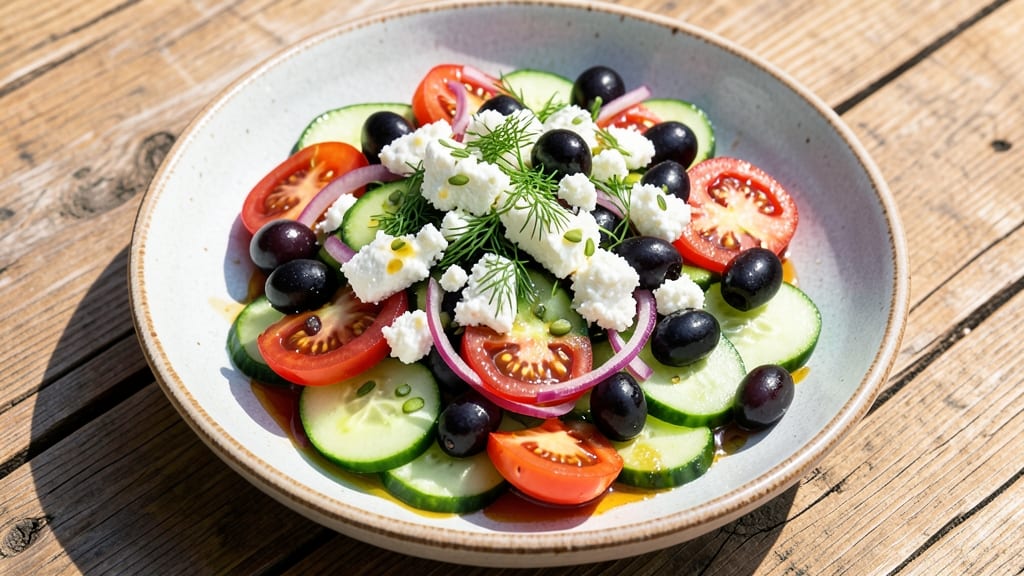
A Greek salad with red wine vinegar transforms a simple bowl of vegetables into a vibrant, tangy masterpiece that captures the essence of Mediterranean dining. This recipe balances crisp cucumbers, juicy tomatoes, and briny olives with a dressing that brightens every bite—no bland salads here.
The red wine vinegar adds depth, cutting through the richness of feta while keeping the flavors fresh and dynamic.
The secret lies in proper preparation: thickly slicing cucumbers to prevent sogginess, dicing tomatoes for maximum juiciness, and using high-quality feta that crumbles easily. A quick soak in ice water revives wilted greens, ensuring your salad stays crisp even when prepped ahead.
This isn’t just a side dish—it’s a celebration of freshness with every forkful.
What you’ll end up with is a salad that’s bold yet balanced, where each ingredient shines without overpowering the others. The red wine vinegar dressing ties everything together, adding a sophisticated tang that elevates this classic dish.
Perfect for summer picnics, weeknight dinners, or as a refreshing starter for any meal.
For best results, assemble the salad just before serving to maintain texture, and store dressing separately until ready to toss. This recipe delivers restaurant-quality flavor with minimal effort—proof that the simplest dishes can be the most impressive.
Ingredients for greek salad recipe red wine vinegar
Twelve ingredients, Mediterranean flair, and a dressing that transforms ordinary vegetables into a vibrant masterpiece.
| Ingredient | Amount | Notes |
|---|---|---|
| Cucumber 🥒 | 1 ½ lb | English or Persian, thickly sliced |
| Roma Tomatoes 🍅 | 4 whole | Juicy, medium-sized, diced |
| Red Onion 🧅 | 1 whole | Medium size, thinly sliced |
| Kalamata Olives 🫒 | ½ cup | Pitted, sliced in half lengthwise |
| Feta Cheese 🧀 | 6 oz | High-quality, crumbled |
| Fresh Cucumber Seeds 🥒 | ¼ cup | Optional, for garnish |
| Red Wine Vinegar 🍷 | ¼ cup | Dry, aged variety |
| Extra-Virgin Olive Oil 🫒 | ½ cup | High-quality, fruity |
| Dried Oregano 🌿 | 1 tsp | Mediterranean blend preferred |
| Diamond Crystal Kosher Salt 🧂 | 1 tsp | Fine grain preferred |
| Fresh Dill 🌿 | ¼ cup | Chopped, for garnish |
| Lemon Juice 🍋 | 1 tbsp | Freshly squeezed |
The quality of your feta and olives makes all the difference. Look for crumbly, salty feta at specialty markets—Kalamata olives should be plump and dark purple. The red wine vinegar should be aged (like Balsamic Vinegar Co.'s or Rutini) for depth. For cucumbers, English or Persian varieties stay crisp longer. Thinly slice the onions in a mandoline or food processor for even, delicate layers. Fresh dill and oregano elevate the salad—buy from bulk bins to preserve their aromatic oils.
No Kalamata olives? Green olives work in a pinch, but they lack the rich flavor. Substitute lemon juice for extra brightness if you're light on vinegar. The dressing can be made ahead—store it in a sealed jar for up to 5 days. For a vegan version, swap feta for marinated tofu cubes or vegan feta. The tomatoes can be substituted with heirloom varieties if you prefer sweeter notes, but Roma tomatoes provide the perfect balance of acidity and juiciness. If your cucumbers are watery, pat them dry with paper towels before slicing.
Assemble the salad just before serving to maintain crispness—dressing makes greens soggy within 15 minutes. Store the dressing separately in an airtight container in the fridge for up to 7 days. The feta keeps well for 2 weeks if wrapped in parchment, while olives last 6 months unopened. For a make-ahead option, store components separately and toss with dressing when ready. This salad reheats beautifully—ideal for lunches or potlucks where prep time matters.
Why You'll Love This Recipe
- No-Chop Nightmare: I swear, the only knife work here is slicing cucumbers into thick half-moons—no dice, no fuss. The tomatoes and onions can stay whole or get roughly chopped; this salad begs for imperfection.
- Taste Like a Taverna: That red wine vinegar punch—bright, tangy, just sharp enough to cut through the creamy feta—makes every bite feel like a little Greek vacation. The olives? They’re the salty, briny stars that turn this from a side dish to a main-event craving.
- Lunchbox Hero: Pack it in a jar for work or school—layer the tomatoes and cucumbers first, then the dressing and feta on top. By lunchtime, everything’s perfectly mixed, and you’ve just saved yourself a $12 takeout order.
- Budget Bright Spot: A single jar of olives and a block of feta stretch for weeks of salads, and the rest? Fresh veggies you’d buy anyway. Honestly, I’ve fed a houseful of people for under $10 with this—no one’s complaining.
Step-by-step instructions for Greek salad with red wine vinegar
This method delivers a vibrant, balanced salad where each component shines while maintaining crisp textures and bright flavors.
Prepare the Vegetable Base
Begin by peeling the 1.5 lb cucumber and cutting it into ½-inch thick slices. I use a sharp chef's knife for clean cuts, and I like to leave the slices slightly thick to prevent them from becoming soggy. Pat each slice dry with paper towels to remove excess moisture - this ensures your salad stays crisp rather than watery.
Next, halve the 4 whole Roma tomatoes and remove the cores. Dice them into ¼-inch pieces, keeping them uniform in size so they distribute evenly throughout the salad. Thinly slice the 1 whole red onion into semi-circles, then separate the rings. Soak the onion slices in ice water for 5 minutes before draining - this mellows their sharpness while maintaining their crunch.
Assemble the Core Components
In a large mixing bowl, combine the prepared cucumber slices, diced tomatoes, and drained onion rings. Add the 0.5 cup Kalamata olives (halved lengthwise) and 6 oz feta cheese (crumbled into ¼-inch pieces). I use my fingers to gently break the feta rather than a knife to maintain its characteristic texture.
Sprinkle 1 tsp dried oregano and 1 tsp Diamond Crystal kosher salt over the mixture. Give everything a gentle toss with a large spoon, being careful not to bruise the vegetables. The goal here is to distribute all ingredients evenly without compressing the salad - we want to preserve that fresh, garden-picked quality.
Create the Signature Dressing
In a small bowl, whisk together the 0.25 cup red wine vinegar, 0.5 cup extra-virgin olive oil, and 1 tbsp freshly squeezed lemon juice. The vinegar should be aged and dry to provide that classic tangy bite, while the olive oil should be fruity and high-quality for depth of flavor. Add 0.25 cup chopped fresh dill and whisk until fully incorporated.
Taste the dressing before adding it to the salad. It should be tangy with a subtle herbal note from the dill. If needed, adjust the balance by adding 1-2 teaspoons more vinegar for extra acidity or 1 teaspoon more olive oil for richness. The dressing should coat the back of a spoon but remain light enough to allow the vegetables to remain prominent.
Combine and Rest Before Serving
Pour the dressing over the vegetable mixture and gently toss everything together. Work quickly but carefully to avoid breaking down the larger pieces. For an extra touch, sprinkle the 0.25 cup fresh cucumber seeds (optional) over the top just before serving - they add a delicate crunch and beautiful presentation.
Let the salad rest for 10-15 minutes before serving. This brief resting period allows the flavors to meld together while maintaining the crisp texture of the vegetables. Serve immediately while the cucumbers are still crisp and the dressing is vibrant. The red wine vinegar's bright acidity will cut through the richness of the feta, creating that perfect balance that makes this salad truly stand out.
Pro Tips For Making Greek Salad Recipe Red Wine Vinegar
- CHILL THE CUCUMBER: Toss your cucumber in ice water for 10 minutes before slicing—it tightens the flesh so it doesn’t turn to mush when dressed. I learned this the hard way after serving a salad where the cucumbers oozed like overcooked pasta. Works especially well for thick-skinned varieties.
- SALT THE TOMATOES: Sprinkle Roma tomatoes with ½ teaspoon of salt and let them sit for 10 minutes before slicing. This draws out excess water, keeping them crisp and preventing a soggy salad. Skip this, and your tomatoes will bleed juice into the dressing like a bad feta.
- DICE THE ONION DRY: Pat the red onion slices completely dry with a paper towel before dicing—this prevents them from releasing too much moisture and diluting the dressing. I used to skip this, and my salad always ended up watery. A quick 30-second step that makes a real difference.
- ASSEMBLE LAST MINUTE: Toss the dressing with the cucumber and tomatoes first, then fold in olives, onion, and feta right before serving. This keeps the feta from getting rubbery and the olives from absorbing too much liquid. Yes, it means you’ll assemble it twice—but your salad will taste like it came from a taverna, not a sad lunchbox.
Pro cooking tips for great greek salad recipe red wine vinegar
Dressing Balance
The key to this salad's tangy brightness lies in the red wine vinegar dressing. Start with a 1:2 ratio of vinegar to olive oil—this ensures the acidity shines without overwhelming.
I always taste the dressing before tossing it with the salad, adjusting with 1-2 teaspoons more vinegar if it feels too mild or 1 teaspoon more olive oil if it’s too sharp.
The fresh dill and lemon juice add herbal depth, so don’t skip them—even if you’re in a hurry. 🍷
Onion Prep
Thinly slicing the red onion is non-negotiable for texture, but soaking it in ice water for 5 minutes before draining is a game-changer. This step mellows the onion’s bite while keeping it crisp.
Use a mandoline slicer for even, paper-thin slices—just be careful with your fingers! If you’re short on time, a food processor works too, but hand-slicing gives you more control. 🧅
Feta Texture
Crumbly feta is everything in this salad. Avoid pre-shredded feta—it’s often wax-coated and lacks texture. Instead, buy a block of high-quality feta (look for brands like Chani or Telemea) and break it into ¼-inch pieces with your fingers.
The saltier the feta, the better—it balances the dressing’s acidity perfectly. If your feta is too salty, rinse it briefly under cold water before crumbling. 🧀
Cucumber Trick
Thickly slicing cucumbers (½-inch thick) prevents them from turning mushy, but patting them dry with paper towels is the real secret. This removes excess moisture that would make your salad watery.
For extra crispness, chill the sliced cucumbers in the fridge for 15 minutes before assembling the salad. Pro tip: Use Persian cucumbers—they’re less seedy and stay crunchier longer. 🥒
Resting Time
Never skip the 10-15 minute rest after tossing the salad. This lets the flavors meld without compromising texture. The red wine vinegar needs time to penetrate the vegetables, and the feta’s saltiness will soften slightly, creating a harmonious bite.
Serve the salad immediately after resting—any longer, and the cucumbers will start to release water. 💫
Make-Ahead Tips
Prep the salad components up to 24 hours ahead and store them separately in airtight containers. Keep the dressing in a sealed jar in the fridge for up to 5 days. When ready to serve, toss everything together and let it rest.
For a lunchbox-friendly version, pack the dressing separately and add it just before eating to keep the greens crisp. This method works perfectly for potlucks or meal prep Sundays. ⏰
Nutrition facts
Frequently asked questions
Can I substitute white wine vinegar for red wine vinegar?
While you can use white wine vinegar in a pinch, red wine vinegar adds a deeper, slightly fruitier complexity that enhances the Mediterranean flavors. For a similar tang without the rich notes, try a mix of lemon juice and a touch of balsamic vinegar. If you must substitute, reduce the amount by 1 teaspoon since white wine vinegar is slightly milder.
How do I keep my Greek salad crisp longer?
Pat all vegetables—especially cucumbers and tomatoes—dry with paper towels before assembling. Store the dressing separately until ready to serve, and assemble the salad no more than 15 minutes before eating. For make-ahead salads, keep components separate in airtight containers and toss with dressing just before serving. Chilling the salad for 10 minutes in the fridge also helps maintain crispness.
What's the best way to store leftover Greek salad?
Store the salad components (vegetables, cheese, olives) in separate airtight containers in the fridge for up to 2 days. Keep the dressing in a sealed jar for 5 days. When ready to serve, toss everything together and let it rest for 5 minutes before eating. For best texture, add fresh cucumber slices and a splash of dressing just before serving.
Can I make this salad ahead for a party?
Prep all ingredients separately and store them in airtight containers in the fridge. Keep the dressing in a separate jar. When ready to serve, assemble the salad and toss with dressing just before serving. For a crowd, use a large platter and let guests add their own dressing. This method keeps the salad fresh and crisp for up to 4 hours before serving.
Why does my Greek salad taste bland?
Blandness often comes from using low-quality feta or not enough acidity. Ensure your feta is salty and crumbly, and taste your dressing before adding it to the salad. If needed, add 1-2 teaspoons more red wine vinegar or a pinch of salt. Fresh herbs like dill and oregano also boost flavor—don't skip them! The red wine vinegar should be the star, so use an aged, high-quality variety for the best results.