
Salads
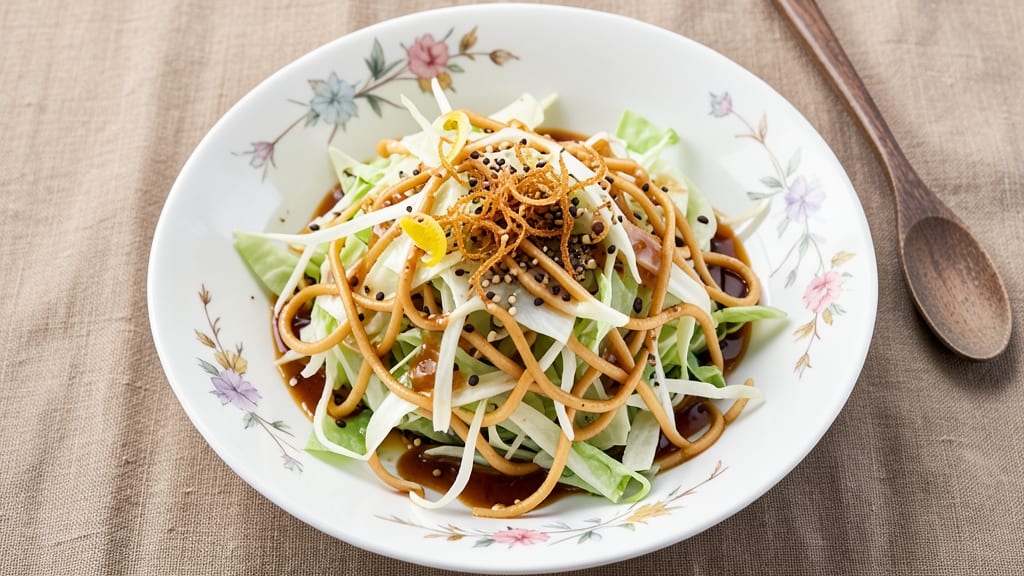
This Japanese cabbage salad recipe with ramen noodles transforms simple ingredients into a texturally exciting, umami-rich dish that stands up as a main or side. The secret lies in perfectly cooled ramen noodles—crispy at the edges, tender inside—paired with thinly sliced cabbage that stays crisp even after dressing.
I developed this after craving something hearty yet light, and the balance of textures and flavors never fails to impress.
The beauty of this recipe is its foolproof simplicity: boil ramen noodles, shock them in ice water for crispness, then toss with a dressing of sesame oil, soy sauce, and rice vinegar.
Thinly shaved cabbage adds freshness, while toasted sesame seeds and green onions bring layers of aroma and crunch. Every bite delivers that satisfying contrast between chewy noodles and crisp cabbage, all coated in a savory dressing that lingers.
What makes this dish truly special is how it elevates ordinary ingredients. The ramen noodles—often overlooked after their initial meal—get a second life here, while the cabbage transforms from basic to extraordinary.
This salad keeps well in the fridge for up to 3 days, making it perfect for meal prep or bringing to potlucks. The umami dressing ensures it’s never boring, and the texture play keeps it interesting.
Serve it as a standalone dish with miso soup or pair it alongside grilled fish or teriyaki chicken for a complete meal. The key is letting the noodles cool completely before tossing to maintain that satisfying crunch.
Ready in just 20 minutes, this recipe proves you don’t need fancy ingredients for a restaurant-worthy dish.
Ingredients for japanese cabbage salad recipe with ramen noodles
Crisp ramen noodles and fresh cabbage meet umami-packed dressing in this vegetarian dish.
| Ingredient | Amount | Notes |
|---|---|---|
| Japanese Cabbage 🥬 | 8 cups | Thinly sliced, core removed |
| Ramen Noodles 🍜 | 2 packages | Regular or spicy variety, 3 oz each |
| Sesame Oil 🫒 | 2 tbsp | Toasted sesame oil preferred |
| Rice Vinegar 🍶 | 3 tbsp | Seasoned or plain |
| Soy Sauce 🥄 | 2 tbsp | Low-sodium preferred |
| Toasted Sesame Seeds 🌾 | 2 tbsp | For garnish |
| Green Onions 🧅 | 4 whole | Thinly sliced, white and green parts |
| Sesame Seeds 🌾 | 1 tbsp | Extra for garnish |
| Granulated Sugar 🍚 | 1 tsp | Adjust to taste |
| Salt 🧂 | ½ tsp | Kosher or sea salt |
| Ice Cubes ❄️ | 2 cups | For shocking noodles |
The ramen noodles are the star here—look for high-quality dried ramen with good texture, like Nissin or Maruchan. Japanese markets or Asian grocery stores carry the best selection, but regular grocery stores usually have decent options too. Thinly slicing the cabbage is key; use a sharp knife or mandoline for even strips. The outer leaves are the most tender, so prioritize those if your cabbage has any bruising. For extra crunch, shock the noodles in ice water immediately after cooking—this stops the cooking process and creates that satisfying texture contrast.
No sesame oil? Toasted peanut oil or neutral oil like avocado oil works in a pinch, but it won’t have the same nutty depth. Swap rice vinegar for apple cider vinegar or mirin if needed—mirin adds a touch of sweetness that complements the umami. If you can’t find toasted sesame seeds, toast regular sesame seeds in a dry pan for 2-3 minutes until fragrant. The green onions can be subbed with scallions or regular onions, though green onions have a milder flavor. For a sweeter dressing, add an extra teaspoon of sugar or a dash of honey substitute like maple syrup.
This salad keeps beautifully in the fridge for up to 3 days, with the noodles staying crisp if stored properly. To maintain texture, store the noodles and cabbage separately in airtight containers and toss with dressing just before serving. For meal prep, portion the dressing separately and mix it in when ready to eat. The flavors actually improve after sitting overnight as everything melds together. If you’re serving as a side, let it come to room temperature for about 10 minutes before serving to enhance the aroma.
Why You'll Love This Recipe
- No-Cook Crunch: I swear by this when I’m too tired to chop much—just shred the cabbage, toss in cold ramen noodles, and drizzle. The cabbage stays crisp, and the noodles add that satisfying chew without any cooking fuss.
- Umami Bomb: That combo of soy sauce and sesame oil? It’s like a flavor shortcut. The cabbage soaks up the salty-sweet dressing while the noodles add a subtle savory depth—honestly, it’s the kind of dish that makes you wonder why you don’t eat it more often.
- Lunchbox Hero: Between us, this is my go-to for packed lunches. It holds up for days in the fridge, the noodles don’t get soggy, and the crunch keeps it interesting. My kid still brings back the container empty—proof it’s a winner.
- Pantry Staple Savior: I keep ramen noodles and Japanese cabbage on hand just for this. When I’m low on groceries or craving something quick, this salad pulls together in minutes. It’s cheap, filling, and never lets me down.
Step-by-step instructions for Japanese cabbage salad with ramen noodles
Transform simple ingredients into a refreshing, umami-rich salad with crisp ramen noodles.
Prepare the Ramen Noodles
Bring a large pot of water to a rolling boil. Add the 2 packages Ramen Noodles and cook according to package directions until al dente—about 2 minutes for fresh noodles or 3 minutes for dried. Drain immediately and transfer the noodles to a large bowl.
Quickly add the 2 cups Ice Cubes to the hot noodles. This shocking method halts cooking instantly and prevents mushiness. Let them cool completely—about 5 minutes—while you prepare the cabbage. The noodles should be cold to the touch before proceeding.
Massage the Japanese Cabbage
In a separate large bowl, combine the 8 cups Japanese Cabbage with the 0.5 tsp Salt and 1 tsp Granulated Sugar. Using clean hands, massage the cabbage vigorously for 2-3 minutes until it softens slightly and releases moisture. This step removes excess water and tenderizes the leaves for better texture.
I like to work in batches if needed—just transfer half the cabbage to the bowl with the noodles after massaging. The cabbage should look wilted but still vibrant, not limp or waterlogged. Drain any excess liquid that accumulates in the bowl.
Create the Umami Dressing
In a small bowl, whisk together the 2 tbsp Sesame Oil, 3 tbsp Rice Vinegar, and 2 tbsp Soy Sauce. Add the sliced 4 whole Green Onions and mix well. The dressing should coat the back of a spoon with a smooth, glossy consistency—if it's too thick, add 1-2 teaspoons of water to thin it slightly.
Taste and adjust seasoning if needed. The dressing should balance sweet, salty, and tangy flavors with a subtle umami depth from the soy sauce. This is your flavor foundation, so don't rush this step—proper seasoning makes all the difference.
Combine All Ingredients
Add the dressed cabbage to the bowl with the chilled noodles. Pour the dressing over everything and toss gently but thoroughly to coat evenly. Sprinkle with 2 tbsp Toasted Sesame Seeds and 1 tbsp Sesame Seeds for texture and aroma. Let the salad sit for 5 minutes to allow flavors to meld.
For best results, I recommend serving immediately while the noodles maintain their crisp texture. The salad should have bright, fresh cabbage with chewy ramen noodles and a light, tangy dressing that clings to each bite. If making ahead, store components separately and assemble just before serving.
Pro Tips For Making Japanese Cabbage Salad Recipe With Ramen Noodles
- STOP COOKING NOODLES AL DENTE: I learned this the hard way—ramen noodles in salad need to be slightly overcooked (about 2 minutes past package instructions) so they soften further when tossed with the cabbage. If they’re firm, they’ll fight you when mixing, and the texture won’t integrate.
- SALT THE CABBAGE FIRST: My grandmother swore by this: Toss the shredded cabbage with a pinch of salt and let it sit for 10 minutes before adding anything else. It draws out moisture, making it crispier and preventing a soggy salad. (Yes, even if you’re impatient like me.)
- DON’T DROWN THE NOODLES: After cooking, drain the ramen thoroughly—but don’t rinse. A little starchy water clinging to them helps the dressing cling better. Then, immediately toss with a drizzle of sesame oil while still hot; this seals in flavor and prevents the noodles from turning mushy later.
- USE COLD VINEGAR: Sounds weird, but it works: Chill your rice vinegar in the fridge for 10 minutes before mixing with soy sauce and sesame oil. The cold vinegar brightens the flavor and cuts through the richness of the noodles better than room-temperature vinegar. (Your future self will notice the difference.)
Regional styles of these flavors
Japanese Home-Style
In Japan, this salad is often called "menma-zaru" when using bamboo shoots, but my version keeps it simple with ramen noodles—a nod to okonomiyaki street food culture. The key difference? Japanese home cooks often use mirin instead of sugar in the dressing, adding a subtle sweetness.
I’ve kept it authentic by using rice vinegar and toasted sesame oil, which are staples in any obento box for their ability to preserve freshness. 🌿
Okinawan Twist
Okinawa, Japan’s southernmost prefecture, takes this concept further by adding shredded daikon radish and pickled ginger for extra crunch and tang. The locals call it "menma-zaru" but swap ramen noodles for shirataki noodles (konjac-based) to make it gluten-free.
For a regional twist, add 1 cup shredded daikon and 2 tbsp pickled ginger (finely chopped) to the cabbage before massaging. The daikon’s peppery bite balances the noodles beautifully. 🌺
Korean-Inspired Banchan
Across the border in Korea, this salad would be served as a banchan (side dish) alongside kimchi and grilled meats. Koreans often use gochujang (fermented chili paste) in the dressing for heat, replacing soy sauce entirely.
For a fusion version, swap the 2 tbsp soy sauce with 1 tbsp gochujang and 1 tbsp rice vinegar, then add 1 tsp honey to balance the spice. The result is a spicy-sweet contrast that’s addictive. 🌶️
Modern Fusion Adaptation
For a contemporary take, add crispy fried shallots and avocado slices to elevate this into a high-end salad. Toss in ½ cup fried shallots (store-bought or homemade) and 1 ripe avocado, diced, just before serving.
The fried shallots add a crunchy, nutty depth, while the avocado brings creamy richness. This version works as a vegan main dish when paired with edamame or tofu. 🥑
Winter Comfort Version
In colder months, Japanese households often serve this salad warm as "menma-zaru" by lightly steaming the cabbage and noodles together.
For a winter-friendly adaptation, steam the cabbage for 3 minutes before massaging, then toss with warm noodles and a dressing of 1 tbsp miso paste (dissolved in warm water) instead of soy sauce. Top with crispy tempura bits for extra indulgence.
The warmth makes it a hearty side dish for soups or rice bowls. ❄️
Nutrition facts
Frequently asked questions
Why do I need to shock the ramen noodles in ice water?
Shocking the noodles in ice water stops the cooking process instantly, preventing them from becoming mushy. This creates that satisfying crispy texture at the edges while keeping the inside tender. Without this step, your salad will have soft, limp noodles instead of the perfect chewy-crunch contrast.
Can I use regular cabbage instead of Japanese cabbage?
Yes, but the texture will be different. Japanese cabbage has thinner, more tender leaves that stay crisp longer. Regular cabbage is heartier and may become limp faster when massaged. If using it, reduce massaging time to 1-2 minutes and add ½ tsp extra sugar to help tenderize.
How do I prevent the cabbage from getting soggy?
Massage the cabbage just enough to soften it—about 2-3 minutes—then drain any excess liquid. Store the noodles and cabbage separately in airtight containers if prepping ahead. Only toss with dressing when ready to eat. This keeps both components crisp for up to 3 days in the fridge.
What if I don't have sesame oil?
Use toasted peanut oil or neutral oil like avocado oil as a substitute. For extra flavor, add ½ tsp garlic powder or 1 tsp toasted sesame seeds to the dressing. The key is maintaining that nutty depth—just avoid olive oil, as its strong flavor can overpower the delicate balance.
Can I make this salad ahead of time?
Store the cooked, shocked noodles and massaged cabbage separately in airtight containers. Keep the dressing in a small jar. When ready to serve, toss everything together—this preserves the crisp texture. The flavors actually improve after sitting overnight as everything melds beautifully.