
Salads
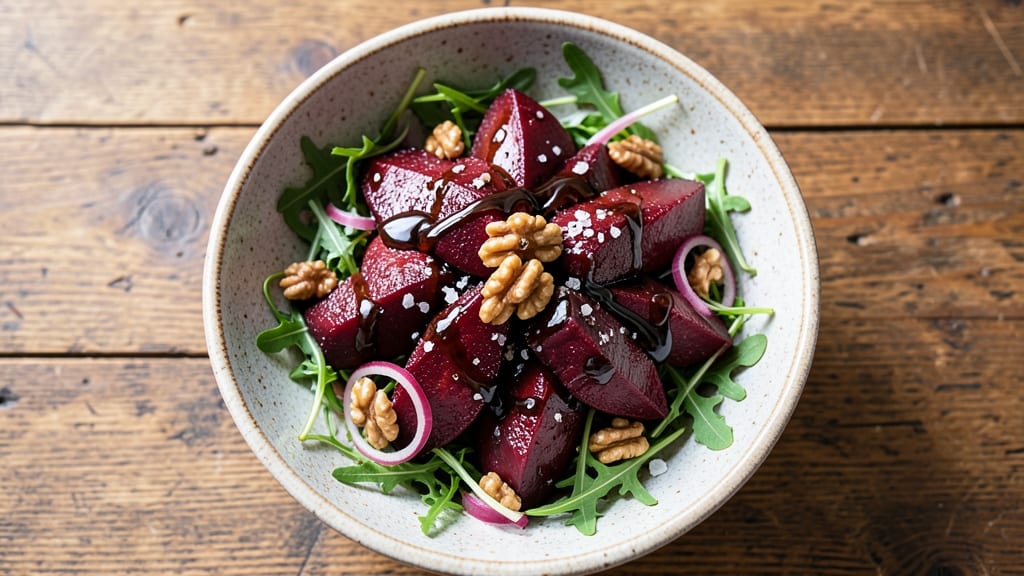
This balsamic roasted beet salad transforms humble beets into a showstopping dish with deep earthy sweetness and a tangy glaze that ties everything together. 💛 The secret lies in roasting the beets until tender and caramelized, then drizzling them with a balsamic reduction that adds complexity—no fancy techniques required, just simple ingredients that deliver restaurant-quality results.
Perfect for vegans, this salad is as nutritious as it is visually stunning, with vibrant colors that make every bite feel like a celebration.
The beauty of this recipe is its versatility—you can keep it simple with arugula and walnuts or elevate it with optional goat cheese (or vegan alternatives) and fresh herbs.
The balsamic glaze isn’t just a dressing; it’s the star, cutting through the natural sweetness of the roasted beets and adding a touch of sophistication. Whether you’re serving it as a main course or a side, this salad will impress even the most discerning guests.
Roasting the beets first concentrates their natural sugars, creating a rich, caramelized flavor that pairs perfectly with the tangy balsamic. The result is a salad that’s not only delicious but also packed with nutrients—no compromises on taste or health.
The textures play beautifully too: crisp greens, tender beets, and crunchy toppings come together in every bite.
Serve this salad at room temperature for the best texture, and don’t forget to garnish with fresh thyme or microgreens for an extra pop of color.
It’s the kind of dish that looks as good as it tastes, making it ideal for dinner parties, potlucks, or even a special weeknight meal. Let’s get started!
Ingredients for balsamic roasted beet salad
Earthy beets meet tangy balsamic—simple ingredients for a showstopping salad that's vegan-friendly and packed with flavor.
| Ingredient | Amount | Notes |
|---|---|---|
| Medium Beets 🧅 | 1 ½ lb | Organic preferred, trimmed and peeled |
| Extra-Virgin Olive Oil 🫒 | ½ cup | High-quality, fruity flavor preferred |
| Balsamic Vinegar 🍷 | ¼ cup | Aged 25 years minimum for depth |
| Arugula 🌱 | 6 cups | Baby arugula for tender bite |
| Walnuts 🌰 | ½ cup | Toasted for enhanced flavor |
| Red Onion 🧅 | 1 whole | Thinly sliced for crisp texture |
| Fresh Thyme Leaves 🌿 | ¼ cup | Chopped, for garnish |
| Vegan Goat Cheese Alternative 🧀 | ½ cup | Optional, crumbled for richness |
| Maple Syrup 🍁 | 1 tbsp | For glaze sweetness balance |
| Sea Salt 🧂 | 1 ½ tsp | Diamond Crystal preferred |
| Freshly Ground Black Pepper 🌶️ | ½ tsp | For subtle seasoning |
| Lemon Juice 🍋 | 1 tbsp | Freshly squeezed for brightness |
The beets are non-negotiable here—organic if possible, since their natural sweetness is the foundation. Whole Foods or local farmers markets usually carry the best quality, with vibrant colors indicating freshness. For the balsamic, aged 25 years or more makes all the difference—it's worth the splurge for that deep, complex flavor. I always grab Trader Joe's extra-virgin olive oil for this recipe; their California variety has perfect fruity notes that complement the beets beautifully. The walnuts? Toast them yourself—5 minutes in a dry pan until fragrant, then cool before chopping. That extra step transforms them from ordinary to extraordinary.
No aged balsamic? Regular balsamic vinegar plus 1 tsp brown sugar mimics the depth. Swap arugula for mixed greens if that's what you've got—just add an extra tablespoon of lemon juice to brighten it up. The vegan goat cheese alternative can be tricky to find, but Follow Your Heart brand works perfectly. For the glaze, if you're short on maple syrup, agave nectar at half the amount does the trick. The red onion needs to be thinly sliced—a mandoline makes this job effortless, but a sharp knife works too. And if you're feeling adventurous, add 1 tsp poppy seeds for a nutty crunch that pairs perfectly with the walnuts.
Roasted beets keep 5 days in the fridge once cooked, but make the glaze fresh—it's best the same day. Store the salad components separately: beets, greens, and toppings in airtight containers. The walnuts stay crisp for 1 week if kept in a sealed container away from light. For meal prep, assemble everything the morning of serving—the flavors meld beautifully when tossed right before eating. This salad reheats surprisingly well too—30 seconds in the microwave with a splash of water revives it perfectly for lunch the next day.
Why You'll Love This Recipe
- One-Pan Wonder: I swear by this trick—just toss the beets in olive oil, balsamic, and salt, then roast them whole. No peeling, no fuss, and the skins crisp up into edible little surprises. (Yes, even on a Tuesday night when you’d rather be scrolling than chopping.)
- Sweet-Savory Magic: That caramelized balsamic glaze? It’s the star. The roasted beets get this deep, tangy sweetness that makes the peppery arugula sing, and the walnuts add crunch that actually holds up. Honestly, the first time I tasted it, I immediately texted my mom: “I’m keeping this.”
- Meal Prep MVP: Between us, this salad keeps like a champ. Roast a big batch of beets on Sunday, store them in the fridge, and toss them together with whatever greens you grab. It’s my go-to for lunchboxes (kids love the pretty colors) or a quick side when I’m too tired to cook. Zero guesswork.
- Budget Brightener: Beets are dirt cheap, and this recipe stretches them far. A single bunch of medium beets + a handful of walnuts feed four people easily. Plus, the balsamic and olive oil are pantry staples—no specialty shopping needed. My wallet (and my taste buds) thank me every time.
Step-by-step instructions for balsamic roasted beet salad
This salad comes together with stunning colors and bold flavors—let's make it.
🔥 Step 1: Roast the Beets Until Tender and Caramelized
Preheat your oven to 400°F and line a baking sheet with parchment paper. Toss the 1.5 lb medium beets (trimmed and peeled) with 2 tablespoons of the extra-virgin olive oil and 1 teaspoon of the sea salt. Spread them in a single layer—they need room to roast evenly.
Roast for 45-50 minutes until a knife slides in easily and the edges are caramelized to a deep mahogany color. The beets should feel tender when pierced but still hold their shape. Here's the thing—if they're still firm, return them to the oven for another 10 minutes. Overcooked beets turn mushy, and we're going for that perfect balance of tenderness and structure.
🍳 Step 2: Create the Tangy Balsamic Glaze
While the beets roast, combine 0.25 cup balsamic vinegar, 1 tbsp maple syrup, and 1 tbsp lemon juice in a small saucepan. Place over medium heat and bring to a gentle simmer, stirring occasionally. Real talk: you'll see the mixture bubble and reduce quickly—this is where the magic happens.
Simmer for 5-7 minutes until the glaze thickens to a syrupy consistency that coats the back of a spoon. It should smell rich and complex, with deep caramel notes from the balsamic. If it reduces too quickly, add 1 teaspoon water to balance it. Let the glaze cool slightly before using—it'll thicken more as it sits.
👨🍳 Step 3: Toast the Walnuts and Prep the Arugula
In a dry skillet over medium heat, toast the 0.5 cup walnuts for 3-4 minutes, stirring constantly, until they're fragrant and lightly golden. Watch them like a hawk—they burn faster than you think. Transfer to a plate and let cool, then roughly chop them for texture contrast.
Meanwhile, trim any tough stems from the 6 cups arugula and spread it on a large serving platter. Thinly slice the whole red onion and scatter it over the arugula. This is where the salad starts building its layers—crisp onion against tender greens, with the beets coming next.
🥘 Step 4: Assemble the Salad with Perfect Balance
Once the beets are cool enough to handle, slice them into ¼-inch thick rounds. Arrange them over the arugula in an even layer, slightly overlapping for visual appeal. Drizzle with the cooled balsamic glaze—about 2 tablespoons per serving—letting it pool in the crevices between beets and greens.
Sprinkle the toasted walnuts and 0.25 cup chopped fresh thyme leaves over everything, then crumble the 0.5 cup vegan goat cheese alternative on top. Finish with a final seasoning of 0.5 teaspoon freshly ground black pepper and the remaining 0.5 teaspoon sea salt. The pepper adds a subtle heat that cuts through the sweetness.
🍽️ Step 5: Serve Immediately for Maximum Freshness
Gently toss the salad just before serving to distribute all the components evenly. The beets should be warm from roasting, the arugula still crisp, and the glaze glistening like liquid jewels. This salad shines when served immediately—don't let it sit too long or the arugula will wilt.
For the best experience, serve each portion on a large plate so the vibrant colors pop. The earthy sweetness of the beets pairs perfectly with the tangy glaze, while the walnuts and thyme add herbal depth. It's a salad that feels special enough for company but simple enough for weeknight dinners.
Pro Tips For Making Balsamic Roasted Beet Salad
- Trim the Greens: Tear arugula by hand instead of chopping—it keeps those peppery leaves intact and prevents them from turning bitter. I used to cut it like lettuce, and the salad always tasted dull afterward.
- Roast at 400°F: High heat caramelizes the beets faster and gives them that glossy, restaurant-worthy finish. Skip the low-and-slow approach—400°F for 45 minutes does the trick without drying them out.
- Toast Walnuts First: Dry-toast walnuts in the same pan as the beets for 5 minutes before adding them to the salad. This adds crunch and depth—no need to waste time toasting them separately.
- Peel Beets Warm: Wait 10 minutes after roasting before peeling—warm beets slip out of their skins effortlessly. Cold beets? You’ll be scrubbing like it’s your job, and some stubborn bits will still cling.
Best sauces and condiments for these flavors
Balsamic Glaze Mastery
The heart of this salad is the balsamic glaze, and getting it right makes all the difference. I recommend using aged balsamic vinegar (25 years or more)—it’s sweeter, richer, and adds depth that regular vinegar can’t match.
For an even more luxurious touch, reduce it with 1 tbsp maple syrup and 1 tbsp lemon juice until it thickens to a glossy syrup. This glaze isn’t just a dressing; it’s the star that ties everything together with its tangy-sweet balance. 🍷
Maple-Balsamic Swap
If you don’t have maple syrup, agave nectar works in a pinch—use half the amount. For a deeper flavor, add ½ tsp vanilla extract to the glaze while simmering.
This swap keeps the sweetness but adds a subtle warmth that complements the earthy beets beautifully. Trust me, your taste buds will thank you.
Herb-Infused Glaze
Elevate your glaze by steeping 2 sprigs of fresh rosemary or thyme in the warm vinegar mixture for 5 minutes before simmering. Remove the herbs before reducing, but their aromatic oils infuse the glaze with a fragrant depth.
This technique adds a herbal complexity that pairs perfectly with the toasted walnuts and arugula.
Spicy Kick Option
For a bold twist, stir ½ tsp red pepper flakes or 1 tsp hot honey into the cooled glaze. The heat cuts through the sweetness of the beets and adds a fiery contrast that’s unexpected but delicious.
This works especially well if you’re serving the salad as a main course with grilled proteins.
Nutty Glaze Variation
Add 1 tbsp toasted walnut oil to the glaze while simmering for a nutty richness that mirrors the walnuts in the salad. This variation ties all the flavors together even more cohesively. Walnut oil has a subtle earthiness that enhances the beets’ natural sweetness without overpowering it.
Storage Tips for Glaze
Store any leftover glaze in an airtight container in the fridge for up to 5 days. Reheat gently in a small saucepan over low heat until warmed through—it thickens as it cools, so add a splash of water if needed.
This glaze is so versatile; drizzle it over toast, roasted veggies, or even vanilla ice cream for a sweet-savory surprise. 💫
Nutrition facts
Frequently asked questions about balsamic roasted beet salad
Can I use regular beets instead of organic?
Yes, but you'll want to peel them thoroughly to remove any dirt or pesticide residue. Organic beets have naturally thinner skins, which makes peeling easier and preserves more of their natural sweetness. Non-organic beets may have thicker skins that require more effort to remove completely.
How do I know when the beets are fully roasted?
They're done when a knife slides in easily with minimal resistance and the edges have caramelized to a deep mahogany color. The beets should feel tender when pierced but still hold their shape—if they're mushy, they've been overcooked. For best results, aim for 45-50 minutes at 400°F.
What if I don't have aged balsamic vinegar?
Use regular balsamic vinegar plus 1 teaspoon brown sugar to mimic the depth. For an even better substitute, simmer ¼ cup balsamic vinegar with 1 tbsp maple syrup for 5 minutes to create a similar reduction. The key is balancing sweetness and acidity to complement the beets' natural flavors.
Can I make this salad ahead of time?
Roast the beets and make the glaze 1 day ahead and store them separately in airtight containers. Assemble the salad just before serving to maintain crispness in the greens and walnuts. The flavors actually improve when components are combined fresh—this isn't a make-ahead dish that benefits from resting.
What are good vegan alternatives for the goat cheese?
Try crumbled vegan feta or cashew-based goat cheese alternatives like Follow Your Heart brand. For a homemade option, blend ½ cup soaked cashews, 1 tbsp lemon juice, 1 tsp apple cider vinegar, and ½ tsp salt until smooth. This adds a creamy richness that mimics traditional goat cheese beautifully.