
Salads
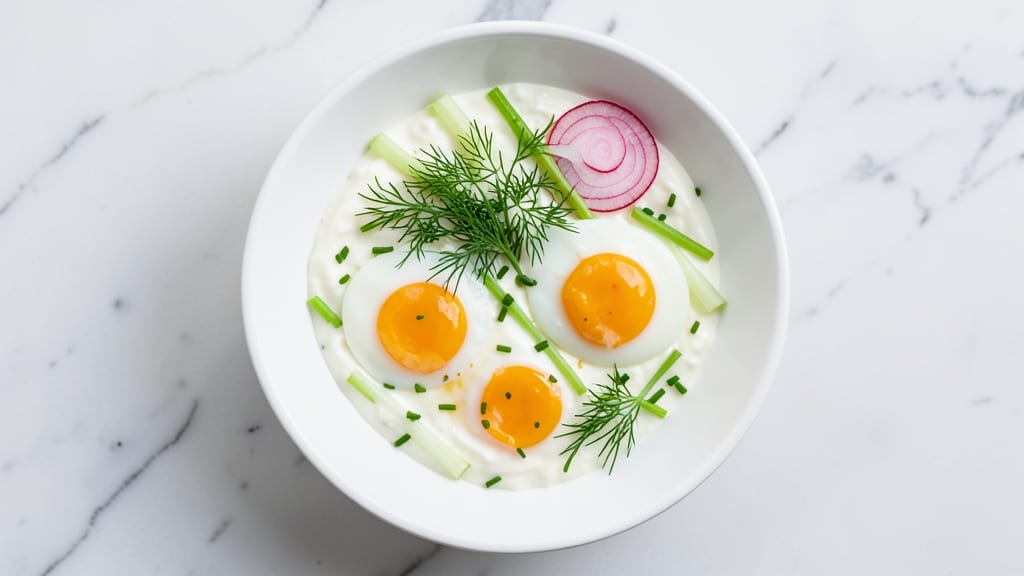
This bariatric egg salad recipe delivers all the protein and creaminess you crave without the heaviness or hard-to-digest ingredients. The secret lies in soft-boiled eggs blended with Greek yogurt instead of mayo, creating a smooth, protein-rich texture that’s gentle on your system while keeping flavor intact.
I designed this specifically for post-surgery needs—packed with lean protein, minimal fat, and easy-to-digest components that won’t weigh you down.
The recipe skips traditional mayo in favor of nonfat Greek yogurt, which adds creaminess without excess calories or fat. Soft-boiled eggs (6 minutes in boiling water) ensure tender, easy-to-chew bites, while finely diced celery and red onion provide texture and flavor without bulk.
Every serving delivers high protein (about 18g per serving) to support recovery and keep you full longer, all while avoiding common bariatric triggers like added salt or sugar.
What makes this salad truly bariatric-friendly is the blended consistency—no hard-to-chew chunks, no dense textures, and no added fillers. The yogurt base binds everything together smoothly, and the portion size is controlled to fit post-surgery guidelines.
You’ll get that satisfying, creamy egg salad experience without the discomfort, making it a perfect addition to your meal plan.
Perfect for lunch or a light dinner, this recipe also works as a protein boost for smoothies or wraps. The ingredients are simple, the prep is quick, and the results are restaurant-quality without the guilt. Let’s get started on a meal that nourishes without overloading.
Ingredients for bariatric egg salad
Four soft-boiled eggs and yogurt make this salad bariatric-friendly yet packed with protein.
| Ingredient | Amount | Notes |
|---|---|---|
| Large Eggs 🥚 | 4 whole | Soft-boiled for 6 minutes |
| Nonfat Plain Greek Yogurt 🥛 | ½ cup | High-protein, unsweetened |
| Fresh Celery Stalks 🧅 | 2 whole | Finely diced, no strings |
| Red Onion 🧅 | ¼ cup | Finely diced, mild flavor |
| Fresh Dill 🌿 | 1 tbsp | Chopped, or dried at 1/3 amount |
| Fresh Chives 🌿 | 1 tbsp | Chopped, for brightness |
| Lemon Juice 🍋 | 1 tbsp | Freshly squeezed, no pulp |
| Extra-Virgin Olive Oil 🫒 | 1 tsp | For moisture, not calories |
| Mustard Powder 🌶️ | ½ tsp | Dijon preferred, for tang |
| Diamond Crystal Kosher Salt 🧂 | ¼ tsp | Fine grain, no iodine |
| Black Peppercorns 🌶️ | ¼ tsp | Freshly cracked, no salt |
| Ice Water 💧 | ¼ cup | For blending consistency |
The Greek yogurt is non-negotiable here—nonfat, plain, and high-protein is key for that creamy texture without the fat. Fage or Siggi's are my go-tos, but any nonfat brand works. For the eggs, timing matters: 6 minutes in boiling water gives you just-set yolks that blend smoothly. Fresh herbs like dill and chives add flavor without bulk—Trader Joe's has great pre-chopped options if you're short on time. The celery and red onion should be finely diced (smaller than a pea) to avoid any chewing challenges.
No Greek yogurt? Nonfat cottage cheese blended smooth works in a pinch, though the texture won't be identical. Swap fresh herbs for 1/3 the amount of dried, but honestly, fresh is better if you've got it. The lemon juice can be bottled if needed, but fresh is brighter. For extra protein, add 1/4 cup cooked quinoa to each serving—it blends right in. If you're avoiding onion entirely, green onion is a milder swap. The olive oil is just for moisture, so don't skimp on quality—California Avocado Ranch is my favorite for this.
This salad keeps for 3 days in the fridge, stored in an airtight container. The yogurt base makes it blendable again if it separates—just add a splash of ice water and pulse. Portion into 4-ounce containers for easy grab-and-go meals. Freezes beautifully for up to 1 month if you add an extra 1/2 cup ice water before freezing—just thaw and blend again. The flavors actually improve overnight, so make extra if you can.
Why You'll Love This Recipe
- No Chopping Chaos: The celery and onion are the only veggies you’ll touch—just a quick dice, no peeling, no fuss. I keep a pre-chopped stash in my fridge so it’s even faster.
- Yogurt Magic: That tangy Greek yogurt replaces mayo, but don’t worry—it’s creamy in all the right ways. The dill brightens it up like a fresh breeze on a hot day.
- Lunchbox Legend: Pack it in lettuce wraps, slather it on crackers, or toss it in a wrap—it’s my go-to for post-surgery meals. Honestly, it’s the only egg salad that doesn’t feel like a chore to eat.
- Protein Powerhouse: Three hard-boiled eggs give you serious staying power, and the yogurt keeps it light. It’s my secret weapon for curbing hunger without the guilt.
Step-by-step instructions for bariatric egg salad
This protein-packed egg salad delivers creamy texture without mayo, using smart swaps for bariatric-friendly nutrition.
Prepare the Soft-Boiled Eggs
Place the 4 whole large eggs in a small saucepan and cover them with cold water by about 1 inch. Bring to a gentle boil over medium heat, then immediately reduce to a low simmer. Cook for exactly 6 minutes—this ensures perfectly set whites with runny yolks that blend beautifully. Transfer eggs to an ice bath for 5 minutes to stop cooking completely. Peel under cool running water, being careful not to break the yolks.
Here's the thing—soft-boiled eggs should have slightly sticky yolks when you press gently with your finger. If they're too firm, they'll make the salad grainy. The ice bath is non-negotiable; it prevents overcooking and makes peeling effortless. Keep the peeled eggs whole until blending—this prevents yolks from breaking and creating an uneven texture.
Blend the Base Ingredients
In a food processor fitted with the metal blade, combine the peeled eggs, 0.5 cup nonfat plain Greek yogurt, 1 tbsp lemon juice, 1 tsp extra-virgin olive oil, 0.5 tsp mustard powder, 0.25 tsp Diamond Crystal kosher salt, and 0.25 tsp black peppercorns. Pulse 5 times to break down the eggs slightly, then process continuously for 30 seconds until completely smooth. Scrape down the sides with a spatula to ensure even blending.
This is where the magic happens—the Greek yogurt replaces mayo while keeping it creamy. The lemon juice brightens the flavor without adding calories, and the mustard powder adds just enough tang to balance the richness. You'll know it's ready when the mixture looks like thick, pale yellow pudding with no visible egg chunks. If it's too thick, add 1 tablespoon of ice water at a time until it reaches a spoonable consistency—this helps with portion control for bariatric needs.
Incorporate the Fresh Vegetables
In a separate bowl, finely dice the 2 whole fresh celery stalks (remove strings first) and 0.25 cup red onion into tiny pieces—think pinhead-sized for even distribution. Chop the 1 tbsp fresh dill and 1 tbsp fresh chives into tiny confetti-like pieces. Add these to the blended egg mixture and gently fold together with a rubber spatula until just combined. The vegetables should be evenly distributed but still visible for texture and nutrition.
Here's a pro tip: If you're using dried herbs instead of fresh, reduce to ⅓ the amount—dried herbs are more concentrated. The celery and onion add crunch and volume without many calories, while the dill and chives bring freshness. Taste as you go—you might want to add a pinch more salt or a splash of lemon juice to balance flavors. The salad should taste bright, fresh, and slightly tangy—not bland or overly rich.
Adjust Consistency and Serve
If the mixture feels too thick after folding in the vegetables, add the remaining 0.25 cup ice water 1 tablespoon at a time until it reaches a light, spreadable consistency. For bariatric portions, divide into 4 equal servings (about ¼ cup each) and store in airtight containers. Serve on lettuce leaves or with whole-grain crackers for added fiber. The salad should hold its shape slightly when scooped but still be creamy and smooth—not dry or crumbly.
This salad keeps well for 3 days in the refrigerator, making it perfect for meal prep. If it thickens overnight, simply stir in 1 teaspoon of ice water to restore the perfect texture. The key to success is balancing the moisture—too little makes it dry, too much dilutes the flavor. Aim for a light, fluffy texture that's easy to eat in small portions while still feeling satisfying.
Pro Tips For Making Bariatric Egg Salad
- Boil Eggs 9 Minutes: I learned this the hard way—soft eggs turn to mush when chopped. Set a timer for exactly 9 minutes from cold water boiling, then plunge into ice water immediately. The yolks stay firm but creamy, not rubbery, and they blend perfectly with the Greek yogurt without breaking.
- Soak Celery 10 Minutes: Fresh celery has a stubborn crunch that fights the yogurt’s smoothness. Chop it small, then toss with cold water for 10 minutes. Drain and pat dry—this softens the fibers enough to make the salad actually creamy, not gritty.
- Dice Onion Tiny: Skip the quarter-inch chunks. Use a sharp knife and cut the red onion into 1/8-inch pieces—yes, it takes longer, but it dissolves into the yogurt instead of sitting as a separate texture. No one wants onion chunks in their bariatric-friendly bite.
- Mix Yogurt Last: Add the Greek yogurt after everything else is combined. Stir it in gently to keep the eggs and veggies intact—this prevents the salad from turning into a watery, lumpy mess. If it looks too thick, add a splash of lemon juice or water, not more yogurt.
Troubleshooting great bariatric egg salad
Eggs Too Dry
If your soft-boiled eggs turn out dry or grainy, it’s likely from overcooking. Always use an ice bath for 5 minutes after cooking to halt the cooking process completely. For extra tenderness, try 5 minutes and 30 seconds in boiling water instead of 6 minutes.
The yolks should be slightly runny—if they look firm, your salad will be dense. For a quick fix, blend in 1 extra tablespoon of Greek yogurt to restore creaminess. 🥚
Salad Too Thick
When your egg salad feels too thick after blending, don’t panic—just add ice water in small increments. Start with 1 tablespoon at a time and blend again until it reaches a light, spreadable consistency. Over-blending can make it too thin, so pulse gently.
If it’s still thick after adding all 0.25 cup ice water, try adding 1 more tablespoon of Greek yogurt to balance the texture. The goal is a smooth, spoonable consistency that’s easy to portion. ✨
Herbs Too Strong
Fresh herbs can sometimes overpower the delicate flavors of this salad. If your dill or chives taste too intense, reduce the amount to ½ tbsp next time. For a milder flavor, use dried herbs at ⅓ the amount (e.g., ⅓ tsp dried dill instead of 1 tbsp fresh).
If you’ve already added too much, balance it with ½ tsp extra lemon juice or a pinch of salt to mellow the flavors. Taste as you go—this salad should be bright, not overpowering.
Vegetables Too Crunchy
The celery and red onion should be finely diced (smaller than a pea) to avoid any chewing challenges. If they’re still too tough, pulse them in a food processor for 3-5 seconds before folding into the salad.
For an even smoother texture, blend the vegetables with 1 tbsp of the egg mixture first, then mix the rest in. If you prefer no crunch at all, skip the celery and use only red onion—it’s still flavorful but softer. 🧅
Salad Separates
If your egg salad separates after refrigeration, it’s because the yogurt and eggs aren’t fully emulsified. To fix it, add 1-2 tablespoons of ice water and blend again until smooth. For future batches, ensure the eggs and yogurt are fully blended (no visible chunks) before adding vegetables.
If you’re making it ahead, store it in a single airtight container rather than multiple small ones to prevent separation. Stir gently before serving to restore the creamy texture. 💫
Not Enough Flavor
If your salad tastes bland, it’s likely missing acidity or salt. Boost the flavor with ½ tsp extra lemon juice or a pinch of Diamond Crystal kosher salt. For depth, add ¼ tsp garlic powder or a dash of hot sauce (like Cholula)—it adds heat without calories.
If you’re using store-bought herbs, swap them for fresh to brighten the dish. Taste as you go, and adjust seasonings gradually to avoid overdoing it. The salad should be bright, fresh, and slightly tangy.
Nutrition facts
Frequently asked questions
Can I use hard-boiled eggs instead of soft-boiled?
Hard-boiled eggs will work, but the texture will be firmer and less creamy. For bariatric needs, soft-boiled eggs (6 minutes) blend more smoothly and create a lighter consistency. If you must use hard-boiled, peel them carefully and blend slightly longer (up to 45 seconds) to break down the texture. The result won't be as velvety, but it will still be edible and protein-rich.
How do I adjust this for a lower-carb bariatric diet?
Skip the celery and red onion entirely—they add minimal carbs but can be challenging to digest. Replace them with 1 tbsp finely chopped cucumber (peeled) for moisture and a mild flavor. The Greek yogurt base is already low-carb, so no other adjustments are needed. This keeps the protein high while reducing any potential carb triggers.
Can I make this salad ahead of time?
Yes! This salad actually tastes better the next day. Store it in an airtight container for up to 3 days in the fridge. If it thickens, stir in 1 teaspoon of ice water to restore consistency. For freezing, add ½ cup extra ice water before freezing—thaw overnight in the fridge and blend again to smooth out. Portion into 4-ounce containers for easy grab-and-go meals.
What if I don't have Greek yogurt?
Use nonfat cottage cheese blended until smooth as a substitute—it adds creaminess and protein. For a lighter texture, strain through a fine-mesh sieve to remove any lumps. If you're avoiding dairy, unsweetened silken tofu (blended until silky) works in a pinch, though the flavor will be slightly different. The key is maintaining that creamy, easy-to-eat consistency.
Is this safe to eat immediately after bariatric surgery?
This recipe is designed for the full-liquid or pureed phase (typically 2-4 weeks post-surgery) if you blend it until completely smooth with no visible chunks. For the soft food phase, you can add finely diced veggies as written. Always consult your dietitian first—the protein content is excellent, but portion size and texture may need adjustment based on your specific recovery stage.