
Salads
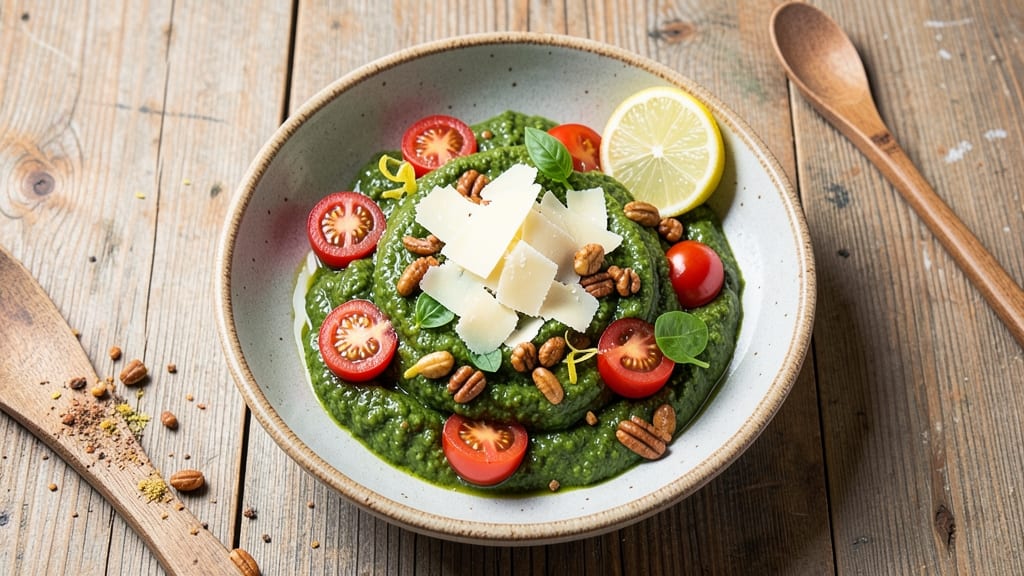
This basil pesto salad recipe transforms simple greens into a vibrant, herb-packed masterpiece with crispy roasted vegetables that add satisfying texture. The homemade pesto—bright with fresh basil, garlic, and Parmesan—binds everything together while keeping the dish light yet deeply flavorful.
I developed this recipe after realizing how much better homemade pesto tastes than store-bought, and it’s become my go-to for summer lunches and dinner parties alike.
The secret lies in the roasted vegetables, which develop a caramelized crust while staying tender inside. Tossed with arugula, cherry tomatoes, and toasted pine nuts, the salad becomes a perfect balance of textures and flavors.
For extra protein, grilled chicken or chickpeas work beautifully, making this dish equally satisfying as a main or side.
What makes this recipe stand out is how the pesto’s vibrant green color and herby aroma elevate even the simplest ingredients. The crispy roasted vegetables add a satisfying contrast to the creamy pesto and tender greens, creating a salad that feels indulgent yet fresh.
It’s the kind of dish that looks as impressive as it tastes—ideal for bringing to potlucks or enjoying as a weeknight meal.
Serve immediately for the best texture, but the pesto can be made ahead and stored in the fridge for up to 5 days. The roasted vegetables stay crispy for about 2 hours, so assemble just before serving.
This salad proves that a simple dish can be restaurant-quality with the right technique and fresh ingredients.
Ingredients for basil pesto salad
Fresh basil, crispy roasted veggies, and creamy pesto create this vibrant vegetarian masterpiece.
| Ingredient | Amount | Notes |
|---|---|---|
| Fresh Basil Leaves 🌿 | 2 cups | Packed, stems removed |
| Pine Nuts 🥜 | ½ cup | Toasted for richness |
| Garlic Cloves 🧄 | 3 cloves | Peeled, rough chopped |
| Parmesan Cheese 🧀 | ¾ cup | Freshly grated preferred |
| Extra-Virgin Olive Oil 🫒 | ¾ cup | High quality, fruity |
| Lemon Juice 🍋 | 2 tbsp | Freshly squeezed |
| Sea Salt 🧂 | ½ tsp | Fine grain preferred |
| Black Pepper 🌶️ | ¼ tsp | Freshly ground |
| Baby Arugula 🌱 | 6 oz | Fresh, loosely packed |
| Cherry Tomatoes 🍅 | 1 pint | Halved for salad |
| Zucchini 🥒 | 1 medium | Sliced into half-moons |
| Red Bell Pepper 🌶️ | 1 medium | Sliced into strips |
| Asparagus 🥬 | 1 bunch | Trimmed, tough ends removed |
| Extra-Virgin Olive Oil 🫒 | 2 tbsp | For roasting vegetables |
| Chickpeas 🌱 | 1 can (15 oz) | Drained, rinsed, for protein |
The basil is non-negotiable here—farmers market basil has the brightest flavor, but grocery store containers work too (just pick the freshest bunch). Pine nuts are pricey, so Trader Joe’s or bulk bins at natural markets offer the best deals. For the Parmesan, grate it fresh from a wedge—pre-grated loses flavor fast. The roasted vegetables are where the magic happens: zucchini, red bell pepper, and asparagus develop that perfect caramelized crust while staying tender. Look for organic veggies when possible—they tend to be sweeter and more flavorful after roasting.
No pine nuts? Walnuts or pecans work perfectly—they just toast up differently. Short on basil? Fresh parsley or cilantro can stretch it, but reduce the amount by half. For the roasted veggies, swap in whatever’s seasonal—sweet potatoes or Brussels sprouts add great texture. The pesto can be made ahead (up to 5 days in the fridge), but the roasted veggies are best assembled fresh. If you’re serving a crowd, double the veggies—they disappear fast. For extra protein, grilled chicken or white beans are great additions, but the chickpeas here keep it vegetarian.
Roasted vegetables stay crispy for about 2 hours after coming out of the oven, so assemble the salad just before serving. Store the pesto separately in an airtight container with a thin layer of olive oil on top to preserve its vibrant color. The roasted veggies reheat well in a 350°F oven for 10 minutes, making this a great make-ahead dish for potlucks. Keep the arugula in a sealed container with a paper towel to maintain crispness—it wilts fast once chopped. The entire salad holds together for 3-4 hours if stored properly, though the texture will soften slightly.
Why You'll Love This Recipe
- No Food Processor Needed: I’ll be real—this pesto doesn’t require a pricey machine. A sturdy knife and a little elbow grease turn fresh basil, garlic, and olive oil into a vibrant sauce in minutes. (Yes, even on a Tuesday night.)
- Garlicky, Nutty Magic: That first bite? The garlic and pine nuts hit like a flavor bomb, but the olive oil softens it into something rich and addictive. Honestly, it’s the kind of taste that makes you pause mid-bite.
- Lunch or Party Fix: Pack it for work—it holds up all day. Or serve it at a picnic, potluck, or as a side for grilled meats. Between us, it’s my go-to when I need something effortless but impressive.
- Pesto Leftovers? No Problem: Make a big batch of the pesto base, then drizzle it on salads, pasta, or even toast for days. I’ve got a jar in my fridge right now from last week’s prep—still bright and delicious.
Step-by-step instructions for basil pesto salad with crispy roasted veggies
Transform fresh basil into vibrant pesto and pair it with perfectly roasted vegetables for a salad that bursts with flavor.
Toast the Pine Nuts and Prepare the Pesto Base
Heat a dry skillet over medium-low heat and add the 0.5 cup pine nuts. Toast them for 3-4 minutes, stirring constantly, until they turn a rich golden brown and smell nutty. Watch closely—they burn quickly once they start to darken. Transfer the toasted nuts to a cutting board and let them cool for 5 minutes before processing.
While the nuts cool, combine the 2 cups fresh basil leaves, 3 cloves garlic cloves, and 0.5 teaspoon sea salt in a food processor. Pulse until finely chopped but not completely pureed—you want some texture in your pesto. This ensures the vibrant green color and fresh flavor shine through.
Blend the Pesto to Perfection
With the food processor running, slowly drizzle in the 0.75 cup extra-virgin olive oil while scraping down the sides as needed. The pesto should begin to emulsify, turning into a thick, glossy sauce. Add the toasted pine nuts and pulse just until combined.
Transfer the pesto to a bowl and stir in the 0.75 cup freshly grated Parmesan cheese and 0.25 teaspoon black pepper. Taste and adjust seasoning if needed—you might want to add a splash of 2 tablespoons lemon juice to brighten the flavors. Cover and refrigerate while you prepare the roasted vegetables.
Roast the Vegetables Until Crispy
Preheat your oven to 425°F. In a large bowl, toss the 1 medium zucchini (sliced into half-moons), 1 medium red bell pepper (sliced into strips), 1 bunch asparagus (trimmed), and 1 pint halved cherry tomatoes with 2 tablespoons extra-virgin olive oil, 0.25 teaspoon sea salt, and 0.125 teaspoon black pepper. Spread them evenly on two rimmed baking sheets.
Roast for 20-25 minutes, stirring once halfway through, until the vegetables are tender with crispy edges and caramelized spots. The zucchini should soften slightly, while the asparagus and bell pepper should hold their shape but be slightly charred. Remove from the oven and let them cool for 5 minutes before assembling the salad.
Assemble the Salad with Crispy Chickpeas
While the vegetables roast, drain and rinse the 1 can (15 oz) chickpeas, then pat them dry with a paper towel. Heat a skillet over medium heat and add the chickpeas, tossing to coat in a little oil. Roast for 8-10 minutes until golden and crispy. Set aside to cool.
In a large salad bowl, combine the 6 oz baby arugula, roasted vegetables, and crispy chickpeas. Drizzle with the reserved 2 tablespoons lemon juice and toss gently to coat. Top with the prepared pesto, dividing it evenly over the salad. Serve immediately while the vegetables are still warm and crispy.
Garnish and Serve for Maximum Flavor
Before serving, sprinkle the salad with an additional pinch of black pepper and a final drizzle of extra-virgin olive oil if desired. The contrast of the bright basil pesto, crispy roasted vegetables, and peppery arugula creates a harmonious balance of textures and flavors.
This salad is best enjoyed fresh, so assemble it just before serving. Each bite delivers a perfect mix of creamy pesto, crispy chickpeas, and tender roasted vegetables—all elevated by the vibrant freshness of the herbs.
Pro Tips For Making Basil Pesto Salad
- STORE PINE NUTS RIGHT: Buy them fresh-toasted in small batches or toast your own—those pre-packaged ones go rancid fast. If they taste bitter or stale, toss them and grab a fresh bag; pine nuts are the flavor backbone here, not just garnish.
- SALT THE GARLIC: Toss your minced garlic into a pinch of salt before blending—it softens the cloves and mutes that sharp bite. I used to skip this, and the pesto always tasted too raw and aggressive.
- BLEND IN STAGES: Pulse the basil and garlic first, then drizzle in oil slowly while blending—this keeps the texture silky, not pasty. Dumping everything in at once turns your pesto into a gloppy mess (been there).
- DRESS THE SALAD LAST: Toss your greens with a tiny amount of pesto first, then fold in the rest after adding dressing—this prevents the basil from wilting into oblivion. I learned this the hard way when my salad turned into a sad, soggy pile.
Flavor customization for this basil pesto salad
Herb Variations
Swap basil for cilantro or parsley to create a zesty twist—just reduce the amount by ½ cup since these herbs are milder. For a Mediterranean flair, add 1 tbsp dried oregano or thyme to the pesto base.
I love using spinach (instead of arugula) for a milder base that pairs beautifully with the bold pesto flavors. 🌿
Nut Alternatives
Pine nuts are pricey, so try walnuts or pecans for a heartier texture. Toast them for 5-6 minutes at medium heat until fragrant, then pulse in the food processor.
Walnuts add a nutty depth, while pecans bring a sweet, buttery note. For a budget-friendly option, sunflower seeds work in a pinch—just toast them until golden. 🥜
Cheese Swaps
Replace Parmesan with Pecorino Romano for a sharper, saltier kick or feta cheese (crumbled) for a tangy contrast. For a dairy-free version, use nutritional yeast (¼ cup) or vegan Parmesan—it mimics the umami richness.
I’ve also had great success with goat cheese (whipped) for a creamy, slightly tangy twist. 🧀
Sweet & Spicy Twist
Add 1 tsp honey or maple syrup to the pesto for a subtle sweetness that balances the garlic. For heat, stir in ½ tsp red pepper flakes or 1 tsp hot honey.
A sprinkle of crushed chili flakes on top adds a smoky finish. This variation works especially well with grilled chicken or roasted sweet potatoes. 🌶️
Protein Upgrades
Swap chickpeas for grilled shrimp (tossed in lemon and garlic) or seared tofu (marinated in soy sauce). For a meaty option, add crispy prosciutto or grilled halloumi cheese—both hold up well to the pesto’s acidity. I often use rotisserie chicken (shredded) for a quick, protein-packed boost. 🍗
Seasonal Veggie Swaps
In summer, use zucchini, cherry tomatoes, and asparagus as written. For fall, swap in roasted butternut squash and Brussels sprouts. Winter calls for caramelized onions and roasted beets, while spring works well with sugar snap peas and radishes. Each seasonal change keeps the salad exciting year-round. 🍂
Nutrition facts
Frequently asked questions
Can I make the pesto ahead of time?
Yes! The pesto can be prepared up to 5 days in advance and stored in an airtight container. To preserve its vibrant color, cover the surface with a thin layer of extra-virgin olive oil. Stir well before using to restore its creamy texture. This makes it perfect for meal prep—just assemble the salad fresh with roasted veggies.
What if I don't have pine nuts?
No problem! Use walnuts or pecans instead—they add a heartier texture. Toast them for 5-6 minutes at medium heat until fragrant, then pulse in the food processor. For a budget option, sunflower seeds work too—just toast until golden. The flavor won't be identical, but it'll still taste delicious.
How do I keep the roasted vegetables crispy?
Roast the vegetables at 425°F for 20-25 minutes until they develop crispy edges. The key is to remove them from the oven while still slightly firm—overcooking makes them soggy. If reheating, warm them in a 350°F oven for 10 minutes to restore crispness. Serve immediately for the best texture!
Can I make this salad without cheese?
For a dairy-free version, replace the Parmesan with ¼ cup nutritional yeast or vegan Parmesan. These alternatives add umami richness without dairy. The pesto will still taste vibrant and creamy—just omit the cheese entirely if you prefer.
Why does my pesto turn brown or watery?
Brown pesto often means overcooked garlic or oxidized basil. Use fresh garlic and pulse it just until chopped, not minced. Watery pesto usually happens if too much liquid (like lemon juice) is added. Start with the 2 tbsp lemon juice and adjust to taste—less is often better.