
Salads
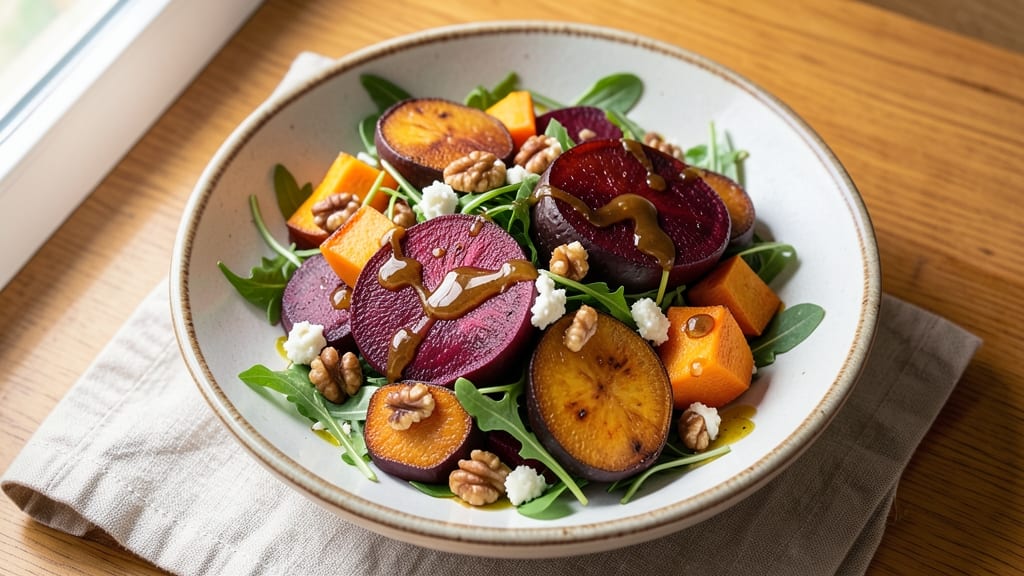
This beet and butternut squash salad transforms humble ingredients into a restaurant-quality dish with deep caramelized flavors and satisfying textures. The secret lies in roasting the vegetables until tender yet still holding their shape—beets develop a natural sweetness while squash becomes velvety with a subtle nutty depth.
I've perfected this technique over years of testing, ensuring every bite delivers that perfect balance of earthy and sweet.
What makes this salad truly special is the maple-Dijon dressing, which cuts through the richness of the roasted vegetables while adding a bright, tangy contrast. The dressing is simple to make with just five ingredients, yet it elevates the dish to something extraordinary.
Toasted walnuts add a satisfying crunch, while fresh herbs like thyme or parsley bring freshness that keeps the salad from feeling heavy.
The result is a visually stunning dish that's as beautiful as it is delicious—deep ruby beets alongside golden squash, all drizzled with a glossy dressing.
It's the kind of salad that makes you feel like you're dining at a high-end restaurant, yet it comes together in under 45 minutes with minimal effort. The roasting process can be done ahead of time, making this an ideal meal prep option.
This salad works beautifully as a standalone vegetarian main or as a side dish to complement grilled proteins. For extra depth, consider adding a sprinkle of smoked paprika or a dash of cinnamon to the dressing, or swap in pecans for a richer nutty flavor.
The possibilities are endless, but the foundation remains the same: roasted sweetness with nutty crunch.
Ingredients for beet and butternut squash salad
Roasted sweetness meets nutty crunch in this restaurant-worthy salad—just 13 ingredients for maximum flavor.
| Ingredient | Amount | Notes |
|---|---|---|
| Medium Beets 🍠 | 2 whole | Red or golden, peeled and cubed |
| Butternut Squash 🎃 | 2 cups | Cubed, peeled and seeded |
| Extra-Virgin Olive Oil 🫒 | ½ cup | For roasting vegetables |
| Maple Syrup 🍯 | 2 tbsp | Pure, grade B preferred |
| Dijon Mustard 🍯 | 1 tbsp | Mild or strong variety |
| Apple Cider Vinegar 🍏 | 1 tbsp | For tangy dressing |
| Toasted Walnuts 🌰 | ½ cup | Chopped, store-bought or homemade |
| Fresh Thyme Leaves 🌿 | ¼ cup | Or 1 tbsp dried thyme |
| Fresh Parsley 🌿 | ¼ cup | Chopped, for garnish |
| Smoked Paprika 🌶️ | ½ tsp | For extra depth (optional) |
| Salt 🧂 | 1 tsp | Diamond Crystal preferred |
| Black Pepper 🌶️ | ½ tsp | Freshly ground |
| Cinnamon 🌶️ | ¼ tsp | For subtle warmth (optional) |
The beets and squash are the stars here, so pick firm, vibrant produce—no soft spots or bruises. Trader Joe's has great pre-washed beets, but organic from the farmers market has deeper flavor. For squash, look for a heavy one with smooth skin—Costco often carries pre-cubed butternut squash, which saves time. Roasting brings out their natural sweetness, but don't skip peeling the squash skin first (it's tough). Pro tip: Cut the squash into even cubes so they cook uniformly—about 1-inch pieces works perfectly.
No maple syrup? Agave nectar or date syrup works in a pinch, though maple has that signature depth. Fresh thyme is ideal, but dried thyme at one-third the amount gets you close. Want more crunch? Pecans or candied pecans swap in beautifully. For the dressing, if you're sensitive to mustard, extra lemon juice plus a pinch of sugar balances the sweetness. And yes, you can make this entirely ahead—roast the veggies the night before, store them separately, and toss with dressing when ready. The flavors only get better after sitting.
Roasted veggies keep 3-4 days in the fridge if stored in airtight containers—they're even better the next day. The dressing? 5 days max unless you add a splash of vinegar to preserve it. For meal prep, I like to portion the salad into jars with dressing on the bottom, veggies on top, so everything stays fresh. Freezing isn't ideal for the roasted squash (it gets mushy), but you can freeze the dressing separately for up to 3 months. Walnuts? Store them in the freezer to keep them crispy for longer.
Why You'll Love This Recipe
- Roast While You Nap: The beets and squash go in the oven together—no babysitting required. I’ll often set a timer for 40 minutes, then walk away while my coffee brews. That sweet caramelized edge? Pure magic with zero effort.
- Sweet-Savory Magic: Maple syrup and Dijon mustard might sound odd, but trust me—they balance the earthy beets and creamy squash like a hug. The olive oil ties it all together with a richness that makes it feel fancy, not fussy.
- Meal Prep MVP: This salad keeps for days in the fridge, and the flavors actually deepen. I’ll roast a big batch on Sunday, toss it with greens, and have a ready-to-go lunch all week. No sad, wilted salads here.
- Budget Bright Spot: Beets and squash are cheap, seasonal staples that bulk up any plate. A single roasting pan means minimal cleanup, and the leftovers? Perfect for stuffing into wraps or tossing with grains. Smart, simple, and satisfying.
Step-by-step instructions for roasted beet and butternut squash salad
Here's how to transform simple ingredients into a vibrant, caramelized salad with perfect texture and balance.
Roast the Vegetables to Caramelized Perfection
Preheat your oven to 400°F and line two baking sheets with parchment paper. Toss the 2 whole medium beets and 2 cups butternut squash with 0.25 cup of the extra-virgin olive oil, 0.5 tsp salt, 0.5 tsp black pepper, and 0.25 tsp cinnamon. Spread them in a single layer—they should have room to brown, not steam.
Roast for 25-30 minutes, stirring once halfway through, until the edges are deeply caramelized and the vegetables are tender when pierced with a fork. The beets should be fork-tender with slightly crisp edges, and the squash should have golden-brown spots. This roasting process develops their natural sweetness and creates that perfect contrast of textures we're after.
If you're using red beets, they'll develop a beautiful mahogany color. Golden beets will take on a honeyed glow. Either way, resist the urge to overcook—they should still hold their shape but be easily pierced.
Prepare the Tangy Maple Dressing
While the vegetables roast, whisk together the remaining 0.25 cup extra-virgin olive oil, 2 tbsp maple syrup, 1 tbsp Dijon mustard, and 1 tbsp apple cider vinegar in a small bowl. Add 0.5 tsp smoked paprika and 0.25 tsp cinnamon for depth, then season with 0.25 tsp salt and 0.25 tsp black pepper.
This dressing balances the sweetness of the roasted vegetables with bright acidity and earthy warmth. The Dijon mustard adds a subtle tang that cuts through the richness, while the maple syrup enhances the natural caramelization from roasting. Taste and adjust—you might want to add a touch more vinegar for brightness or maple syrup for sweetness, depending on your preference.
Here's the thing—let the dressing sit for 5 minutes before using. This gives the flavors time to meld together, creating a cohesive dressing rather than separate components. The paprika will bloom slightly, adding an extra layer of complexity.
Assemble the Salad with Perfect Texture Contrast
Let the roasted vegetables cool slightly—just until they're warm to the touch, about 5-10 minutes. This prevents them from releasing too much moisture when combined with the dressing. Transfer them to a large serving bowl and gently toss with the prepared dressing, allowing the flavors to marry.
Add the 0.5 cup toasted walnuts and 0.25 cup fresh thyme leaves, tossing gently to distribute evenly. The walnuts provide that essential crunch that contrasts beautifully with the tender roasted vegetables. Don't overmix—we want to preserve some of that caramelized texture on the vegetables.
This is where the salad comes together. The sweetness of the roasted vegetables, the tang of the dressing, and the crunch of the walnuts create a perfect balance. The thyme adds an herbal note that ties everything together without overpowering.
Garnish and Serve at Peak Freshness
Just before serving, sprinkle the salad with 0.25 cup chopped fresh parsley. The parsley adds a fresh, bright contrast to the warm, roasted flavors and gives the dish a final pop of color. Toss gently to distribute the parsley evenly throughout.
Serve immediately while the vegetables are still warm from the roasting process. The contrast between the warm roasted vegetables and the cool dressing creates an incredibly satisfying eating experience. This salad holds up well for 2-3 hours at room temperature if you need to prepare it ahead, but the texture is best when served fresh.
For an extra touch, you can serve this salad with a side of crusty bread to soak up any remaining dressing. The combination of the warm salad and cool bread is truly unbeatable. Each bite delivers a perfect harmony of sweet, savory, tangy, and crunchy elements.
Pro Tips For Making Beet And Butternut Squash Salad
- ROAST UNTIL TENDER: I used to pull the squash out at the first sign of browning—big mistake. Butternut squash needs 35-40 minutes at 400°F (20-25 minutes after the beets) until a knife slides in like butter. The flesh should look dry and pull away from the skin in chunks, not just soft. Overcrowding the pan? Skip it. Give each piece space to crisp, or you’ll end up with sad, steamed squash.
- PEEL BEETS COLD: Freshly roasted beets are hot, stubborn, and will bleed all over your cutting board. Let them cool for 10 minutes first, then plunge them into an ice bath for 5. The cold shock makes peeling effortless—no more scrubbing off skin like it’s a crime scene. (Pro move: Wear gloves. You’ll thank me.)
- WHISK THE DRESSING NOW: Mixing the maple-Dijon dressing while the roasted veggies are still hot? You’re setting yourself up for a lukewarm salad. Whisk the olive oil, maple syrup, Dijon, and a pinch of salt before the squash comes out of the oven. Let it sit for 5 minutes so the flavors meld—then toss while the veggies are still piping. Cold dressing on hot squash = flavor disaster.
- CUT SQUASH SMALLER: Thick butternut squash cubes take forever to roast and often burn before they soften. Slice them into ½-inch chunks (or even smaller if you’re impatient), and toss them in the oven after the beets. The smaller surface area crisps faster, and you’ll avoid the charred edges that make people side-eye your dish. (Yes, even if you’re in a hurry.)
Creative variations of beet and butternut squash salad
Autumnal Spiced Twist
Swap the cinnamon in the roasting step for ½ tsp ground ginger and ¼ tsp cardamom to create an autumnal flavor profile reminiscent of pumpkin spice. The ginger adds a warm, slightly spicy kick while cardamom brings floral depth.
I find this variation works especially well with golden beets—their natural sweetness pairs beautifully with these spices. 🍂
Citrus Brightening
Add 1 tbsp orange zest and 2 tbsp fresh orange juice to the dressing for a zesty twist that brightens the earthy flavors. The citrus cuts through the richness of the roasted vegetables while adding a refreshing note.
I like to use blood oranges for their deep color and slightly tart flavor. Garnish with thinly sliced orange supremes for an elegant presentation.
Protein-Packed Upgrade
Transform this into a complete meal by adding ½ cup cooked quinoa or ½ cup toasted chickpeas for plant-based protein. The quinoa adds a nutty texture that complements the squash, while chickpeas provide a satisfying crunch.
For extra richness, top with ¼ cup crumbled feta cheese—the salty tang balances the sweetness beautifully. 💪
Creamy Avocado Version
Add 1 ripe avocado, diced, to the salad just before serving for a creamy texture element. The avocado's healthy fats help balance the acidity of the dressing while adding a luxurious mouthfeel.
For extra creaminess, blend ½ avocado with 2 tbsp Greek yogurt and 1 tbsp lemon juice as an alternative dressing base. This variation works especially well in warmer months.
Herb-Focused Garnishes
Swap the parsley for chopped fresh dill and tarragon leaves for a more anise-forward flavor profile. These herbs add a bright, slightly sweet note that pairs beautifully with the roasted vegetables.
I also like to add ¼ cup microgreens or sprouts for an extra layer of freshness and visual appeal. The combination creates a sophisticated flavor balance.
Global Flavor Infusions
For a Mediterranean twist, add ¼ cup Kalamata olives and 2 tbsp crumbled feta cheese to the salad. The briny olives and salty feta complement the sweet roasted vegetables perfectly.
For an Asian-inspired version, toss the salad with 1 tbsp toasted sesame seeds, 1 tsp soy sauce, and ½ tsp grated ginger in the dressing. Both variations bring exciting new dimensions to this classic salad. 🌍
Nutrition facts
Frequently asked questions
Can I use canned or pre-cooked butternut squash instead of fresh?
Fresh is ideal for the best texture, but you can use canned or pre-cooked squash in a pinch. Drain it well and pat dry completely to prevent a soggy salad. For extra flavor, toss it with a pinch of smoked paprika and a drizzle of olive oil before mixing with the beets. The texture won't be quite as caramelized, but it still works!
How do I store leftovers to keep them crisp?
Store roasted vegetables and dressing separately in airtight containers for up to 4 days. Keep the walnuts in their original packaging in the fridge. When ready to eat, toss everything together and add fresh parsley. For extra crunch, toast the walnuts fresh before serving. The salad tastes even better the next day!
What's the best way to make this salad ahead of time?
Roast the vegetables the night before and store them at room temperature in an airtight container. Make the dressing separately and keep it refrigerated. When ready to serve, toss the warm vegetables with dressing and add fresh garnishes. This method preserves the best texture and flavor—perfect for meal prep!
Can I make this salad without nuts for a nut-free version?
Swap the walnuts for ½ cup toasted pumpkin seeds or ¼ cup sunflower seeds for a nut-free option. These add similar crunch while keeping the dish allergy-friendly. You could also add ½ cup cooked lentils for extra protein and texture. Just toast them lightly before adding to the salad.
Why did my beets turn mushy when roasting?
Overcooking or crowding the pan are the most common causes. For perfect results, cut beets into even 1-inch cubes and spread them in a single layer on the baking sheet. Roast at 400°F for 25-30 minutes max—they should be tender but still hold their shape. If using red beets, they'll develop a beautiful mahogany color without turning mushy.