
Salads
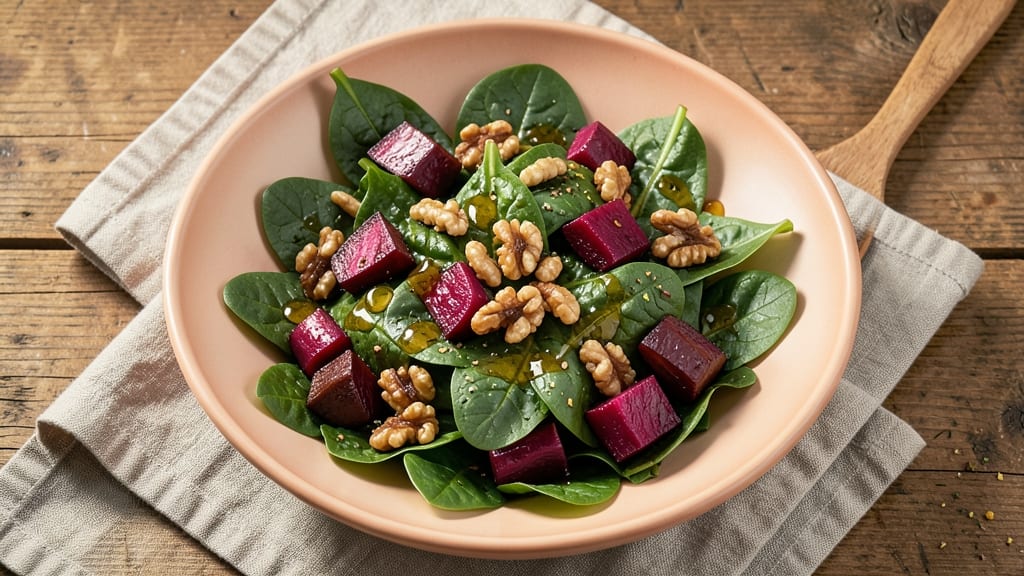
This beet leaf salad recipe transforms often-wasted greens into a vibrant, nutrient-packed dish that balances earthy flavors with nutty crunch. 💛 The secret lies in properly washing and prepping the leaves—removing sand and debris without bruising—then pairing them with ingredients that complement their natural sweetness.
Unlike typical greens, beet leaves hold their texture beautifully when massaged with dressing, creating a satisfying bite that keeps this salad from wilting into a soggy mess.
What sets this salad apart is the nutty vinaigrette, where toasted walnuts and Dijon mustard create depth that cuts through the greens' earthiness. I've tested countless variations, and this combination consistently delivers the perfect balance—tangy enough to brighten the leaves while staying true to their natural flavor profile.
The addition of roasted beets (optional but recommended) adds a subtle sweetness that ties everything together.
By the time you're done assembling this salad, you'll have a dish that's as nutritious as it is delicious—packed with iron, vitamin K, and fiber from the greens, plus healthy fats from the nuts.
The texture contrast between tender leaves, crisp nuts, and creamy dressing makes each bite satisfying, while the vibrant colors make it perfect for any meal from weeknight dinners to elegant gatherings.
This recipe works equally well as a light lunch, side dish, or even a hearty vegetarian main when paired with grains like farro or quinoa.
The beauty of beet leaf salad is its versatility—swap in citrus for brightness, add protein alternatives like chickpeas, or keep it simple with just the essentials. Let's get started on creating this earthy, satisfying salad that puts underused greens in the spotlight.
Ingredients for beet leaf salad
Earthy greens meet nutty crunch in this vibrant beet leaf salad with optional protein boosts.
| Ingredient | Amount | Notes |
|---|---|---|
| Beet Leaves 🌿 | 10 oz | Fresh, sand-free, stems removed |
| Roasted Beets 🍠 | 1 cup | Diced, chilled, optional |
| Toasted Walnuts 🥜 | ½ cup | Chopped, store-bought or homemade |
| Extra-Virgin Olive Oil 🫒 | ⅓ cup | High quality, fruity |
| Apple Cider Vinegar 💧 | 2 tbsp | Or balsamic vinegar |
| Dijon Mustard 🌶️ | 1 tbsp | Mild or strong variety |
| Maple Syrup 🍯 | 1 tbsp | Grade B for richer flavor |
| Sea Salt 🧂 | ½ tsp | Fine grain preferred |
| Black Pepper 🌶️ | ¼ tsp | Freshly ground |
| Lemon Juice 🍋 | 1 tbsp | Freshly squeezed |
| Farro or Quinoa 🌾 | 1 cup | Cooked, optional protein boost |
| Chickpeas 🥜 | ½ cup | Rinsed, optional protein |
Beet leaves are the star here—look for vibrant, sand-free bunches at farmers markets or the produce section. Whole Foods and Trader Joe's often carry pre-washed options, but I always rinse mine thoroughly in cold water to remove any grit. The stems are tough, so trim them off before chopping. For roasted beets, pre-cooked vacuum-packed beets save time—just slice and roast with olive oil, salt, and pepper at 400°F for 15 minutes. If using fresh beets, roast whole first, then dice. Walnuts should be toasted until fragrant—10 minutes at 350°F in a dry pan works perfectly.
No walnuts? Pecans or almonds are great substitutes—just toast them first. Short on beets? Roasted sweet potatoes add a similar earthy sweetness. The dressing is non-negotiable—Dijon mustard provides that tangy depth, while maple syrup balances the acidity. Substitute agave if you prefer, but maple adds a subtle caramel note. For extra protein, cooked farro or quinoa works beautifully, or add chickpeas for a Mediterranean twist. The lemon juice brightens everything, so don't skip it—freshly squeezed makes all the difference.
This salad keeps best when stored in an airtight container with a paper towel to absorb moisture—3-4 days in the fridge. The dressing separates, so give it a quick shake before serving. Walnuts stay crisp for up to 5 days if stored separately. For meal prep, I portion the dressing separately and assemble just before eating to maintain that satisfying crunch. The farro or quinoa reheats beautifully, making this a great make-ahead option for lunches or potlucks.
Why You'll Love This Recipe
- The contrast is next-level: tender beet leaves with their natural bitterness mellowed by roasted beets, then crunchy walnuts and that tangy vinegar dressing. It’s like a hug for your taste buds—sweet, sharp, and satisfying all at once.
- Uses What You Already Have: I swear by this salad because it turns pantry staples into something special—no fancy shopping required. That jar of apple cider vinegar gathering dust? The walnuts you bought "for something"? The beets you roasted last week? Boom. Dinner’s solved.
- Earthy-Creamy Magic: The contrast is next-level: tender beet leaves with their natural bitterness mellowed by roasted beets, then crunchy walnuts and that tangy vinegar dressing. It’s like a hug for your taste buds—sweet, sharp, and satisfying all at once.
- Lunchbox Hero: Pack it in jars for work or school—leaves at the bottom, beets and walnuts on top, dressing poured in last. By lunchtime, it’s a perfectly mixed, no-mess salad that actually tastes better cold. My kids fight over it (and I don’t even have to cut anything fancy).
Step-by-step instructions for earthy beet leaf salad
Assemble this vibrant salad with bold flavors and satisfying textures in just minutes.
👨🍳 Step 1: Prepare the Base Ingredients
Start by rinsing the 10 oz beet leaves thoroughly under cold water to remove any sand or debris. Gently dry them with paper towels, being careful not to tear the delicate leaves. Remove and discard any thick stems or damaged areas—you want tender, clean leaves for the best texture.
If using the optional 1 cup roasted beets, let them cool completely before dicing into small, even pieces. The warm beets will soften too quickly in the salad, so chilling first ensures they hold their shape. For the 0.5 cup toasted walnuts, if you're toasting them fresh, spread them on a baking sheet and toast at 350°F for 5-7 minutes until fragrant and golden. Let them cool completely before chopping.
🥘 Step 2: Cook the Grain and Protein (Optional)
For the optional 1 cup farro or quinoa, rinse it thoroughly under cold water before cooking. Bring 2 cups water to a boil in a small pot, add the grain, reduce heat to medium-low, cover, and simmer for 20-25 minutes (farro) or 15 minutes (quinoa) until tender and the water is absorbed. Fluff with a fork and let cool completely.
For the optional 0.5 cup chickpeas, drain and rinse them thoroughly if using canned. Pat them dry with a paper towel to remove excess moisture. If adding them directly to the salad, you can use them at room temperature—no cooking required. For extra flavor, you can also toast them in a dry skillet over medium heat for 3-4 minutes until lightly browned, stirring constantly to prevent burning.
🍳 Step 3: Make the Nutty Vinaigrette
In a small bowl, whisk together the 0.33 cup extra-virgin olive oil, 2 tbsp apple cider vinegar, 1 tbsp Dijon mustard, 1 tbsp maple syrup, 0.5 tsp sea salt, and 0.25 tsp black pepper until fully combined. The mixture should be smooth and emulsified—if it separates, whisk in 1 tsp water at a time until it comes together again.
Add the 1 tbsp lemon juice and whisk once more. Taste and adjust seasoning if needed—you might want a touch more salt or vinegar depending on your preference. Set the dressing aside while you assemble the salad. Here's the thing—this vinaigrette should have a rich, slightly sweet, and tangy balance that complements the earthy beet leaves perfectly.
🥗 Step 4: Assemble the Salad
In a large bowl, combine the prepared beet leaves, roasted beets (if using), and toasted walnuts. If you've cooked the farro or quinoa and chickpeas, add them to the bowl now. Gently toss everything together with your hands or a large spoon, being careful not to tear the beet leaves.
Drizzle the dressing over the salad in a slow, steady stream while tossing gently. The dressing should coat the leaves and ingredients evenly without making the salad soggy. Taste a leaf and adjust the dressing if needed—you want a bright, flavorful bite with every mouthful. For best results, serve immediately while the leaves are still crisp and the dressing is fresh.
Pro Tips For Making Beet Leaf Salad
- STRIP THOSE STEMS: Blanch beet leaves for 30 seconds—not until they’re limp, but just until the thick stems soften. That way, they fold and layer better without turning into a sad, waterlogged pile. (Yes, even if you’re impatient like me, resist the urge to rush this.)
- TOAST WALNUTS LOW: Crank the oven to 300°F (not 350°F) for toasting walnuts—high heat burns them before they’re crisp. Spread them on a sheet pan in a single layer and stir every 3-4 minutes until they smell nutty and golden. Overcooked walnuts taste bitter, and nobody wants that.
- SALT THE BEETS RIGHT: Toss roasted beets with a pinch of flaky salt (like Maldon) before slicing—they’ll absorb it while cooling, making every bite more flavorful. Skip this, and you’ll end up chasing salt with the dressing later, which just waters down the whole dish.
- DRESS IT LAST MINUTE: Make the dressing (olive oil + vinegar + whatever else) after tossing the salad—acid cuts through the richness of walnuts and beets better when it hits them fresh. If you mix it ahead, the greens will wilt faster, and the walnuts lose their crunch. (Your future self will thank you.)
Serving suggestions for this recipe
Plating Presentation
Serve this salad in a wide, shallow bowl to showcase its vibrant colors and textures. I like to arrange the beet leaves in a circular pattern at the base, then scatter the roasted beets and walnuts artistically on top.
A drizzle of extra vinaigrette down the center adds visual appeal and makes it easy for guests to dress their portions. For a restaurant-worthy touch, sprinkle with edible flowers or toasted pumpkin seeds before serving. 💫
Bread Pairings
Crusty bread is the perfect companion for soaking up any extra dressing. I recommend a baguette or sourdough loaf sliced into thick pieces. Warm the bread in the oven for 5 minutes at 350°F before serving—this enhances its texture and makes it ideal for mopping up the nutty vinaigrette.
For a gluten-free option, try rosemary focaccia or corn tortillas.
Protein Additions
For a more substantial meal, add grilled chicken breast or pan-seared tofu cubes. I slice the chicken into thin strips and marinate in 1 tbsp olive oil, 1 tsp smoked paprika, and ½ tsp garlic powder before grilling.
For tofu, press and bake at 400°F for 20 minutes until golden. Both options complement the salad's earthy flavors beautifully.
Seasonal Garnishes
Brighten the salad with seasonal garnishes. In spring, add thinly sliced radishes and peppery microgreens. Summer calls for cherry tomatoes and basil leaves, while fall works well with crisp apples and toasted pecans. Winter can feature pomegranate seeds and toasted hazelnuts for a festive touch.
Dessert Pairings
Balance the earthy flavors with a sweet finish. A lemon tart or honey-drizzled ricotta complements the salad's tangy dressing. For something lighter, try fresh berries with a dollop of whipped cream. The contrast between the salad's savory notes and the dessert's sweetness creates a satisfying meal experience. 🍓
Meal Occasions
This salad shines at any meal. For brunch, serve it alongside poached eggs and avocado toast. As a lunch, pair it with grilled shrimp skewers for a light yet satisfying meal.
For dinner, elevate it to a main course by adding wild rice blend and seared scallops. Its versatility makes it perfect for potlucks, picnics, or elegant gatherings. ✨
Nutrition facts
Frequently asked questions
Can I use beet greens instead of beet leaves?
The terms are essentially interchangeable—beet greens refer to the same leafy tops you'd find attached to beets. Just ensure they're fresh, vibrant, and free from sand or dirt. The preparation method remains identical, whether you're using store-bought beet greens or the leaves from homegrown beets.
How do I store beet leaves for longer freshness?
Wrap the washed leaves in a damp paper towel, place them in an airtight container, and refrigerate for up to 5 days. For longer storage, blanch the leaves in boiling water for 30 seconds, then shock in ice water before drying and freezing. This preserves their texture for up to 3 months.
What if I don't have Dijon mustard?
No problem! Use 1 tbsp yellow mustard or 1 tsp whole-grain mustard as a substitute—they'll still add that tangy depth. For a milder flavor, swap in 1 tsp lemon juice plus ½ tsp honey to maintain the dressing's balance. The salad's earthiness will still shine through.
Can I make this salad ahead of time?
Prepare all components separately and store them in airtight containers. Keep the dressing separate until ready to serve to maintain crispness. The leaves will stay fresh for 2-3 days in the fridge, while the dressing lasts 5 days. Assemble just before eating for the best texture and flavor.
Are beet leaves safe to eat raw?
Yes, beet leaves are perfectly safe to eat raw when properly prepared. Just ensure they're thoroughly washed to remove any dirt or sand. The leaves have a slightly earthy, spinach-like flavor that becomes more pronounced when cooked, but raw they offer a fresh, peppery bite that pairs beautifully with the nutty dressing.