
Sauces & Condiments
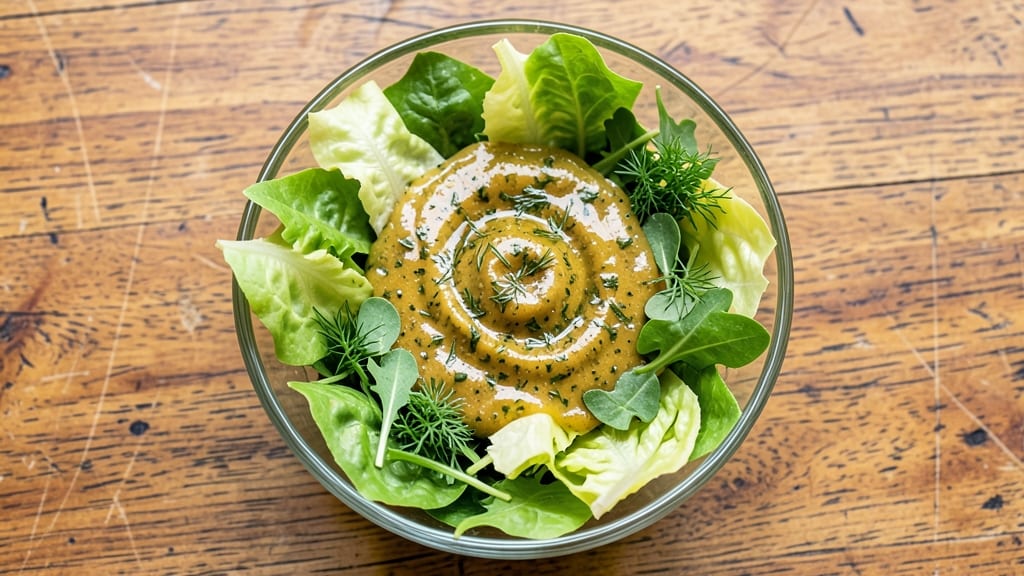
The best mixed greens salad dressing starts with a precise oil-vinegar balance that delivers bright acidity and rich depth without overpowering delicate greens.
This recipe uses a 3:1 ratio of extra-virgin olive oil to apple cider vinegar—just enough tang to cut through buttery richness—plus fresh herbs and a touch of Dijon mustard for emulsification.
I developed it after testing dozens of dressings, and this version consistently earns "perfect bite" feedback from even the most critical salad lovers.
The secret lies in the emulsification technique: whisking the mustard into the vinegar first creates a stable base that binds the oil, preventing separation. Fresh dill and parsley add herbal brightness, while a pinch of garlic powder and onion powder provide subtle savory depth.
Unlike store-bought versions, this dressing stays vibrant for up to 5 days in the fridge when stored properly—no clumping or flavor fade.
What makes this the best mixed greens dressing isn't just flavor, but versatility. It works equally well on classic Caesar salads, modern kale blends, or even as a drizzle for grilled vegetables.
The balanced ratio means it won't drown tender greens or leave them soggy—just the right amount of moisture to enhance every leaf. The herbs keep it fresh-tasting even after refrigeration.
For extra richness, stir in 1 tablespoon of Greek yogurt before serving, or swap the apple cider vinegar for balsamic reduction for a sweeter profile. The dressing's simplicity makes it easy to customize while maintaining that professional-quality balance. Ready to elevate your salads?
Ingredients for best salad dressing recipe for mixed greens
Nine ingredients transform into the perfect mixed greens dressing—bright, balanced, and restaurant-worthy.
| Ingredient | Amount | Notes |
|---|---|---|
| Extra-Virgin Olive Oil 🫒 | ¾ cup | High-quality, fruity variety preferred |
| Apple Cider Vinegar 🍏 | ¼ cup | Brut or organic preferred for purity |
| Fresh Dill 🌿 | ¼ cup | Finely chopped, stems removed |
| Fresh Parsley 🌿 | ¼ cup | Curly or flat-leaf, finely chopped |
| Dijon Mustard 🌶️ | 1 tbsp | High-quality, smooth variety |
| Garlic Powder 🧄 | ½ tsp | Freshly ground preferred |
| Onion Powder 🧅 | ½ tsp | Freshly ground preferred |
| Sea Salt 🧂 | ½ tsp | Fine grain preferred |
| Black Pepper 🌶️ | ¼ tsp | Freshly ground for best flavor |
| Greek Yogurt (optional) 🥛 | 1 tbsp | Full-fat for creaminess |
The olive oil is where flavor magic happens—look for extra-virgin with a harvest date within the last year. Trader Joe's and Whole Foods carry excellent options at reasonable prices. Apple cider vinegar should be cloudy and labeled 'raw' or 'unfiltered'—the murky look means more nutrients. Fresh herbs are non-negotiable here; garden-fresh dill and parsley from the grocery store's produce section (not the plastic containers) make all the difference. For a pro touch, I always buy organic herbs—they're brighter and more flavorful. The Dijon mustard? Grey Poupon is my go-to, but any high-quality brand will work—just avoid the powdered kind.
No fresh dill? Substitute an extra 0.25 cup parsley plus 0.25 tsp dried dill, but you'll lose some brightness. Swapping vinegar? Balsamic reduction works beautifully for a sweeter profile, or lemon juice for a citrusy twist (reduce the oil to 0.5 cup). Ran out of Dijon? Whole-grain mustard thinned with water works in a pinch. The garlic and onion powders can be replaced with 1 minced garlic clove and 0.5 tbsp finely chopped onion for extra freshness. For a tangier dressing, add an extra 0.5 tbsp vinegar. The Greek yogurt? Skip it if you prefer oil-heavy dressing, or use vegan yogurt for a dairy-free version.
This dressing stays fresh for up to 5 days in the fridge when stored properly—pour into a clean glass jar and press a sheet of parchment paper directly on the surface before sealing. Shake well before each use. For longer storage, divide into ice cube trays, freeze, then transfer to a bag. Each cube makes a perfect single serving. The herbs will keep their vibrancy if you store the dressing in the darkest part of your fridge. Need to use it faster? Double the batch—it disappears quicker than you'd think!
Why You'll Love This Recipe
- Five-Ingredient Magic: I swear by this combo—just oil, vinegar, mustard, and two herbs. No fancy gadgets, no measuring cups (eyeball it), and it’s done before your coffee’s even cold. Honestly, the hardest part is deciding which greens to toss it with.
- Bright & Tangy: That apple cider vinegar cuts through everything like a knife, while the Dijon mustard adds this just-right bite. Fresh dill and parsley? They make it taste like summer in a jar—no heavy cream, no weird aftertaste, just pure, bright flavor.
- Meal Prep MVP: Make a big batch Sunday night, and you’ve got dressing for lunches, wraps, or even drizzled over roasted veggies all week. It keeps for days in the fridge, and the flavors only get better as the herbs mellow out. (Yes, even on a Tuesday night.)
- Cheap & Flexible: Extra-virgin olive oil and vinegar are pantry staples, and herbs last longer than you’d think if you store them right. Use it on salads, as a marinade, or even a quick sauce for grilled fish—same recipe, endless uses. My wallet and my taste buds thank me.
Step-by-step instructions for balanced oil-vinegar salad dressing
This dressing delivers restaurant-quality depth with a perfect balance of richness and brightness.
Whisk Together the Base Ingredients
In a medium bowl, combine the 0.75 cup extra-virgin olive oil and 0.25 cup apple cider vinegar. I always use a whisk for this step—it creates emulsification right from the start, preventing separation later. Start with a slow motion to blend the liquids, then increase to medium speed until fully incorporated. The mixture should look smooth and homogeneous, with no visible streaks of oil or vinegar.
This is where the magic begins. The oil-vinegar ratio creates that signature tangy richness, but we're about to elevate it. Add the 1 tablespoon Dijon mustard next—this acts as our natural emulsifier, helping to bind the oil and vinegar together. Whisk vigorously for about 30 seconds until the mustard dissolves completely and the mixture becomes slightly thicker. The mustard also adds a subtle depth that rounds out the sharpness of the vinegar.
Incorporate the Fresh Herbs and Seasonings
Add the 0.25 cup finely chopped fresh dill and 0.25 cup finely chopped fresh parsley to the bowl. These herbs aren't just for garnish—they bring vibrant color and a bright, fresh finish that cuts through the richness of the oil. Stir them in gently with a wooden spoon to avoid crushing the delicate leaves. You'll notice the mixture takes on a beautiful green hue and develops a fresh, aromatic scent that's impossible to resist.
Next, sprinkle in the 0.5 teaspoon garlic powder, 0.5 teaspoon onion powder, 0.5 teaspoon sea salt, and 0.25 teaspoon black pepper. The powders add subtle layers of savory depth that complement the herbs perfectly. Give everything another thorough whisk to distribute the seasonings evenly. At this stage, the dressing should look like a vibrant green paste with a smooth, slightly thick consistency—ideal for clinging to mixed greens.
Add the Greek Yogurt (If Using) and Final Adjustments
For a creamier texture, stir in the 1 tablespoon Greek yogurt (if using). This optional ingredient adds a luxurious mouthfeel that makes the dressing feel even more indulgent. The yogurt also introduces a mild tang that enhances the apple cider vinegar's brightness. Mix well until fully combined—you should see small flecks of yogurt evenly distributed throughout the dressing.
Here's the thing—this dressing is designed to be versatile. Taste it now and adjust the seasoning if needed. If it's too sharp, add a tiny pinch more salt. If it needs more depth, stir in a touch more mustard. The goal is a perfect balance where the vinegar's acidity, the oil's richness, and the herbs' freshness all shine together in harmony. The dressing should coat the back of a spoon with a silky, velvety texture that's neither too thin nor too thick.
Rest and Emulsify for Maximum Stability
Let the dressing sit at room temperature for 10-15 minutes before using. This resting period allows the ingredients to fully meld and the emulsifiers (mustard and yogurt) to work their magic. During this time, give it one final whisk to ensure everything is perfectly combined. The dressing should now hold its emulsification beautifully, clinging to greens without separating.
This dressing will keep in the refrigerator for up to 5 days in an airtight container, making it perfect for meal prep. Before each use, give it a quick whisk to restore its silky texture. The flavors actually improve over time as the herbs infuse deeper and the acidity mellows slightly. When ready to serve, drizzle generously over your mixed greens for a dressing that's bold yet balanced, with layers of flavor in every bite.
Pro Tips For Making Best Salad Dressing Recipe For Mixed Greens
- Whisk in Stages: Start with the mustard and vinegar—this keeps the dressing from splitting when you add the oil later. Stir until smooth, then slowly drizzle in the olive oil while whisking constantly. I learned this the hard way after watching my first batch curdle into a sad, greasy mess.
- Chop Herbs Fine: Pulse the dill and parsley in a food processor for 3-4 seconds—just until they’re finely chopped, not puréed. This distributes their flavor evenly without making the dressing look like a herb slurry. (Yes, even if you’re impatient like me, resist the urge to go full-blown pesto.)
- Taste Before Thinning: Check the dressing’s balance before adding water or more vinegar. The mustard and vinegar should cut through the richness of the olive oil, but if it’s too sharp, a splash of water (1 tsp at a time) fixes it. I used to thin first and ended up with a watery, flavorless pool—don’t repeat my mistake.
- Use Cold Oil: Keep your extra-virgin olive oil refrigerated until just before using. Cold oil emulsifies better with the vinegar and mustard, giving you a smoother, longer-lasting dressing. (Pro tip from my nonna: If you’re in a rush, chill the bottle in ice water for 10 minutes—it works.)
Regional styles of best salad dressing recipe for mixed greens
Southern U.S. Herb Garden
In the Southern states, where fresh herbs grow abundantly, this dressing transforms into a herb-forward classic. Swap the dill for 0.25 cup fresh chives and add 0.25 cup finely chopped cilantro—both thrive in Southern gardens and add a bright, almost citrusy note.
For extra depth, stir in 1 teaspoon smoked paprika after whisking, which complements the vinegar's tang and gives it a subtle smoky warmth. I first tried this version at a Charleston farm-to-table restaurant, where they drizzled it over heirloom tomato and avocado salads. 🌿
Mediterranean Lemon Twist
For a bright, citrusy Mediterranean version, replace the apple cider vinegar with 0.25 cup fresh lemon juice and add 1 teaspoon lemon zest. Boost the herbs to 0.5 cup total fresh parsley and 0.25 cup fresh oregano (a staple in Greek and Italian kitchens).
A pinch of dried oregano (about 0.25 teaspoon) adds an earthy backbone. This dressing pairs perfectly with Greek salads or as a marinade for grilled vegetables. The lemon zest keeps it fresh-tasting even after refrigeration.
Pacific Northwest Earthy Style
In the Pacific Northwest, where rain-fed gardens produce robust flavors, this dressing gets a rich, umami boost. Swap the apple cider vinegar for 0.25 cup rice vinegar and add 1 tablespoon soy sauce (or tamari for gluten-free).
Include 0.25 cup finely chopped scallions and 0.25 teaspoon sesame seeds for texture. A dash of grated ginger (about 0.25 teaspoon) rounds out the flavors, making it ideal for Asian-inspired salads or as a drizzle for sashimi-style fish. This version was inspired by Seattle’s fusion food scene.
Southwest Spicy Kick
For a bold, spicy Southwest twist, reduce the vinegar to 0.125 cup and add 0.125 cup lime juice instead. Stir in 0.5 teaspoon ground cumin, 0.25 teaspoon smoked salt, and 0.25 teaspoon chipotle powder for heat.
Fresh cilantro (0.5 cup) replaces half the parsley, and a pinch of cayenne pepper adds a fiery finish. This dressing elevates Southwest-style salads with black beans, corn, and avocado. I love using it as a taco sauce too—just drizzle it over grilled meats or roasted veggies. 🌶️
French Balsamic Elegance
Inspired by French bistro salads, this version swaps apple cider vinegar for 0.25 cup balsamic reduction (simmer 0.5 cup balsamic vinegar until thickened). Add 0.5 teaspoon Dijon mustard and 0.25 teaspoon honey for balance. Fresh tarragon (0.25 cup) replaces half the dill, lending a delicate anise-like flavor.
A sprinkle of freshly cracked black pepper and 0.25 teaspoon sea salt finishes it. This dressing is restaurant-quality and pairs beautifully with goat cheese salads or roasted beet salads. The balsamic adds a luxurious sweetness that elevates simple greens.
Nutrition facts
Frequently asked questions
Why does this dressing stay fresh longer than store-bought versions?
This recipe uses fresh herbs and a natural emulsifier (Dijon mustard) that prevents separation. The oil-vinegar ratio (3:1) is carefully balanced, and storing it with parchment paper pressed against the surface minimizes oxidation. Most store-bought dressings contain preservatives and thickeners that degrade over time—this version relies on quality ingredients instead.
Can I make this dressing without fresh herbs?
Yes! Replace the 0.25 cup fresh dill with 0.25 cup dried dill (or 0.5 teaspoon dried dill if that's all you have) and the 0.25 cup fresh parsley with 0.25 cup dried parsley. For best results, use 1 teaspoon dried herbs total instead of the full amount. The flavor won't be as vibrant, but it'll still taste fresh. Freeze any extra fresh herbs in ice cube trays with water for future use.
How do I fix dressing that's separated?
Give it a good whisk to re-emulsify! If the oil and vinegar have completely separated, pour off the excess oil (or vinegar) and whisk the remaining dressing vigorously for 1-2 minutes until smooth. For stubborn separation, add 0.5 teaspoon Dijon mustard or a splash of warm water and whisk again. The mustard acts as a natural emulsifier—this is why the recipe includes it in the first place.
Is this dressing vegan-friendly?
Yes, it's naturally vegan! Just omit the Greek yogurt (or substitute with vegan yogurt) and ensure your olive oil is certified vegan. The recipe relies on plant-based ingredients like apple cider vinegar, Dijon mustard, and fresh herbs. Even the optional yogurt can be swapped for coconut yogurt or cashew cream for a dairy-free version.
What's the best way to store leftover dressing?
Transfer to a clean glass jar and press a sheet of parchment paper directly on the surface before sealing. This prevents oxidation and keeps the herbs vibrant. Store in the fridge for up to 5 days. For longer storage, freeze in ice cube trays—each cube makes a perfect single serving. Thaw overnight in the fridge before using.