
Salads
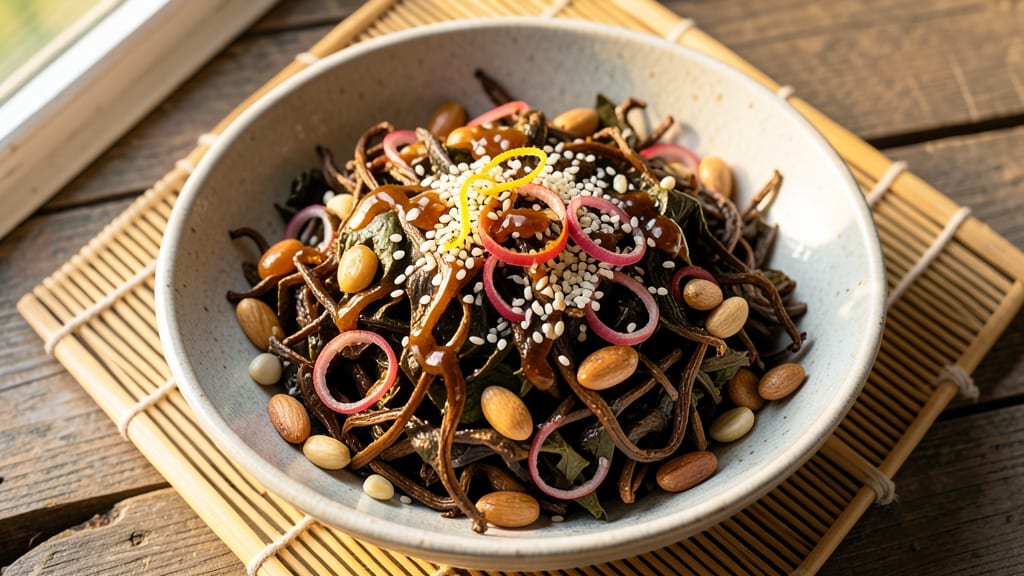
This Burmese fermented tea leaf salad delivers a perfect balance of tangy umami, earthy depth, and satisfying crunch that makes every bite unforgettable.
Growing up, I watched my grandmother prepare this dish with the same care she'd give a family heirloom—fermenting the tea leaves for days to develop that signature funky-sweet flavor. The process might seem intimidating, but the result is worth every minute of patience.
At its heart, this salad combines fermented tea leaves with toasted peanuts or sesame seeds for texture, then tosses them with garlic, shallots, and a dressing of tamarind and fish sauce (or vegan alternatives).
The key lies in the fermentation—whether you use store-bought fermented tea leaves or make your own at home. My grandmother always said the longer they ferment, the more complex the flavor becomes.
What you'll end up with is a salad that's bold in flavor yet refreshing in texture—crisp tea leaves, crunchy seeds, and a dressing that's both sweet and savory.
It's the kind of dish that transforms simple ingredients into something extraordinary, perfect for serving alongside rice or as a standalone snack when you crave something with real depth. The best part? It keeps well in the fridge, so you can enjoy the flavors for days.
This recipe respects tradition while adapting to modern kitchens—no special equipment needed, just time and attention. Whether you're serving it at a gathering or enjoying it as a midday pick-me-up, the combination of fermentation and toasted nuts creates a flavor profile that's uniquely satisfying.
Let's bring this Burmese classic to your table.
Ingredients for burmese fermented tea leaf salad
Bold flavors and crunchy textures—this salad transforms simple ingredients into a Burmese masterpiece.
| Ingredient | Amount | Notes |
|---|---|---|
| Fermented Tea Leaves (Laphet Thoke) 🍃 | 2 cups | Store-bought or homemade, fermented 3-5 days |
| Dry Roasted Peanuts 🥜 | ½ cup | Crushed for texture, unsalted preferred |
| White Sesame Seeds 🌾 | ¼ cup | Toasted until golden, for crunch |
| Garlic Cloves 🧄 | 6 cloves | Minced, for aromatic depth |
| Shallots 🧅 | 3 whole | Thinly sliced, for bright flavor |
| Tamarind Paste 🍈 | 2 tbsp | Unadulterated, for authentic tang |
| Fish Sauce Substitute (Vegetarian) 🍶 | 1 ½ tbsp | Soy sauce or vegan fish sauce |
| Lime Juice 🍋 | 2 tbsp | Freshly squeezed, for acidity |
| Palm Sugar or Coconut Sugar 🍯 | 1 tbsp | Dissolved in dressing for sweetness |
| Vegetable Oil 🫒 | 2 tbsp | For tossing, neutral flavor preferred |
| Fresh Chili Peppers 🌶️ | 2 whole | Bird's eye or Thai chili, sliced thin |
| Kaffir Lime Leaves 🍃 | 2 whole | Finely shredded, for aromatic complexity |
| Salt 🧂 | ½ tsp | Diamond Crystal preferred |
| Black Peppercorns 🌶️ | ¼ tsp | Freshly cracked, for subtle heat |
The fermented tea leaves are the soul of this dish. Look for Laphet Thoke at Asian markets—it should have that funky, almost vinegary aroma from fermentation. If you're fermenting your own, use loose black tea leaves and ferment for at least 3 days in a sealed jar. The longer it ferments, the more complex the flavor becomes—my grandmother always said patience is key. For the peanuts, toast them in a dry pan until golden—this brings out their natural oils for maximum crunch. Sesame seeds should be toasted too, but watch them closely—they burn fast. Whole Foods or local Asian grocers usually carry these ingredients, but if you're stuck, the bulk bins at Trader Joe's work in a pinch.
No tamarind paste? Lemon juice plus a pinch of sugar gets you close, though it won't have that same depth. For the fish sauce substitute, soy sauce works surprisingly well, but add a splash of miso for umami. The shallots and garlic should be fresh—no pre-minced garbage here. Kaffir lime leaves are non-negotiable for that signature aroma, but if you can't find them, lime zest plus a drop of lime oil will mimic some of the complexity. The chili peppers can be adjusted to taste—remove seeds for less heat. And for the sugar, palm sugar gives that authentic caramel note, but coconut sugar or even brown sugar will work if you're in a hurry. Just don't use white sugar—it's too harsh.
This salad tastes even better the next day as flavors meld. Store in an airtight container in the fridge for up to 5 days, though the texture might soften slightly after day 3. For longer storage, freeze the dressing separately—just mix it back in when ready to eat. The fermented tea leaves keep indefinitely in the fridge, so you can make a big batch and use them in multiple dishes. I always double the dressing because it's so versatile—great on rice, noodles, or even as a marinade. Just give it a good toss before serving to wake up all those flavors.
Why You'll Love This Recipe
- No-Chop Salad: I swear by this—just toss in the pre-packaged fermented tea leaves and crushed peanuts. The shallots and garlic get minced in 2 minutes, and honestly? That’s it. No chopping mountains of herbs or wilting veggies.
- Umami Bomb: The fermented tea leaves pack a funky, tangy punch that’s ridiculously addictive. Pair that with crunchy peanuts and toasty sesame seeds, and you’ve got a flavor explosion that hits all the right notes—savory, nutty, and just a little funky.
- Lunchbox Hero: Between us, this salad keeps perfectly for days in the fridge. I pack it for work, toss it in bento boxes for the kids, or serve it at potlucks—it’s the one dish everyone goes back for. (Yes, even on a Tuesday night.)
- Budget Crunch: Tea leaves and peanuts are cheap, and a little goes a long way. I stretch one bag of laphet thoke into three salads, and the sesame seeds add that fancy touch without breaking the bank. My wallet and my taste buds thank me.
Step-by-step instructions for Burmese fermented tea leaf salad
Here's how to assemble this vibrant salad with perfect balance and texture every time.
Prepare the Fermented Tea Leaves
Rinse the 2 cups Fermented Tea Leaves (Laphet Thoke) thoroughly under cold water to remove any fermentation residue. Gently squeeze out excess moisture with your hands, being careful not to crush the delicate leaves. Spread them on a clean kitchen towel and pat dry completely—this ensures your salad has the right texture without being soggy.
For optimal flavor, I recommend using leaves that have fermented for 3-5 days. If they smell strongly of vinegar, they're over-fermented and may overpower the dish. The leaves should have a deep, earthy aroma with subtle umami notes. Once dry, transfer them to a large mixing bowl—they'll be the base of your salad.
Toast and Prepare the Crunchy Elements
In a dry skillet over medium heat, toast the 0.5 cup Dry Roasted Peanuts for 3-4 minutes until they're fragrant and lightly golden. Watch closely—they'll darken quickly. Immediately transfer them to a cutting board and roughly chop them with a knife, leaving some texture for that satisfying crunch.
While the peanuts toast, toast the 0.25 cup White Sesame Seeds in the same skillet for 1-2 minutes until they're golden brown and aromatic. Let them cool slightly, then add both to the bowl with the tea leaves. The combination of toasted peanuts and sesame seeds creates that perfect textural contrast that makes this salad irresistible.
Build the Aromatic Dressing
In a small bowl, combine the 2 tbsp Tamarind Paste, 1.5 tbsp Fish Sauce Substitute (Vegetarian), 2 tbsp Lime Juice, and 1 tbsp Palm Sugar or Coconut Sugar. Stir until the sugar dissolves completely—this creates the perfect balance of tangy, salty, sweet, and umami flavors that define this dish.
Add the 2 tbsp Vegetable Oil and whisk vigorously until emulsified. The dressing should coat the back of a spoon smoothly. Taste and adjust—you might want to add a touch more lime for brightness or a bit more sugar to balance the acidity. This is where the magic happens, so don't rush it.
Add the Aromatics and Chili
Finely mince the 6 cloves Garlic Cloves and thinly slice the 3 whole Shallots. Add these to the bowl with the tea leaves along with the 2 whole Fresh Chili Peppers (sliced thin) and 2 whole Kaffir Lime Leaves (finely shredded). Gently toss everything together—you want to distribute the aromatics evenly without crushing the tea leaves.
The kaffir lime leaves add an incredible citrusy aroma that's essential to this dish. If you can't find them, a teaspoon of finely grated lime zest will work in a pinch, but it won't be quite the same. The chili should be distributed throughout for heat in every bite.
Combine and Season to Perfection
Pour the dressing over the tea leaves and toss gently but thoroughly with your hands. You want every leaf to be coated with the dressing while maintaining that beautiful crunch. Let the salad sit for 5-10 minutes at room temperature—this allows the flavors to meld together beautifully.
Season with the 0.5 tsp Salt and 0.25 tsp Black Peppercorns (freshly cracked), then give it one final toss. The salad should be vibrant, with a perfect balance of tangy, umami, sweet, and spicy flavors. Serve immediately while the leaves are still crisp and the dressing is fresh.
Pro Tips For Making Burmese Fermented Tea Leaf Salad
- TOAST PEANUTS LOW: I learned this the hard way—roasting peanuts over high heat turns them bitter fast. Instead, keep the heat medium-low (around 325°F/160°C) and stir constantly for 8-10 minutes until they’re golden and fragrant. They’ll crisp up perfectly without burning, and that nutty flavor becomes the star of the salad.
- CHOP SHALLOTS FINE: Thin, even slices make all the difference here. If you’re lazy and chop them roughly, they’ll sit like little rocks in your salad. Use a sharp knife and go for paper-thin half-moons—this way, they soften just enough to mingle with the tea leaves without overpowering the texture.
- MIX GARLIC LAST: Sounds weird, but it works: add the minced garlic right before serving. If you toss it in early, it can turn bitter sitting in the acidity of the fermented tea leaves. A quick stir at the end keeps it bright and pungent—just how it should be.
- RINSE TELEAF GENTLY: Fermented tea leaves are delicate—don’t drown them. Rinse them in a colander under cold water for no more than 10 seconds, then drain immediately. Over-rinsing strips their funky, umami depth, and you’ll end up with a sad, watery salad instead of the bold, tangy bite you want.
Common mistakes when making great burmese fermented tea leaf salad
Over-Fermented Leaves
I've ruined this salad more times than I can count by using tea leaves that fermented too long. The telltale sign? A strong vinegar smell that overpowers the dish. Fermented tea leaves should have an earthy, umami aroma—not like a balsamic reduction gone wrong.
If yours smell like a pickle jar, toss them and start fresh. For best results, ferment your own for 3-5 days or buy pre-fermented leaves from a trusted Asian market. 🍃
Skipping the Toast
Don't even think about skipping the toast on your peanuts and sesame seeds—I've made that mistake, and it's a game-changer. Raw peanuts taste bland, and raw sesame seeds lack that nutty depth. Toast them separately in a dry skillet over medium heat until golden.
The peanuts should smell fragrant, and the sesame seeds should be aromatic. This step takes 5 minutes but makes all the difference in texture and flavor.
Uneven Dressing Distribution
One of my early disasters was pouring the dressing and calling it a day. Big mistake—the tea leaves need that dressing to cling evenly for perfect flavor in every bite. After mixing, let the salad sit for 5-10 minutes at room temperature.
Then, give it one final toss by hand. This ensures every leaf gets coated while maintaining that satisfying crunch. Trust me, your taste buds will thank you.
Using Fresh Tea Leaves
This is a rookie error I see all the time—using fresh tea leaves instead of fermented. Fresh leaves lack that funky, umami depth that makes this salad special.
If you're making your own fermented tea leaves, use loose black tea leaves and ferment them for at least 3 days in a sealed jar. The longer they ferment, the more complex the flavor becomes. No shortcuts here—this is what gives the salad its signature character.
Ignoring the Resting Time
I used to rush this part, tossing everything together and serving immediately. Big mistake! The salad needs time to marry—5-10 minutes at room temperature lets the flavors meld together beautifully.
This is when the tamarind's tanginess balances with the umami from the fermented leaves and the sweetness from the sugar. Patience here makes all the difference in the final result. ⏳
Substituting Key Ingredients
I've tried swapping out tamarind paste for lemon juice, and while it works in a pinch, it lacks that authentic depth. The tamarind is non-negotiable for that signature tangy-sweet balance. Similarly, kaffir lime leaves are essential for that citrusy aroma—don't substitute with regular lime zest.
And for heaven's sake, use palm sugar or coconut sugar instead of white sugar. The caramel notes from these sugars are what make this salad truly special. Stick to the recipe, and you'll get the best results. 💫
Nutrition facts
Frequently asked questions
Where can I find fermented tea leaves (Laphet Thoke) if I don't live near an Asian market?
Look for them online at specialty stores like Mekhala or Thai Pantry. Some larger grocery chains with international sections (like Whole Foods) may carry them too. If you can't find them, you can make your own by fermenting loose black tea leaves in a sealed jar for 3-5 days—just rinse them well before using.
Can I make this salad without fish sauce for a vegetarian/vegan version?
Replace the fish sauce with 2 tbsp soy sauce plus 1 tsp miso paste for umami depth. For extra richness, add 1 tsp coconut aminos. The tamarind and lime will still provide the tangy balance, and the toasted nuts give plenty of flavor. Just taste as you go—you might need an extra pinch of salt.
How do I adjust the spice level for this salad?
Start with 1-2 Thai chili slices for mild heat, or 3-4 slices for medium spice. For extra heat, add 1/4 tsp chili flakes or a dash of sambal oelek. Remove seeds for less heat, or keep them for maximum spice. Remember, the fermented tea leaves already add complexity, so don't overpower them with too much chili.
Can I prepare this salad ahead of time?
Yes! Store the fully assembled salad in an airtight container in the fridge for up to 5 days. The flavors actually improve as they meld together. For best texture, give it a final toss before serving. If storing longer, keep the dressing separate and mix it in just before eating. The tea leaves may soften slightly after day 3, but the flavors remain delicious.
What's the best way to serve this salad?
This vibrant salad pairs perfectly with steamed jasmine rice or rice noodles for a complete meal. It's also great as a snack with warm grilled chicken or tofu. For a traditional Burmese touch, serve with huy (Burmese fried dough) or as part of a larger spread with other fermented dishes. The contrast of crisp salad with soft rice is pure comfort.