
Salads
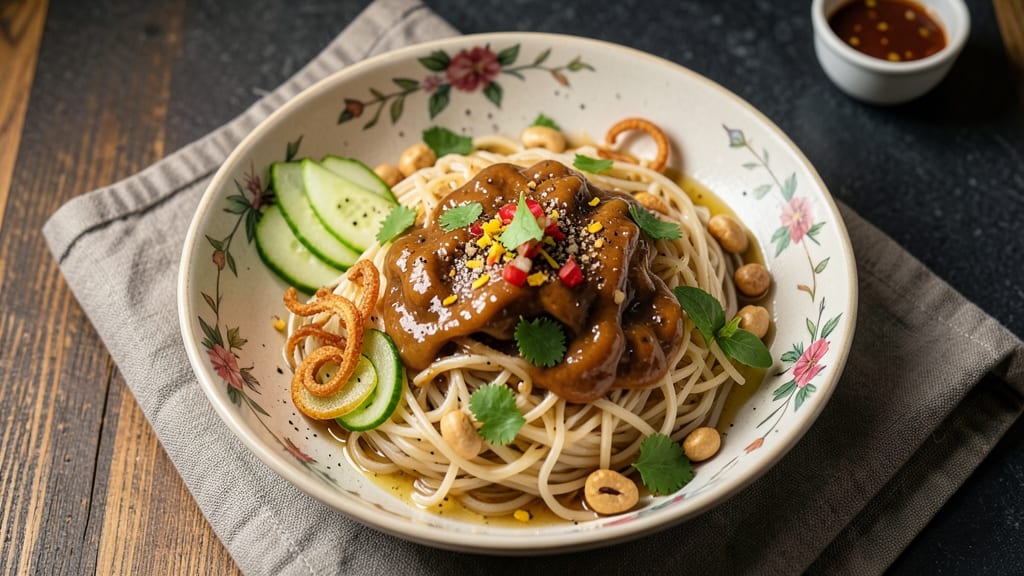
This Burmese noodle salad recipe delivers the perfect balance of tangy, umami-packed flavors that make it a street food sensation. The tamarind-lime dressing cuts through rich peanut and soy notes, creating a harmony that’s both complex and addictive.
I’ve perfected this dish after years of exploring Burmese cuisine—it’s the kind of salad that transforms a simple meal into something extraordinary.
The foundation starts with chewy rice noodles, soaked just right to maintain their bite, then tossed with a vibrant mix of herbs, crunchy vegetables, and protein—whether that’s tender chicken, tofu, or crispy fried shallots.
The dressing, a blend of tamarind paste, lime juice, and toasted peanuts, is where the magic happens, delivering that signature bright, savory-sweet profile that defines Burmese flavors.
What you’ll end up with is a dish that’s fresh yet deeply satisfying—cool, crunchy, and packed with layers of texture and flavor in every bite. It’s the kind of recipe that feels both rustic and refined, perfect for a light lunch or a bold appetizer that steals the show.
The best part? It’s infinitely adaptable. Swap in shrimp for extra richness, add chili for heat, or keep it vegan with tofu and extra herbs. Let’s bring this vibrant, umami-rich salad to your table.
Ingredients for burmese noodle salad
Here’s your umami-packed salad lineup—where tangy, nutty, and savory collide in every bite.
| Ingredient | Amount | Notes |
|---|---|---|
| Rice Noodles 🍜 | 8 oz | Flat, chewy variety preferred |
| Tamarind Paste 🍯 | ½ cup | Thick, unsweetened preferred |
| Lime Juice 🍋 | ¼ cup | Freshly squeezed, seeds removed |
| Peanut Butter 🥜 | ¼ cup | Natural, unsweetened preferred |
| Soy Sauce 🥫 | 3 tbsp | Light or dark variety |
| Fish Sauce 🍶 | 1 tbsp | Red Boat brand preferred |
| Brown Sugar 🍚 | 2 tbsp | Packed firmly |
| Garlic Cloves 🧄 | 4 cloves | Minced finely |
| Shallots 🧅 | 3 whole | Thinly sliced, crispy fried |
| Red Chili Peppers 🌶️ | 2 whole | Thinly sliced, optional heat |
| Fresh Mint Leaves 🌿 | ¼ cup | Chopped finely |
| Fresh Cilantro Leaves 🌿 | ¼ cup | Chopped finely |
| Peanuts 🥜 | ½ cup | Toasted, crushed |
| Protein Option (Chicken or Tofu) 🍗🥬 | 1 lb | Thinly sliced chicken or cubed tofu |
| Sesame Oil 🫒 | 1 tbsp | For finishing drizzle |
The rice noodles are the star—look for flat, chewy varieties at Asian markets or the international aisle. Thai Kitchen or Golden Gate brands are my go-tos, but any rice noodle will work if it’s labeled 'chewy' or 'thick'. Soak them in warm water for 15-20 minutes until pliable but still with bite. The tamarind paste? Mae Ploy or Thai Kitchen are the easiest to find, but if you can’t get it, sub with equal parts lime juice and date syrup. The fish sauce is non-negotiable for that signature umami—Red Boat is the gold standard, but any good-quality brand will do. For the protein, chicken adds richness, but tofu keeps it vegan and still packed with flavor.
No tamarind paste? Mix lime juice with date syrup or brown sugar—it’s not identical, but it’ll get you close. Swapping peanuts for cashews? Toast them first—they’ll have a totally different vibe. The shallots are a must for crunch, but if you’re in a rush, sub with thinly sliced red onion. For heat lovers, add bird’s eye chilies or a dash of Sriracha to the dressing. The herbs? Fresh mint and cilantro are ideal, but dried mint at half the amount works in a pinch. Just don’t skip them—they’re what makes this salad sing. And if you’re avoiding peanuts, toasted sunflower seeds add a similar crunch.
This salad tastes even better the next day—flavors meld beautifully in the fridge. Store the dressing separately if you’re prepping ahead, then toss everything together right before serving. The noodles stay chewy for 3-4 days in the fridge, but the herbs wilt fast, so add them last. For extra crunch, keep the fried shallots and peanuts separate until serving. If you’re making this for a crowd, double the dressing—it’s that good.
Why You'll Love This Recipe
- No Boil Required: I swear by the quick-soak method—just hot water, a splash of oil, and 5 minutes. No fussing with a pot, no sticky rice mess, and the noodles stay perfectly chewy. Honestly, my lazy Sundays thank me every time.
- Tangy Peanut Magic: That tamarind and lime cut through the richness of the peanut sauce like a knife. One bite and you’ve got this perfect balance—sweet, salty, and a little sharp. I’ll be real: my kids think it’s candy, but it’s actually dinner.
- Lunchbox Hero: Pack it cold or at room temp—it’s just as good the next day. Throw in some cucumber or shredded cabbage for crunch, and you’ve got a meal that survives the commute. Between us, this is my go-to for work lunches when I’m sick of sad salads.
- Pantry Staple Power: You’re probably already stocked for this. Peanut butter, soy sauce, lime? Basic stuff. No specialty trips, no wasted ingredients. I made this twice last month with what I had—zero food waste, all flavor. Budget-friendly and brilliant.
Step-by-step instructions for Burmese noodle salad
This vibrant salad delivers perfect balance—tangy, nutty, and umami-packed every bite.
Cook and Prepare the Rice Noodles
Bring a large pot of water to a rolling boil. Add the 8 oz rice noodles and cook for 5-6 minutes until they're tender but still slightly firm to the bite—you want them al dente so they don't turn mushy in the dressing. Drain immediately and rinse under cold water to stop the cooking process. Toss the noodles with 1 tablespoon sesame oil to prevent sticking and let them cool completely on a plate.
Here's the thing—overcooked noodles will absorb too much dressing and turn soggy. You'll know they're perfect when they hold their shape but still have a slight bite. Spread them on a tray to cool while you prepare the other components.
Create the Signature Tamarind-Lime Dressing
In a medium bowl, whisk together the 0.5 cup tamarind paste, 0.25 cup lime juice, 0.25 cup peanut butter, 3 tablespoons soy sauce, 1 tablespoon fish sauce, and 2 tablespoons brown sugar until completely smooth. The mixture will be thick and vibrant—this is your flavor base. Taste and adjust: add more lime for tang or brown sugar for sweetness, but don't overdo it or the balance will break.
This is where the magic happens. The tamarind gives that signature Burmese tang, while the peanut butter adds richness that cuts through the heat. I like to whisk vigorously for about 2 minutes to fully emulsify the peanut butter—it should coat the back of a spoon without separating.
Prepare the Aromatic Protein and Crispy Toppings
Heat 1 tablespoon sesame oil in a large skillet over medium-high heat. Add the 3 whole shallots and 2 whole red chili peppers (sliced) and cook for 3-4 minutes until the shallots turn golden and crispy. Remove them with a slotted spoon and set aside. In the same pan, add the 1 lb protein option (chicken or tofu) and cook until fully done—about 5-6 minutes for chicken or 4-5 minutes for tofu.
While the protein cooks, toast the 0.5 cup peanuts in a dry skillet over medium heat for 2-3 minutes until fragrant and lightly golden. Crush them slightly with the bottom of a glass or mortar and pestle. The crispy shallots and peanuts add crucial texture contrast to the dish.
Assemble the Noodle Salad
In a large bowl, combine the cooled rice noodles with the prepared protein. Pour the tamarind-lime dressing over the noodles and toss gently but thoroughly to coat everything evenly. Add the crispy shallots, 0.25 cup chopped mint leaves, and 0.25 cup chopped cilantro leaves. Fold everything together carefully—you want the dressing to cling to the noodles without breaking them.
This is the moment that matters: let the salad sit for 5 minutes before serving. The flavors need time to meld together. The noodles should be glossy from the dressing, the protein should be fully coated, and you should see those beautiful green herbs peeking through.
Garnish and Serve with Confidence
Transfer the salad to serving plates and drizzle with any remaining dressing from the bowl. Garnish with extra crushed peanuts and a sprinkle of chopped cilantro. Serve immediately while the noodles are still warm from the dressing—this ensures the perfect texture and flavor combination.
I know it seems like a lot of components, but trust me, each element plays a crucial role. The tamarind-lime dressing cuts through the richness of the peanut butter, the crispy toppings provide texture contrast, and the fresh herbs add brightness. Every bite should deliver that perfect balance of sweet, sour, salty, and umami that makes this dish so addictive.
Pro Tips For Making Burmese Noodle Salad
- SOAK NOODLES UNTIL FLEXIBLE: Rice noodles need to be just tender—not mushy—so they hold up in the salad. Taste one after 10 minutes; if it’s still chewy, let it sit another 5. Over-soaking turns them to glue, and nobody wants that.
- DILUTE TAMARIND PASTE FIRST: Tamarind paste is thick and stubborn. Mix it with warm water (about ¼ cup) before adding to the dressing—it dissolves smoother and blends evenly. Cold water? You’ll end up with clumps no amount of whisking will fix.
- SALT THE PEANUT BUTTER: Store-bought peanut butter is often bland. Sprinkle a pinch of salt directly into the peanut butter while mixing it with the dressing—it cuts through the sweetness and balances the tamarind’s tang. Trust me, your salad will taste more complex.
- WAIT BEFORE ADDING LIME: Let the dressing sit for 10 minutes after mixing before tossing in the lime juice. The peanut butter and tamarind need time to marry; adding lime too soon makes the flavors fight instead of harmonize. Patience here makes the difference.
Wine and beer pairings for this burmese noodle salad
Burmese-Inspired White Wines
For this vibrant salad, I recommend crisp Thai or Burmese white wines that complement the tamarind-lime tang. A Riesling from Thailand—like Chateau Thai Riesling—works beautifully with its bright acidity and subtle honey notes that mirror the salad’s sweet-sour balance.
The wine’s slight mineral finish also cleanses your palate between rich, peanutty bites. 🍷
Light Beer Pairings
If wine isn’t your thing, opt for a light lager like Singha or Chang—these Thai beers have a clean, crisp profile that won’t overpower the dish. Their subtle malt sweetness enhances the tamarind’s tang, while their effervescence refreshes the palate.
For a craft option, try a Burma Beer (the country’s classic lager) or a wheat beer with citrus notes to echo the lime in the dressing.
Rosé for Versatility
A dry Burmese rosé or Provençal rosé bridges the gap between wine and beer lovers. Look for Chateau d’Esclans Whispering Angel—its strawberry and citrus flavors harmonize with the salad’s herbs and peanuts. The wine’s moderate alcohol content (around 12-13%) ensures it won’t clash with the dish’s bold flavors.
Non-Alcoholic Options
For a refreshing non-alcoholic match, serve Thai iced tea (sweetened with condensed milk) or lemongrass soda—both highlight the salad’s citrusy, herbal notes. If you prefer something fizzy, try San Pellegrino Aranciata (blood orange soda), which adds a complementary sweetness without overpowering the tamarind’s tang. ✨
Regional Beer Deep Dive
For authenticity, seek out Burmese microbrews like Mandalay Beer or Myanmar Beer, which offer a malty, slightly bitter profile that contrasts the salad’s richness. These beers are harder to find outside Southeast Asia, but local Asian markets or specialty beer shops often carry them.
If unavailable, a Belgian witbier (like Hoegaarden) provides a similar crisp, spicy lift.
Nutrition facts
Frequently asked questions
Can I use regular egg noodles instead of rice noodles?
While you can technically use egg noodles, they won't give you that authentic Burmese texture. Rice noodles are essential—they're chewy and absorb the dressing beautifully. If you must substitute, try vermicelli noodles (they're similar in texture) or rice stick noodles from Asian markets. Just soak them 10-15 minutes longer than rice noodles since they're thinner.
How can I make this vegan without losing flavor? Swap the chicken for extra-firm tofu or tempeh—press and pan-fry it until crispy. For umami depth, add 1 tablespoon soy sauce to the tofu marinade and use vegan fish sauce (like Red Boat's vegan version) in the dressing. The tamarind-lime balance will still shine through beautifully—just
What's the secret to getting the perfect tamarind-lime balance?
The magic is in the whisking technique! Start with equal parts tamarind and lime juice, then adjust by teaspoons. Taste after each addition—you want the dressing to be tangy but not sour, with just a hint of sweetness from the brown sugar. The peanut butter should be fully emulsified (no streaks), and the soy sauce adds that savory backbone. If it's too thick, add 1-2 tablespoons warm water to loosen.
Can I make this ahead of time?
Store the dressing separately in the fridge for up to 3 days. Keep the noodles cooked and cooled (they'll last 4 days in an airtight container), and store proteins and toppings separately. When ready to serve, toss everything together and let it sit 10 minutes before eating—this lets the flavors meld perfectly. The herbs should be added last to keep them fresh and vibrant.
Why does my salad taste too salty?
Most likely, your fish sauce or soy sauce is overpowering the balance. Try adding 1-2 tablespoons more lime juice to brighten the flavors, or a pinch of brown sugar to counter the saltiness. If needed, thin the dressing slightly with warm water to dilute the salt concentration. Remember, you can always adjust—taste as you go!