
Salads
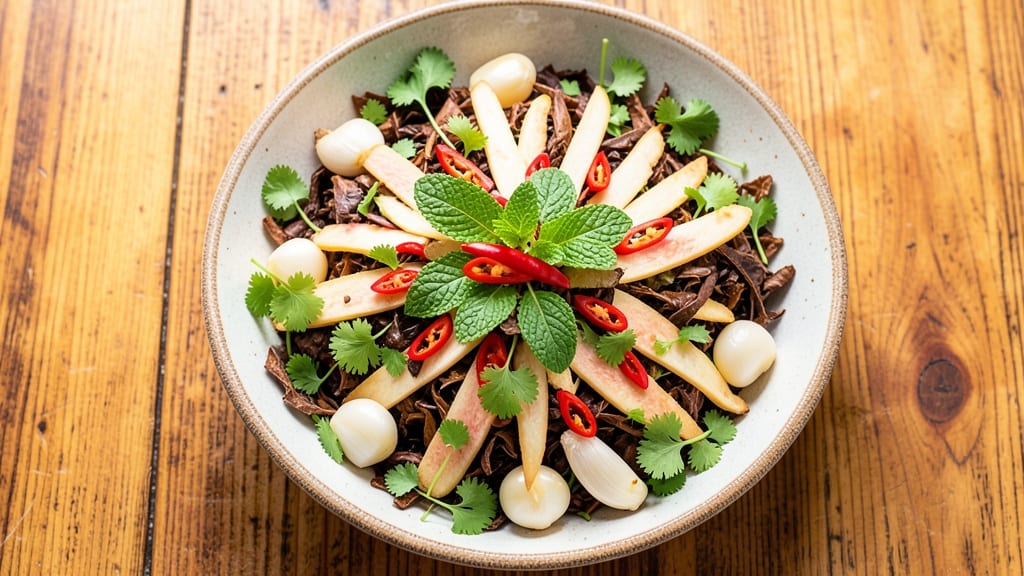
This Burmese ginger salad recipe brings the bold flavors of Myanmar to your table in just 20 minutes—a perfect balance of tangy, spicy, and refreshing that wakes up any meal. 🌟 What sets this dish apart is the fermented tea leaf base (laphet thoke), which adds a deep umami complexity that's hard to find elsewhere.
I first discovered this recipe during a trip to Yangon, where street vendors served it with crispy fried noodles—a combination that became my obsession.
The beauty of this salad lies in its simplicity: fresh ginger, garlic, chili, and herbs come together with fermented tea leaves to create a dish that's both vibrant and deeply flavorful.
Unlike many salads that rely on heavy dressings, this one gets its punch from the fermentation process, which develops rich, funky notes over time. The result is a salad that's as satisfying as it is refreshing—ideal for warm days or as a palate-cleansing starter.
What you'll love most is how this salad transforms ordinary ingredients into something extraordinary. The crisp texture of fresh herbs contrasts beautifully with the fermented tea leaves' earthy bite, while the ginger and garlic add layers of warmth.
It's vegetarian by nature but can easily accommodate fish sauce for non-vegetarians, making it versatile for any dietary preference.
Serve it as a side with grilled meats, pair it with rice for a light meal, or enjoy it on its own as a refreshing appetizer. The best part?
It's a dish that travels well, so you can pack it for picnics or share it at gatherings. Let's bring a taste of Myanmar to your kitchen!
Ingredients for burmese ginger salad
Fresh ginger and fermented tea leaves lead this vibrant Burmese salad—simple yet bold.
| Ingredient | Amount | Notes |
|---|---|---|
| Fresh Ginger 🧄 | ½ cup | Finely grated, skin removed |
| Garlic Cloves 🧄 | 6 cloves | Minced, aromatic and fresh |
| Red Chili Peppers 🌶️ | 2 whole | Bird's eye or Thai chili, seeded |
| Fermented Tea Leaves (Laphet Thoke) 🍃 | ¼ cup | Packed, rinsed well |
| Fresh Mint Leaves 🌿 | ½ cup | Stems removed, loosely packed |
| Fresh Cilantro Leaves 🌿 | ½ cup | Stems removed, loosely packed |
| Lime Juice 🍋 | ¼ cup | Freshly squeezed, seeds removed |
| Vegetable Oil 🫒 | 2 tbsp | Light, like canola or sunflower |
| Salt 🧂 | 1 tsp | Diamond Crystal preferred |
| Fish Sauce 🍶 | 1 tbsp | Optional for non-vegetarian |
| Sugar 🍚 | 1 tsp | White granulated, balances heat |
| Shallots 🧅 | 2 whole | Thinly sliced, aromatic |
| Crispy Fried Noodles 🍜 | 1 cup | Store-bought or homemade |
The fermented tea leaves (laphet thoke) are non-negotiable for that signature umami punch. Look for them at Asian markets—the ones in jars or bags work fine, just rinse them well before using. Fresh ginger should be vibrant and firm, not woody or shriveled. For the chili, Thai bird's eye peppers (or their equivalent) are ideal—they pack serious heat without overwhelming. If you can't find them, sub with extra jalapeños, but you'll need to adjust the amount. The crispy fried noodles? Trader Joe's has a great pre-made version, but homemade (like Chinese chow mein noodles) tastes even better. Toast them in a dry pan until they're golden and crispy—don't skip this step, it's what gives the salad that addictive crunch.
No fermented tea leaves? Mushroom powder or a dash of soy sauce can mimic some of that funk, but it won't be the same. Short on fresh herbs? Dried mint or cilantro at half the amount works in a pinch, though texture will suffer. Fish sauce is optional here—if you're making this vegetarian, skip it entirely. For non-vegetarians, Red Boat fish sauce is my go-to, but any good-quality brand will do. The sugar balances the heat, so don't skip it—coconut sugar works too. If you're sensitive to spice, start with just one chili and add more to taste. The shallots add sweetness, so if you're in a rush, sub with green onions (use twice the amount).
This salad keeps best in the fridge for 2-3 days, though the noodles lose crispness after a day. Store the dressing (ginger, garlic, lime, oil, salt, sugar) separately and toss with the salad just before serving. For extra crunch, keep the fried noodles in an airtight container—they stay crispy for up to 5 days if you're not using them all at once. Pack it for picnics? Toss the noodles in last minute—otherwise, they'll get soggy. The fermented tea leaves can be prepped ahead and stored in the fridge for up to 2 weeks, but they'll mellow in flavor over time.
Why You'll Love This Recipe
- No-Fuss Assembly: I swear by this one—just chop, toss, and let the fermented tea leaves do their magic. No blending, no fussing, and honestly, the hardest part is deciding how much chili to throw in.
- Umami Bomb: That fermented tea leaf? It’s the star—earthy, tangy, and a little funky in the best way. Pair it with fresh mint and garlic, and suddenly, every bite feels like a little flavor explosion.
- Party in a Bowl: Serve it with grilled meats, rice, or even just as a snack—it’s that versatile. My friends ask for it at every gathering, and I always bring it because it’s the one dish that never lets me down.
- Budget Brightener: Ginger, garlic, and chili are cheap, and a little goes a long way. I make a big batch, store it in the fridge, and it keeps for days—perfect for when I’m too tired to cook but still want something exciting.
Step-by-step instructions for Burmese ginger salad
Here's how to balance heat, tang, and texture for a perfect Burmese salad every time.
👨🍳 Step 1: Prepare the Base Ingredients
Start by peeling and grating the 0.5 cup fresh ginger using a fine grater or microplane. You want the texture to be smooth but not pasty—think fine snow. Set aside in a bowl. Next, mince the 6 garlic cloves and thinly slice the 2 whole red chili peppers, removing seeds and membranes for less heat. These will form the aromatic backbone of your salad.
Rinse the 0.25 cup fermented tea leaves (laphet thoke) thoroughly under cold water to remove any grit or excess fermentation tang. Squeeze out excess moisture with your hands—you want them packed but not dripping. This ingredient adds that signature umami depth that makes Burmese cuisine so special. While you're at it, remove stems from the 0.5 cup fresh mint and 0.5 cup fresh cilantro, then roughly chop both herbs. I like to keep them slightly larger than confetti for better texture contrast.
🍳 Step 2: Create the Dressing
In a small bowl, whisk together the 0.25 cup lime juice, 2 tbsp vegetable oil, 1 tsp salt, 1 tbsp fish sauce (if using), and 1 tsp sugar. The sugar might seem odd, but it's essential—it balances the acidity and heat while enhancing the other flavors. Whisk vigorously for 30 seconds until fully emulsified. The dressing should be smooth with no visible separation.
Here's the thing—this dressing is what ties everything together. If you taste it now, it should be bright, slightly salty, with just a hint of sweetness. If it's too acidic, add a pinch more sugar; if it's too bland, add a splash more lime juice. The fish sauce adds that unmistakable umami punch that's characteristic of Burmese cuisine, so don't skip it if you're making the vegetarian version.
🥘 Step 3: Combine and Marinate
In a large mixing bowl, combine the grated ginger, minced garlic, sliced chili peppers, fermented tea leaves, mint, and cilantro. Pour the dressing over the top and use your hands or a spatula to thoroughly mix everything together. The goal is to coat every ingredient with the dressing so each bite delivers all the flavors. Let the mixture sit for 5-10 minutes—this allows the flavors to meld and the ginger to soften slightly.
While it marinates, thinly slice the 2 whole shallots and add them to the bowl. The shallots will soften as they absorb the dressing, adding a subtle sweetness that complements the heat. Give everything another good mix, then taste. You should feel the heat from the chili, the tang from the lime, and the earthy depth from the fermented tea leaves. If it needs more heat, add a pinch of red pepper flakes; if it needs more brightness, add another teaspoon of lime juice.
⏰ Step 4: Add the Crispy Noodles
Just before serving, gently fold in the 1 cup crispy fried noodles with a spatula or clean hands. Be careful not to crush them—their texture is what gives this salad its satisfying crunch. The noodles should be evenly distributed throughout the salad, with just a few visible on top for presentation. The contrast between the soft, marinated vegetables and the crispy noodles is what makes this dish so addictive.
Let the salad sit for 2-3 minutes before serving—this gives the noodles time to warm slightly and absorb just a touch more of the dressing. The final texture should be a perfect balance: tender vegetables, crispy noodles, and a dressing that clings to everything. Serve immediately while the noodles are still at their crispiest and the dressing is most vibrant. This salad tastes best fresh, so don't make it too far ahead of time.
Pro Tips For Making Burmese Ginger Salad
- Pound, Don’t Chop Ginger: Grab your rolling pin or heavy pan and flatten that ginger into a thin paste—no food processor needed. I used to slice it thinly, but it never dissolved properly into the dressing. A few firm smashes with a spoon or the side of your knife breaks down the fibers so it blends smoothly.
- Toast the Tea Leaves: Warm your fermented tea leaves in a dry pan for 30 seconds until fragrant—this cuts the funk and deepens the umami. I learned this the hard way after serving a batch that tasted like wet cardboard. Just enough heat to wake them up, not enough to burn.
- Balance the Chili Heat: Taste the raw chilies before adding them—some varieties (like Thai bird’s eye) pack way more punch than others. Start with 1-2, then adjust. I once made a batch so spicy it cleared the room, and now I keep a bowl of yogurt nearby just in case.
- Add Mint Last: Toss in the mint leaves right before serving, or they’ll wilt into sad, limp bits. Keep them whole for texture, and save a few to garnish—it makes the dish look like you actually put effort in. (Yes, even if you’re serving it to picky eaters.)
Perfect pairings for this recipe
Crispy Noodle Pairings
This salad shines when paired with crispy fried noodles—the perfect textural contrast to the soft, marinated ingredients. For an authentic touch, use Trader Joe's crispy chow mein noodles, toasted in a dry pan until golden. If you're feeling adventurous, try homemade fried rice noodles for extra crunch. 🍜
Short on time? Store-bought crispy wonton strips work in a pinch—they add a satisfying crunch without the fuss. For a lighter option, serve with rice crackers or fried shallots on the side. The key is keeping those noodles crispy until the very last minute!
Protein Additions
For a heartier meal, toss in grilled shrimp or tofu cubes marinated in lime and chili. The protein soaks up the dressing beautifully, making it a complete dish. I love using firm tofu pressed for 30 minutes and pan-fried until golden—it holds up perfectly to the salad's bold flavors. 🍤
If you prefer meat, add thinly sliced chicken breast cooked with a pinch of salt and pepper. The contrast of warm protein against the cool, tangy salad is pure magic.
For a vegetarian twist, try roasted chickpeas—toss them in oil, salt, and smoked paprika before roasting at 400°F for 20 minutes.
Beverage Pairings
A cold Thai iced tea with its creamy sweetness balances this salad's spicy, tangy notes beautifully. Look for Cha Yen brand at Asian markets—it's my go-to. For something lighter, sparkling lime soda (like Jarritos) adds a refreshing fizz. 🍹
If you prefer beer, a light lager like Singha cuts through the heat without overpowering. For wine lovers, a dry Riesling with its crisp acidity complements the salad's brightness. Avoid heavy reds—they'll clash with the vibrant flavors.
Side Dish Suggestions
Serve this salad alongside steamed jasmine rice for a complete Burmese meal. The mild rice soaks up any extra dressing, making every bite flavorful. For extra texture, add pickled cucumbers—their cool, crunchy bite contrasts perfectly with the warm salad. 🥒
Another great pairing is Burmese tea leaves steeped in hot water with a touch of honey. The earthy tea enhances the salad's umami notes while adding a comforting warmth. For a modern twist, try mango slices on the side—the sweet fruit balances the salad's heat beautifully.
Nutrition facts
Frequently asked questions
Can I make this salad without fermented tea leaves?
Yes, but the flavor will be different. For a vegetarian substitute, try 1 tbsp mushroom powder or 1 tsp soy sauce plus 1 tsp miso paste to mimic some of the umami depth. For a non-vegetarian option, use 1 tbsp fish sauce instead. The tea leaves provide that signature funky complexity, so if you can find them at an Asian market, they're worth seeking out!
How do I adjust the spice level for kids or sensitive eaters?
Start by removing the seeds and membranes from the chili peppers to reduce heat. For kids, use just 1 chili pepper (or half of one) and add more to taste. You can also serve the dressing on the side so they can control their own spice level. If you prefer no heat at all, substitute the chili with 1 tbsp finely chopped green onion for color without spice.
Can I prepare this salad ahead of time?
but keep the crispy noodles separate until serving. Store the salad base (ginger, herbs, dressing) in an airtight container in the fridge for up to 2 days. Just before serving, toss in the noodles and let them sit for 2-3 minutes to warm slightly. For the fermented tea leaves, you can prep them up to 2 weeks ahead, but they'll mellow in flavor over time.
What's the best way to store leftover crispy noodles?
Store them in an airtight container at room temperature for up to 5 days. To keep them crispy, spread them out on a baking sheet and toast in a 200°F oven for 5-10 minutes before using. If you prefer, you can also freeze them for up to 1 month—just thaw at room temperature before adding to your salad.
Is this salad gluten-free?
Mostly, but check your crispy noodles! The salad itself is naturally gluten-free, but traditional fried noodles often contain wheat. For a gluten-free version, use rice noodles or corn-based crispy noodles instead. Always verify packaging—some brands offer gluten-free options specifically for Asian cuisine.