Salads
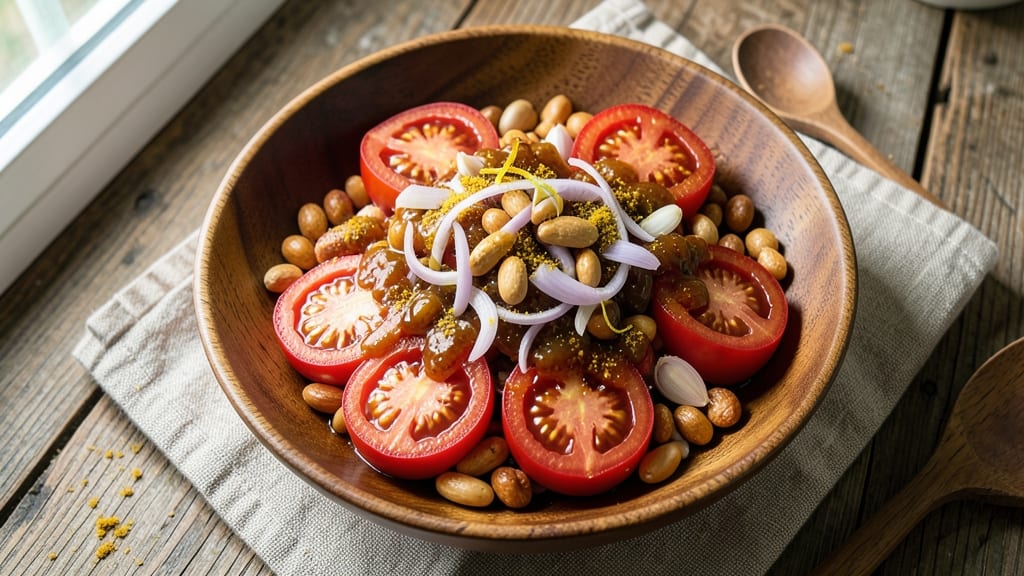
This Burmese tomato salad recipe brings vibrant Southeast Asian flavors to your table with its perfect balance of spicy, tangy, and crunchy elements. 🌟 I first tasted this dish at a bustling street market in Myanmar, where vendors expertly tossed together fresh tomatoes, fiery chili, and toasted peanuts in front of hungry crowds.
The secret lies in the harmony of sweet, sour, and umami flavors that make every bite irresistible.
What makes this salad truly special is its simplicity combined with depth. You'll need just a handful of ingredients—ripe tomatoes, garlic, shallots, tamarind paste, and a touch of turmeric—that come together in minutes.
The key to authentic flavor is toasting the peanuts until fragrant and crisp, then tossing them with the dressing while still warm. This technique enhances their natural nuttiness and creates that signature crunch.
By the time you're done, you'll have a salad that's as visually stunning as it is delicious—bright red tomatoes glistening with golden peanuts, all bound together by a glossy, tangy dressing.
The balance of heat from chili, sweetness from tomatoes, and umami from the peanuts creates a flavor profile that's both complex and satisfying. It's the kind of dish that transforms a simple meal into something extraordinary.
This recipe works beautifully as an appetizer, side dish, or even a light main course when paired with grilled meats or steamed rice. The beauty of Burmese tomato salad is its versatility—it's equally at home on a weeknight dinner table or as part of a festive spread.
Let's bring this vibrant dish to life in your kitchen.
Ingredients for burmese tomato salad
Fresh tomatoes, toasted peanuts, and bold spices create this vibrant, tangy salad in minutes.
| Ingredient | Amount | Notes |
|---|---|---|
| Large Ripe Tomatoes 🍅 | 4 whole | Roma or vine-ripped preferred |
| Raw Peanuts 🥜 | ½ cup | Unsalted, dry-roasted preferred |
| Shallots 🧅 | 3 whole | Thinly sliced, about 0.5 cup |
| Garlic Cloves 🧄 | 4 cloves | Minced, about 1 tbsp |
| Tamarind Paste 🍯 | 2 tbsp | Unadulterated, block form best |
| Turmeric Powder 🌿 | ½ tsp | Freshly ground preferred |
| Red Chili Paste 🌶️ | 1 tbsp | Adjust for spice preference |
| Fish Sauce 🍶 | 1 tbsp | Vegetarian alternative: soy sauce |
| Lime Juice 🍋 | 2 tbsp | Freshly squeezed |
| Granulated Sugar 🍚 | 1 tbsp | Or coconut sugar for depth |
| Vegetable Oil 🫒 | 1 tbsp | For toasting peanuts |
| Salt 🧂 | ½ tsp | Kosher or sea salt |
| Cilantro Leaves 🌿 | ¼ cup | Chopped, for garnish |
The tomatoes are the star—ripe but firm is key. Hit the farmers market if you can, or grab the heirloom variety at Whole Foods. Shallots add depth, but if you're in a pinch, green onions work in a bind. For the tamarind, block form is best—it's less processed than the paste. If you can't find it, lemon juice plus 1 tsp sugar is a decent swap. Toasting the peanuts is non-negotiable—they should smell nutty and golden, not burnt. Trader Joe's has great dry-roasted peanuts if you're short on time.
No fish sauce? Soy sauce or coconut aminos work perfectly—just taste as you go. The chili paste can be swapped for fresh red chilies (blended with a pinch of salt), but it's trickier to control the heat. Fresh turmeric? Grate it yourself—one teaspoon fresh equals half a teaspoon powder. The lime juice needs to be fresh; bottled won't cut it. For extra crunch, add toasted sesame seeds (1 tsp), but keep them separate until serving. The cilantro is optional but adds that bright finish—skip it if you're not a fan.
Toasted peanuts stay crisp for 3 days in an airtight container, but they're best used fresh. The salad dressing keeps for 5 days in the fridge, so make extra—it's perfect for drizzling on noodles or grilled tofu. Store tomatoes whole until ready to slice, and keep the dressing separate until you're ready to toss. This salad tastes even better the next day once the flavors meld, so double the batch if you're hosting.
Why You'll Love This Recipe
- No-Fuss Assembly: I swear, this salad takes less effort than deciding what to eat. Toss in the tomatoes, crush the peanuts, mince the shallots and garlic—no dicing, no peeling, no fuss. The tamarind paste does the heavy lifting of balancing everything, so you’re basically just stirring while your brain checks out.
- Tangy Crunch Magic: That first bite? Sweet tomatoes meet salty peanuts, sharp garlic, and a just-right sour punch from the tamarind. It’s the kind of flavor that sticks with you—bright enough to wake up a lazy lunch, but complex enough to impress when you’re actually trying.
- Leftover Hero: Make a big batch on Sunday, and it’ll still taste fresh by Thursday. The peanuts stay crispy, the tomatoes hold their shape, and the dressing doesn’t separate. I’ve had it cold, at room temp, even with a fried egg on top—it just works.
- Budget Brightener: Shallots and garlic bulk up the flavor without costing a fortune, and raw peanuts are cheaper than fancy nuts. Ripe tomatoes? Often the cheapest produce in season. It’s a salad that feels luxurious but won’t break the bank—or your grocery list.
Step-by-step instructions for Burmese tomato salad
Here's how to make this vibrant, addictive salad with perfect balance of heat, tang, and crunch.
🔥 Step 1: Toast the Peanuts for Maximum Flavor
Heat a dry skillet over medium heat and add the 0.5 cup raw peanuts. Toast for 3-4 minutes, stirring constantly, until they turn a rich golden brown and smell nutty. Watch closely—they burn fast once they start browning.
Remove the peanuts immediately when they're golden and transfer to a small bowl. Let them cool slightly before crushing lightly with your fingers or a rolling pin. The toasted aroma will elevate your salad from good to extraordinary. Don't skip this step—raw peanuts won't give that same satisfying crunch.
👨🍳 Step 2: Prepare the Aromatic Base
In a small bowl, combine the 2 tbsp tamarind paste, 1 tbsp red chili paste, 1 tbsp fish sauce, 1 tbsp granulated sugar, 2 tbsp lime juice, and 0.5 tsp salt. Whisk vigorously until completely smooth—this is your flavor foundation.
Taste and adjust: need more heat? Add a pinch of chili paste. Too tangy? Balance with a touch more sugar. The sauce should be vibrant, slightly sticky, and perfectly balanced between sweet, sour, and spicy. I like to let it sit for 5 minutes while I prep the other ingredients—this allows the flavors to meld.
🍳 Step 3: Cook the Shallots and Garlic
Heat 1 tbsp vegetable oil in a small skillet over medium-low heat. Add the 3 whole shallots (sliced thinly) and 4 cloves garlic (minced). Cook for 5-6 minutes, stirring occasionally, until the shallots are tender and just starting to turn golden.
Remove from heat and sprinkle with 0.5 tsp turmeric powder. Stir well to coat—the turmeric will give your salad that beautiful golden hue. Let this mixture cool completely before adding to the tomatoes. The warm shallots will soften the tomatoes slightly, creating perfect texture contrast in the final salad.
🥘 Step 4: Assemble the Salad
Cut the 4 whole large ripe tomatoes into 1-inch chunks (no need to peel or seed). In a large bowl, gently combine the tomatoes with the cooled shallot mixture, crushed peanuts, and the tamarind-fish sauce mixture. Toss lightly—just enough to distribute everything evenly.
Here's the thing—don't overmix. You want the tomatoes to remain slightly intact with some juices still visible. The salad should look vibrant with red tomatoes, golden shallots, and dark peanuts peeking through. Let it sit for 10 minutes at room temperature before serving—this allows all the flavors to truly meld together.
🍽️ Step 5: Finish and Serve
Just before serving, sprinkle the salad with 0.25 cup chopped cilantro leaves. Give it one final gentle toss to distribute the herbs evenly. The cilantro adds freshness that cuts through the richness of the peanuts and the heat of the chili.
Serve immediately while the tomatoes are still slightly crisp. The salad should be a perfect balance of textures—juicy tomatoes, crunchy peanuts, and tender shallots—with a sauce that's tangy, spicy, and just sweet enough. This dish pairs beautifully with grilled meats or steamed rice to soak up all that delicious dressing.
Pro Tips For Making Burmese Tomato Salad
- CRUSH PEANUTS COLD: Grab your peanuts straight from the fridge—yes, even if you’re in a hurry—and pulse them in batches with a mortar and pestle (or food processor) until you hit that perfect mix of fine powder and tiny crunchy bits. Cold peanuts release their oils more evenly, so you avoid that greasy mess that happens when you work them too long. I learned this the hard way after turning my first batch into peanut butter by accident.
- SWEAT SHALLOTS LOW: Don’t rush this step—cook those sliced shallots on low heat for 5-7 minutes until they’re translucent and just starting to soften. High heat burns them before they render their flavor, and you’ll end up with a bitter bite cutting through the sweetness. Sounds boring, but trust me: this is where the depth of flavor lives.
- SOAK TAMARIND PASTE: Dump that tamarind paste into a bowl with twice its volume of warm water and let it sit for 10 minutes before using. The paste clumps like glue otherwise, and you’ll end up with lumps in your dressing that ruin the texture. Stir it once in a while—it dissolves faster than you think.
- CUT TOMATOES IN WEDGES: Skip the dice—thick, uneven wedges (about ½-inch slices) hold up better in the salad and soak up the dressing more evenly. Thin slices turn mushy, and you’ll regret it when your salad looks like a watery soup by the end. Plus, wedges are easier to toss with the peanuts and herbs.
Dietary considerations for this dish
Vegetarian Adaptations
Traditional Burmese tomato salad often includes fish sauce for that signature umami depth, but you can easily make this vegetarian with soy sauce or coconut aminos. I’ve tested both—soy sauce gives a more familiar savory taste, while coconut aminos add a subtle sweetness that complements the tamarind beautifully.
Start with 1 tbsp and adjust to taste, as coconut aminos can be slightly saltier. 🌱
For extra umami without fish sauce, add 1 tsp mushroom powder (like Better Than Bouillon mushroom seasoning) or a splash of vegetable-based fish-free Worcestershire sauce. These work wonders in small amounts. The key is balancing the tangy-sweet-spicy trio—don’t overdo it, or the salad will taste flat.
Gluten-Free Considerations
This salad is naturally gluten-free, but always double-check your ingredients. Store-bought red chili paste or fish sauce (or substitutes) can sometimes contain hidden gluten. Brands like Red Boat (fish sauce) and Annie Chun’s (chili paste) are typically safe, but read labels carefully.
Even tamarind paste can have additives—opt for 100% pure tamarind pulp if you’re strict about it.
For extra safety, make your own chili paste by blending 1 tbsp fresh red chilies, 1 tsp garlic, and ½ tsp salt until smooth.
It’s fresher, gluten-free, and lets you control the heat perfectly. I keep a small batch in the fridge for quick use—it lasts about 2 weeks.
Spice Level Control
If you’re sensitive to heat, reduce the red chili paste to ½ tbsp and add ½ tsp sugar to balance it. For a milder kick, swap the chili paste for 1 tbsp finely chopped fresh jalapeño (seeds removed).
The tamarind’s natural tanginess will still shine through, but the heat will be much more manageable. 🌶️
On the other hand, if you love spice, add ½ tsp cayenne pepper or a dash of Sichuan chili oil (just ½ tsp) to the dressing. Trust me, the peanuts and tomatoes will hold their own against serious heat—just be prepared for a fiery finish!
For a smoky twist, toast the peanuts with ¼ tsp smoked paprika for depth.
Allergen-Friendly Swaps
Peanuts are a common allergen, so if needed, swap them for toasted pumpkin seeds or crushed wasabi peas for a similar crunch. I’ve also used toasted coconut flakes (unsweetened) in a pinch—they add a tropical note that pairs surprisingly well.
For texture, toast 1 tbsp sesame seeds separately and sprinkle on top at the end.
If you’re avoiding sesame (another common allergen), stick to the peanuts or use sunflower seeds instead. Just toast them until golden and lightly crushed—no need to go overboard.
The salad’s flavor will still shine, and the crunch remains satisfying. Always check labels on store-bought ingredients like tamarind paste or chili sauce for cross-contamination warnings.
Nutrition facts
Frequently asked questions
Can I substitute regular peanuts for the recipe?
Use any unsalted peanuts—raw or dry-roasted—but toasting them fresh in the skillet is key for that signature nutty aroma. If you're allergic or avoiding peanuts, try toasted pumpkin seeds or crushed wasabi peas for a similar crunch. Just toast them until golden and lightly crushed before adding to the salad.
How do I make this salad less spicy?
Reduce the red chili paste to ½ tbsp and balance it with an extra ½ tsp sugar. For even milder heat, swap the chili paste for 1 tbsp finely chopped jalapeño (seeds removed). The tamarind’s natural tanginess will still shine through without overwhelming heat.
Can I prepare this salad ahead of time?
Yes! Make the dressing and toast the peanuts in advance—they’ll keep for 5 days in the fridge. Store tomatoes whole and slice just before tossing to maintain crispness. The salad actually tastes better the next day as flavors meld, but keep the dressing separate until serving. Pro tip: Double the batch for easy leftovers!
What's the best way to store leftover peanuts?
Transfer toasted peanuts to an airtight container and store at room temperature for up to 3 days. For longer storage, refrigerate for 1 week or freeze for 3 months. Reheat in a dry skillet for 1-2 minutes before crushing to restore crispness.
How can I make this vegetarian?
Swap the fish sauce for soy sauce or coconut aminos (1 tbsp). For extra umami, add 1 tsp mushroom powder or a splash of vegetable-based Worcestershire sauce. The key is balancing the tangy-sweet-spicy trio—don't overdo it, or the salad may taste flat.