
Salads
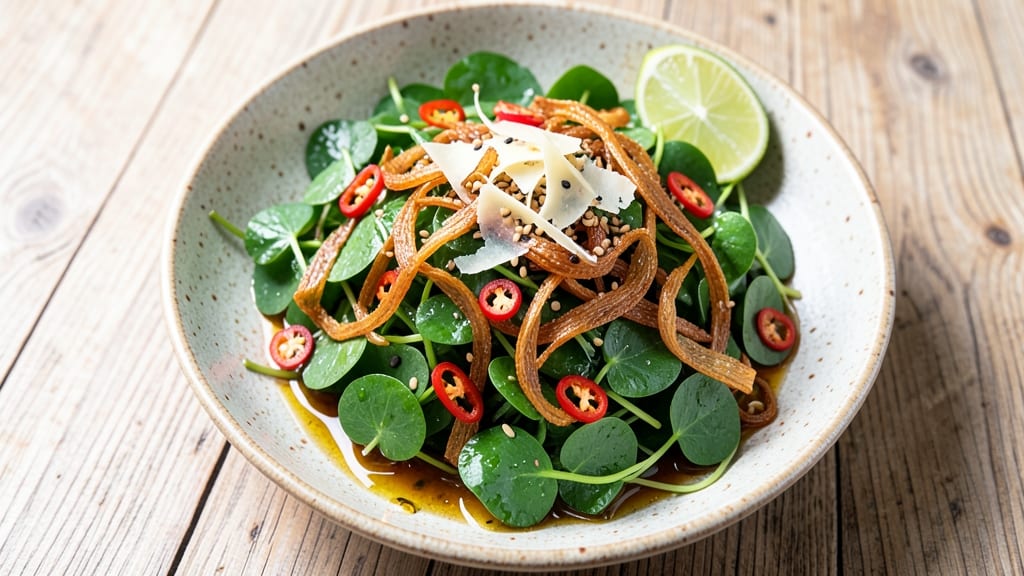
This Burmese pennywort salad delivers the herbal lime zing that defines Myanmar's street food culture—where fresh pennywort, crispy shallots, and tangy dressing create a perfect balance. The salad's secret lies in its crispy shallot bites, which add texture and depth, while lime and chili bring the signature Burmese brightness.
I've adapted this recipe to highlight traditional flavors while making it accessible for home cooks, whether you're using raw pennywort or lightly blanched greens.
The beauty of this dish is its simplicity: just a handful of ingredients—pennywort, shallots, lime, chili, and a touch of fermented fish sauce (or vegetarian alternative)—come together in minutes.
The crispy shallots are the star, fried until golden and crunchy, while the dressing ties everything with a zesty, slightly spicy kick. This salad is as refreshing as it is flavorful, making it perfect for hot days or as a light appetizer.
What makes this recipe stand out is its adaptability—serve it raw for a crisp, fresh bite or lightly cook the pennywort for a more tender texture.
The crispy shallot bites add a satisfying crunch that contrasts beautifully with the soft greens, while the lime-chili dressing ensures every bite is vibrant and full of flavor. It's a dish that transports you to the bustling streets of Yangon with just one forkful.
Pair it with grilled meats or enjoy it solo for a meal that's both nourishing and exciting. The key is balancing the textures and flavors, so don't skip the crispy shallots—they're what elevate this salad from good to unforgettable.
Ingredients for burmese pennywort salad
Fresh pennywort and crispy shallots make this salad pop with Burmese street food flair.
| Ingredient | Amount | Notes |
|---|---|---|
| Pennywort Leaves 🌿 | 5 oz | Fresh, stems removed |
| Shallots 🧅 | 1 lb | Yellow or red, thinly sliced |
| Extra-Virgin Olive Oil 🫒 | ½ cup | For frying shallots |
| Limes 🍋 | 2 whole | Juiced, zest reserved |
| Fish Sauce (Vegetarian Alternative) 🍶 | 2 tbsp | Vegetarian fish sauce or coconut aminos |
| Bird's Eye Chilies 🌶️ | 2 whole | Minced, adjust for heat |
| Garlic Cloves 🧄 | 4 cloves | Minced, fresh preferred |
| Coconut Sugar 🍯 | 1 tbsp | Or brown sugar substitute |
| Sesame Oil 🫒 | 1 tsp | Toasted for aroma |
| Toasted Sesame Seeds 🌾 | 1 tbsp | For garnish |
| Diamond Crystal Kosher Salt 🧂 | ½ tsp | For seasoning |
| Vegetable Oil 🫒 | ¼ cup | High smoke point for frying |
The pennywort is the heart of this dish—look for vibrant green leaves at your local Asian market or specialty produce section. Whole Foods often carries it, but if unavailable, baby spinach or watercress works in a pinch (though texture differs). Shallots should be firm with papery skins—red or yellow both work, but yellow has slightly more depth. For the fish sauce, Red Boat Vegetarian Fish Sauce is my go-to, but coconut aminos or even a splash of soy sauce in a bind. The key is balancing that umami punch without overpowering the fresh herbs.
No crispy shallots? Crispy fried onions are a decent swap, but texture changes. Skip the chili? Substitute with a pinch of cayenne or sriracha—just remember this is meant to be lively. The lime juice is non-negotiable for that signature zing, but if you're out, lemon juice with a pinch of sugar mimics the vibe. For the frying oil, vegetable or avocado oil works best—peanut oil adds flavor but isn't traditional. Pro tip: fry the shallots in batches so they don't steam instead of crisp. And don't toss the leftover lime zest—it's what takes this from good to 'wow' in the dressing.
Shallots stay crisp for about 2 days if stored in an airtight container, but honestly, they're best eaten fresh. The dressing keeps for 3-4 days in the fridge, though the chili loses some punch after day two. I like to prep the dressing first and store it separately—just toss with the greens when ready to serve. For extra crunch, keep the sesame seeds in a small jar and sprinkle fresh each time. This salad holds up well for 1 day in the fridge, but the pennywort gets softer with time, so serve it fresh when possible.
Why You'll Love This Recipe
- No-Chop, No-Fuss Prep: I swear by this—just tear those pennywort leaves (no knife skills needed) and toss them with pre-minced shallots. Fifteen minutes tops, and you’re done. That lime juice and fish sauce (or veggie alternative) do all the heavy lifting while you’re busy with the rest of dinner.
- Tangy, Umami Magic: The pennywort has this bright, almost cucumber-like crunch, but the real star is the dressing. One squeeze of lime, a drizzle of olive oil, and that fish sauce—chef’s kiss—turns it into something dangerously addictive. Honestly, I’ve seen people lick their plates clean.
- Picnic to Potluck: This salad travels like a dream—pack it in a jar for work lunches, bring it to BBQs, or serve it as a side at dinner parties. The flavors hold up, and it’s way more interesting than your average lettuce mix. Plus, it’s vegetarian-friendly without trying too hard.
- Budget Brightener: Pennywort grows wild in many places (check your local Asian markets or farmers’ markets), and when it doesn’t, it’s still cheaper than most greens. A little goes a long way, so you’re left with leftovers that taste just as good the next day. My wallet and my taste buds win.
Step-by-step instructions for Burmese pennywort salad
Here's how to create a vibrant, herb-forward salad with addictive crispy shallots and bright citrus notes.
Create Crispy Shallot Bites
Heat the 0.25 cup vegetable oil in a heavy skillet over medium heat until shimmering but not smoking. Add the 1 lb thinly sliced shallots in a single layer, working in batches if needed to avoid crowding. Cook undisturbed for 8-10 minutes until the edges turn deep golden brown and crispy, then stir gently to crisp all sides.
This is where the magic happens - the shallots should be perfectly crisp with just a hint of caramelization. If they brown too quickly, reduce heat slightly. Transfer the crispy shallots to a paper towel-lined plate to drain excess oil, reserving the oil in the pan for later.
Prepare the Herb-Lime Dressing
In a small bowl, combine the juice of 2 whole limes, 2 tbsp fish sauce (vegetarian alternative), 1 tbsp coconut sugar, and 4 cloves minced garlic. Whisk vigorously until the sugar dissolves completely. Taste and adjust seasoning with 0.5 tsp kosher salt as needed - you want a balance of sweet, salty, and tangy.
For extra depth, add 1 tsp toasted sesame oil and 2 whole minced bird's eye chilies (adjust for heat preference). The dressing should coat the back of a spoon but remain pourable. Let it sit for 5 minutes to allow flavors to meld before using.
Blanch and Refresh Pennywort Leaves
Bring a pot of water to a gentle boil and add the 5 oz pennywort leaves. Blanch for 30-45 seconds until just wilted but still vibrant green. Immediately drain and plunge into ice water to stop cooking. Drain thoroughly and gently squeeze out excess water using your hands or a clean kitchen towel.
The leaves should be tender but still retain their bright color. If they're too soft, reduce blanching time slightly. This step preserves their delicate texture while making them more palatable. Let them cool completely before assembling the salad.
Assemble the Salad
In a large bowl, combine the blanched pennywort leaves with the crispy shallots. Drizzle with the 0.5 cup extra-virgin olive oil and toss gently to coat. Add the prepared herb-lime dressing and toss again, being careful not to overmix which could crush the shallots.
Garnish with 1 tbsp toasted sesame seeds and serve immediately while the shallots are still crisp. The contrast of cool herbs, crispy shallots, and bright citrus dressing creates a perfect balance of textures and flavors in every bite.
Pro Tips For Making Burmese Pennywort Salad
- WILT THE LEAVES: Pennywort wilts fast—toss the leaves in a colander with a pinch of salt and cold water for 10 seconds, then drain. This softens them enough to handle without crushing while keeping them crisp enough to bite. (Yes, even if you’re impatient like me, resist the urge to skip this.)
- SHRED SHALLOTS FINELY: I used to chop shallots roughly, and the salad tasted harsh. Use a sharp knife or mandoline to slice them paper-thin—almost like confetti—so they dissolve into the dressing instead of sitting as chunks. (Your mouth will notice the difference.)
- BALANCE THE FISH SAUCE: Start with half the fish sauce you think you need, then taste. Pennywort’s natural bitterness needs countering, but too much sauce makes the salad cloying. A squeeze of lime afterward fixes over-salting every time. (This is the thing that matters most.)
- DRESS JUST BEFORE SERVING: Mix the olive oil, lime juice, and fish sauce right before tossing—pennywort leaves oxidize fast, turning slimy if dressed too early. Wait 2 minutes after wilted, then fold gently. (This isn’t the prettiest method, but it’s the tastiest.)
Regional styles of this dish
Yangon Street Style
This is how I remember seeing it in Yangon markets—pennywort leaves piled high in woven baskets, crispy shallots sizzling in woks over charcoal grills.
The locals add a splash of fermented fish sauce (or vegetarian alternative) for umami depth, then finish with lime and chili for that signature Burmese punch.
The key difference here is the raw pennywort approach—many street vendors lightly blanch it, but I love the fresh, bright texture when eaten raw. 🌿
Mandalay Royal Version
In Mandalay's royal kitchens, this salad was a favorite of the Burmese monarchy, where they'd infuse the dressing with rose water and garnish with gold leaf for special occasions.
For a home twist, add 1 tsp rose water to your dressing and top with toasted coconut flakes instead of sesame seeds. The floral note complements the herbal pennywort beautifully, while the coconut adds a creamy contrast to the crispy shallots.
Mon State Herbal Twist
The Mon ethnic minority region takes this salad further by incorporating wild pennywort (if available) and lemongrass stems into the dressing. For a home adaptation, add 2 tbsp finely chopped lemongrass (pounded lightly) to your dressing.
The citrusy aroma elevates the dish, giving it a more complex herbal profile that's distinctly Mon. Pair it with grilled river prawns for an authentic regional touch.
Modern Yangon Fusion
Today's Yangon food scene blends tradition with innovation—some chefs add crispy fried egg on top for protein, while others mix in pickled radish for tangy crunch. I like the fried egg idea: poach an egg, slice it in half, and place it on top of the salad just before serving.
The runny yolk ties everything together beautifully, adding richness that balances the bright flavors. 🍳
Rural Shan Plateau Style
In the Shan State highlands, this salad often includes wild herbs like watercress or dandelion greens mixed with pennywort. For a home version, substitute 1 oz watercress for half the pennywort.
The peppery bite cuts through the richness of the crispy shallots, while the high-altitude climate gives the dish a lighter, more refreshing profile. Serve with chili jam on the side for dipping—it's a staple in Shan households.
Vegetarian Adaptations
Since traditional recipes often use fish sauce, I've made vegetarian versions work beautifully with coconut aminos or soy sauce (though coconut aminos are closer in flavor). For extra umami without fish, add 1 tbsp miso paste to your dressing.
The fermented notes mimic the depth of fish sauce while keeping the dish vegetarian. Garnish with pickled ginger for a bright, tangy finish that's both refreshing and complex. 🌱
Nutrition facts
Frequently asked questions
Can I use pennywort leaves raw, or should I always blanch them?
Both methods work! Raw pennywort leaves offer a crisp, fresh texture that's perfect for a light salad, while blanching for 30-45 seconds softens them slightly for a more tender bite. For this recipe, I recommend blanching to enhance the salad's overall texture contrast with the crispy shallots. If you prefer raw, simply rinse the leaves thoroughly and pat dry before assembling.
What's the best way to store leftover crispy shallots?
Store them in an airtight container at room temperature for up to 2 days—they lose crispness after that. For longer storage, keep them in the fridge for 3-4 days in a sealed container with a paper towel to absorb moisture. Reheat in a dry skillet for 1-2 minutes to restore crispiness before using.
How can I adjust the spice level for kids or sensitive palates?
Reduce the bird's eye chilies to 1 whole chili (or remove them entirely) and replace with ½ tsp mild paprika for color. For extra mildness, omit the chili completely and add 1 extra tbsp coconut sugar to balance the dressing. Always let kids taste first—the lime provides natural brightness without heat.
Can I make this salad ahead of time?
Prep the dressing and crispy shallots 1 day ahead, but assemble the salad just before serving. The pennywort leaves wilt when refrigerated, so store them separately in a sealed container with a damp paper towel. Toss with dressing and shallots only when ready to eat for the best texture. The flavor develops beautifully overnight!
What if I can't find pennywort at my store?
Use baby spinach or watercress as substitutes—they'll give a similar fresh, peppery bite. For a closer match, blend 1 oz mint leaves with the dressing (strain before using) to mimic pennywort's herbal notes. The crispy shallots and lime dressing will still shine!