
Salads
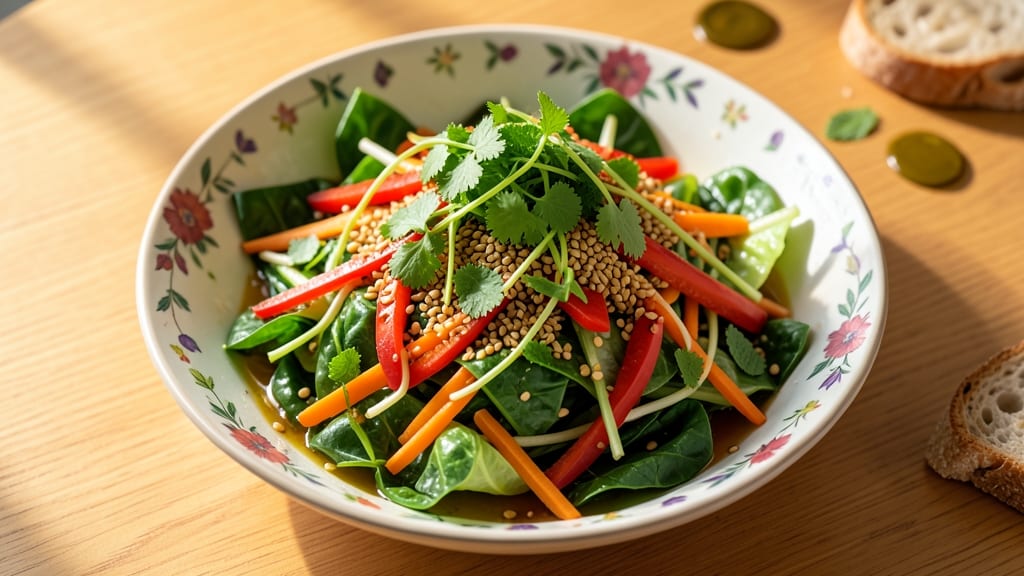
This Burmese rainbow salad recipe brings a burst of color and flavor to your table with its vibrant lime-tamarind dressing and crunchy toasted seeds. The traditional technique of layering crisp vegetables and fresh herbs creates a dish that's as visually stunning as it is delicious.
I've perfected this recipe to balance sweet, tangy, and savory notes, making it a standout for any meal.
The salad's foundation lies in thinly shredded cabbage, carrots, and bean sprouts, which provide the perfect textural contrast when paired with toasted sesame and peanuts. The dressing, made with lime juice, tamarind paste, garlic, and a touch of chili, adds a bright, zesty kick that complements the fresh vegetables beautifully.
This dish is not only vegetarian but also easily adaptable for pescatarian diets by adding grilled shrimp or fish.
What makes this recipe truly special is the way the colors come together—each ingredient contributes to the vibrant rainbow effect that's both eye-catching and satisfying. The toasted seeds add a delightful crunch, while the dressing ties everything together with its tangy, slightly sweet profile.
It's a dish that's perfect for lunch, dinner, or even as a refreshing side.
Whether you're serving it at a gathering or enjoying it as a light meal, this Burmese rainbow salad delivers a perfect blend of flavors and textures. The preparation is straightforward, and the ingredients are easy to find, making it a great addition to your weekly menu.
Let's get started on creating this vibrant and flavorful dish!
Ingredients for burmese rainbow salad
Bright colors and bold flavors—this salad brings the rainbow to your plate with just 15 ingredients.
| Ingredient | Amount | Notes |
|---|---|---|
| Green Cabbage 🥬 | 2 cups | Thinly shredded, vibrant color |
| Carrots 🥕 | 1 lb | Julienned, bright orange |
| Bean Sprouts 🌱 | 1 cup | Fresh, crisp texture |
| Red Bell Pepper 🌶️ | 1 whole | Thinly sliced, any color |
| Fresh Cilantro 🌿 | ½ cup | Chopped, stems removed |
| Fresh Mint Leaves 🍃 | ¼ cup | Finely chopped, bright green |
| Sesame Seeds 🌰 | ¼ cup | Toasted until golden |
| Peanuts 🥜 | ½ cup | Toasted, roughly chopped |
| Fresh Lime Juice 🍋 | ½ cup | Freshly squeezed, strained |
| Tamarind Paste 🍯 | 2 tbsp | Thick, authentic quality |
| Garlic Cloves 🧄 | 3 cloves | Minced, aromatic |
| Red Chili Flakes 🌶️ | 1 tsp | Adjust for heat preference |
| Coconut Oil 🥥 | 1 tbsp | For toasting seeds |
| Sea Salt 🧂 | 1 tsp | Fine grain preferred |
| Maple Syrup 🍁 | 1 tbsp | For subtle sweetness |
The cabbage and carrots are your rainbow stars. Green cabbage should be crisp and vibrant—skip the wilted outer leaves. For the carrots, organic is best if you're peeling them, but the skin adds color and nutrients. Trader Joe's has the best pre-shredded mix, but if you're doing it fresh, a mandoline makes quick work of it. Bean sprouts? Grab the freshest pack from the produce section—they wilt fast once opened. Store them in a sealed container with a paper towel to keep them crisp. The bell pepper adds that pop of red, and any color works—just make sure it's firm and shiny.
No tamarind paste? Substitute lime juice plus 1 tsp sugar—it won't be identical, but close. Chili flakes too spicy? Swap for 0.5 tsp cayenne or skip entirely. Toasting the seeds is non-negotiable—they need to be golden and fragrant. Use a dry pan and keep stirring. Peanuts can be regular or roasted—whatever's cheaper. The mint and cilantro? Fresh is a must here, but if you're out, dried oregano at half the amount gets you close. The lime juice should be freshly squeezed—bottled won't cut it.
This salad stays fresh for 3 days in the fridge if you keep the dressing separate. The seeds and peanuts? Store them in an airtight container for up to 2 weeks. Double the batch—it's perfect for potlucks. The dressing keeps for 5 days in the fridge, so make extra for drizzling on other dishes. Leftovers? Toss with a little more lime juice to keep it bright.
Why You'll Love This Recipe
- Uses what you’ve got: cabbage lasts forever, carrots stretch meals, and sprouts add texture for pennies. Leftovers? Toss them in fried rice or ramen—never waste a bite.
- No Knife Struggle: I slice cabbage and carrots in broad, uneven strips—no fancy techniques, just quick cuts that still look vibrant. Bean sprouts and bell pepper? Toss them in whole or halved; the crunch speaks for itself.
- Herb-Packed Punch: That bright cilantro and a squeeze of lime cut through the crunch like a cool breeze. Honestly, the tangy dressing makes even the simplest veggies feel like a celebration.
- Lunchbox Legend: Pack it in jars for days—layers stay crisp, flavors meld just enough to taste fresh. My kids beg for it cold or at room temp, and it’s my go-to for potlucks too.
Step-by-step instructions for Burmese rainbow salad
Assemble this vibrant salad with bold flavors and textures that come together in minutes.
Toast the Seeds and Nuts for Maximum Crunch
Heat a small skillet over medium heat and add 1 tablespoon coconut oil. Once the oil shimmers, add the 0.25 cup sesame seeds and 0.5 cup peanuts, stirring constantly for 3-4 minutes until the sesame seeds turn a rich golden brown and the peanuts are fragrant. You'll know they're ready when they release their nutty aroma—this is the moment that matters.
Transfer the toasted mixture to a plate and let it cool completely before adding to the salad. The contrast between the warm toasted seeds and the cool, fresh vegetables will make every bite exciting. Keep an eye on the skillet—the seeds burn quickly, so don't walk away. If they darken too much, remove them immediately to preserve their nutty flavor.
Prepare the Vibrant Vegetable Medley
In a large mixing bowl, combine the 2 cups green cabbage, 1 lb carrots (julienned), 1 cup bean sprouts, and 1 whole red bell pepper (thinly sliced). Use your hands to gently massage the cabbage for 30 seconds—this softens the leaves slightly and helps the dressing cling better. The cabbage should look slightly wilted but still retain its bright color.
Add the 0.5 cup fresh cilantro and 0.25 cup fresh mint leaves to the bowl, tossing everything together until the herbs are evenly distributed. The fresh herbs will add a bright, herbal note that balances the sweet and tangy flavors of the dressing. If you're using very large leaves, chop them slightly to ensure even distribution throughout the salad.
Make the Lime-Tamarind Dressing
In a small bowl, whisk together the 0.5 cup fresh lime juice, 2 tablespoons tamarind paste, 1 tablespoon maple syrup, 3 cloves garlic cloves (minced), 1 teaspoon red chili flakes, and 1 teaspoon sea salt. Start with a small amount of lime juice and gradually add more if needed—the tamarind paste is quite tangy on its own. The dressing should have a thick, syrupy consistency that will cling beautifully to the vegetables.
Taste the dressing before adding it to the salad. You want a balance of sweet, tangy, and slightly spicy flavors. If it's too tart, add a touch more maple syrup. If it needs more heat, add a pinch of red chili flakes. This dressing is the heart of the salad, so don't rush this step—taste as you go to get it just right.
Combine Everything for Perfect Balance
Pour the dressing over the vegetable mixture and toss gently but thoroughly to coat every ingredient. Add the toasted sesame seeds and peanuts, tossing just until they're evenly distributed. The warm seeds will infuse the salad with their nutty aroma, creating a perfect contrast with the cool, fresh vegetables. Let the salad sit for 5 minutes before serving—this allows the flavors to meld together beautifully.
Taste the salad one final time before serving. Adjust the seasoning if needed—perhaps a bit more lime juice for brightness or a pinch more salt to enhance the flavors. This salad is best served immediately while the vegetables are still crisp and the dressing is vibrant. The combination of textures and flavors will make it a standout dish at any meal.
Pro Tips For Making Burmese Rainbow Salad
- SHRED CABBAGE THIN: I learned this the hard way—thick cabbage strips stay chewy no matter how long you toss. Use a sharp knife and slice paper-thin layers, almost like rice noodles. The salad’s crunch depends on this; don’t rush it.
- SOAK SPROUTS FIRST: Bean sprouts hold onto moisture like stubborn kids. Give them a quick 10-minute soak in cold water before draining, then pat very dry. This keeps them crisp instead of soggy when mixed with the dressing.
- CUT PEPPER IN STRIPS: Dice that red bell pepper and it’ll turn into mush by the time you toss everything. Instead, slice it into long, thin strips—same width as the cabbage. They’ll stay vibrant and hold their shape.
- TOSS WITH WET HANDS: Dry hands = clumpy salad. Wet your hands slightly before mixing—it helps the dressing cling evenly to every ingredient. Works especially well for the cilantro, which tends to float away.
Regional styles of this dish
Yangon Street Style
In Yangon, this salad is often served as a quick street food snack, packed with extra crunch from toasted sesame seeds and peanuts. Vendors there use a slightly sweeter dressing—sometimes adding 1 extra tablespoon of maple syrup—to balance the tangy tamarind.
I’ve seen locals toss in thinly sliced radishes for extra bite, which adds a peppery contrast that works beautifully with the lime. Look for Thai-style tamarind paste at Asian markets for that authentic sour punch. 🌶️
Mandalay Royal Version
The royal courts of Mandalay elevated this salad by incorporating gold leaf flakes into the dressing, which were reserved for special occasions. While you won’t find gold leaf in most kitchens, you can mimic the luxurious feel by adding crushed pistachios for a touch of opulence.
The Mandalay style also calls for longan or lychee segments in the salad for a delicate floral note. If you can’t find these, mandarin orange segments work as a bright, citrusy substitute. 🍊
Rangoon Home Kitchen Twist
In Rangoon households, this salad is often prepared with fermented tea leaves (like laphet thoke) mixed into the dressing for an earthy depth. You can approximate this by adding 1 teaspoon of black tea leaves steeped in the lime juice before mixing.
Another Rangoon favorite is to serve the salad with grilled shrimp on top, turning it into a pescatarian main dish. For a vegetarian version, add crispy fried tofu instead—just toss it in the pan until golden and crunchy. 🦐
Mon State Herbal Adaptation
The Mon ethnic group in southern Myanmar incorporates wild herbs like lemongrass stems and kaffir lime leaves into their versions. If you’re feeling adventurous, finely chop 2-3 lemongrass stems and add them to the dressing for a citrusy aroma.
For kaffir lime leaves, tear 2 leaves and muddle them with the garlic before whisking. These herbs add a unique, aromatic complexity that’s hard to find elsewhere. 🌿
Modern Fusion Updates
Today’s chefs are putting their own spin on this classic. Some add avocado slices for creaminess or pickled ginger for a tangy crunch. I’ve even seen versions with quinoa or buckwheat mixed in for extra protein.
For a smoky twist, lightly toast 1 tablespoon of smoked paprika and sprinkle it over the salad after tossing. The key is to keep the rainbow theme intact—every color should pop against the vibrant dressing. ✨
Nutrition facts
Frequently asked questions
Can I make this salad without tamarind paste?
The tamarind paste is key for that authentic tangy-sweet balance, but you can substitute it with 0.5 cup lime juice plus 1 tablespoon honey or maple syrup. For extra depth, add 1 teaspoon of white vinegar to mimic tamarind's complexity. The salad will still be bright and flavorful, though slightly less complex.
How do I keep the cabbage crisp for longer?
Massage the cabbage with 1 teaspoon of lime juice before adding it to the salad—this helps maintain crispness. Store the salad in an airtight container with a paper towel pressed against the vegetables to absorb excess moisture. For extra crunch, add the bean sprouts and bell pepper just before serving.
Is this salad gluten-free?
Yes! This recipe is naturally gluten-free as long as you use tamarind paste without additives. Double-check that your sesame seeds and peanuts are processed in a gluten-free facility if you have sensitivities. The lime-tamarind dressing and all other ingredients are inherently gluten-free.
Can I make this ahead of time?
Prepare the vegetables and dressing separately up to 2 days ahead, but don't combine them until serving. Store the toasted seeds and peanuts in an airtight container for up to 2 weeks. When ready to serve, toss everything together and let it sit for 5 minutes to let flavors meld. The dressing can also be made 3 days ahead and stored in the fridge.
What's the best way to adjust the spice level?
Start with 1 teaspoon of red chili flakes and adjust to taste. For milder heat, reduce to 0.5 teaspoon or swap for 0.25 teaspoon of cayenne pepper. If you love spice, add an extra 0.5 teaspoon or a pinch of fresh chili powder. Always taste the dressing before tossing with the salad.