
Salads
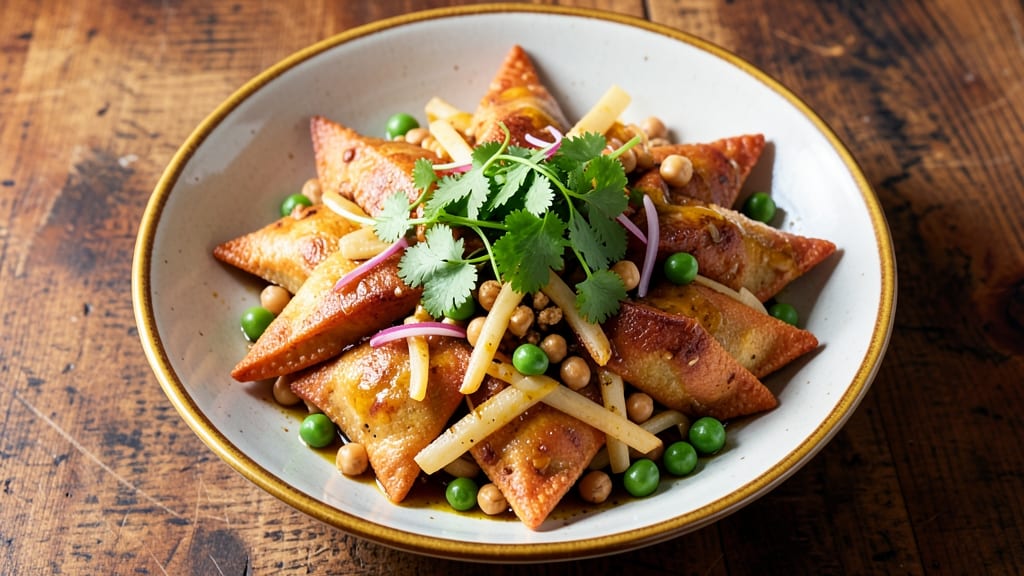
This Burmese samosa salad recipe brings the vibrant flavors of Myanmar to your table with crispy golden pastry bites and a bright tamarind dressing. 💛 I first discovered this dish while traveling through Southeast Asia, where street vendors served it as both a snack and a meal—warm, crispy, and packed with layers of flavor.
The secret lies in the delicate samosa dough, which encases a spiced potato-pea filling that's both hearty and light, all balanced by the tangy tamarind dressing.
The recipe starts with making the samosa dough from scratch—a process that's simpler than it seems, using just flour, water, and a pinch of salt. Inside, a fragrant filling of potatoes, peas, and chickpeas is spiced with turmeric, cumin, and mustard oil for that authentic Burmese taste.
Once fried to golden perfection, these crispy triangles are tossed with shredded cabbage, fresh herbs, and a dressing that's sweet, tangy, and just a little spicy. It's a dish that feels special but comes together with straightforward techniques.
What makes this recipe truly special is how it transforms a traditional street food into a complete meal. The crispy samosas add texture and satisfaction, while the cool, tangy salad balances the richness.
It's perfect for lunch or dinner, and the flavors only get better as the dressing melds with the warm pastry. The best part? This recipe is adaptable—swap in tofu for chickpeas or use coconut oil instead of mustard oil to make it vegan-friendly without sacrificing flavor.
Whether you're serving this as a main dish or a shareable appetizer, the combination of textures and flavors will impress. The samosas stay crispy even after being tossed with the salad, and the tamarind dressing adds a bright contrast that keeps every bite exciting.
Let's bring a taste of Myanmar to your kitchen—it's easier than you think.
Ingredients for burmese samosa salad
Golden samosas and zesty dressing—just 15 ingredients for a taste of Myanmar.
| Ingredient | Amount | Notes |
|---|---|---|
| All-Purpose Flour 🌾 | 2 cups | For delicate samosa dough |
| Water 💧 | ¾ cup | Room temperature preferred |
| Russet Potatoes 🥔 | 2 medium | Peeled and diced small |
| Peas 🌱 | 1 cup | Fresh or frozen, thawed |
| Chickpeas 🥜 | 1 can | Drained and rinsed (15 oz) |
| Mustard Oil 🫒 | ¼ cup | For authentic Burmese flavor |
| Ground Cumin 🌿 | 1 tbsp | Toasted for deeper flavor |
| Turmeric Powder 🌶️ | 1 tsp | Bright yellow color |
| Salt 🧂 | ½ tsp | Kosher or sea salt |
| Green Cabbage 🥬 | 2 cups | Shredded, thin slices |
| Cilantro Leaves 🌿 | ¼ cup | Chopped, for freshness |
| Tamarind Paste 🍯 | ½ cup | For tangy dressing |
| Lime Juice 🍋 | ¼ cup | Freshly squeezed |
| Sugar 🍚 | 2 tbsp | Balances tanginess |
| Red Chili Powder 🌶️ | ½ tsp | Adjust for spice level |
The mustard oil is non-negotiable for that authentic Burmese kick—Trader Joe's or Indian markets usually carry it. If you can't find it, vegetable oil works in a pinch, but the flavor won't be quite the same. For the tamarind paste, look for blocks at Asian markets—they're fresher than the jarred stuff. The chickpeas should be drained well, and if you're using canned, rinsing removes excess sodium. Fresh peas are ideal, but frozen works too—just thaw and drain them first. The cabbage? Green cabbage holds up best when shredded thin.
No mustard oil? Coconut oil or sesame oil adds a different but still delicious flavor. Running low on tamarind? Lemon juice plus a pinch of sugar gets you close. The cumin and turmeric are essential for the filling—toast the cumin in a dry pan for 30 seconds to deepen the flavor. For the samosa dough, handle it as little as possible to keep it tender. If you're making this vegan, swap the mustard oil for coconut oil and ensure your tamarind paste is vegan-certified (some brands use honey).
The samosas stay crispy for about 2 hours at room temperature, so assemble the salad just before serving. Store the dough separately in the fridge for up to 2 days—wrap it tightly in plastic. The filling keeps for 3 days in the fridge, but it's best used fresh. The tamarind dressing can be made a day ahead and stored in the fridge—the flavors meld beautifully. For leftovers, keep the samosas and salad separate to maintain crispness.
Why You'll Love This Recipe
- No-Fuss Dough: I swear by that simple flour-and-water dough—no butter, no fuss, just roll it out and fold. The crispy edges on those little triangles? That’s the magic of a hot pan and a few minutes of patience.
- Crispy-Creamy Magic: Russet potatoes and chickpeas get a double fry—first in oil until golden, then tossed in a tangy tamarind dressing. That contrast? Chef’s kiss. The peas add a bright pop that keeps every bite interesting.
- Lunchbox Hero: Between us, this is my go-to for packed lunches or potlucks. The samosas stay crispy for hours, and the salad dressing won’t leak. Honestly, it’s the only thing my kids will actually eat from my lunchbox.
- Pantry Staple Power: Potatoes, peas, chickpeas—ingredients I already have. The dough uses basic flour and water, and the spices? Just a pinch of turmeric and cumin. Budget-friendly, zero waste, and it feeds four for under $10. (Yes, even on a Tuesday night.)
Step-by-step instructions for Burmese samosa salad
Crispy samosas meet zesty tamarind dressing in this perfect fusion dish.
👨🍳 Step 1: Make the Samosa Dough
In a large bowl, combine the 2 cups all-purpose flour and 0.5 tsp salt. Add 0.25 cup mustard oil and the 1 tbsp ground cumin, mixing until the oil is fully absorbed and the flour looks crumbly. Slowly pour in the 0.75 cup water while mixing with a fork until a soft dough forms.
Knead the dough on a lightly floured surface for 5-7 minutes until smooth and elastic. Wrap tightly in plastic wrap and let rest for 30 minutes at room temperature. This resting period relaxes the gluten, making it easier to roll out thin layers for crispy samosas. If the dough feels sticky, dust your hands with flour—but don't overdo it, or the samosas won't brown properly.
🍳 Step 2: Prepare the Filling
In a medium saucepan, heat 0.25 cup mustard oil over medium heat. Add the 1 tsp turmeric powder and 0.5 tsp red chili powder, stirring for 30 seconds until fragrant. Add the 2 medium peeled and diced russet potatoes, 1 cup peas, and 1 can drained chickpeas. Cook for 8-10 minutes, stirring occasionally, until the potatoes are tender and the mixture is dry.
Remove from heat and let cool completely before using. The filling should be dry enough to hold its shape when packed into the samosa cups. If it's too moist, the samosas will be soggy. Taste and adjust seasoning with additional salt if needed—this filling should have a balanced spice level without being overpowering.
🥘 Step 3: Assemble and Fry the Samosas
Divide the rested dough into 4 equal portions. Roll each portion into a 1/8-inch thick circle using a rolling pin. Cut each circle into 4 equal wedges, then carefully shape each wedge into a cone by pinching the point at the bottom. Fill each cone with about 1 tablespoon of the potato-pea mixture, then fold the sides over to seal tightly.
Heat 1 inch of oil in a deep fryer or heavy pot to 350°F. Fry the samosas in batches for 3-4 minutes until golden brown and crispy. Drain on paper towels and keep warm in a 200°F oven while you prepare the salad. The key to crispy samosas is maintaining the oil temperature—if it's too cool, they'll absorb oil and become greasy.
🥗 Step 4: Prepare the Tangy Tamarind Dressing
In a small bowl, whisk together the 0.5 cup tamarind paste, 0.25 cup lime juice, 2 tbsp sugar, and 0.25 cup chopped cilantro leaves until smooth. Thin with 2-3 tablespoons water if needed to reach a pourable consistency. Taste and adjust sweetness or tanginess—this dressing should balance the crispy samosas with a bright, zesty kick.
In a large bowl, combine the 2 cups shredded green cabbage and toss with the dressing. Let it marinate for 10 minutes while the samosas finish frying. The cabbage will soften slightly and absorb the tangy flavors, creating the perfect bed for the crispy samosas.
🍽️ Step 5: Assemble and Serve
Arrange the crispy samosas on a platter surrounded by the dressed cabbage salad. Serve immediately while the samosas are still warm and crispy. For extra flair, sprinkle with additional chopped cilantro and a pinch of red chili powder to enhance the Burmese flavors.
Each bite should deliver a perfect contrast—crispy, flaky samosa pastry with a tender, spiced filling, followed by the refreshing tang of the tamarind-cabbage salad. This dish is all about balance: the heat from the chili, the sweetness of the tamarind, and the satisfying crunch of the samosas. Enjoy with a cold drink to cleanse the palate!
Pro Tips For Making Burmese Samosa Salad
- Boil Potatoes Until Fork-Tender: Russets turn to mush if you overcook them, but undercooked ones ruin the crispy texture of the salad. Test after 12 minutes—pierce with a fork. They should slide in easily but still hold shape. Drain immediately and rinse with cold water to stop cooking.
- Parboil Peas for 2 Minutes: I used to skip this, but fresh peas stay crunchy and vibrant. Toss them in boiling water for exactly 2 minutes, then shock in ice water. This keeps them from turning to mush while staying bright green—critical for balancing the fried dough’s richness.
- Rest Dough 30 Minutes Before Rolling: Skipping this makes the dough sticky and uneven. Let the flour-water mix sit covered at room temp while you prep fillings. The gluten relaxes, so it rolls out smoother and crisps better—no more tearing or greasy patches.
- Use Cold Chickpeas for Crispiness: Drain and rinse chickpeas, then refrigerate for 30 minutes before mashing. The cold starch firms up the texture, preventing a gummy filling. Mix with a fork just until combined—overworking turns it paste-like, and you’ll regret it when the samosas sog.
Regional styles of this recipe
Yangon Street Style
In Yangon, you'll find vendors serving samosa salad as a quick street snack—warm, crispy samosas tossed with shredded cabbage and a tangy dressing. The key difference here is the mustard oil in both the dough and filling, which gives that signature Burmese punch.
I remember trying this for the first time at a bustling market stall, where the vendor fried the samosas fresh and tossed them with just-shredded cabbage for maximum crunch. 🌶️
For an authentic touch, serve the samosas slightly warm (not piping hot) so they don’t melt the dressing. In Yangon, they’re often eaten with a side of pickled garlic or a cold Burmese lager to cut through the richness.
The cabbage should be thinly shredded—almost ribbons—so it stays crisp even after sitting in the dressing for a few minutes.
Mandalay Royal Twist
The royal courts of Mandalay elevated samosa salad to a more refined dish, often served at banquets. Here, the samosas are slightly larger and the filling includes roasted chickpeas for extra texture. The tamarind dressing is often sweeter and sometimes includes a touch of poppy seeds for a nutty crunch.
I’ve adapted this by adding 1 tbsp poppy seeds to the dressing—it’s an easy upgrade that feels luxurious. 💛
In Mandalay, the salad might also include thinly sliced cucumbers or radishes for extra freshness. The presentation is key—samosas are arranged in a circular pattern on a platter, with the cabbage salad fanned out around them.
Garnish with extra cilantro and a sprinkle of red chili powder for color and heat. This version is perfect for special occasions or when you want to impress guests.
Northern Shan State
Up in the Shan State, samosa salad takes on a spicier, earthier profile, thanks to the region’s love of dried chili flakes and toasted sesame seeds.
The filling often includes shredded carrots for a touch of sweetness, and the dressing might have a hint of fermented soybean paste (like Burmese ngapi) for umami depth.
I’ve simplified this by adding 1 tsp toasted sesame seeds to the dressing and a pinch of dried chili flakes on top. ⚡
The samosas here are often deep-fried twice—once to cook the filling, and again to crisp the dough—though that’s a bit advanced for home cooks. Instead, I fry them once at 375°F for an extra minute to get that extra-crispy texture.
The cabbage salad in this region is also lighter, with less dressing so the natural flavors of the veggies shine through.
Modern Fusion Adaptations
If you’re looking to put your own spin on this classic, try swapping the traditional filling for roasted sweet potatoes and black-eyed peas for a sweeter, nuttier flavor. Or, for a vegan version, use coconut oil instead of mustard oil and ensure your tamarind paste is vegan-certified.
I’ve also seen creative twists where the samosas are baked (brush with oil and bake at 400°F for 15-20 minutes) for a lighter version—though they won’t be as crispy. 💡
For a fusion twist, serve the samosa salad with a side of mango chutney or spicy peanut sauce for dipping. The contrast of sweet, spicy, and tangy flavors takes this dish to the next level.
If you’re feeling adventurous, add thinly sliced jalapeños to the cabbage for a bit of heat. The possibilities are endless—just keep the balance of crispy, tangy, and spicy in mind!
Nutrition facts
Frequently asked questions
Can I make the samosa dough ahead of time?
Yes! Wrap the rested dough tightly in plastic wrap and refrigerate for up to 2 days. Let it sit at room temperature for 30 minutes before rolling to prevent cracking. For longer storage, freeze the dough for up to 1 month—thaw overnight in the fridge before using. The key is to avoid over-handling when you're ready to roll.
What if I can't find mustard oil?
Mustard oil is essential for authentic flavor, but you can substitute with vegetable oil or sesame oil (toasted for depth). For a coconut-infused version, use coconut oil—it adds a subtle sweetness. Just note that the flavor won't be identical, but the dish will still taste delicious. The oil should be hot (around 350°F) when frying for crispiness.
How do I keep the samosas crispy after frying?
Keep fried samosas warm in a 200°F oven on a wire rack (not a plate) to prevent sogginess. For extra crispiness, fry in batches and avoid overcrowding the pan. If they soften later, reheat in a dry skillet over medium heat for 1-2 minutes per side. The secret is maintaining high heat during frying—never let the oil temperature drop below 350°F.
Can I make this salad ahead of time?
The salad dressing can be made 1 day ahead and stored in the fridge. Keep the cabbage and dressing separate until serving to maintain crispness. Fry samosas fresh and assemble just before eating—the contrast of warm samosas with cool salad is what makes this dish special. If storing leftovers, keep components separate and reheat samosas before serving.
What other vegetables can I add to the salad?
For extra crunch, add thinly sliced cucumbers or radishes. For sweetness, try shredded carrots or green beans. In Burmese cuisine, bean sprouts are also common—they add a fresh, peppery note. Just keep the dressing ratio balanced so the salad doesn't get watery. The cabbage should remain the base for proper texture.