
Salads
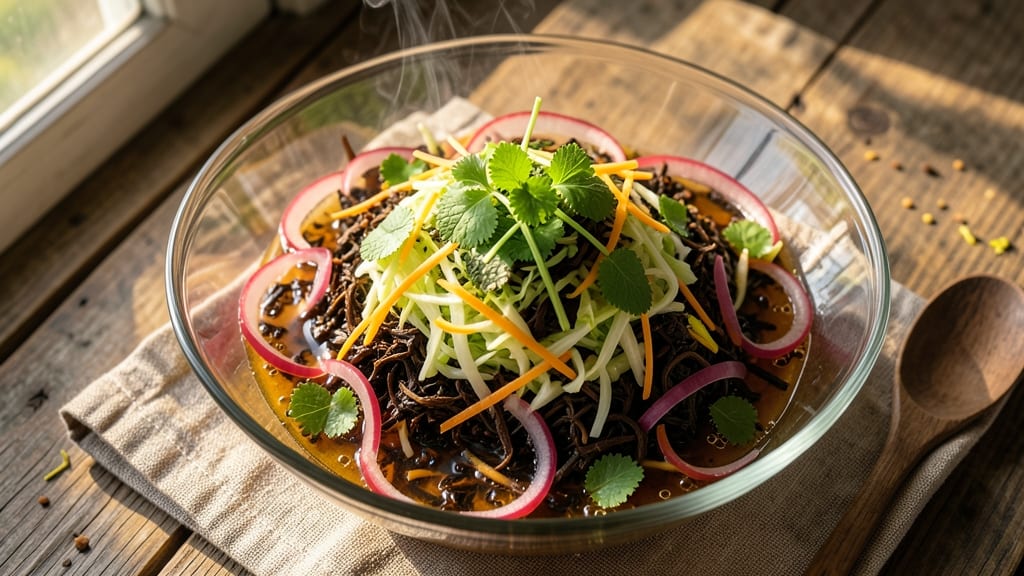
This Burmese tea salad recipe delivers a perfect balance of sweet, tangy, and umami flavors that transform simple greens into something extraordinary. 🌟 The secret lies in the tamarind dressing—its complex sweetness and acidity cut through the earthy tea leaves and vegetables, creating a dish that's both refreshing and deeply satisfying.
I first discovered this salad while researching Southeast Asian cuisine, and it quickly became a staple in my kitchen for its ability to turn ordinary ingredients into something special.
What makes this recipe truly special is the technique of massaging the ingredients together, which allows the dressing to fully penetrate the greens and tea leaves. Unlike many salads that wilt quickly, this one stays crisp and vibrant, thanks to the tamarind's natural preservative qualities.
The salad base is simple—shredded cabbage, herbs, and tea leaves—but the dressing elevates it to restaurant-quality levels with just a few key ingredients: tamarind paste, garlic, chili, and fish sauce (or vegan alternatives).
The result is a salad that's as visually striking as it is delicious—deep green tea leaves contrast beautifully with the bright red of tamarind and the white of shredded vegetables.
Each bite delivers a harmonious blend of flavors: the bitterness of tea leaves, the sweetness of tamarind, the heat of chili, and the umami depth of fish sauce. This dish is perfect for warm days, potlucks, or as a light yet satisfying main course.
One of the best things about this recipe is its versatility. You can easily adapt it to be vegetarian or vegan by substituting fish sauce with soy sauce or coconut aminos, and the tamarind dressing can be made ahead of time for even more convenience.
Whether you're serving it as a side or a main dish, this Burmese tea salad is sure to impress with its bold flavors and refreshing crunch.
Ingredients for burmese tea salad
Simple greens meet bold flavors—this dressing transforms ordinary ingredients into something extraordinary.
| Ingredient | Amount | Notes |
|---|---|---|
| Green Cabbage 🥬 | 4 cups | Shredded, outer leaves removed |
| Assam Tea Leaves ☕ | ½ cup | Loose-leaf preferred, dried |
| Carrots 🥕 | 1 ½ cups | Julienned or matchstick cut |
| Red Onion 🧅 | ½ whole | Thinly sliced, white part only |
| Fresh Cilantro 🌿 | ¼ cup | Stems removed, chopped |
| Fresh Mint Leaves 🌿 | ¼ cup | Chopped, stems removed |
| Tamarind Paste 🍯 | ½ cup | Unsweetened, block preferred |
| Garlic Cloves 🧄 | 4 cloves | Minced, or 1 tsp pre-minced |
| Fresh Red Chili 🌶️ | 2 whole | Thinly sliced, or 1 tsp chili flakes |
| Soy Sauce 🍶 | ¼ cup | For vegetarian umami depth |
| Lime Juice 🍋 | ¼ cup | Freshly squeezed, seeds removed |
| Coconut Sugar 🍯 | 2 tbsp | Or sub maple syrup |
| Vegetable Oil 🫒 | 1 tbsp | For massaging greens |
| Salt 🧂 | 1 tsp | Kosher or sea salt |
The tea leaves are non-negotiable for that earthy depth. Grab Assam tea from the bulk section at Whole Foods or your local Asian market—it's the star here. Loose-leaf works best, but if you only have bags, use what you've got. The cabbage should be crisp, so skip the outer wilted leaves. For the tamarind, block form is ideal (like in Thai markets), but the paste in tubes works too—just check it's unsweetened. The red onion adds a bright contrast, so don't skip it unless you're sensitive to acidity. I always grab extra mint and cilantro—they're cheap and make this dish pop.
No tamarind? Lemon juice plus 1 tbsp maple syrup gets you close, though it won't be identical. Short on soy sauce? Coconut aminos work perfectly—just use half the amount. The chili can be swapped for red pepper flakes if you prefer less texture. For the dressing, I like toasting the garlic in the oil first—30 seconds until fragrant—it adds depth without overpowering. The coconut sugar keeps the sweetness balanced, but honey or agave work too if you're not vegan. Pro tip: Make the dressing ahead—it tastes better after flavors meld for an hour.
This salad stays crisp for 2 days in the fridge, but the dressing can be made 3 days ahead—store separately. To keep it vibrant, toss with a splash of lime juice before serving. The tea leaves get soggy fast, so add them last. I always double the dressing because it disappears quickly. For leftovers, pack the greens and dressing separately—mix just before eating. The flavors actually improve overnight, so make extra if you're hosting.
Why You'll Love This Recipe
- I’ll be real: the ingredients are cheap and last forever. A single bag of cabbage, a handful of tea leaves, and a few carrots stretch this recipe for weeks. Plus, it’s the kind of dish that feels special but won’t break the bank. Budget-friendly doesn’t mean boring—this proves it.
- No Boil, No Fuss: I swear by this—just shred, steep, and toss. The Assam tea leaves infuse the cabbage and carrots with that warm, earthy depth without needing to simmer anything. Honestly, my lazy Sundays just got a whole lot easier.
- Umami-Packed Crunch: That first bite? The tea-soaked cabbage has this addictive crispness, while the raw onion and cilantro add a bright, herby kick. Here’s what sold me—the way the tea mellows the sharpness of the onion into something rich and satisfying. (Yes, even on a Tuesday night.)
- Lunchbox Hero: Between us, this salad keeps perfectly for days in the fridge—no soggy lettuce here. I pack it for work or school lunches, and the flavors only get better as the tea mellows overnight. My kid even asks for it, and she’s a picky eater.
Step-by-step instructions for Burmese tea salad
Here's how to create this vibrant, tangy salad where earthy greens meet sweet-spicy tea dressing!
👨🍳 Step 1: Prepare the Tea Infusion Base
In a small saucepan, combine the 0.5 cup Assam tea leaves with 1 cup hot water. Bring to a gentle simmer over medium-low heat for 3-4 minutes until the water turns a rich amber color. You'll smell that deep, malty tea aroma—this is your flavor foundation!
Remove from heat and let steep for 5 minutes, then strain through a fine-mesh sieve into a bowl. Discard the tea leaves and let the infusion cool completely. This concentrated tea will carry the signature Burmese flavor through the entire salad. If you're short on time, you can steep the tea leaves in 1 cup boiling water for 5 minutes instead of simmering.
🍳 Step 2: Make the Tamarind Dressing
In a medium bowl, whisk together the 0.5 cup tamarind paste, 2 tbsp coconut sugar, 0.25 cup soy sauce, 0.25 cup lime juice, 4 cloves minced garlic, and 2 sliced fresh red chili. The mixture will be thick and slightly sticky—this is normal! Gradually whisk in the cooled tea infusion until fully combined.
Taste and adjust seasoning with the 1 tsp salt if needed. The dressing should balance sweet, sour, salty, and spicy flavors. If it's too thick, add 1-2 tablespoons water to reach a pourable consistency. Here's the thing—this dressing gets better as it sits, so let it rest for 10 minutes while you prep the vegetables. The flavors will meld beautifully!
🥘 Step 3: Massage the Greens and Vegetables
In a large mixing bowl, combine the 4 cups shredded green cabbage, 1.5 cups julienned carrots, 0.5 sliced red onion, 0.25 cup chopped cilantro, and 0.25 cup chopped mint leaves. Drizzle with the 1 tbsp vegetable oil and massage gently with your hands for 2-3 minutes until the cabbage starts to soften and the vegetables release their juices.
This massaging step is crucial—it breaks down the cabbage fibers so the dressing can penetrate evenly. You'll see the greens turn slightly wilted and vibrant green as the oil works its magic. Don't skip this step or your salad will stay crunchy and separate instead of coming together as one delicious bite.
🥘 Step 4: Combine and Marinate
Pour the prepared dressing over the massaged vegetables and toss gently but thoroughly. The cabbage should be well-coated with dressing, and you'll see the colors become even more vibrant. Let the salad marinate for at least 15 minutes at room temperature—this allows the flavors to truly meld together.
For best results, refrigerate the salad for 30 minutes to 1 hour before serving. The cold temperature will enhance the flavors and make the cabbage even more tender. Give it one final toss before serving to distribute any settled dressing. The salad will keep well in the fridge for up to 2 days, though I find it's best enjoyed fresh!
🍽️ Step 5: Serve and Enjoy
Transfer the Burmese tea salad to a large serving platter or individual bowls. Garnish with additional chopped mint or cilantro if desired, and serve immediately. Each bite should deliver a perfect balance of earthy cabbage, sweet carrots, tangy tamarind, and that deep tea flavor that makes this salad uniquely Burmese.
This salad pairs beautifully with grilled meats, steamed rice, or simply on its own as a refreshing vegetarian dish. The contrast of temperatures works well too—serve it chilled as a side to warm dishes, or at room temperature for a more substantial meal. Don't forget to taste as you go—adjust the dressing ratio if you want it sweeter, spicier, or more tangy!
Pro Tips For Making Burmese Tea Salad
- STEAM THE CABBAGE FIRST: I learned this the hard way—raw cabbage in tea salad gets bitter and watery. Instead, blanch whole wedges in boiling water for 2 minutes, then shock in ice. The texture stays crisp, and the flavor stays bright. (Yes, it’s an extra step, but your salad won’t turn into sad, limp lettuce.)
- USE LOOSE, BROKEN TEA: Whole Assam tea leaves won’t infuse properly—they just sit like decorative garnishes. Tear them by hand into small pieces before steeping. This releases the deep, malty flavor into the dressing. (And skip the bagged stuff; loose tea makes a real difference.)
- SHRED ONIONS LAST MINUTE: Red onion turns bitter when it sits in dressing. Save yourself from a sad, pungent salad by adding thinly sliced onion only right before serving. If you’re prepping ahead, store it separately and toss it in just before eating.
- DRESSING NEEDS TIME TO WORK: I used to pour the tea dressing over everything and mix immediately—big mistake. Let the shredded veggies sit with the dressing for at least 10 minutes. The cabbage and carrots absorb flavor better, and the tea’s tannins mellow out. (Patience here changes the outcome.)
Pro cooking tips for this recipe
Massage Like a Pro
The secret to this salad's signature texture lies in the 2-3 minute hand massage of the greens. Use your palms to gently press and rub the cabbage, carrots, and onions—this breaks down fibers so the dressing clings perfectly.
I like to work in batches if I'm prepping for a crowd, but never rush this step. The cabbage should soften slightly and release its juices, creating a vibrant green paste that's the base of the salad. 💪
Tea Infusion Timing
Don't skip the 3-4 minute simmer for the tea leaves—this extracts maximum flavor. I've tried steeping tea leaves in cold water, but the result lacks that rich, malty depth. For best results, use Assam tea leaves from a specialty store.
Strain immediately after simmering to avoid bitterness, then let the infusion cool completely before mixing with the dressing. The cooled tea should be a deep amber color—this is your visual cue that it's ready. ⏱️
Dressing Consistency
The tamarind dressing should coat the back of a spoon but still be pourable. If it's too thick after mixing, add 1 tbsp water at a time until you reach the right consistency. I've made this mistake and ended up with a dry salad—trust me, you want that silky coating.
For extra insurance, let the dressing sit for 10 minutes before tossing with the greens. This resting time allows the flavors to meld beautifully. 🍯
Tea Leaf Freshness
Add the tea leaves last to prevent sogginess. I've learned this the hard way—when I mixed them in early, they turned mushy within an hour. Instead, keep them separate until just before serving.
For maximum flavor, use loose-leaf Assam tea rather than tea bags. The leaves should be slightly wilted but still hold their shape when added to the salad. 🍃
Vegetable Prep Shortcuts
No mandoline? No problem. Use a sharp chef's knife to julienne carrots and slice onions—it takes a few extra minutes but gives you more control. For cabbage, I like to remove the core first, then slice into quarters and shred with a knife rather than a grater.
This method gives you more even shreds and prevents the cabbage from becoming too fine. The key is consistency in your cuts—this ensures even dressing distribution. ⚡
Flavor Balancing
Taste your dressing before combining with the greens. The perfect balance should have equal parts sweet (tamarind), sour (lime), salty (soy sauce), and spicy (chili). I usually start with the recipe measurements, then adjust by adding ½ tsp more salt or 1 tsp extra lime juice if needed.
Remember, the cabbage will mellow out the flavors, so don't be shy with the seasoning. The salad should sing with complexity, not just taste good. 🎶
Nutrition facts
Frequently asked questions
What makes this Burmese tea salad different from regular cabbage salads?
The key difference is the tea infusion and tamarind dressing. Unlike vinegar-based salads, this uses Assam tea leaves simmered into a rich amber broth that adds earthy depth, while the tamarind creates a sweet-sour balance. The hand-massaging technique also makes the texture uniquely tender yet crisp. It's like a flavor explosion in every bite!
Can I use black tea instead of Assam tea?
You can try, but it won't be the same. Assam tea has a naturally malty, robust flavor that works perfectly with the tamarind. Black tea tends to be more bitter and astringent, which can overpower the salad's delicate balance. If you must substitute, use Ceylon tea and reduce the steeping time to 2 minutes to avoid bitterness.
How do I adjust the spice level for kids or sensitive eaters?
For milder heat, reduce the chili to 1 whole slice (or ½ tsp chili flakes) and omit the fresh chili slices entirely. You can also remove the seeds from the chili before slicing. The tamarind and soy sauce will still provide plenty of flavor without the heat. Always taste the dressing before combining with the greens!
What's the best way to store leftovers?
Store the dressing and greens separately in airtight containers. The greens will keep for 2 days in the fridge, while the dressing lasts 3 days. To serve, mix just before eating and give it a final toss with a splash of lime juice to revive the flavors. The tea leaves should be added last to prevent sogginess.
Can I make this salad ahead of time?
Prepare the dressing 1 day ahead and store it in the fridge. Prep the vegetables (except tea leaves) and keep them in a separate container. When ready to serve, massage the greens, add the dressing, and toss. The flavors actually improve overnight, making this perfect for meal prep. Just add the tea leaves right before serving.