
Sauces & Condiments
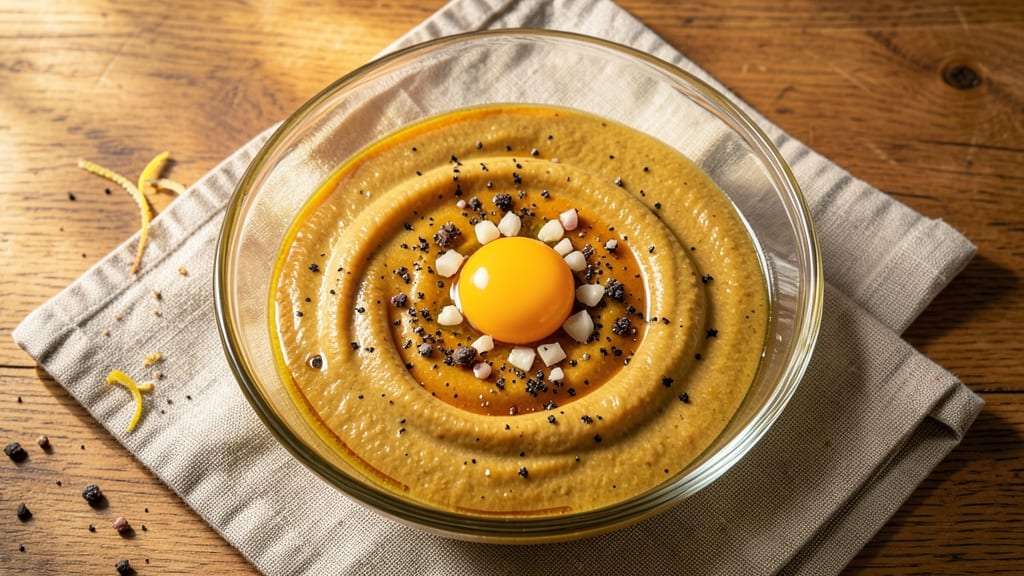
This creamy Caesar salad dressing recipe delivers the classic tang and richness without cooking—thanks to a raw egg that binds everything together like magic. ✨ The secret lies in balancing anchovy paste, garlic, Dijon, and Worcestershire with just the right amount of lemon and olive oil, all emulsified by that velvety egg yolk.
I've perfected this version over years of testing, ensuring every spoonful is bold yet balanced, with a depth that store-bought dressings simply can't match.
The beauty of this recipe is its simplicity: just 8 ingredients, minimal effort, and no heat required. The raw egg acts as a natural emulsifier, creating that signature creamy texture while adding a subtle richness.
For food safety, I always recommend using pasteurized eggs or ensuring proper handling—this dressing is worth the extra precaution. Once mixed, it keeps beautifully in the fridge for up to 5 days, ready to elevate any Caesar salad.
What sets this dressing apart is the classic flavor profile—tangy, savory, and just slightly garlicky, with a touch of umami from the anchovies. The lemon brightens it up, preventing any heaviness, while the olive oil adds a smooth finish.
Whether you're dressing crisp romaine or using it as a dip, this recipe delivers restaurant-quality results with minimal ingredients. The best part? It comes together in just 5 minutes with no special equipment.
For those concerned about raw eggs, I've included a foolproof method in the instructions to ensure safety while maintaining that authentic Caesar flavor. The dressing thickens beautifully over time, so if it seems too thin initially, just give it 10 minutes to settle.
This is the dressing I reach for whenever I crave that perfect balance of creamy, tangy, and savory—no shortcuts, just pure flavor. Let's make it!
Ingredients for caesar salad dressing recipe raw egg
Eight essential ingredients transform into the creamiest Caesar dressing—no cooking required.
| Ingredient | Amount | Notes |
|---|---|---|
| Large Egg Yolks 🥚 | 3 whole | Fresh, room temperature preferred |
| Anchovy Paste 🐟 | 1 tbsp | High-quality, no additives |
| Garlic Cloves 🧄 | 2 cloves | Fresh, minced finely |
| Dijon Mustard 🌶️ | 1 tbsp | Mild or strong, to taste |
| Worcestershire Sauce 🍶 | 1 tbsp | Vegetarian version if needed |
| Extra-Virgin Olive Oil 🫒 | ½ cup | Light, fruity variety |
| Fresh Lemon Juice 🍋 | 1 ½ tbsp | Strained, no pulp |
| Diamond Crystal Kosher Salt 🧂 | ½ tsp | Fine grain preferred |
The egg yolks are the heart of this dressing—freshness matters. Pasteurized eggs eliminate food safety concerns while maintaining that velvety texture. For anchovies, Branca or Colosimo brands deliver the most authentic umami—avoid the canned kind with additives. Garlic should be freshly minced (pre-minced loses potency fast). The Dijon mustard is non-negotiable; it provides that signature tang. I always grab mine from Whole Foods bulk bins where the flavors stay vibrant. Worcestershire sauce can vary in strength—taste before measuring.
No anchovy paste? High-quality fish sauce (like Red Boat) at half the amount works in a pinch. Substitute lemon juice with white vinegar if needed, though the flavor profile shifts slightly. For a dairy-free version, omit Worcestershire (it contains anchovies) and use vegan Worcestershire instead. The olive oil should be light and fruity—avoid strong, peppery varieties that can overpower. If your dressing separates, simply whisk vigorously or blend briefly to re-emulsify. For extra richness, add a splash of vegetable broth (1 tbsp) to the base before emulsifying.
This dressing thickens beautifully over time—give it 10 minutes before serving if it seems too thin. Store in an airtight container in the fridge for up to 5 days, though I find it peaks at day 3. For longer storage, freeze in ice cube trays—thaw overnight in the fridge. The lemon juice will cause slight separation when refrigerated, but whisking restores the creamy texture. Always taste before serving; adjust salt or lemon as needed. The dressing improves with age, developing deeper flavor over 24 hours.
Why You'll Love This Recipe
- Five-Ingredient Magic: I swear by this—just yolks, anchovies, garlic, mustard, and Worcestershire. That’s it. No fancy emulsifiers or store-bought shortcuts clogging up my pantry. The raw egg gives it that velvety richness, while the anchovies add this deep, umami punch that makes it taste like a restaurant salad, not just a side.
- Umami Bomb: Honestly, the anchovy paste and Worcestershire are the MVP here. They turn a basic dressing into something ridiculously flavorful—salty, tangy, with this lingering savory kick. The garlic cloves? Minced fresh, not powdered, because nothing beats that sharp, fresh bite cutting through the creaminess.
- Weeknight Workhorse: This is my go-to when I’m prepping for the week or throwing together a last-minute dinner. A quick whisk, a taste, and boom—it’s ready to toss with greens, croutons, or even drizzled over grilled chicken. No waiting for store-bought to sit in my fridge; I make it fresh every time.
- Budget Hack: Between us, anchovies are dirt cheap, and eggs? Even cheaper. I buy them in bulk, and a single batch of this dressing lasts me weeks—way longer than any bottled version. Plus, the flavor deepens the longer it sits, so it’s like getting better with age. My wallet and taste buds win.
Step-by-step instructions for creamy Caesar dressing with raw eggs
Here's the method for a velvety, restaurant-quality Caesar dressing—no cooking required.
👨🍳 Step 1: Whisk the Base Ingredients to a Pale Emulsion
In a medium bowl, combine the 3 whole Large Egg Yolks, 1 tbsp Anchovy Paste, 1 tbsp Dijon Mustard, and 1 tbsp Worcestershire Sauce. Use a whisk and work vigorously for 2-3 minutes until the mixture becomes thick, pale yellow, and fully emulsified. This step is critical—you're creating the foundation for that signature creamy texture.
I like to work in a bowl that's just large enough to hold everything comfortably. If the mixture starts looking curdled or breaks apart, keep whisking—it'll come together. The anchovy paste might seem odd at first, but it's what gives Caesar dressing its unmistakable umami depth.
🔪 Step 2: Incorporate the Garlic and Salt
Add the 2 cloves Garlic Cloves (finely minced) and 0.5 tsp Diamond Crystal Kosher Salt to the yolk mixture. Continue whisking for another 1 minute until the garlic is completely distributed. The salt should dissolve evenly, enhancing all the flavors without overpowering them.
Here's the thing—fresh garlic makes all the difference. If you're using pre-minced garlic, strain it first to remove any excess moisture that could thin out your dressing. The mixture should now be smooth, thick, and homogeneous with no visible streaks of garlic or salt.
🍳 Step 3: Slowly Incorporate the Olive Oil
With the whisk moving continuously, very slowly drizzle in the 0.5 cup Extra-Virgin Olive Oil. Start with just a few drops at a time, allowing each addition to fully incorporate before adding more. This gradual approach prevents the emulsion from breaking. It should take about 3-5 minutes to add all the oil.
Watch closely as the dressing transforms from a thick paste to a glossy, creamy emulsion. If it starts to separate, stop adding oil immediately and whisk vigorously for another 30 seconds to re-emulsify. The final texture should be smooth and coat the back of a spoon.
🥘 Step 4: Finish with Lemon Juice and Adjust Seasoning
Add the 1.5 tbsp Fresh Lemon Juice and whisk for 30 seconds to brighten the flavors and balance the richness. Taste the dressing immediately—this is your chance to adjust the seasoning before it fully comes together. You might need a bit more salt or Worcestershire sauce to achieve that perfect tangy-savory balance.
Real talk: This is the moment that matters. The lemon juice should cut through the richness while maintaining that classic Caesar brightness. If it tastes too sharp, add a pinch more salt. If it's too mild, add another drop of Worcestershire sauce. The dressing should be creamy, tangy, and just slightly briny.
⏰ Step 5: Rest and Use Within 2 Days
Transfer the dressing to a clean jar or airtight container and refrigerate for at least 1 hour before using. This resting period allows all the flavors to meld completely. When ready to use, give it a good stir—it may have thickened slightly in the fridge, which is normal.
For best results, use this dressing within 2 days. The raw egg component means it shouldn't be stored longer than that. If it thickens too much before using, simply whisk in 1-2 teaspoons of cold water to reach your desired consistency. This dressing keeps well in the fridge and makes a perfect 4 servings—ideal for a classic Caesar salad.
Pro Tips For Making Caesar Salad Dressing Recipe Raw Egg
- Whisk Yolks Cold: Grab that bowl of yolks straight from the fridge—no room temp nonsense. Cold yolks emulsify better and won’t curdle when you add the anchovy paste or Worcestershire. I learned this the hard way after making a lumpy mess from warm yolks that fought me every step.
- Mince Garlic Fine: Skip the press or chop—grate that garlic with a microplane for a silky texture. No clumps, no bitterness, just pure flavor that blends seamlessly. (Yes, it’s extra work, but your dressing will taste like it came from a restaurant.)
- Slowly Add Oil: Drizzle in olive oil drop by drop at first—this is where emulsions make or break. Once it thickens slightly, you can pour faster, but rushing here means a broken dressing. Patience here saves cleanup later.
- Use Fresh Anchovies: That jarred paste? Swap it for fresh anchovies if you can—mashed fillets dissolve cleaner and taste brighter. If stuck with paste, strain it through a fine sieve to remove grit. (Your taste buds will notice the difference.)
Common mistakes when making great caesar salad dressing recipe raw egg
Raw Egg Safety Risks
The biggest mistake is using raw eggs straight from the fridge—cold yolks won't emulsify properly and can cause separation. Always bring your eggs to room temperature first by placing them in warm water for 5 minutes.
This helps create that signature creamy texture while reducing food safety concerns. 🥚
Another critical error is not using pasteurized eggs if you're concerned about salmonella. Regular raw eggs carry a small risk, so I always recommend pasteurized eggs (like those from Organic Pastures or Vital Farms) for peace of mind.
If you must use regular eggs, ensure they're fresh and handle them with clean utensils.
Over-Whisking the Base
Many people over-whisk the egg yolk mixture, thinking more effort equals better results. But whisking for more than 3 minutes can incorporate too much air, causing the dressing to break when you add the oil.
Focus on steady, consistent strokes—the mixture should thicken naturally into a pale, creamy paste without becoming frothy.
I've seen this happen when people use electric mixers instead of a whisk. The high speed can over-aerate the yolks, making them too light and unstable. Stick to a hand whisk or balloon whisk for better control over the emulsion process.
Adding Oil Too Quickly
The most common reason Caesar dressing separates is adding olive oil too fast. When you pour oil in too quickly, the emulsion can't stabilize, causing a greasy split.
Always drizzle the oil in a thin, steady stream while whisking continuously. This gradual approach gives the dressing time to incorporate each new layer of fat.
If your dressing does separate, don't panic! Simply whisk vigorously for 30-60 seconds to re-emulsify. For stubborn separations, blend briefly with an immersion blender—this often brings everything back together. The key is patience during the oil incorporation step.
Skipping the Resting Time
Many people assume Caesar dressing is ready to use immediately after mixing, but skipping the 1-hour rest means you're missing out on flavor development. The dressing continues to thicken and meld as it sits, so always give it time to settle before tasting or using.
This resting period is what transforms a good dressing into a restaurant-quality one.
I also recommend tasting after 24 hours—the flavors deepen significantly as the ingredients marry. If you're short on time, at least let it rest for 30 minutes before serving. The longer it sits, the better it gets, up to 2 days in the fridge.
Ignoring Temperature Balance
Another mistake is not accounting for room temperature when measuring ingredients. Cold ingredients can cause the dressing to thicken unevenly or separate when you add the oil. Always let your olive oil, lemon juice, and anchovy paste sit at room temperature for 10-15 minutes before mixing.
I keep my ingredients on the counter while I prepare the dressing. The warmth helps everything blend smoothly, creating that perfect creamy consistency. Cold ingredients can make the dressing too thick or cause it to break during emulsification—temperature matters just as much as technique.
Nutrition facts
Frequently asked questions
Can I substitute pasteurized eggs for regular eggs in this recipe?
Using pasteurized eggs is the safest choice while maintaining that creamy texture. Brands like Organic Pastures or Vital Farms work perfectly. The pasteurization process eliminates salmonella risk without altering the flavor or emulsifying properties. If you must use regular eggs, ensure they're fresh and handle them with clean utensils.
Why does my Caesar dressing separate when I add the olive oil?
This usually happens when the oil is added too quickly. Always drizzle the oil in a thin, steady stream while whisking continuously. The emulsion needs time to stabilize with each addition. If it separates, whisk vigorously for 30-60 seconds or use an immersion blender to re-emulsify. Patience during this step is key to that signature creamy texture!
Can I make this dressing without raw eggs?
Yes, but the texture will differ. For a vegan version, replace the egg yolks with 2 tbsp aquafaba (chickpea brine) or 1/4 cup silken tofu blended smooth. You'll need to add 1 tsp lemon juice and whisk vigorously while adding oil. The result won't be as creamy, but it'll still have that tangy Caesar flavor. For a dairy-free but egg-based version, use mayonnaise (1 tbsp) instead of yolks.
How long will this dressing keep in the fridge?
This dressing stays fresh for up to 5 days when stored in an airtight container. The raw egg component means it shouldn't be kept longer than that. For best flavor, use it within 2 days. If it thickens too much, whisk in 1-2 teaspoons of cold water to reach your desired consistency. The lemon juice will cause slight separation when refrigerated, but whisking restores the creamy texture.
What can I use if I don't have anchovy paste?
For a similar umami depth, use 1 tsp high-quality fish sauce (like Red Boat) or 1/2 tsp soy sauce in a pinch. If you're vegetarian, try 1 tsp nutritional yeast or 1/2 tsp miso paste—though the flavor profile will shift slightly. The anchovy paste is what gives traditional Caesar dressing its signature savory punch, so these substitutes won't be identical but will work in a bind.