
Salads
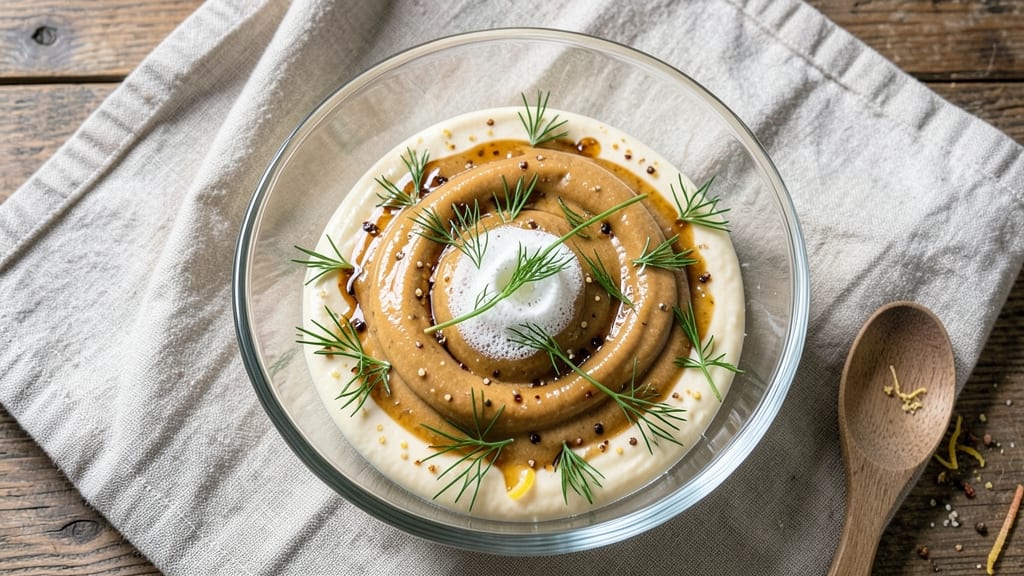
This vegan salad cream recipe delivers the same creamy, tangy richness as traditional versions—but without a drop of dairy. 💚 The secret lies in blending silky cashews with mustard and aquafaba for that signature emulsified texture, while fresh herbs and lemon juice bring bright, garden-fresh flavor.
I developed this after years of searching for a vegan dressing that could hold up to hearty salads without separating or tasting artificial.
The magic happens with a simple base of soaked cashews, which create a velvety foundation when blended with aquafaba (chickpea brine) and Dijon mustard. These ingredients work together to mimic the fat content of traditional salad cream, while apple cider vinegar and nutritional yeast add depth and tang.
No special equipment is needed—just a blender and 10 minutes of prep time.
What you'll end up with is a smooth, drizzle-worthy sauce that clings beautifully to mixed greens, potatoes, or crudités. The texture stays perfectly emulsified, even after sitting in the fridge, and the flavor is tangy, herby, and just slightly sweet—ideal for everything from classic potato salad to fresh garden salads.
This recipe proves plant-based dressings can be just as versatile as their dairy counterparts.
Best of all, it keeps for up to a week in the refrigerator, making it perfect for meal prep. The cashew base adds natural creaminess without dairy, while the aquafaba ensures the dressing stays silky rather than grainy.
For extra richness, stir in a spoonful of vegan mayo before serving—this is the kind of dressing that transforms simple salads into restaurant-worthy meals.
Ingredients for vegan salad cream
Nine simple ingredients create a velvety vegan dressing that rivals dairy-based versions.
| Ingredient | Amount | Notes |
|---|---|---|
| Raw Cashews 🥜 | 1 cup | Soaked in hot water for 15 minutes |
| Aquafaba 🥫 | ½ cup | Chickpea brine, not canned water |
| Dijon Mustard 🌶️ | 2 tbsp | High-quality for tangy flavor |
| Apple Cider Vinegar 🍎 | 2 tbsp | Raw, unfiltered preferred |
| Nutritional Yeast 🍄 | 2 tbsp | Fortified for cheesy flavor |
| Fresh Dill 🌿 | ¼ cup | Chopped, stems removed |
| Fresh Chives 🌱 | ¼ cup | Finely chopped for freshness |
| Lemon Juice 🍋 | 1 tbsp | Freshly squeezed |
| Sea Salt 🧂 | ½ tsp | Fine grain preferred |
| Black Pepper 🌶️ | ¼ tsp | Freshly ground |
The cashews are the heart of this recipe—soak them in hot water for 15 minutes to soften completely. Trader Joe's and Whole Foods carry high-quality raw cashews, but any brand will work. Fresh herbs are non-negotiable here; dried won't give the same bright flavor. If you're short on time, frozen herbs (thawed) work in a pinch. The aquafaba must be the brine from canned chickpeas—never the canned water—for proper emulsification. For the mustard, Maille or Brianna brands are my go-tos, but any good-quality Dijon will do.
No cashews? Silken tofu or blended white beans can replace them, though texture will differ slightly. Short on dill? Fresh parsley or tarragon work as substitutes. The nutritional yeast adds that signature tangy depth—Bob's Red Mill is a reliable brand. For extra richness, blend in 1 tbsp vegan mayo after the initial mix. If the dressing separates, whisk vigorously or blend briefly to re-emulsify. The lemon juice can be adjusted to taste—add more for extra tang if you prefer it sharper.
This dressing keeps beautifully in the fridge for up to 1 week when stored in an airtight container. For best results, press plastic wrap directly onto the surface to prevent a skin from forming. If it thickens over time, thin with a splash of water or plant-based milk. Freezes well for up to 3 months—just thaw in the fridge overnight. Portion into small jars for easy grab-and-go meal prep. It's perfect for drizzling over salads, potatoes, or even as a dip for veggie sticks.
Why You'll Love This Recipe
- No-Soak Magic: I swear by this trick—soak-free cashews blend into velvety silk in minutes. Just toss them in warm water for 15 minutes, drain, and blend. That’s it. No overnight soaking, no fuss.
- Umami Bomb: The nutritional yeast isn’t just a garnish—it’s the star. One teaspoon turns this from good to dangerously good, adding that cheesy, savory punch that makes you forget it’s plant-based. Pair it with Dijon, and suddenly your salads taste like they’ve been kissed by a French chef.
- Potluck Hero: This stuff thrives in jars. Make a big batch on Sunday, and you’ve got creamy dressing for potlucks, picnic sandwiches, or last-minute dinner guests. Honestly, I’ve used it on everything from pasta salads to roasted veggies, and no one’s ever asked what’s in it.
- Pantry Staple: Cashews and aquafaba? Both are cheap and last forever. A single batch costs me pennies and stretches for weeks—perfect for when you’re broke but still want to eat like you’re not. Plus, the vinegar keeps it fresh for days in the fridge. Efficiency at its finest.
Step-by-step instructions for silky herb cream without dairy
Here's how to create a rich, plant-based dressing that rivals traditional salad creams.
👨🍳 Step 1: Soak and Prepare the Cashews
Place the 1 cup raw cashews in a heatproof bowl and pour hot water (just off the boil) over them until fully submerged. Let them soak for 15 minutes—this softens them enough to blend into a silky texture. I like to use a fine-mesh strainer to drain them afterward, pressing gently with a spoon to remove all excess water.
If you're short on time, you can soak them in boiling water for 5 minutes, but 15 minutes gives you the best results. The soaked cashews should feel tender when pressed between your fingers. Transfer them to a high-speed blender or food processor—this is where we'll build our base.
🍳 Step 2: Blend the Base Ingredients
Add the soaked cashews, 0.5 cup aquafaba, 2 tbsp Dijon mustard, 2 tbsp apple cider vinegar, and 2 tbsp nutritional yeast to the blender. The aquafaba (chickpea brine) acts as our egg substitute, providing structure and creaminess. Blend on high speed for 2-3 minutes until completely smooth and pale.
Here's the thing—you want the mixture to be perfectly smooth with no visible texture. If it looks grainy, stop and scrape down the sides, then blend for another 30 seconds. The nutritional yeast adds a cheesy depth, while the Dijon mustard brings tangy complexity. This blend should be thick but pourable—like a rich, pale mayonnaise.
🥘 Step 3: Incorporate Fresh Herbs and Seasonings
With the blender still running, add the 0.25 cup fresh dill, 0.25 cup fresh chives, 1 tbsp lemon juice, 0.5 tsp sea salt, and 0.25 tsp black pepper. The fresh herbs should be finely chopped before adding—this ensures they distribute evenly without creating texture. Blend again until fully incorporated, about 1 minute.
Taste the mixture and adjust seasoning if needed. I often add a pinch more salt or a splash of lemon juice at this stage. The herbs should be bright and fresh, not overpowering. The final consistency should be thick enough to coat the back of a spoon but still spreadable. If it's too thick, thin with 1-2 tsp water at a time until you reach your desired consistency.
⏰ Step 4: Chill and Thicken (Optional but Recommended)
Transfer the salad cream to a clean jar or airtight container and refrigerate for at least 30 minutes before using. This chilling step allows the flavors to meld and the texture to thicken slightly—it makes a noticeable difference in the final product. The cream will keep in the refrigerator for up to 5 days, maintaining its freshness and vibrant flavor.
If you're in a hurry, you can use it immediately, but chilled salad cream has a more refined texture. Give it a quick stir before serving to ensure even distribution of the herbs. This step is especially important if you're using it for layering in dishes where texture matters, like stuffed avocados or veggie tartar.
Pro Tips For Making Vegan Salad Cream
- Soak Cashews Properly: Dump them in boiling water for 10 minutes—no need to pre-soak overnight. I used to do the overnight thing, but this cuts time in half and still softens them perfectly for blending. Just drain and rinse thoroughly afterward; leftover soaking water makes the cream watery.
- Blend Aquafaba First: Whip the aquafaba alone until stiff peaks form before adding anything else. This mimics egg whites and gives your cream that signature thickness. Skip this, and you’ll end up with something closer to buttermilk than salad dressing.
- Taste the Mustard: Start with half the Dijon and adjust to taste—some brands are sharper than others. I’ve burned my tongue twice trying to "fix" a bland dressing by adding more vinegar later. Test early, or you’ll regret it.
- Strain for Smoothness: Run the blended mixture through a fine-mesh sieve or cheesecloth to remove any grit from cashews or aquafaba. Sounds tedious, but it guarantees a velvety finish—no one likes texture surprises in their dressing. (Yes, even if you’re impatient like me.)
Creative variations of this recipe
Herb Swap Options
Trade the dill and chives for other fresh herbs based on what you have. For a garlic-lemon twist, swap in 2 tbsp minced fresh parsley and 1 tbsp minced garlic—this works beautifully with roasted veggie salads.
A Mediterranean vibe comes from 0.25 cup fresh basil and 0.1 cup chopped mint, perfect for grain bowls or stuffed peppers. 🌿
Spicy Variations
Add heat with 1 tsp hot sauce (like Frank's RedHot) or ½ tsp smoked paprika for depth. For a Cajun kick, blend in ½ tsp cayenne pepper and ½ tsp onion powder—this pairs well with grilled corn or black bean salads.
If you love Asian-inspired flavors, stir in 1 tsp sriracha and 1 tsp grated ginger for a tangy, spicy dressing.
Extra Creamy Upgrades
For a richer texture, blend in 2 tbsp vegan mayo (like Hellmann's Vegan) or 1 tbsp tahini for nutty depth. A silky avocado version works by adding ½ ripe avocado to the blender—this adds healthy fats and a buttery smoothness.
For a nut-free option, replace cashews with ½ cup cooked white beans (like cannellini), drained and rinsed.
Sweet & Tangy Twists
Balance the tang with 1 tsp maple syrup or ½ tsp agave for a subtle sweetness. A fruit-infused version shines with 1 tbsp finely diced cucumber or 1 tsp grated apple—this brightens the flavor and works well with potato salads.
For a citrusy zing, add 1 tbsp orange zest and 1 tsp orange juice instead of lemon.
Global Flavors
Transform this into a Japanese-inspired dressing by adding 1 tsp rice vinegar, ½ tsp sesame oil, and ½ tsp toasted sesame seeds. For a Mexican-style crema, blend in 1 tbsp lime juice, ½ tsp ground cumin, and ¼ tsp chili powder.
A Middle Eastern touch comes from swapping in 1 tbsp tahini and ½ tsp sumac—perfect for roasted eggplant or hummus bowls.
Nutrition facts
Frequently asked questions
Why does this recipe use aquafaba instead of eggs?
Aquafaba (chickpea brine) acts as a perfect plant-based emulsifier, just like eggs in traditional salad cream. It creates that signature creamy texture while keeping the dressing vegan. The high protein content in aquafaba helps bind the ingredients together, preventing separation—something that's especially important for dressings that need to stay smooth.
Can I make this without cashews for a nut-free version?
You can substitute the cashews with ½ cup cooked white beans (like cannellini) or ½ cup silken tofu, though the texture will be slightly different. For the best results, blend the beans or tofu until completely smooth first, then proceed with the recipe as written. The aquafaba will still help create that creamy consistency.
How do I fix it if my dressing separates?
Don't worry—this happens sometimes! Simply whisk vigorously or blend briefly to re-emulsify. If it's still grainy, add 1 tsp water at a time while blending until smooth. For extra insurance, stir in ½ tsp xanthan gum (a common thickener) or 1 tbsp vegan mayo to help stabilize the mixture.
What's the best way to store this vegan salad cream?
Store it in an airtight container in the fridge for up to 5 days. For longer storage, freeze for up to 3 months—thaw overnight in the fridge before using. To prevent a skin from forming, press plastic wrap directly onto the surface. If it thickens, thin with a splash of water or plant-based milk before serving.
Can I use this dressing on hot dishes like roasted potatoes?
Yes, but add it just before serving. The high heat can cause the aquafaba to break down, making the dressing separate. For hot dishes, try a stovetop version by simmering the blended ingredients with 2 tbsp water for 5 minutes on low heat, then cooling completely before using.